
Review · SCENIC RAILWAYS
Dunedin to Queenstown One Way Tour Including Taieri Gorge Train
The most memorable part of this Dunedin to Queenstown trip comes before the road journey even begins. You board the Taieri Gorge Train at Dunedin’s grand railway station, then cross narrow gorges, old viaducts, and high-country terrain before meeting your road guide at remote Pukerangi.
I like two things in particular: the train turns a long transfer into a proper sightseeing experience, and the small group, capped at 15 people, gives the road section a more personal feel. I also like the stops at St. Bathans and Ophir, places you would likely miss on a direct drive.
The main drawback is the nine-hour duration and early start. This is not a quick shuttle, and the second half includes several short photo stops rather than long visits. You also need to reach the Dunedin station yourself, since pickup is not provided there.
Key points to know before booking
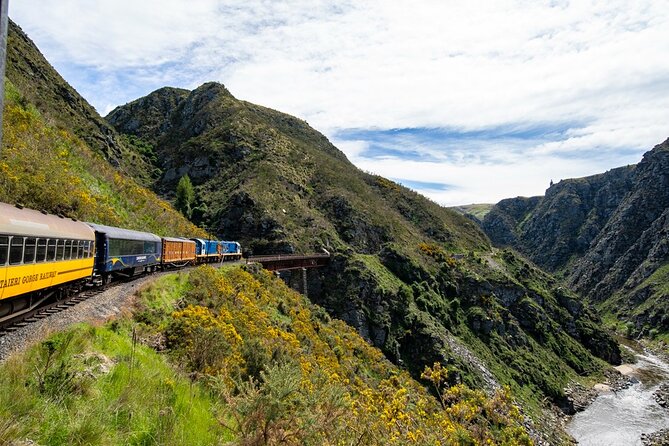
- Taieri Gorge Train to Pukerangi: The first two hours unfold by rail through gorges, canyons, and old viaducts.
- Small group of up to 15: The road transfer is more intimate than a large coach trip.
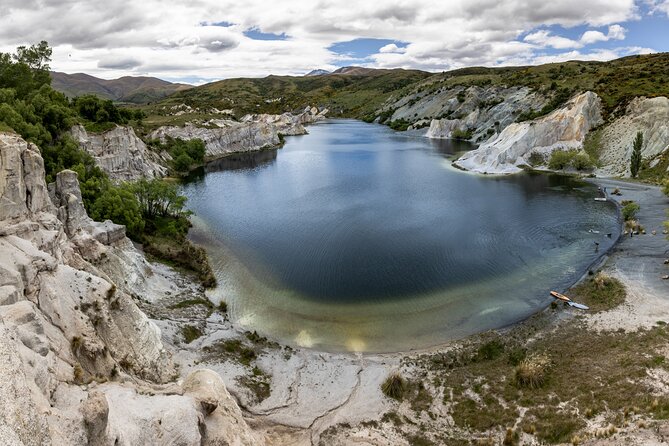
- St. Bathans and Blue Lake: You get a short visit to a gold-mining settlement with an unusual man-made lake.
- Central Otago by road: The route continues through Ophir, Cromwell, Kawarau Gorge, and the Gibbston area.
- Door-to-door finish in Queenstown: You are dropped at centrally located accommodation, with room for one large and one small bag.
- Plan for a full day: The tour starts at 9:00 am and lasts about nine hours, with moderate physical fitness recommended.
Why this transfer is better than a straight drive
A direct vehicle transfer from Dunedin to Queenstown would get you there more simply, but it would turn Central Otago into scenery outside a window. This trip breaks the route into two distinct experiences: a historic railway ride inland, followed by a guided road trip through old gold-mining country.
That change of pace is the tour’s real appeal. The train handles the first part of the route, so you can watch the Taieri Gorge unfold without navigating roads or worrying about directions. At Pukerangi, the experience changes character. You leave the railway behind and meet your guide for the drive through the high country.
I see this as a useful option for people who want to move between Dunedin and Queenstown but do not want to spend the day on a plain transfer. It also works well if you have limited time in New Zealand and want to fold several Central Otago sights into one travel day.
The tradeoff is simple: you give up flexibility. You cannot linger for an hour in every town, stop whenever you want, or choose your own route. The value comes from having the transport and sightseeing arranged together.
More Scenic Railways in New Zealand:
- TranzAlpine Train, Arthur’s Pass and Castle Hill Day Trip
★ 5.0 · 426 reviews - TranzAlpine Train Journey: Christchurch to Greymouth
★ 4.5 · 312 reviews - Arthur’s Pass Discovery and TranzAlpine Train – Small Group Tour
★ 5.0 · 272 reviews
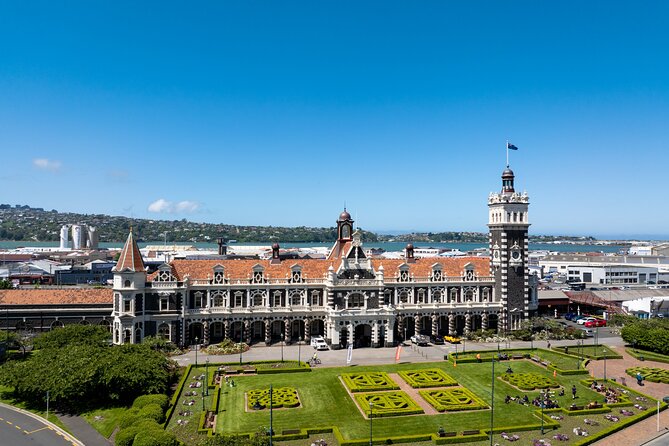
Starting at Dunedin’s railway station
The meeting point is Dunedin Scenic Train Tours at 22 Anzac Avenue, inside the Dunedin Railway Station area. The start time is 9:00 am, and you must make your own way there because hotel pickup in Dunedin is not included.
Allow time to reach the station without rushing. The station itself is one of Dunedin’s best-known buildings, with elaborate design details that make it a fitting place to begin a railway trip. You do not need a separate sightseeing plan for the building, but it is worth looking around before boarding.
The station location is near public transportation, which helps if you are staying elsewhere in Dunedin. Still, check your own route and allow a buffer. Missing the train would be a serious problem, since the rail section is the foundation of the day.
Riding the Taieri Gorge Train for two hours
The train from Dunedin to Pukerangi is included in the price and takes about two hours. This is not simply a way to cover miles. The line carries you through narrow gorges, steep-sided canyons, and scenery shaped by the rugged Otago interior.
Old viaducts are part of the attraction. Their presence gives the ride a strong sense of engineering history, while the changing views show why rail remains such a good way to enter this part of the country. You can sit back, watch the scenery shift, and listen to narration about the places along the line.
The guide on the train is an important part of the experience. One detailed account specifically praised the narration, which brought the sites along the route into focus. That matters because gorge scenery can blur together if you do not know what you are looking at.
You should also keep your expectations practical. The train segment lasts two hours, not the entire day, and it ends at Pukerangi rather than Queenstown. This means you need to be comfortable changing from rail to road at a remote high-country outpost.
Changing trains for a Central Otago road trip
At Pukerangi, you disembark and meet your road guide. The change takes only about five minutes according to the planned schedule, so keep your belongings close and be ready to move from the train to the vehicle.
This is where the small-group format becomes useful. With no more than 15 people, the road section should feel more manageable than a full-size coach. The guide can provide stories and context as you pass through smaller settlements, and the group can make brief stops without the heavy feel of a large tour operation.
Jonathan is one guide associated with this route. His commentary has included stories about the towns along the way, along with humorous local trivia. That mix is worth noting. The drive is not presented as a silent transfer, and a good guide can make short stops feel connected rather than random.
You should expect the vehicle portion to be active but not strenuous. A moderate level of physical fitness is recommended, and you will get in and out for several stops. Wear practical shoes and carry anything you need for the day in your smaller bag.
More Train Journeys in New Zealand:
- Northern Explorer Train Journey from Wellington to Auckland
★ 4.0 · 513 reviews - Coastal Pacific Train Journey from Picton to Christchurch
★ 4.5 · 345 reviews - Arthur’s Pass: TranzAlpine Train and Castle Hill Day Tour
★ 4.8 · 270 reviews - Northern Explorer Train Journey from Auckland to Wellington
★ 4.0 · 204 reviews
St. Bathans and the strange Blue Lake
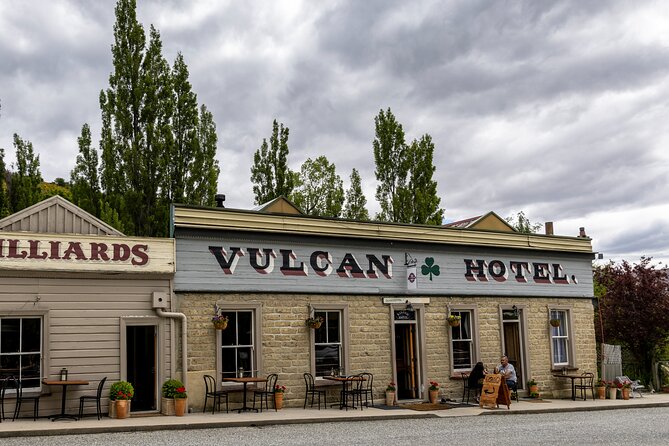
St. Bathans is one of the most distinctive stops on the route. This former gold-mining settlement has an eerie, timeworn character, with preserved streets and buildings that recall its earlier life as a gold rush town.
The visit lasts about 30 minutes. That is enough time to walk around and see the settlement, but not enough for a long exploration. I would treat this as a focused introduction rather than a full historical visit.
Blue Lake is the unusual centerpiece. It was formed by gold mining, so its presence is a direct reminder of how strongly the industry altered Central Otago. The name sounds peaceful, but the lake’s origin gives it a more complicated story. You are looking at scenery created by human excavation, not a purely natural feature.
This stop will suit you if you like places with a strong sense of the past and a slightly unusual visual character. It may feel too brief if your main reason for booking is to spend extended time in old settlements. The schedule gives you a taste, then moves on.
A quick photo stop at Ophir’s historic bridge
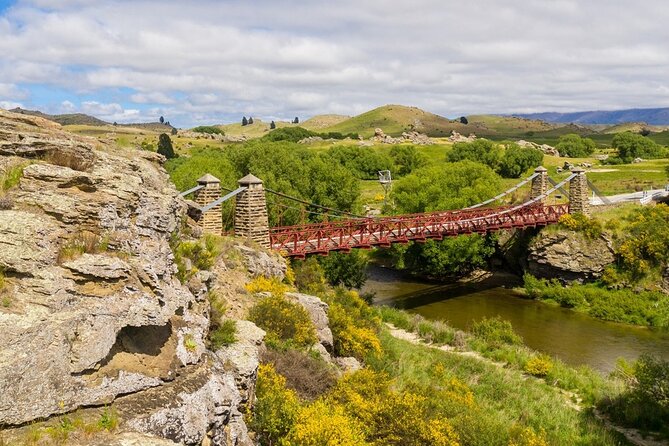
The Ophir Historic Bridge provides a much shorter visit. The 1880 suspension bridge crosses the Manuherikia River and is scheduled as a five-minute photo stop.
That timing tells you how to use it. Do not expect a long walk, a museum visit, or time to settle into the surroundings. Instead, be ready to step out, frame the bridge and river, and get back on board.
Even with only five minutes, the stop adds variety. The bridge reflects the practical engineering of nineteenth-century Otago, while the river setting gives you a change from the dry inland scenery. It also breaks up the drive at a sensible point.
If you enjoy taking photographs, keep your camera or phone easy to reach. A short stop can disappear quickly if your equipment is buried under luggage.
Passing through Cromwell and Central Otago
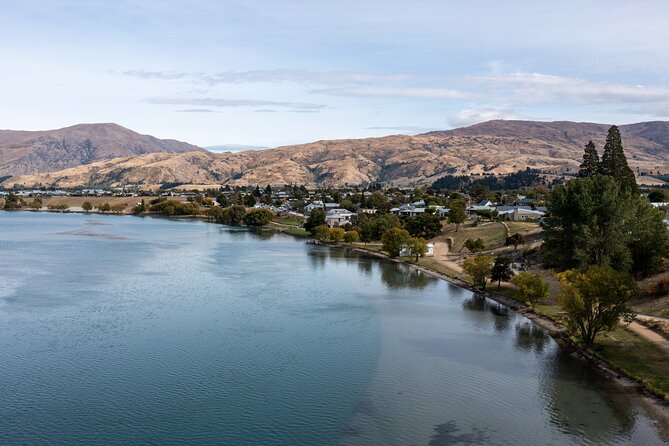
Cromwell brings a different feel to the route. The town sits where two rivers meet and is known for its heritage area and local produce. The tour description gives Cromwell a place in the journey, but it does not specify a fixed visit length, so you should not assume you will have time for a long meal, shopping trip, or detailed town walk.
Cromwell helps connect the smaller historic stops with the wider Central Otago region. The route is not only about abandoned settlements. It also shows a working part of the interior, with farming, produce, rivers, and communities that continue beyond the old gold rush story.
This is one reason I prefer the route to a simple point-to-point transfer. You see several different sides of Otago in one day: railway engineering, mining history, river country, small towns, and major gorge scenery.
Kawarau Gorge and the approach to Queenstown
Near the end of the trip, the road passes through Kawarau Gorge. Steep rock walls, turquoise water, Lake Dunstan views, and the Gibbston wine area give this section a strong finish.
The gorge also carries the story of gold seekers, tying the final part of the drive back to St. Bathans and Ophir. The scenery changes again as you approach Queenstown, so the journey does not simply fade into a long highway run.
The tour ends with drop-off at centrally located Queenstown accommodation. This is a useful feature if you have plans for the evening or want to avoid arranging a separate transfer after a long day.
The drop-off is not described as every address in the wider Queenstown area. If your accommodation is outside the central zone, check the arrangement before booking. The included luggage allowance is one large and one small bag per person, so pack within those limits.
What the $179.97 price really covers
At $179.97 per person, the price is easiest to judge as a combined transport and sightseeing day rather than as a basic transfer. Your fare includes the Taieri Gorge Train ticket, the road journey after Pukerangi, guiding, the planned stops, and hotel drop-off in central Queenstown.
The train ticket is the key value item. You are not paying only for a seat in a vehicle. You are also buying access to a rail route that gives the first section of the trip a distinct character.
The small group adds value too. A maximum of 15 people is far more personal than a large coach, especially during the road section. It does not guarantee a private-tour feeling, but it should make the day easier to follow and less crowded at stops.
The price does not include accommodation, Dunedin hotel pickup, or child safety seats. Children aged seven and under must use a safety seat. You can bring your own or hire one for NZ$20 per seat, so families should include that extra cost when comparing options.
I would compare this tour with the cost of arranging a separate Dunedin to Queenstown transfer, train ticket, and independent sightseeing. If you only need to reach Queenstown quickly, another option may suit you better. If you want the route itself to be part of the holiday, the price is easier to justify.
The pace, luggage, and physical demands
Nine hours is a long travel day, even when the views are good. The train offers a more relaxed start, but the road section includes transfers and short walks at several stops. You should be comfortable getting in and out of the vehicle and walking around St. Bathans.
The tour includes space for one large and one small piece of luggage per person. That is enough for a normal transfer bag, but it is not a license to bring several large suitcases. Keep essentials in the small bag so you can reach them during the day.
Because the tour requires good weather, plans can change if conditions are poor. If the operator cancels for weather or because the minimum number of participants is not reached, you are offered another date or experience, or a full refund.
You can cancel for a full refund up to 24 hours before the 9:00 am start time. Changes or cancellations made less than 24 hours ahead are not refunded, so this is worth remembering when arranging connecting accommodation and travel.
Who should book this Dunedin to Queenstown experience?
I would recommend it to you if you want more than a transfer and have one full day available. It is particularly well suited to people interested in rail travel, old mining settlements, engineering, and the varied scenery between the two cities.
It also suits solo visitors and couples who prefer a small group to hiring a car. The guide takes care of the route, and the included Queenstown drop-off removes one more travel task at the end of the day.
Families can book it, but the long duration and child seat requirement deserve careful thought. Children aged seven and under need a safety seat, and each seat costs NZ$20 to hire if you do not bring your own. The day also includes several transitions, which may not suit every young child.
I would hesitate if you want long visits at each location, a leisurely lunch, or a flexible private itinerary. St. Bathans gets about 30 minutes, Ophir about five, and the overall schedule has to keep moving to reach Queenstown.
Should you book it?
Book this tour if you want the route from Dunedin to Queenstown to be a highlight rather than dead time. The Taieri Gorge Train, the short visit to St. Bathans, the Ophir bridge, and the Kawarau Gorge drive give you a good range of Central Otago sights in one organized day.
Skip it if your priority is speed, privacy, or a fully customizable schedule. For everyone else, the combination of rail, road, local stories, and central Queenstown drop-off makes the $179.97 fare a reasonable buy, especially when the train ticket and small-group guiding are included.
FAQ
Where does the tour start?
The tour starts at Dunedin Scenic Train Tours, home of the Taieri Gorge Railway, at 22 Anzac Avenue, Dunedin 9016.
What time does the tour begin?
The scheduled start time is 9:00 am.
How long does the experience last?
The tour lasts approximately nine hours.
Is Dunedin hotel pickup included?
No. You must make your own way to the Dunedin railway station meeting point.
Where does the train go?
The Taieri Gorge Train takes you from Dunedin to Pukerangi. The train portion lasts about two hours.
Is the train ticket included?
Yes. The Taieri Gorge Train ticket from Dunedin to Pukerangi is included.
Where does the tour end?
You are dropped at centrally located accommodation in Queenstown.
How much luggage can I bring?
The tour provides space for one large and one small piece of luggage per person.
Are child safety seats required?
Yes. Children aged seven and under must use a child safety car seat. You may bring your own or hire one for NZ$20 per seat.
Just added for rail travellers in New Zealand
- Ultimate self-drive rail car journey★ 5.0 · 5 reviews
- 2 Day West Coast Glaciers and TranzAlpine Train: Queenstown to Christchurch★ 3.0 · 3 reviews
- Queenstown to Dunedin with Taieri Gorge Train One-Way Tour★ 5.0 · 5 reviews
- Franz Josef to Christchurch Small-Group Tour W TranzAlpine Train★ 4.5 · 2 reviews
- Captivating Railway Journey in Coromandel★ 4.5 · 36 reviews
- Arthur’s Pass with optional TranzAlpine Train (Small Group Tour)★ 5.0 · 13 reviews
- Kaikoura Whale Watch Day Tour from Christchurch including Coastal Pacific Train★ 5.0 · 6 reviews
- Taumarunui: Forgotten World Rail Cart Tour with Lunch★ 5.0 · 12 reviews
Scenic Railways, compared.
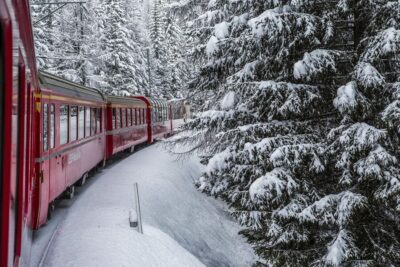
Lake Como Cruise, St. Moritz & Bernina Red Train
Read our review →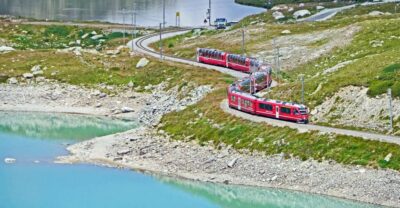
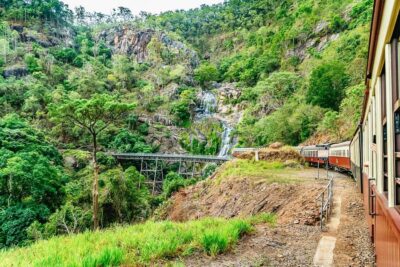
Self-Guided Kuranda Trip with Train and Skyrail
Read our review →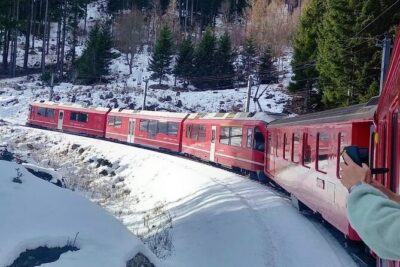
Bernina Red Train, Swiss Alps & St Moritz From Milan
Read our review →
Swiss Alps Bernina Red Train and St.Moritz Tour from Milan
Read our review →
Milan to St. Moritz: Scenic Bernina Train Tour with Guide
Read our review →
Bernina Train, Swiss Alps & St. Moritz Day Trip
Read our review →Browse the lists this tour appears in