
Review · MUMBAI TRAIN JOURNEYS
Dabbawaala Dhobi Ghat Dahravi slum With Local Train Ride
Mumbai’s most revealing sights are often working places, not monuments. This tour brings you close to the city’s dabbawalas, the lunch-box carriers who move about 130,000 meals each day, then continues to Mahalaxmi’s Dhobi Ghat and the working neighborhoods of Dharavi. It is a compact way to see how ordinary Mumbai runs.
I like the mix of real working industries and public transport. I also like that the Dharavi portion is led by a guide who lives in the area, which can give the visit a more grounded point of view. The main consideration is that Dharavi is a lived-in community, not a staged attraction, so you need to follow local etiquette and accept that the experience may feel intense.
- Meet the dabbawalas: Learn how a large lunch-box delivery system operates with very little technology.
- See Dhobi Ghat from close range: Rows of concrete wash pens reveal one of Mumbai’s most unusual working sites.
- Ride a Mumbai local train: Public transport becomes part of the city lesson, not just a way to get around.
- Explore Dharavi’s small-scale industries: Look for leather work, pottery, soap, baking, dyeing, and recycling.
- Follow a guide who lives in Dharavi: The community is presented as a place of work and home, not only as a symbol of poverty.
- Pay $34 per person: The price is reasonable for a multi-part city experience with guiding and several distinct stops.
Mumbai’s Dabbawalas and the Logic of the Lunch Box
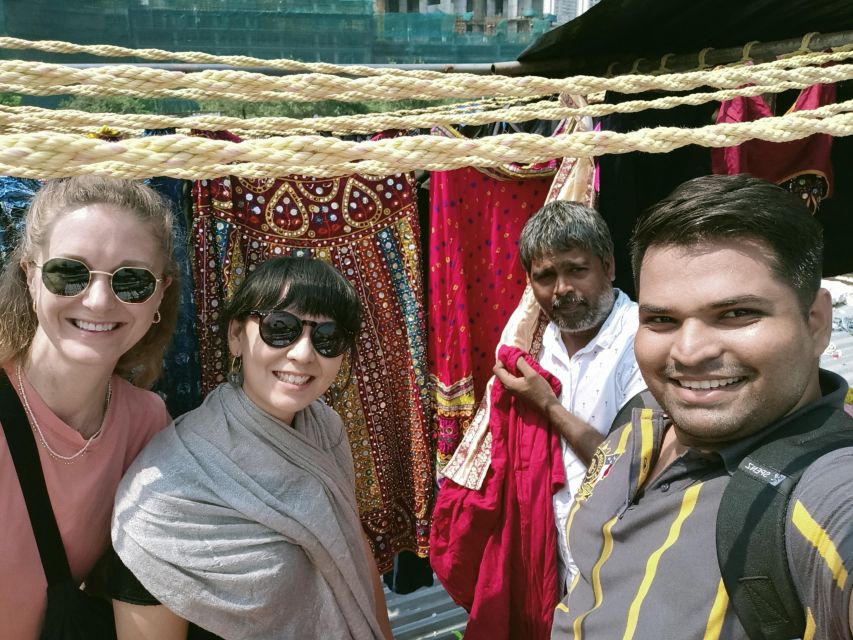
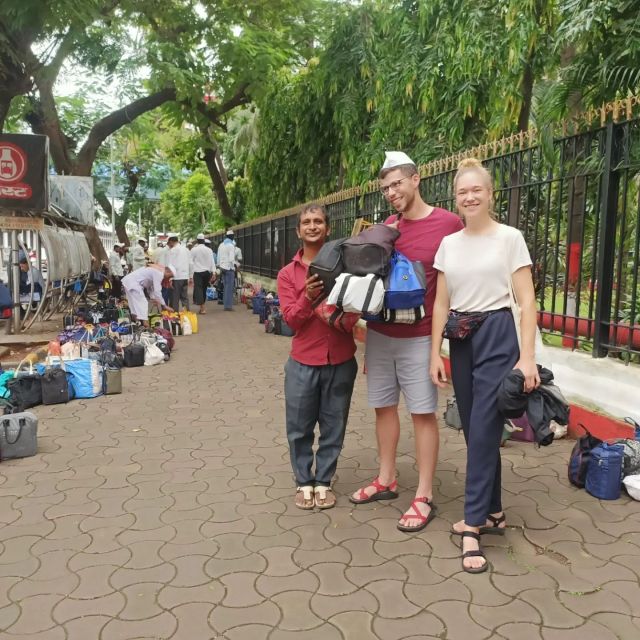
The dabbawala portion gives this tour its best opening. In Hindi, dabba means a box, while dabbawala means the person who carries it. In daily life, these workers collect filled lunch tins from homes, deliver them to offices, retrieve the empty tins, and return them for the next day’s round.
The scale is remarkable. About 5,000 dabbawalas handle roughly 130,000 lunch boxes across Mumbai each day. Around 260,000 individual movements are completed within six hours, six days a week, for 51 weeks of the year.
What interests me most is not simply the size of the operation. It is the way the system works through human coordination, repeated routines, and simple markings rather than computers or mobile phones. That makes the visit useful for anyone curious about how Mumbai functions behind its famous traffic and high-rise offices.
You should not expect a formal business lecture or a long museum-style presentation. The value comes from seeing the people and system connected to the city’s everyday rhythm. If you enjoy learning how a place works, this is more memorable than another photo stop.
The dabbawalas are often described as Mumbai’s real heroes because their service is dependable, practical, and woven into office life. That label is enthusiastic, but the underlying point is sound: this is a major city service carried out by people moving through crowded streets and railway routes with impressive discipline.
A Local Train Ride Through Mumbai
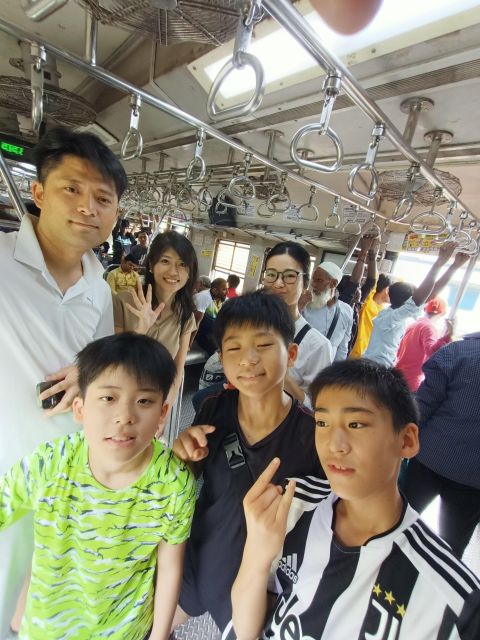
The local train ride adds useful context. Mumbai’s railways are part of the city’s daily life, and using a train helps you understand why the dabbawala system can function across such a large metropolis.
The supplied details do not give a precise station-to-station route, departure time, or ride length. That means you should treat the train ride as a practical part of the tour rather than expecting a fixed sightseeing journey with a published schedule. Your guide can help you understand how the route connects the different parts of the day.
For me, this is one of the tour’s strongest choices. A private vehicle can move you efficiently, but a local train places you inside the city’s normal transport system. You see the connection between work, housing, rail lines, and the constant movement that defines Mumbai.
Wear comfortable shoes, as requested. You may be walking between stations, working areas, and narrow lanes, and the combination of public transport and community visits makes footwear more important than dressing for a standard bus excursion.
More Train Journeys in India:
- From Delhi: Taj Mahal & Agra Tour by Gatimaan Express Train
★ 4.8 · 1,041 reviews - Jaipur Day Trip from Delhi by Car or Train – All Inclusive
★ 5.0 · 663 reviews - “Taj Mahal” Tour from Delhi by India’s Fastest Train (Gatiman Express)
★ 5.0 · 298 reviews
Mahalaxmi’s Open-Air Dhobi Ghat
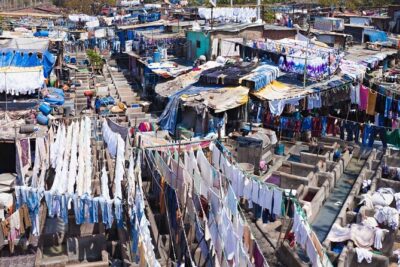
Dhobi Ghat is the tour’s clearest visual stop. Located beside Mahalaxmi railway station near the Saat Rasta roundabout, this open-air laundry contains rows of concrete wash pens. Each one has a stone used for scrubbing clothes.
The dhobis wash clothing connected with Mumbai’s hotels and hospitals. From an overlook near the Mahalaxmi station flyover, you can see the dense arrangement of washing areas and the way a large commercial service operates in the open air.
This is not just a colorful scene for photographs. It shows an older form of urban labor continuing beside one of India’s busiest rail systems. The contrast is the point: trains, roads, offices, and a large laundry operation all occupy the same tight section of the city.
Dhobi Ghat can be viewed quickly, but the guide’s explanation gives it more meaning. I would pay attention to the organization of the work rather than only to the scale. The site is famous as one of the world’s largest outdoor laundries, but its real interest is the people and process behind that reputation.
You should also remember that this is a workplace. Keep your camera respectful, listen to instructions, and do not treat workers as part of a display. The attraction is the setting and the system, not the chance to photograph individuals without care.
Entering Dharavi as a Working Community
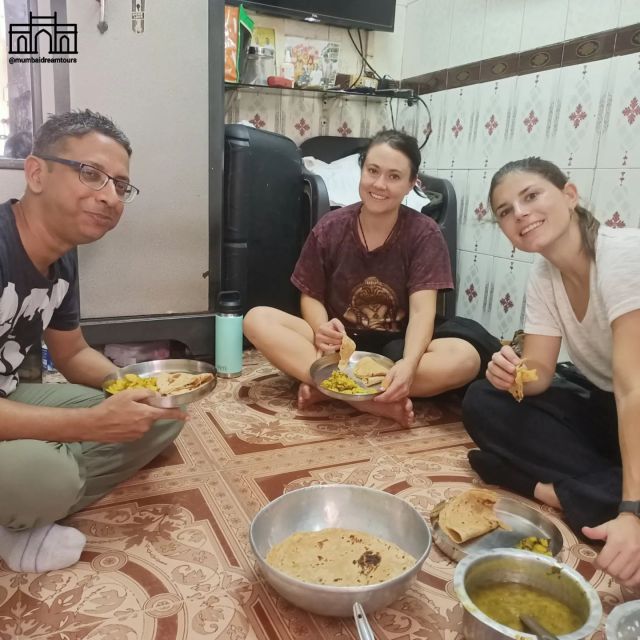
The Dharavi section requires the most thought. Founded in 1882 during British rule, Dharavi is now a densely built part of Mumbai located near the center of India’s financial capital. It is commonly called a slum, but that single word leaves out much of what you will see.
The tour presents Dharavi as a place of homes, schools, hospitals, markets, workshops, and family businesses. Small spaces are used with considerable ingenuity. Leather work, pottery, soap making, bakeries, color dyeing, plastic recycling, and the reuse of vegetable oil cans are all included in the route.
That focus matters. If you visit only to look at poverty, you will miss the wider story. Dharavi also represents work, trade, skill, faith, and community life. The guide’s own connection to the area is especially important here. Since the guide lives in Dharavi, the visit can offer a point of view based on daily life rather than a distant outsider’s description.
At the same time, do not expect a polished attraction. You will be walking through small alleys and residential areas. Homes are close to workshops, and ordinary life continues around you. That can make the experience more immediate, but it also means you must behave as you would in someone else’s neighborhood.
Ask yourself what kind of sightseeing feels right to you. If you want only grand buildings and easy photo opportunities, this tour may be uncomfortable. If you want to understand how people create businesses and communities in limited space, Dharavi is the most valuable stop.
Leather, Pottery, Soap, and Color Dye

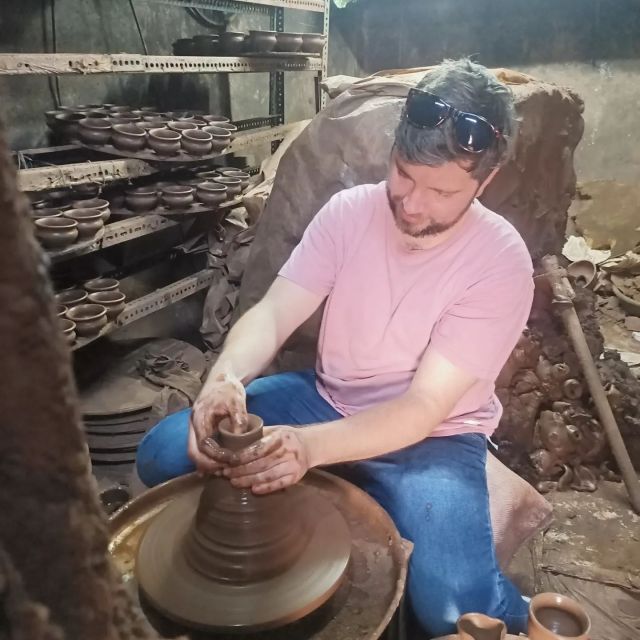
The industrial visits give Dharavi its practical character. Leather industries show how production can take place in compact work areas. Pottery offers a different kind of craft, with shaping and firing tied to a long tradition of local making.
Soap production and color dyeing reveal the range of work found close together. These are not isolated cultural demonstrations prepared for an audience. They are examples of how people earn a living within a crowded urban district.
The bakery visit adds another everyday detail. Food production, workshop labor, recycling, and retail all sit within the same community. You may come away with a more useful understanding of Dharavi by noticing this mix rather than trying to rank one stop as the main attraction.
The same applies to plastic recycling and the reuse of vegetable oil cans. Those activities point to the practical side of city life, where materials are recovered, altered, and sold again. In a place with limited room, waste can become a source of income.
The information provided does not promise that every workshop will be operating at full capacity during every visit. Working conditions change, and the tour is taking place in a real neighborhood. Still, the range of industries listed gives you a clear idea of the experience: this is a walk through workspaces, not a single craft presentation.
Same line, a different day out:
- From Delhi: Taj Mahal and Agra Day Tour by Super-fast Train
★ 4.9 · 270 reviews - Taj Mahal Day Trip From Delhi By Superfast Train With 5* Meal
★ 5.0 · 136 reviews - Private Day Tour of Taj Mahal by India’s Fastest Train or Car – All Inclusive
★ 5.0 · 131 reviews - Taj Mahal Tour with High-Speed Train Experience – All Inclusive
★ 5.0 · 130 reviews
Homes, Schools, Hospitals, and the Dharavi Market

The tour also includes homes, schools, hospitals, and the local market. These stops help balance the industrial side of Dharavi. You are not seeing only where goods are made. You are seeing the places that support a community.
The market is likely to be one of the most useful places for understanding daily needs. It connects local production with buying and selling, and it shows how a neighborhood serves its own residents. Pay attention to the narrow streets and the way shops and homes fit together.
The inclusion of schools and hospitals is also significant. It pushes the visit beyond the familiar film image of Dharavi and toward a fuller picture of a functioning district. The area has challenges, but it is not empty space waiting for redevelopment. People live, work, study, worship, and shop there now.
One unusual detail included in the route is a Muslim community making a shrine for Hindus. That example suggests how religious life can cross community lines in a tightly connected neighborhood. It is a small detail, but it may be more revealing than a broad statement about tolerance.
A respectful attitude is essential. Do not assume that every person wants to be photographed or that every doorway is part of the tour. Stay with the guide, listen before entering any area, and remember that the people around you are going about their lives.
The Place Where Slumdog Millionaire Was Shot
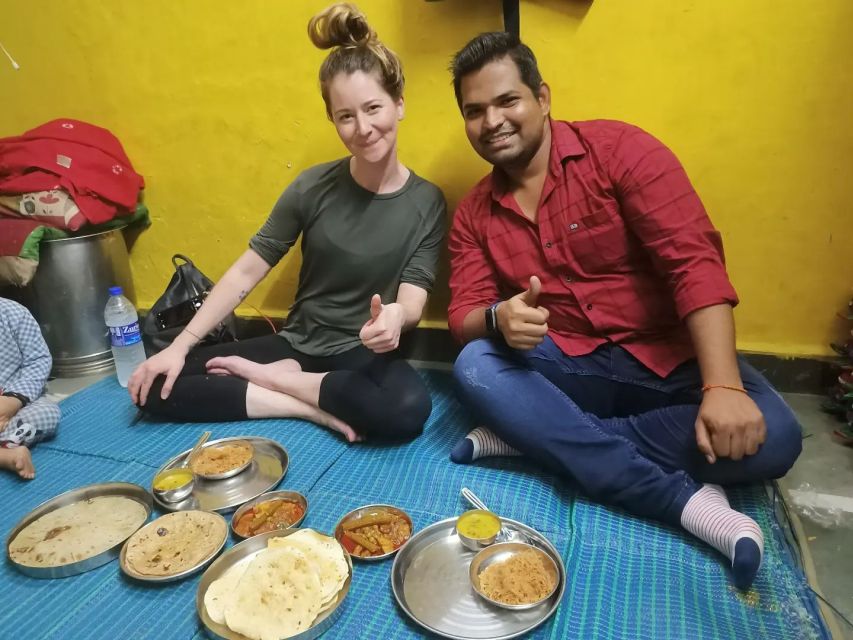
The tour includes a place connected with Slumdog Millionaire. That reference may help you recognize the setting, but it should not become the main reason for visiting Dharavi.
Film has shaped many outside impressions of the area. The tour’s broader list of homes, businesses, schools, hospitals, and markets gives you a chance to see beyond a movie location. I would treat the film connection as one piece of context, then focus on the real people and work around it.
This is also where the guide’s local connection matters most. A resident guide can help keep the area from being reduced to scenery. The experience is stronger when you listen to how the neighborhood functions rather than searching for a familiar movie image.
Is $34 a Fair Price?
At $34 per person, this tour offers a lot of variety for one booking. You receive an English-speaking guide, the dabbawala experience, Dhobi Ghat, a local train ride, and a guided visit through Dharavi’s workplaces and public spaces.
The value comes from the combination. A Dhobi Ghat visit alone would be shorter and more limited. A Dharavi walk alone could give you more time in one community, but this package adds Mumbai’s rail system and the dabbawalas, creating a broader picture of how the city works.
The tradeoff is pace. With several major themes in one tour, some stops may be introductions rather than long visits. If you prefer slow photography, extended conversations, or one neighborhood explored in great detail, a more focused experience may suit you better.
The price is particularly reasonable for someone with limited time in Mumbai who wants to connect several important sights. It is less compelling for someone who has already arranged separate visits to the dabbawalas, Dhobi Ghat, and Dharavi.
Who Should Book This Mumbai Tour?

I would recommend it to curious first-time visitors, people interested in cities and public transport, and anyone who wants to see working Mumbai rather than only famous architecture. It also suits readers who want a guided introduction to Dharavi but prefer a wider route than a slum visit alone.
The tour may appeal to photographers, though you should keep your camera use respectful and follow the guide’s directions. It is also a good match for anyone interested in logistics, small businesses, recycling, craft production, and the way dense communities organize daily life.
Pregnant women are specifically listed as not suitable for this experience. Comfortable shoes are essential, and alcohol and drugs are not allowed. The tour is offered in English.
The experience is not ideal for those seeking a relaxed, air-conditioned sightseeing loop or an attraction designed purely for easy photos. The local train, narrow alleys, workplaces, and residential setting require attention and flexibility.
You can reserve now and pay later, which helps if your Mumbai plans are still taking shape. Cancellation is allowed up to 24 hours before the experience for a full refund.
Should You Book the Dabbawala, Dhobi Ghat, and Dharavi Tour?
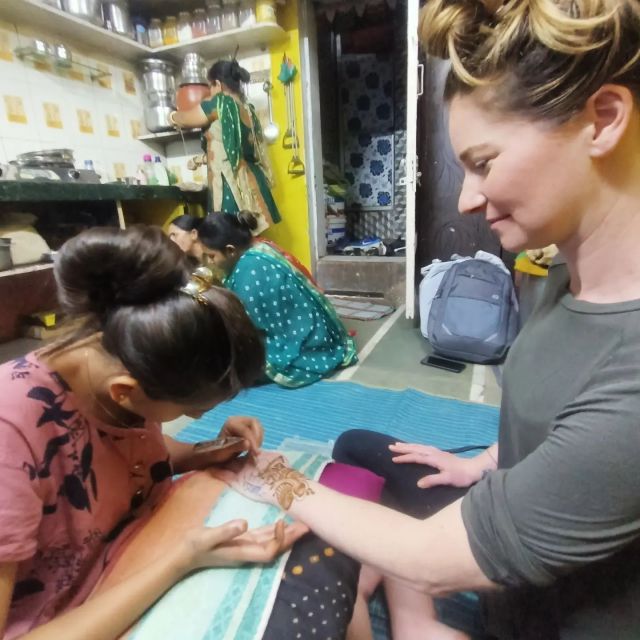
Book this tour if you want a compact, people-focused introduction to Mumbai’s working life. The strongest combination is the dabbawala system, the open-air laundry at Dhobi Ghat, and Dharavi’s range of small industries, all tied together by a local train ride.
I especially like the guide’s connection to Dharavi. It does not remove the need for respectful behavior, but it gives the community portion a more personal foundation. The tour earns its $34 price by linking several parts of Mumbai that are often visited separately.
Skip it if you want a predictable sightseeing route with little walking or if you are uncomfortable entering a lived-in neighborhood. For everyone else, bring comfortable shoes, keep an open mind, and pay attention to the people whose work keeps Mumbai moving.
FAQ
What does the tour include?
It includes a dabbawala experience, Dhobi Ghat, a local train ride, and a guided visit to Dharavi. The Dharavi portion includes leather industries, pottery, soap making, a bakery, color dyeing, recycling, a market, homes, schools, hospitals, and narrow alleys.
Is the tour conducted in English?
Yes. English is the listed tour language.
Will I visit the place where Slumdog Millionaire was shot?
Yes. The experience includes a place in Dharavi where Slumdog Millionaire was filmed.
Is the tour suitable for pregnant women?
No. Pregnant women are listed as not suitable for this experience.
What should I bring?
Bring comfortable shoes. The tour includes a local train ride and visits through working areas and small lanes.
Can I cancel for a full refund?
Yes. You can cancel up to 24 hours in advance for a full refund.
Just added for rail travellers in India
- Taj Mahal & Agra Tour From Delhi By Fastest Train★ 5.0 · 7 reviews
- Private Tajmahal Day Tour From New Delhi By Gatiman Express Train★ 5.0 · 14 reviews
- Taj Mahal and Agra Fort Tour By Fastest Train – Gatiman Express★ 5.0 · 2 reviews
- Taj Mahal and Agra Tour By India’s Fastest Train★ 5.0 · 2 reviews
- From Delhi: Taj Mahal & Agra Tour by Gatimaan Express Train★ 5.0 · 11 reviews
- Taj Mahal Tour by Gatimaan Express Train With Lunch At 5 Star Hotel★ 5.0 · 8 reviews
- Taj Mahal & Agra Fort Visit by Gatimaan Express Train★ 5.0 · 4 reviews
- Enchanting Taj Mahal Same Day Tour by Gatiman Train From Delhi★ 5.0 · 4 reviews
Mumbai Train Journeys, compared.
Dabbawala, Dhobi Ghat & Dharavi slum Tour with Local Train Ride
Read our review →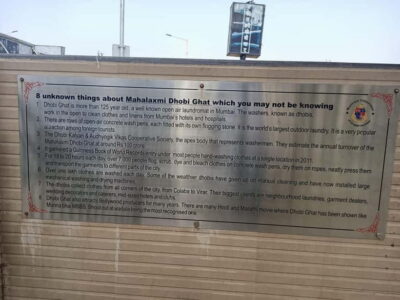
Primmum Mumbai Sightseeing With Local Train Ride Experience
Read our review →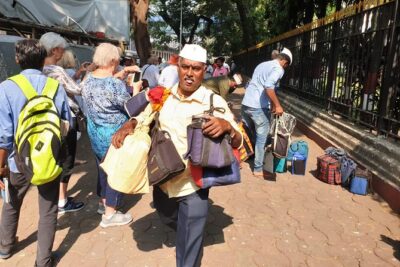
Mumbai City + Dabbawala aka Lunchbox + Train Ride Tour – The Unfeigned Mumbai.
Read our review →
Dhobi Ghat Tour with Dharavi and Train Ride Options
Read our review →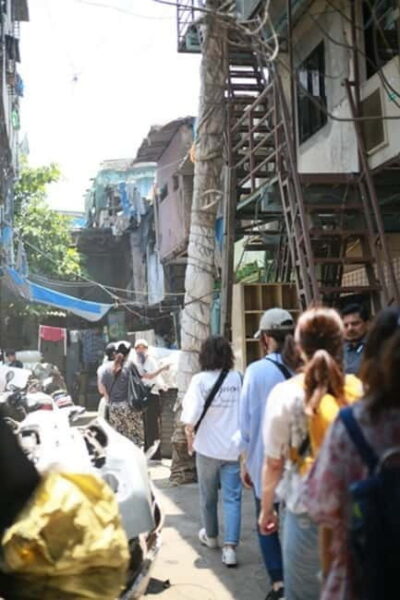
Dhobi Ghat Laundry and Dharavi Slum Tour with Local Train
Read our review →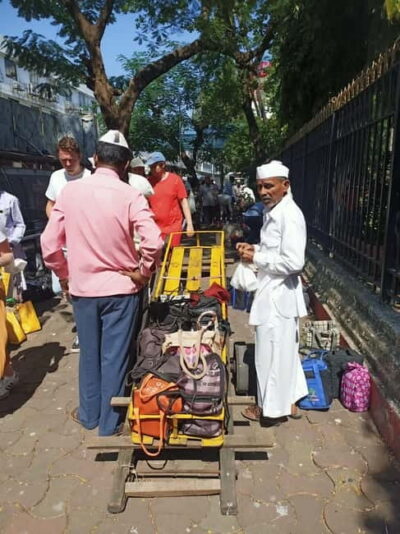
Best Combo Tour: Dabbawalas, Dhobi Ghat and Slum with Train
Read our review →
Mumbai Unseen: Local Train Ride And Sightseeing Tour
Read our review →Browse the lists this tour appears in