
Review · INDIA TRAIN JOURNEYS
Dabbawala, Dhobi Ghat & Dharavi slum Tour with Local Train Ride
Mumbai’s working life is the real star here. You move by local train between Dharavi, Mahalaxmi Dhobi Ghat, and the dabbawala network, then walk through workshops, alleys, homes, and small businesses with a guide who knows the area personally. I like the human scale of the tour, especially the chance to see industry rather than just monuments. I also like that the train ride is part of the experience, not just a way to get around.
The main consideration is that this is a walking tour through a crowded, working residential area. You need comfortable shoes, water, and a respectful attitude about photography and privacy. The tour begins near Churchgate and ends in Dharavi, so you should not plan on returning to the starting point with the group.
Key points at a glance
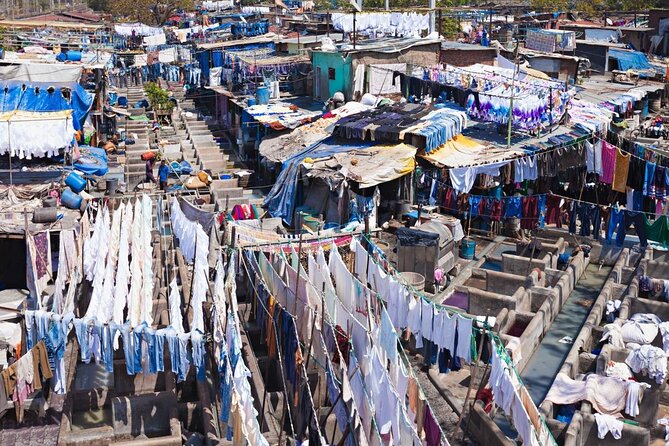
- Dharavi from a resident’s perspective: See leather work, pottery, soap making, bakeries, dyeing, plastic recycling, schools, hospitals, and homes.
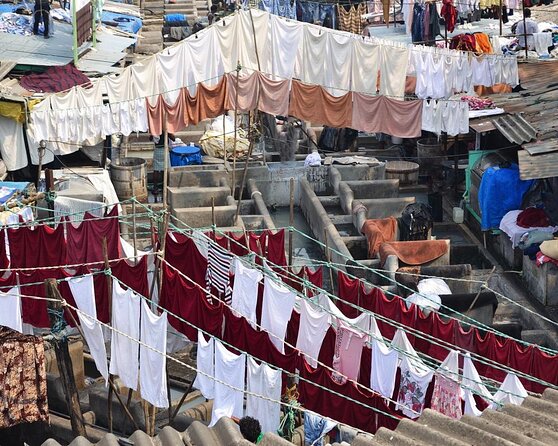
- A working laundry in full view: Mahalaxmi Dhobi Ghat gives you a clear look at Mumbai’s famous open-air washing operation.
- Mumbai by local train: Rail travel connects the stops and adds a practical look at how the city moves.
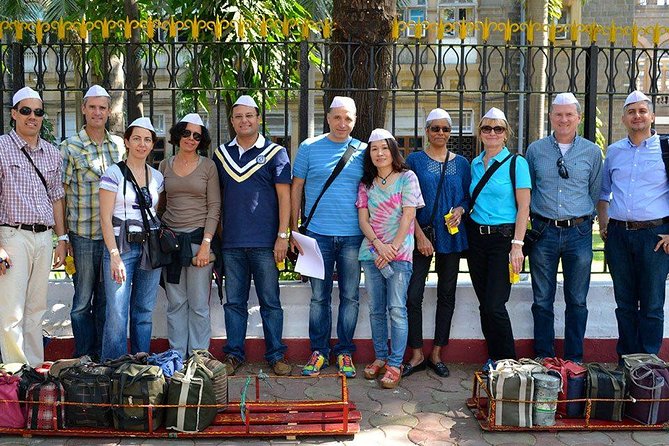
- Small group format: The group is capped at 15 people, which gives you a better chance to ask questions and stay close to your guide.
- Guides with local ties: Guides named in the tour information and feedback include Rakesh, Abhishek, Sagar, Hardik, Dinesh, and Abishek. Guide assignment can vary.
- Strong value at $35.79: Four hours of guiding and train transport makes this a fairly priced way to see parts of Mumbai that are hard to understand on your own.
Why this tour shows you a different Mumbai

This experience is not built around grand buildings or polished attractions. It focuses on the people and systems that keep Mumbai fed, clothed, and working.
That makes it useful for you if you want to understand how a huge city functions day to day. You see small-scale production in Dharavi, the physical labor behind hotel and household laundry at Dhobi Ghat, and the precise lunch delivery system associated with Mumbai’s dabbawalas.
The three themes fit together well. Dharavi shows production and neighborhood life. Dhobi Ghat shows service work on a remarkable scale. The dabbawala stop explains one of the city’s best-known delivery traditions. The local train links all three.
I also appreciate the time frame. Four hours is long enough to give the visit some substance, but short enough to fit into a busy Mumbai schedule. You will not see every corner of Dharavi or spend a full day in any one place. That is the tradeoff. This is an introduction with real access, not an exhaustive study of the neighborhoods.
More Train Journeys in India:
- From Delhi: Taj Mahal & Agra Tour by Gatimaan Express Train
★ 4.8 · 1,041 reviews - Jaipur Day Trip from Delhi by Car or Train – All Inclusive
★ 5.0 · 663 reviews - “Taj Mahal” Tour from Delhi by India’s Fastest Train (Gatiman Express)
★ 5.0 · 298 reviews
Starting near Churchgate and joining the city’s rail system
The meeting point is on Maharshi Karve Road near Churchgate. From there, the tour uses Mumbai’s local train system, with transport by train included in the price.
This matters because the train is part of Mumbai life. It gives you a practical view of the city between stops, and it helps you understand how workers move across long distances. It also makes the tour feel less like a series of isolated attractions.
Train travel can be crowded, and you should pay attention to your guide and group. The supplied information does not promise a reserved carriage or a quiet ride. Think of it as public transport used in the normal way, not a private sightseeing vehicle.
The tour ends at Sai Multispeciality Hospital and Research Centre on 90 Feet Road in Dharavi. That one-way route is worth planning around. If you have a hotel transfer, an afternoon appointment, or another tour afterward, allow yourself extra time after the stated four hours.
Walking through Dharavi’s working neighborhoods
The Dharavi portion lasts about two hours, making it the longest part of the experience. A resident guide leads you through streets and narrow alleys, explaining both the businesses and the homes around you.
The focus is not simply on poverty. You see a place where people live and work, often close together, and where small enterprises support local families and wider commercial networks. The listed subjects include leather industries, pottery, soap production, bakeries, color dyeing, plastic recycling, schools, hospitals, and residential areas.
That range is important. It gives you more than a quick look at cramped housing. You get a picture of an active neighborhood with trade, services, education, and manufacturing. The tour also points out the contrast between small workshops and the dense domestic areas around them.
The alleyways can be tight, and the surroundings may feel intense if you are used to conventional sightseeing. You should follow the guide’s lead and avoid blocking doorways or work areas. This is a place where people are carrying on with ordinary business, not setting up a performance for visitors.
The tour also refers to Dharavi’s connection with the film Slumdog Millionaire. That may interest film fans, but it should not become the main reason to visit. The stronger part of the stop is seeing the neighborhood as a living place rather than as a movie backdrop.
Sagar is one guide specifically praised for having grown up in Dharavi. That sort of personal connection can help explain the area with more warmth and context. One account also describes a visit to Sagar’s family home and a homemade meal, but you should not assume that this is part of every departure. It appears to be a personal addition, not a guaranteed inclusion.
Seeing the open-air laundry at Mahalaxmi Dhobi Ghat
Mahalaxmi Dhobi Ghat is scheduled for about an hour. The site is known for its open-air laundry operation, where dhobis wash clothing connected with Mumbai’s hotels and other customers.
From a visitor’s point of view, the appeal is easy to understand. Laundry is usually hidden behind hotel doors or household walls. Here, the work is visible, physical, and organized across a large outdoor site. Your guide can explain who the dhobis are and how the operation fits into the city’s service economy.
This stop also adds useful balance to Dharavi. At Dharavi, you see many small businesses and production spaces. At Dhobi Ghat, you focus on a single specialized service that has become one of Mumbai’s recognizable working institutions.
The visit is described as a viewing of the laundry operations rather than a hands-on activity. You should expect to observe and listen, not handle clothing or enter every work area. Since this is a functioning workplace, stay aware of where you stand and follow the guide’s instructions.
The Dhobi Ghat stop lasts less time than Dharavi, but it is visually memorable. I would pay close attention to the explanation, not just take photos. The value is in understanding the labor and organization behind what you see.
Same line, a different day out:
- From Delhi: Taj Mahal and Agra Day Tour by Super-fast Train
★ 4.9 · 270 reviews - Taj Mahal Day Trip From Delhi By Superfast Train With 5* Meal
★ 5.0 · 136 reviews - Private Day Tour of Taj Mahal by India’s Fastest Train or Car – All Inclusive
★ 5.0 · 131 reviews - Taj Mahal Tour with High-Speed Train Experience – All Inclusive
★ 5.0 · 130 reviews
Meeting the dabbawala tradition
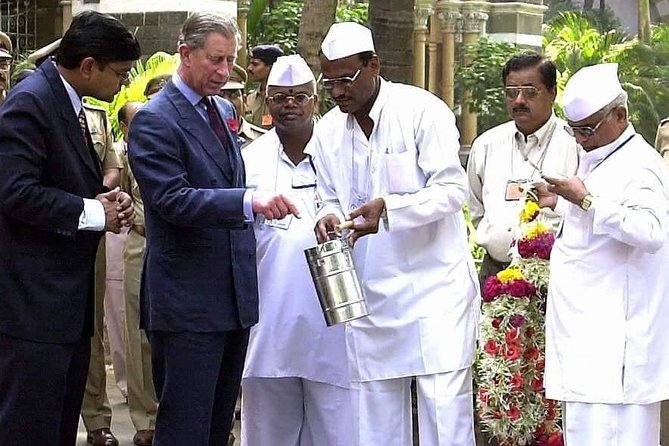
The dabbawala section takes about an hour and includes a dabbawala tribute statue. Your guide explains who the dabbawalas are and how they deliver packed lunches around Mumbai.
This is a useful subject because it connects directly to everyday city life. A dabbawala is not simply a courier in a tourist story. The service is part of the daily routine of many office workers, with lunch containers moving through the city by hand and train.
The tour gives you a chance to see the people and system behind that familiar Mumbai symbol. Depending on the timing and location, the encounter may involve watching the lunch delivery activity and taking photographs, as described in the tour details.
You should keep expectations sensible. The information promises an introduction to the dabbawalas, not a formal workshop or a guaranteed private meeting with a particular worker. The guide’s explanation is likely to be the most useful part, especially if you ask how the system connects with the rail network and the neighborhoods you have just visited.
The dabbawala stop works best when you treat it as part of a larger picture. The local train, Dhobi Ghat, and Dharavi all show different forms of coordination and labor. Together, they make Mumbai’s daily machinery easier to understand.
What the guides add to the experience
Guide quality matters a great deal on a tour like this. The setting is busy, the subject can be sensitive, and the difference between a thoughtful visit and a shallow one often comes down to the person leading it.
Several guide names appear in the tour information, including Rakesh, Abhishek, Sagar, Hardik, Dinesh, and Abishek. You cannot choose one unless the operator confirms that in advance, but the range of feedback points to guides who are friendly, clear in English, and able to answer questions.
Rakesh is repeatedly praised for making the visit comfortable and for explaining local life with humor and care. Abhishek is described as engaging and entertaining. Hardik is noted for being pleasant and well prepared, while Dinesh is praised for helping the group despite difficult weather.
Sagar’s personal connection with Dharavi is a particular strength when he leads. A local guide can explain details that a guide passing through might miss, such as how housing and work fit together or why certain industries developed in the area.
That said, you should not expect the exact same personality or route on every departure. The guide is a major part of the experience, and the quality of your visit will depend partly on who is assigned that day.
A sensitive way to approach Dharavi

A visit to a low-income neighborhood raises a fair question: is it respectful to go?
The answer depends on how you behave and how the visit is led. This tour is strongest when it treats Dharavi as a community and business district, not as a spectacle. The focus on local industry, schools, hospitals, and residents helps create a fuller picture than a simple poverty tour.
You should ask before taking photos of people, especially children or anyone at work. Keep your voice low in residential areas, do not touch personal belongings, and avoid treating homes as scenery. Your guide is there to help you understand where photography is appropriate.
The tour’s small-group limit of 15 people helps. A smaller group is easier to manage in narrow lanes and less disruptive around workshops and homes. It also gives you more space to ask questions without turning the walk into a noisy procession.
If you want a polished, comfortable sightseeing route, this may not suit you. If you want a direct look at urban work and daily life, and you are prepared to behave respectfully, the visit can be meaningful.
Is $35.79 good value?
At $35.79 per person, the price is reasonable for a four-hour guided experience that includes local train transport and three distinct subjects.
You are paying for more than a ride and a photo stop. The guide’s local knowledge, route planning, translation of unfamiliar systems, and help navigating the train all add practical value. Seeing these places independently would be possible in parts, but you would likely miss context and have a harder time understanding what you are looking at.
The price does not include food or drink. Bring water, since the tour involves walking and several hours outdoors. One useful detail from the experience is that homemade food may be offered in a personal family visit with a guide, but that should not be counted on or treated as part of the standard price.
The group cap also improves the value. Fifteen people is not private, but it is more manageable than a large coach group. You can usually stay near the guide and ask questions during the walk.
The main limitation is the short duration. You are getting a carefully selected introduction, not a full day of Mumbai neighborhoods. For most visitors, that is a sensible balance between cost, time, and depth.
Who should book this experience?
I would recommend it to you if you are curious about how Mumbai works beyond its famous sights. It suits people who enjoy walking, public transport, local industries, and conversations about ordinary city life.
It is especially useful early in a Mumbai visit. The train ride and explanations can give you context for the rest of your time in the city. You will begin to notice the relationship between housing, employment, transport, and daily services.
It may be less suitable if you have limited mobility, strongly dislike crowds, or want a relaxed sightseeing schedule. The tour includes walking through small alleys and riding public trains, and the supplied information does not describe special accessibility arrangements.
Wear comfortable shoes and carry water. Since the end point is in Dharavi, plan your next move before you start. A mobile ticket is provided, and confirmation is sent at booking. Most people can participate, but you should raise any specific needs with the operator before paying.
Free cancellation is available if you cancel at least 24 hours before the start time. Changes or cancellations made inside that window are not accepted for a refund.
Should you book the Dharavi, Dhobi Ghat, and dabbawala tour?
Yes, if you want a grounded look at Mumbai’s working life and are ready for a direct, sometimes crowded walk.
The best reasons to book are the resident-led Dharavi visit, the chance to see Mahalaxmi Dhobi Ghat, and the local train connection between the stops. Guides such as Rakesh, Sagar, Abhishek, Hardik, and Dinesh have been singled out for warmth, clear explanations, and personal local insight.
Book it with realistic expectations. You will not see every part of Dharavi, and the dabbawala visit is an introduction rather than a private training session. But for $35.79 and four hours, you get a useful, human view of Mumbai that standard sightseeing rarely provides.
FAQ
How long is the tour?
The tour lasts approximately four hours.
How much does the tour cost?
The listed price is $35.79 per person.
Where does the tour start?
It starts on Maharshi Karve Road near Churchgate in Mumbai, Maharashtra.
Where does the tour end?
The tour ends at Sai Multispeciality Hospital and Research Centre on 90 Feet Road in Dharavi.
Is local train transport included?
Yes. Transport by local train is included.
Is food included?
No. Food and drinks are not included in the tour price.
How large is the group?
The maximum group size is 15 people.
Just added for rail travellers in India
- Mumbai: Dharavi Slum and Dhobi Ghat Tour with Train Ride★ 5.0 · 9 reviews
- Mumbai City + Dabbawala aka Lunchbox + Train Ride Tour – The Unfeigned Mumbai.★ 5.0 · 6 reviews
- Primmum Mumbai Sightseeing With Local Train Ride Experience★ 5.0 · 7 reviews
- Same Day Agra Tour By Gatimaan Express Train from delhi★ 5.0 · 11 reviews
- Taj Mahal and Agra Tour by Superfast Gatimaan Train From Delhi★ 5.0 · 12 reviews
- Delhi to Agra: Delhi to Taj Maha tour by Superfast Train Tour★ 5.0 · 12 reviews
- From Delhi : Taj Mahal full day Agra tour by Gatiman Train★ 5.0 · 23 reviews
- Luxury Taj Mahal by super fast train from Delhi all inclusive★ 5.0 · 62 reviews
India Train Journeys, compared.

Taj Mahal & Agra Tour by Gatimaan Express Train
Read our review →
Jaipur Day Trip from Delhi by Car or Train – All Inclusive
Read our review →
“Taj Mahal” Tour from Delhi by India’s Fastest Train (Gatiman Express)
Read our review →
Taj Mahal Day Trip From Delhi By Superfast Train With 5* Meal
Read our review →
Private Day Tour of Taj Mahal by India’s Fastest Train or Car – All Inclusive
Read our review →
Taj Mahal Tour with High-Speed Train Experience – All Inclusive
Read our review →

Agra-Delhi One Day Trip By India’s Superfast Train
Read our review →Browse the lists this tour appears in