
Review · INDIA TRAIN JOURNEYS
Mumbai City + Dabbawala aka Lunchbox + Train Ride Tour – The Unfeigned Mumbai.
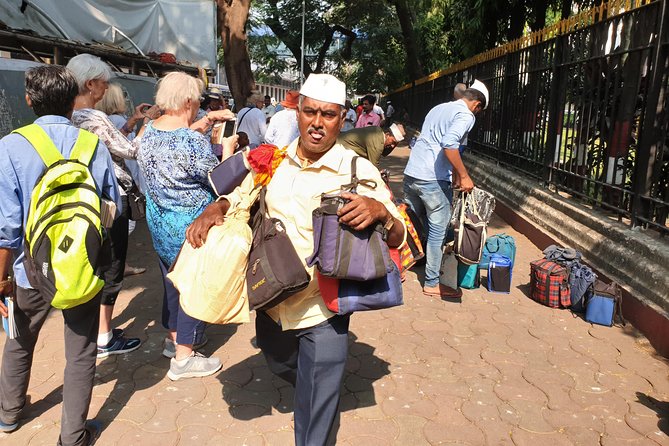
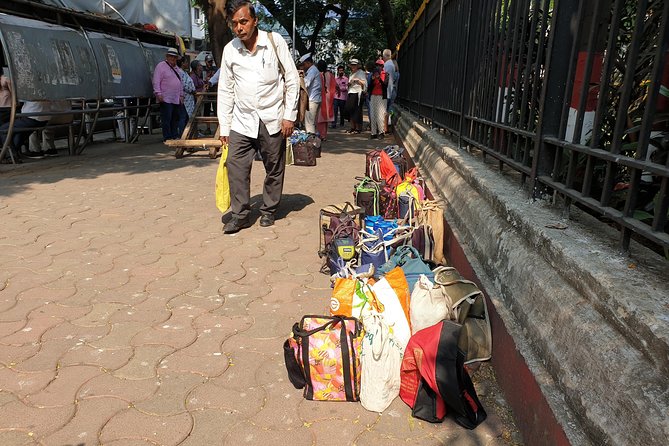
Mumbai’s famous lunchbox couriers offer the most memorable entry point to this tour. At Churchgate Railway Station, you see how dabbawalas help move freshly prepared meals through one of India’s busiest cities, then ride a local train with your guide before visiting laundry workers, Gandhi’s former Mumbai base, seaside viewpoints, and major landmarks.
I like the mix of ordinary Mumbai life and famous sights, and I like that a private guide can adjust explanations to your pace. The included vehicle, train ride, bottled water, tea, and coffee also make a five-hour city introduction easier. The main drawback is a packed schedule: most stops last only 10 to 30 minutes, so you get a useful overview rather than long visits.
Key points to know before booking
- The dabbawala system comes first: Begin at Churchgate and learn about the lunchbox network that carries hot meals across Mumbai.
- You ride a local train: This is not only a sightseeing drive. The train segment gives you a direct look at how people move around the city.
- Dhobi Ghat is a working laundry: You see clothes and linens being washed outdoors, not a staged cultural display.
- Mani Bhavan adds real historical weight: Gandhi used this Mumbai house as his headquarters for about 17 years.
- The route covers major icons: Marine Drive, the Gateway of India, Rajabai Clock Tower, Bombay High Court, and CSMT all fit into the day.
- Lunch is your responsibility: Drinks are included, but the meal itself is not.
Why the dabbawalas make a strong start
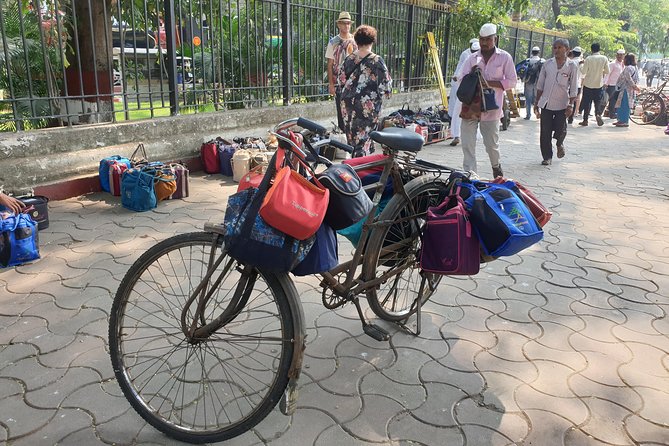
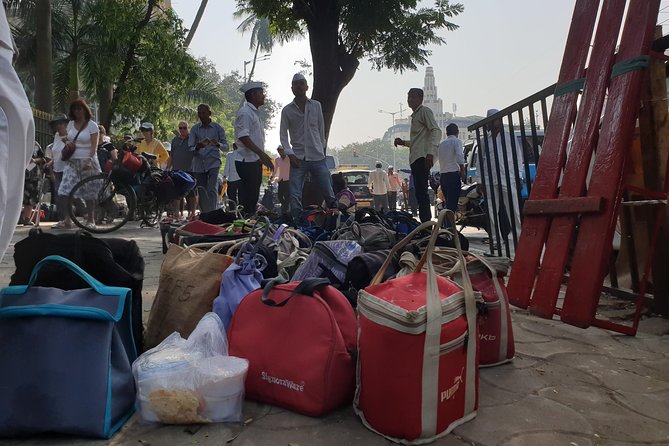
The tour opens at Churchgate Railway Station, where you learn about Mumbai’s dabbawalas, also called tiffin wallahs in older sources. Their job is to collect lunchboxes, move them through the city, deliver hot meals to workers, and return the empty containers later.
You have about 15 minutes here, so do not expect a long workshop or a chance to follow the full delivery chain. Still, this is a smart first stop because the system connects food, homes, offices, trains, and timekeeping. It gives you a practical way to understand Mumbai before the tour moves on to monuments.
The accompanying local train ride is one of the tour’s most useful features. The exact train route and length are not specified, so you should think of it as a short, guided slice of daily transport rather than a dedicated railway excursion. Your guide travels with you, which matters when you are trying to understand the station, the train system, and the city’s rhythm at the same time.
For a visitor with only one day in Mumbai, this can be more revealing than another drive past a landmark. You are not simply looking at Mumbai from an air-conditioned window. You are using one of the city’s main forms of transport.
More Train Journeys in India:
- From Delhi: Taj Mahal & Agra Tour by Gatimaan Express Train
★ 4.8 · 1,041 reviews - Jaipur Day Trip from Delhi by Car or Train – All Inclusive
★ 5.0 · 663 reviews - “Taj Mahal” Tour from Delhi by India’s Fastest Train (Gatiman Express)
★ 5.0 · 298 reviews
Dhobi Ghat: Mumbai’s outdoor laundry
The next working-life stop is Dhobi Ghat at Mahalaxmi. The dhobis wash clothes and linens outdoors, serving Mumbai hotels and hospitals. You get about 15 minutes here, with no admission charge.
The value is in seeing a service that usually remains invisible to hotel guests. Laundry is not presented as an abstract tradition. It is part of the city’s daily system, tied to businesses and institutions that need large volumes of clean linen.
Your time is brief, and the tour does not promise an extended walk through the laundry area. Treat this as an observation stop. Listen carefully to your guide, take in the layout, and ask questions while you have the chance. If you want a long photography session or a detailed look at the work, the schedule may feel tight.
Even so, Dhobi Ghat fits the tour’s main idea well. The dabbawalas show how meals move through Mumbai. The dhobis show how laundry is handled. Both stops focus on people doing essential work, not only on buildings made for sightseeing.
Mani Bhavan and Gandhi’s Mumbai years
Mani Bhavan is the longest scheduled visit, with about 30 minutes inside. Gandhi used this house as his Mumbai headquarters from 1917 to 1934. The mansion belonged to his friend and host Revashankar Jagjeevan Jhaveri.
This stop gives the tour a needed pause. After the train and outdoor working sites, you move into a place linked to Gandhi’s political and personal life in Mumbai. The visit is included, so you do not need to budget a separate admission fee.
I would pay attention to the setting as much as the famous name. Gandhi’s connection here lasted many years, which makes Mani Bhavan more than a quick photo stop. It helps place his work in an actual Mumbai home rather than treating him only as a figure on a memorial.
Thirty minutes is enough for an introduction, but not enough for an extensive museum visit. If Gandhi’s life is your main reason for booking, you may want extra time elsewhere in your trip. On this tour, Mani Bhavan works best as one part of a wider city story.
Hanging Gardens and Kamala Nehru Park
The route then climbs toward Malabar Hill for two short park visits. Hanging Gardens, also called Pherozeshah Mehta Gardens, were first built in 1881. The gardens were constructed over one of Mumbai’s main water reservoirs, with the aim of protecting the water from pollution.
You have about 15 minutes here. That is enough to pause, take in the setting, and hear why the garden occupies this unusual position. It is not a major garden tour, so keep your expectations modest. The stop is mainly about views, fresh air, and city context.
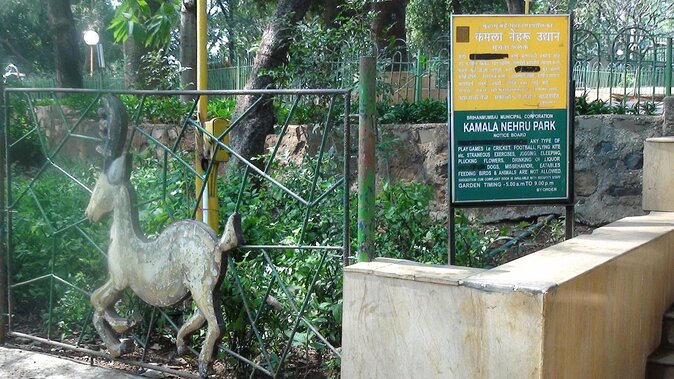
Kamala Nehru Park receives about 10 minutes. It is named after Kamala Nehru, the wife of Jawaharlal Nehru, and is one of Mumbai’s older parks. The familiar shoe structure recalls the nursery rhyme about the old woman who lived in a shoe.
This is a quick, light stop between more serious historical sites. Families may particularly enjoy the shoe feature, while other visitors may see it as a pleasant but short photo break. Since both parks are free to enter, they add variety without adding admission costs.
Same line, a different day out:
- From Delhi: Taj Mahal and Agra Day Tour by Super-fast Train
★ 4.9 · 270 reviews - Taj Mahal Day Trip From Delhi By Superfast Train With 5* Meal
★ 5.0 · 136 reviews - Private Day Tour of Taj Mahal by India’s Fastest Train or Car – All Inclusive
★ 5.0 · 131 reviews - Taj Mahal Tour with High-Speed Train Experience – All Inclusive
★ 5.0 · 130 reviews
Marine Drive and Mumbai’s seafront
Marine Drive receives about 10 minutes. This 3.6-kilometre road and promenade is also known as Netaji Subhash Chandra Bose Road. It is one of the city’s best-known public edges, where the road and waterfront create a broad view across the bay.
Ten minutes is not enough for a leisurely promenade walk. You will likely stop, look, take photographs, and hear a little about the road before moving on. If you want sunset views or a long sit by the water, plan to return independently.
I like the way Marine Drive breaks up the museum and monument visits. Mumbai can feel like a lot of history in a small amount of time, and the sea gives you a visual reset. Just remember that the tour’s short stop is designed for orientation, not for a full waterfront outing.
The Gateway of India and nearby colonial Mumbai
The Gateway of India is scheduled for about 15 minutes, with no separate admission fee. The monument was built in Indo-Saracenic style to mark the landing of King George V and Queen Mary at Apollo Bunder during their 1911 visit to India.
The Gateway is one of Mumbai’s essential landmarks, but its imperial purpose deserves some thought. It is both a striking piece of architecture and a reminder of British rule. Your guide can help connect the monument to the wider story of the city rather than leaving it as a simple background for photographs.
The stop is short, and this area can attract plenty of activity, so stay aware of the group and the meeting point. You will have time to see the monument, but not to spend a long stretch exploring the surrounding waterfront.
The route also passes Rajabai Clock Tower, located within the University of Mumbai. Sir George Gilbert Scott designed the tower in 1878, and its construction was financed by the founder of the Bombay Stock Exchange. The stop is listed at about 10 minutes.
That brief visit is useful for architecture fans. Rajabai Clock Tower brings Victorian Gothic design into the route and helps show the variety of Mumbai’s older public buildings. It is not a separate, extended interior tour, so you should view it as an architectural stop from the route.
The Bombay High Court is also included in the city drive. It was established on August 14, 1862, under the Indian High Courts Act of 1861, and began work with seven judges. The schedule does not give a separate visit length or promise entry inside, so expect to see and discuss the building from outside.
Chhatrapati Shivaji Maharaj Terminus closes the route
The final named stop is Chhatrapati Shivaji Maharaj Terminus, commonly shortened to CSMT or CST. It was once described as the most expensive structure in Mumbai, and its name was changed in 1996 by the Minister of Railways.
You have about 10 minutes here. That is enough to appreciate the grand exterior and hear why the station matters, but not enough for an unhurried architectural study. If railway architecture is a major interest, make a note to return with more time.
Ending at CSMT makes sense after the earlier train and dabbawala sections. The station is not just another old building. It brings together transport, work, architecture, and the city’s long connection with rail travel. In a tour built around how Mumbai functions, it is a fitting final sight.
What the five-hour format really means
The tour lasts about five hours, but the listed stops add up to a tight schedule. Several visits last only 10 or 15 minutes, while Mani Bhavan gets 30 minutes. Travel between locations, the train ride, pickup, and traffic all take part of the day.
That structure works well if you want a first look at Mumbai and prefer someone else to organize the route. It is especially useful if you have only one free day, a short stay, or a limited amount of energy for planning.
It is less suitable if you want to linger. You will not have much spare time at Marine Drive, the Gateway of India, the parks, or CSMT. The tour gives you breadth across the city, not a slow examination of each place.
Pickup is offered from select Mumbai hotels. The experience uses an air-conditioned vehicle and private transportation, which provides a comfortable break between stops. Since the activity is private, only your group participates. That is a meaningful advantage if you prefer to ask questions, adjust your attention, or avoid a large coach group.
Bottled water, coffee, and tea are included, along with all fees and taxes. Lunch is not included, so plan your meal separately. The tour title highlights lunchboxes, but that refers to the dabbawala system, not a provided lunch.
Is $69.99 a fair price?
At $69.99 per person, the value depends on how much you would otherwise pay for convenience. You are getting a private tour, an air-conditioned vehicle, a local train ride with a guide, hotel pickup from selected hotels, drinks, and admission to Mani Bhavan. You also cover a broad stretch of Mumbai in roughly half a day.
For a solo visitor or a couple, the price may feel higher than joining a basic group city tour. The private format is the reason to consider it. You are paying for transport coordination and a guide who stays with your group, not simply for entry to the sights.
For a small group, the value can improve because the experience is priced per person but shared privately. Group discounts are offered, though the exact discount is not provided. Ask about the total price for your party before booking.
The main value is time. You do not have to work out how to connect Churchgate, Dhobi Ghat, Mani Bhavan, Malabar Hill, Marine Drive, the Gateway, the university area, and CSMT on your own. If you are comfortable planning public transport and individual visits, you may prefer to build your own route. If not, this tour packs the city’s contrasts into one manageable outing.
Who should book this Mumbai tour?
I would recommend it to a first-time Mumbai visitor who wants to understand the city beyond postcard sights. The dabbawalas, dhobis, train ride, and Gandhi stop give the tour more substance than a simple drive past monuments.
It also suits anyone with just one day for sightseeing. The highly praised point of this experience is its usefulness as a city introduction when time is limited. You see working Mumbai, colonial Mumbai, Gandhi’s Mumbai, and the seafront without having to arrange separate bookings.
Families and mixed-interest groups may also find the route practical. The shoe structure at Kamala Nehru Park, the train ride, the sea view, and the major monuments offer different kinds of stops. Service animals are allowed, and most travelers can participate.
I would hesitate if your priority is a slow visit to one or two museums, a long railway photography session, or an extended walk along Marine Drive. The schedule is built for coverage. You will see many places, but you must keep moving.
The tour has a rating of 4.8 from six submitted ratings, and its strongest praise centers on making Mumbai possible to see in a single day. That matches the format: it is an organized introduction, not a relaxed neighborhood walk.
Should you book the Unfeigned Mumbai tour?
Book it if you want a private, efficient first look at Mumbai and care about how the city works as much as what it looks like. The dabbawala visit, local train ride, Dhobi Ghat, and Mani Bhavan give the experience a useful human focus, while the Gateway, Marine Drive, and CSMT cover the classic sights.
Skip it if you already know Mumbai well or want long visits at each landmark. For most first-time visitors with limited time, $69.99 is a reasonable price for the transport, guide, private format, and wide route. Just bring realistic expectations: lunch is not included, the day moves quickly, and the best moments come from paying attention to the city’s daily systems.
FAQ
How long is the Mumbai City and Dabbawala tour?
The tour lasts approximately five hours.
Is this a private tour?
Yes. Only your group participates in the activity.
Is hotel pickup available?
Pickup is offered from select Mumbai hotels.
Does the tour include a local train ride?
Yes. You take a local train with your guide.
Is lunch included?
No. Lunch is not included, although bottled water, coffee, and tea are provided.
What transport is included?
The tour includes private transportation in an air-conditioned vehicle, as well as the local train ride.
Can I cancel for a full refund?
Yes, if you cancel at least 24 hours before the experience start time. Cancellations made less than 24 hours in advance are not refundable.
Just added for rail travellers in India
- Mumbai: Dharavi Slum and Dhobi Ghat Tour with Train Ride★ 5.0 · 9 reviews
- Primmum Mumbai Sightseeing With Local Train Ride Experience★ 5.0 · 7 reviews
- Same Day Agra Tour By Gatimaan Express Train from delhi★ 5.0 · 11 reviews
- Taj Mahal and Agra Tour by Superfast Gatimaan Train From Delhi★ 5.0 · 12 reviews
- Delhi to Agra: Delhi to Taj Maha tour by Superfast Train Tour★ 5.0 · 12 reviews
- From Delhi : Taj Mahal full day Agra tour by Gatiman Train★ 5.0 · 23 reviews
- From Delhi: Private Taj Mahal & Agra Day Trip by Car or Rail★ 4.9 · 63 reviews
- Luxury Taj Mahal by super fast train from Delhi all inclusive★ 5.0 · 62 reviews
India Train Journeys, compared.
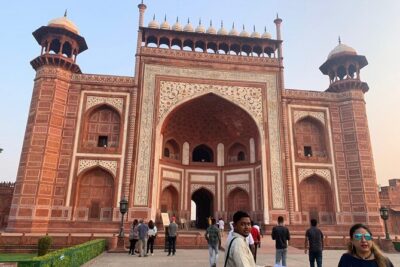
Taj Mahal & Agra Tour by Gatimaan Express Train
Read our review →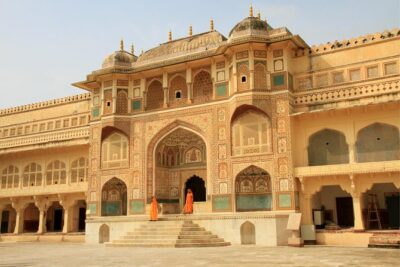
Jaipur Day Trip from Delhi by Car or Train – All Inclusive
Read our review →
“Taj Mahal” Tour from Delhi by India’s Fastest Train (Gatiman Express)
Read our review →
Taj Mahal Day Trip From Delhi By Superfast Train With 5* Meal
Read our review →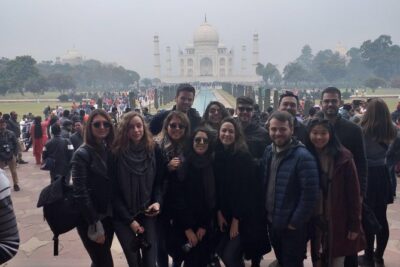
Private Day Tour of Taj Mahal by India’s Fastest Train or Car – All Inclusive
Read our review →
Taj Mahal Tour with High-Speed Train Experience – All Inclusive
Read our review →
Dabbawala, Dhobi Ghat & Dharavi slum Tour with Local Train Ride
Read our review →
Browse the lists this tour appears in