
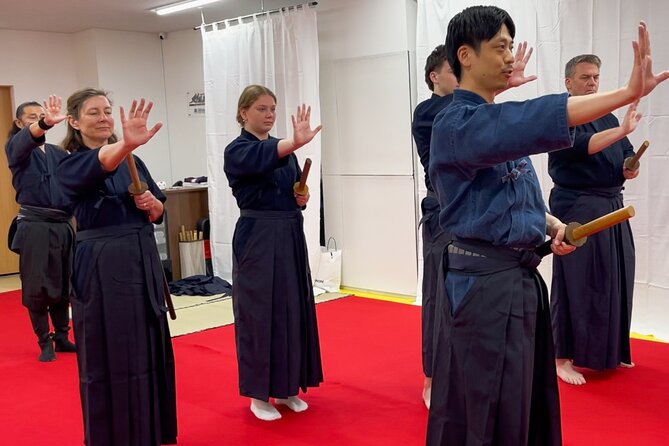
Review · TOKYO TRAIN JOURNEYS
Train in Samurai Swordsmanship and Defeat the Demon in Tokyo
The main appeal here is that you are not sitting through a sword show. You learn a short set of samurai sword techniques, then use them in a staged battle against an Oni, or demon. I like the clear story structure and the small maximum group of six, which should make the lesson feel personal rather than like a theme-park queue.
I also like the thoughtful extras: matcha and Japanese sweets, a samurai photo, and a scroll with your name. The main consideration is that this is a symbolic performance and cultural activity, not combat training or a full martial-arts course. At $84.70, the value depends on how much you want the teaching, costume, story, and keepsakes bundled together.
Key points to know before booking
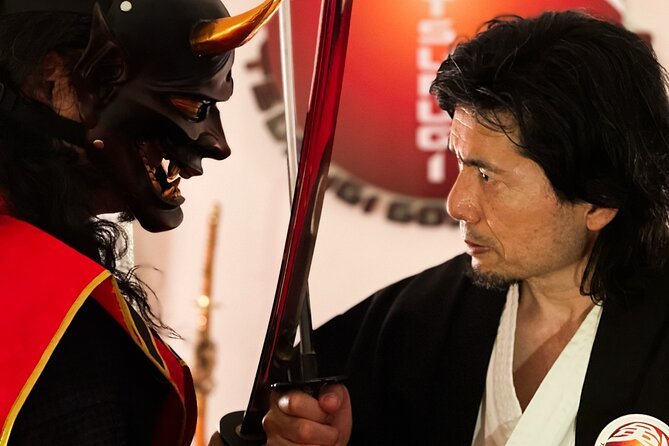
- A four-part samurai story: The session moves from Prologue to Training, Battle, and Recognition, so you always know where you are in the story.
- Small group size: The maximum is six people, a useful advantage for a hands-on lesson.
- English-friendly instruction: The guide explains sword skills, Bushido, and samurai history in English.
- You face an Oni: The final clash represents fear, doubt, and weakness within, not a real fight.
- Useful keepsakes: You receive a named scroll and a commemorative photo in samurai clothing.
- Central Tokyo setting: The meeting point is in Kojimachi, near public transportation, and the activity returns to the same location.
A samurai lesson, not a sword show
This activity begins with a clear promise: you are there to train. The Tsurugi Samurai Squad introduces the setting and the old legends before showing you how a samurai approaches the sword. Expect attention to etiquette, breathing, posture, focus, strikes, and blocks.
That distinction matters. Many sword-themed activities are mainly demonstrations with a quick photo at the end. Here, the live sword demonstration by the instructor is part of the teaching. You watch the movement, then practice the ideas yourself under guidance.
The session uses the legend of Hyakki Yakō, the Night Parade of a Hundred Demons. In Japanese folklore, yokai and oni were said to move through the night in a supernatural procession. This story gives the lesson a reason to exist, rather than making the sword drills feel like disconnected motions.
The tone is theatrical, but the instruction has a practical shape. You learn the outward actions of a samurai while also hearing about Bushido, the values linked with discipline, courage, and conduct. I would approach it as a guided cultural workshop with a fantasy ending, not as a formal school for historical swordsmanship.
More Train Journeys in Tokyo:
- Mt Fuji & Hakone Cruise, Drum Show Bullet Train 1 Day from Tokyo
★ 4.0 · 7,413 reviews - Tokyo Mt Fuji 5th St & Hakone Cruise Bus Tour w/Bullet Train
★ 4.4 · 5,024 reviews - Mt. Fuji and Hakone Day Trip From Tokyo with Bullet Train Option
★ 4.0 · 368 reviews
Entering the Tsurugi Samurai Squad story
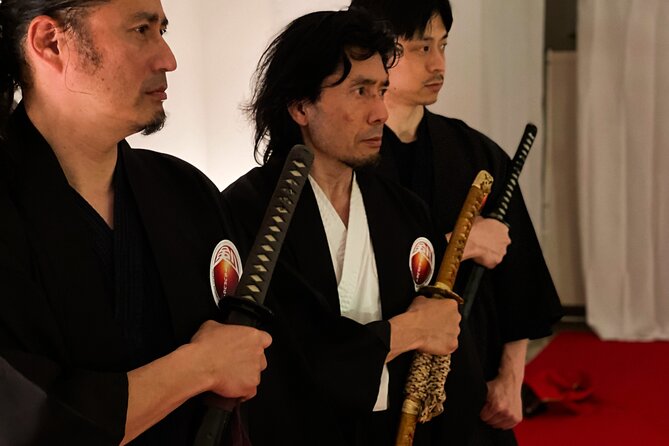
The opening Prologue sets up the central idea. A demon, once sealed away, has returned to the modern world. The Tsurugi Samurai Squad are presented as guardians from the past, and you are invited to join their trial.
This story may sound grand, but it serves a useful purpose. It gives children and adults a simple goal: learn the skills, face the challenge, and complete the task. You are not simply repeating movements because an instructor says so. You are preparing for a final scene.
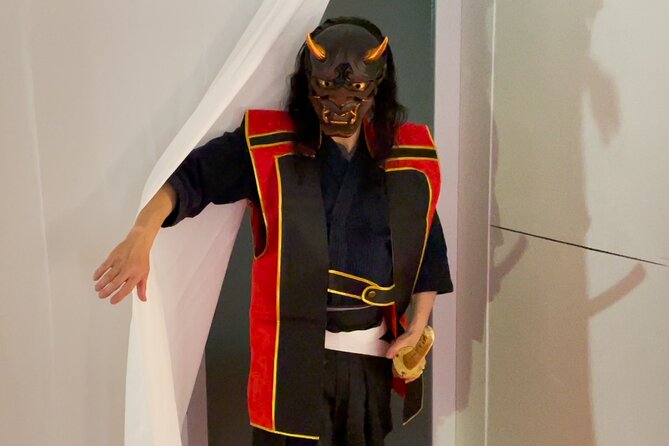
The theme also turns the Oni into more than a costumed enemy. It represents fear, doubt, and personal weakness. That makes the activity suitable for people who want a little reflection mixed into their Tokyo sightseeing. You do not need to take the message solemnly, but the idea gives the finale more weight than a basic staged duel.
The setup should work especially well for families and couples. You can follow the plot together, encourage one another during training, and take photos afterward. Solo visitors can take part too, since the group is small and the activity is designed around each participant joining the squad.
What happens during the two-hour training
The full activity lasts about two hours. The exact balance between explanation, practice, story, and the final battle is not specified, so you should allow the entire period rather than planning another tight appointment immediately afterward.
The training covers several building blocks:
- Samurai etiquette
- Breathing and mental focus
- Correct posture
- Offensive strikes
- Defensive blocks
- The spirit and principles associated with Bushido
The order is important. Posture and breathing may sound less exciting than sword movements, but they help you understand why the activity begins with control. The goal is not to swing quickly. It is to stand, focus, and move with purpose.
The offensive and defensive work then gives you material to use later. One useful feature is that the finale brings those parts together. You are not learning a strike and then forgetting it. You are asked to combine what you practiced in a controlled story scene.
The lesson is fully in English, which removes a major concern for international visitors. You can follow the explanations about technique, samurai history, and Bushido without relying on guesswork. Still, sword instruction involves physical demonstration, so watching closely will be as important as understanding the words.
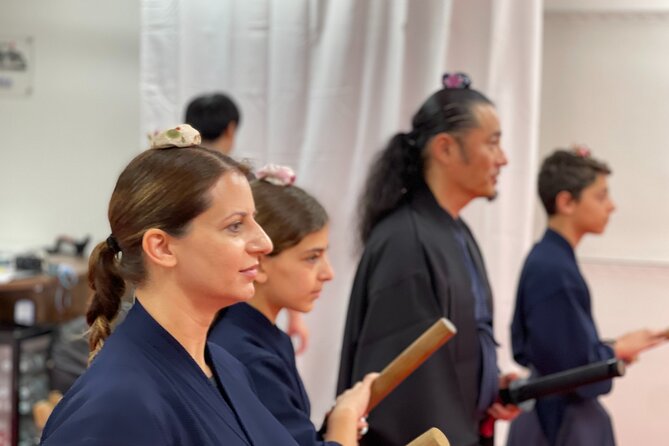
You receive a samurai uniform during the lesson. That adds atmosphere, but it also has a practical benefit: the activity feels like a change of role. You arrive as a visitor in Tokyo and spend the session as a member of the squad. Wear something that allows comfortable movement, since you will be practicing rather than posing for the entire time.
The Oni battle and its limits
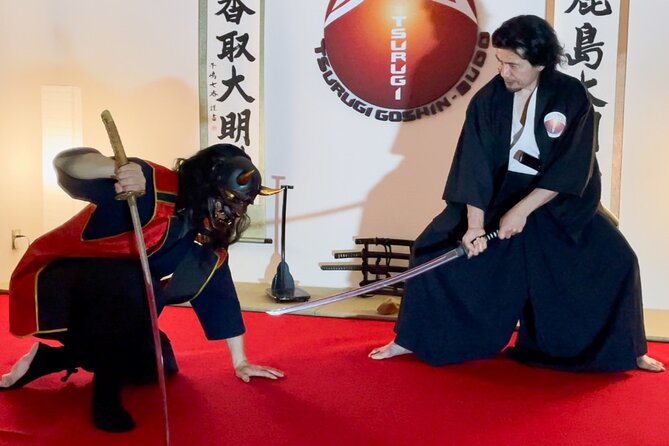
The final Battle chapter is the emotional center of the activity. After training, you confront the Oni in a symbolic clash of light and shadow. The point is to use courage, focus, and the techniques you have learned.
This is not a real fight. The Demon is part of the story, and the action is intended as a dramatic finale. That makes the activity accessible to people who have never held a sword before. You do not need combat experience to take part, and the information provided says most people can participate.
The battle should appeal to anyone who likes a clear payoff. You train, then you get to use the movements in a scene that feels like the conclusion of a short samurai adventure. The structure also helps families: younger participants can understand the mission, while adults can enjoy the cultural background and staged drama.
The symbolic message is worth keeping in mind. Defeating the Oni means facing fear and doubt, not proving physical strength. If you prefer a quiet museum visit or a serious martial-arts seminar, the theatrical side may feel too strong. If you enjoy role-play, costumes, and a story with a beginning and end, it is likely to fit your style.
Same line, a different day out:
- Tokyo: Kamakura & Enoshima Day Tour with Pickup & Train Ride
★ 4.1 · 61 reviews - Snow Monkey Park and Miso Production Tour Bullet Train from Tokyo
★ 4.5 · 26 reviews - Mt Fuji & Hakone Private Tour from Tokyo: Return by Bullet Train
★ 5.0 · 22 reviews - Tokyo:Izu Penisula Train Mt Omuro, Capybara Sightseeing Trip
★ 4.1 · 10 reviews
Matcha, sweets, and the recognition ceremony
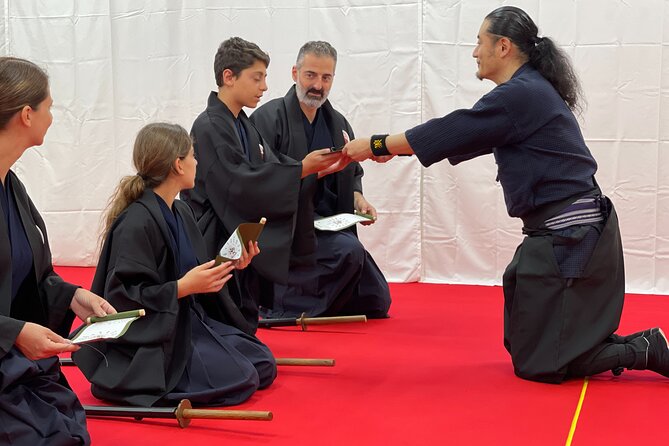
After the battle comes Recognition, the final chapter. You receive a personalized scroll with your name and the techniques you learned. It is a stronger souvenir than a generic ticket or printed photograph because it records your participation in the story.
You also receive authentic matcha tea and Japanese sweets. This is a small detail, but it rounds out the activity nicely. The sword lesson gives you movement and drama; the tea pause adds a calmer Japanese touch. It also gives you a moment to settle after the staged battle.
A commemorative photo with a samurai is included. Since you wear the rented uniform during lessons, the photo becomes part of the experience rather than a separate paid add-on. If you are visiting with family or friends, this is likely to be one of the best shared memories from the session.
The combination of scroll, tea, sweets, and photo helps explain the price. You are paying for instruction, a guided story, costume use, cultural explanation, and physical keepsakes. At $84.70 per person, it is not a cheap filler activity. It makes more sense if you want a complete, prepared event rather than simply a short sword demonstration.
Why the small group matters
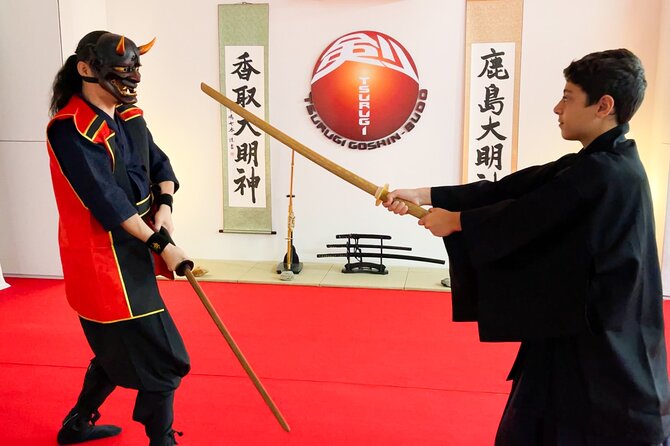
The maximum group size is six. That is one of the strongest practical features of the activity, especially for a hands-on lesson.
A small group can make it easier to see the instructor’s movements and hear the English explanations. It may also give you more room to practice without feeling lost among a crowd. The available information does not promise private instruction, so do not assume you will receive one-to-one coaching, but six people is still a manageable number.
The format suits solo visitors as well as pairs and families. If you come alone, you can join the squad without needing to arrange your own group. If you bring friends or relatives, the battle and photographs give you shared moments to enjoy together.
The activity is also booked, on average, 29 days in advance. That suggests you should plan ahead if this is important to your Tokyo schedule. Confirmation is provided at booking, and the ticket is mobile, so you do not need to print a voucher.
Getting to Kojimachi and planning your time
The meeting point is the International Goshin-Budo Association at MK Kojimachi Building, 4-chome 21, Kojimachi, Chiyoda City, Tokyo 102-0083. It is near public transportation, but private transport is not included.
The activity begins and ends at the same meeting point. That makes planning easier than a tour that drops you in another part of the city. You can pair it with other central Tokyo plans, but allow time to arrive calmly. A sword lesson involving etiquette, costume, and instructions is not a good activity to rush into at the last minute.
There is no air-conditioned vehicle because transportation is not part of the package. That is not a problem for this format, but it is worth noting if you were expecting a hotel pickup or a ride between locations. You make your own way to the building and leave from there after the ceremony.
Toilets are available in the building. The activity is listed as suitable for most participants, but the details do not specify age limits, mobility arrangements, or the exact physical requirements. If someone in your group has a concern about movement or participation, contact the provider before booking rather than guessing.
Is $84.70 a fair price?
The price is reasonable for a two-hour package if you value the full presentation. You get the lesson, an instructor demonstration, English guidance, uniform rental, matcha and sweets, a photo, and a personalized scroll. Comparable value is hard to judge without knowing the cost of other Tokyo sword activities, but this is clearly more than a basic photo opportunity.
The named scroll is especially useful for families and first-time visitors who want a physical reminder of the day. The small group also improves the value, since you are not paying for a large audience experience with only a few minutes of participation.
The price may feel high if your main goal is to watch an authentic sword demonstration. In that case, much of what you pay for here is the chance to participate, dress up, follow the story, and complete the Oni challenge. You should book it for involvement, not for a long historical lecture or advanced martial-arts training.
Free cancellation is available if you cancel at least 24 hours before the local start time. Cancellations or changes made inside that window are not refunded or accepted, so keep that deadline in mind while planning your Tokyo days.
Who will enjoy this most?
I would recommend this activity to:
- Families looking for a structured Tokyo activity with a clear story
- Couples seeking a shared experience and a memorable photograph
- Solo visitors who want a small-group activity in English
- People interested in Bushido, samurai customs, and Japanese folklore
- Beginners who like hands-on learning without needing previous sword experience
- Anyone who enjoys costumes, staged battles, and a souvenir with personal detail
I would be more cautious if you want a serious course in Japanese martial arts. The session introduces techniques and principles, but it lasts only about two hours and ends with a symbolic fantasy battle. It is also not the best match for anyone who dislikes theatrical role-play or prefers to keep sightseeing strictly observational.
Should you book the Oni challenge?
Book it if you want to do more than look at samurai artifacts. The combination of English instruction, a six-person maximum, costume, sword practice, folklore, matcha, and a personalized scroll gives you a complete two-hour event with a strong sense of occasion.
Skip it if you are seeking advanced sword training, a long academic talk, or a low-cost activity with no staged drama. For everyone else, especially families, couples, and solo visitors who enjoy active cultural experiences, this is a well-shaped choice in central Tokyo. The best reason to reserve is simple: you leave not only with a photo, but with a story in which you took part.
FAQ
Where does the samurai sword activity take place?
It takes place at the International Goshin-Budo Association in the MK Kojimachi Building, 4-chome 21, Kojimachi, Chiyoda City, Tokyo 102-0083.
How long does the activity last?
The activity lasts approximately two hours.
Is the activity taught in English?
Yes. English guidance is provided for sword skills, Bushido, and samurai history.
How many people can join?
The activity has a maximum of six participants.
What is included in the price?
The price includes samurai uniform rental during lessons, a live sword demonstration, English guidance, matcha tea and Japanese sweets, a commemorative photo, and a personalized scroll with your name and learned techniques.
Does the activity include transportation?
No. Private transportation and an air-conditioned vehicle are not included. The activity begins and ends at the meeting point.
Can I cancel for a full refund?
Yes, if you cancel at least 24 hours before the experience start time. Cancellations and changes made less than 24 hours before the start time are not accepted for a refund.
Just added for rail travellers in Tokyo
- Tokyo-Izu: Volcano, Ocean& Capybara Cuddle with Izu Scenic Train★ 3.5 · 3 reviews
- Private tour with Yasushi and Yoko – by car, train, on foot★ 5.0 · 2 reviews
- Bullet Train Experience & Mishima Shrine Private Tour from Tokyo★ 5.0 · 9 reviews
- Bullet Train and Mt. Fuji Famous Food Tour★ 5.0 · 4 reviews
- Mt Fuji & Hakone Private Tour from Tokyo: Return by Bullet Train★ 5.0 · 22 reviews
- 3-Day Private Tokyo and Nagano: Snow Monkeys, Tsukiji Market and Bullet Train★ 5.0 · 2 reviews
- Tokyo:Izu Penisula Train Mt Omuro, Capybara Sightseeing Trip★ 4.1 · 10 reviews
- Tokyo: Kamakura & Enoshima Day Tour with Pickup & Train Ride★ 4.1 · 61 reviews
Tokyo Train Journeys, compared.
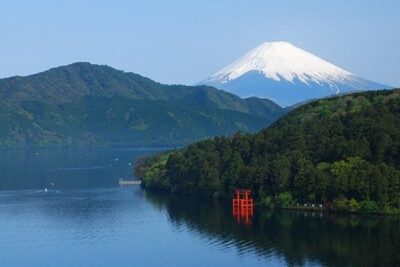
Mt Fuji & Hakone Cruise, Drum Show Bullet Train 1 Day from Tokyo
Read our review →
Tokyo Mt Fuji 5th St & Hakone Cruise Bus Tour w/Bullet Train
Read our review →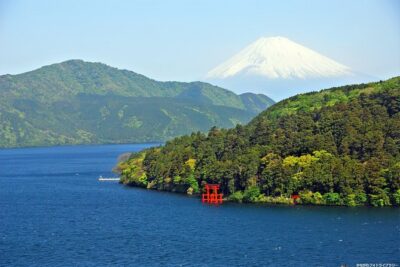
Mt. Fuji and Hakone Day Trip From Tokyo with Bullet Train Option
Read our review →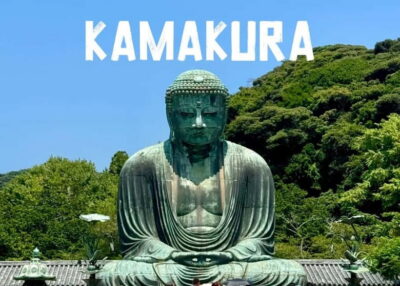
Kamakura & Enoshima Day Tour with Pickup & Train Ride
Read our review →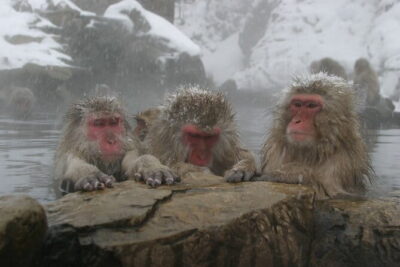
Snow Monkey Park and Miso Production Tour Bullet Train from Tokyo
Read our review →
Mt Fuji & Hakone Private Tour from Tokyo: Return by Bullet Train
Read our review →
Izu Penisula Train Mt Omuro, Capybara Sightseeing Trip
Read our review →
Bullet Train Experience & Mishima Shrine Private Tour from Tokyo
Read our review →Browse the lists this tour appears in