
Review · CANADA TRAIN JOURNEYS
Whistler Train Wreck, Suspension Bridge & Hidden Waterfall Adventure
Whistler’s Train Wreck is not a museum piece behind a rope. It is a line of mangled railway boxcars sitting among cedar trees, glacial water, and bright graffiti. The unusual mix makes this a memorable two-hour outing, especially if you want more than ski-resort scenery.
I like the small maximum of 10 people, which gives your guide room to answer questions and adjust the pace. I also like the tidy route: a rainforest trail, the train wreck, the Cheakamus River, and a suspension bridge, all from a central Whistler meeting point. The main drawback is that this is still a hike, not a stroll. Uneven ground and a bridge crossing mean you need sturdy enclosed shoes and moderate fitness.
Key points to know before you book
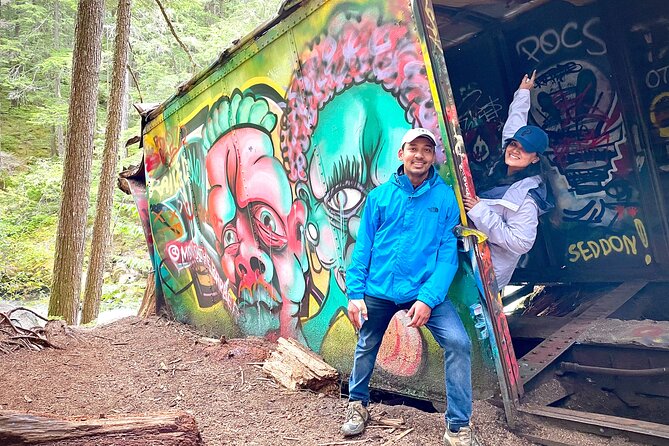
- The boxcars carry layers of graffiti: Local artists have turned the wreckage into an outdoor art stop beneath tall cedar trees.
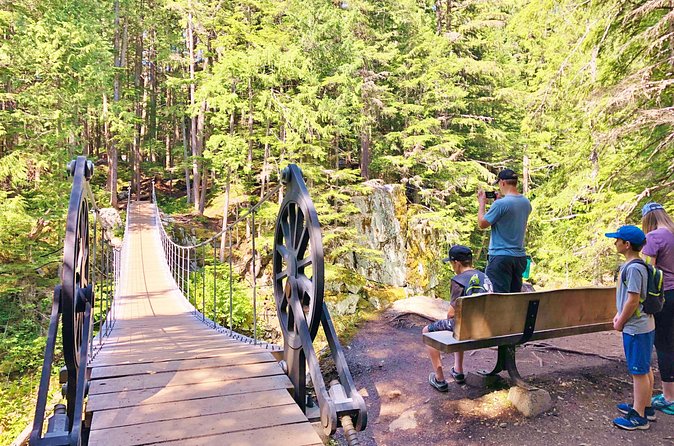
- You cross the Cheakamus Suspension Bridge: The turquoise river sits below as it runs through narrow canyons and past waterfalls.
- The tour lasts about two hours: Plan for roughly one hour at the Train Wreck Trail and one hour around the river and bridge.
- Ryan may be your guide: He is praised for clear local information, practical help, and a warm approach.
- The group is capped at 10 people: This suits visitors who prefer a more personal outing than a large coach tour.
- You meet at 9:30 a.m.: The tour starts and ends at the Gondola Transit Exchange in Whistler.
Why the Train Wreck is such an unusual Whistler stop
Many Whistler outings focus on peaks, lifts, and polished resort facilities. This walk offers something less tidy and more curious: old railway boxcars left behind after a crash in the 1950s.
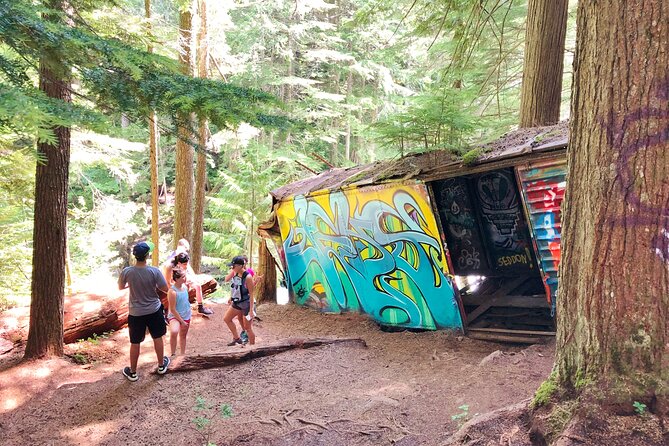
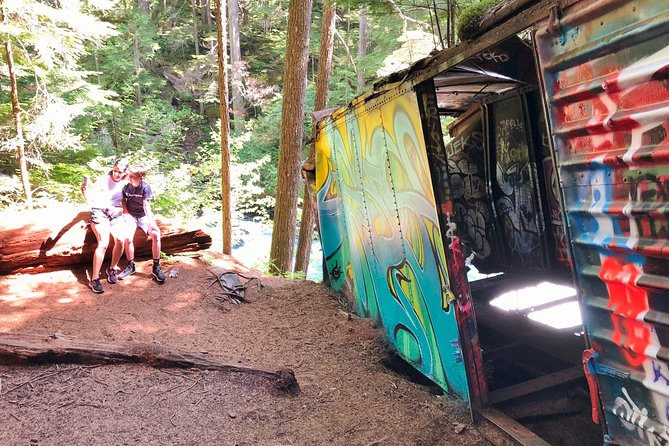
The wrecked cars sit in a temperate rainforest, where tall cedar trees and mountain water create a strong contrast with the painted metal. The graffiti gives the site a changing outdoor-art feel, while the rusted cars keep the place grounded in its past. You are not simply looking at old rail equipment. You are seeing how a forgotten industrial remnant has become part of the local setting.
The appeal is visual, but the setting also gives the guide something useful to explain. Ryan, one of the named guides associated with this experience, is praised for his local information and his willingness to help. That matters here because the boxcars are more interesting when you understand why they remain, how the site has changed, and how the forest has grown around them.
You will spend about an hour on the Train Wreck Trail. That is enough time to explore without making the visit feel like an all-day hike. Still, the exact amount of walking can feel significant if you rarely hike. The route crosses undulating terrain, so expect slopes and irregular footing rather than a smooth urban path.
More Train Journeys in Canada:
- Niagara Parks: Power Pass + Falls Incline Railway
★ 4.7 · 164 reviews - Bicyle Tour on Historical Kettle Valley Railway from Myra Canyon to Penticton
★ 5.0 · 62 reviews - Guided Bike Tour on Historical Kettle Valley Railway at Myra Canyon & Wine Tour
★ 5.0 · 19 reviews
Walking through the temperate rainforest
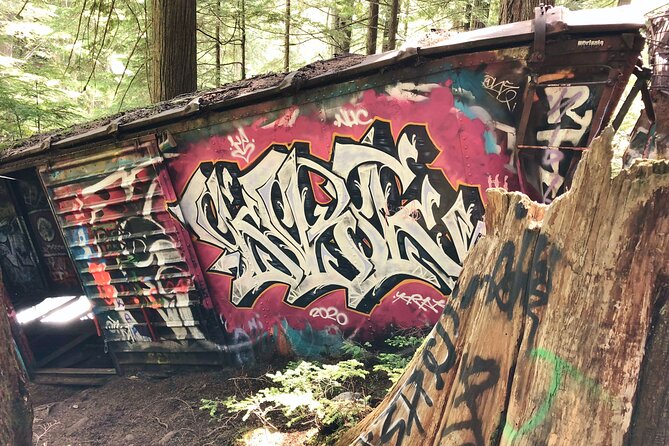
The forest is not just scenery between the meeting point and the wreck. It sets the tone for the whole outing.
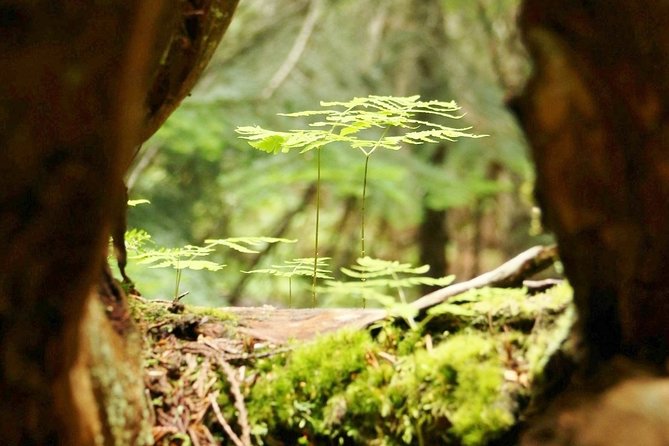
You move through a temperate rainforest before reaching the boxcars, with cedar trees overhead and the suggestion of glacial water below. This type of setting makes the graffiti more striking. Bright paint on battered railway metal catches your eye against the greens and browns of the forest.
I like this part because it gives the experience a sense of place without requiring a full-day excursion. You get a short forest walk, a bit of local character, and a clear destination. The guide can also make the route more meaningful by pointing out what you are seeing along the way, rather than leaving you to guess why this patch of woodland matters.
The practical point is footwear. The operator requires sturdy enclosed shoes, and that is sensible advice. Sandals and smooth-soled casual shoes would not be a good match for an uneven trail. You should also be comfortable walking over changing ground for the duration of the outing.
This is not presented as a strenuous mountain climb, but it does require moderate physical fitness. If you can manage a two-hour walk on undulating terrain, you are likely looking at the right level. If you need a fully level path or frequent seating, this outing may be frustrating.
Seeing the graffiti-covered railway boxcars
The Train Wreck is the first major stop, and the boxcars are the visual centerpiece. They are mangled remnants from a 1950s railway crash, now marked with layers of local graffiti.
The art changes the mood of the site. Old railway cars can feel bleak or forgotten, but the painted surfaces give them energy. At the same time, the forest keeps the scene from feeling like a city art wall. You have metal, paint, cedar trees, and glacial water in one compact area.
This is a good stop for photographers, though the tour information does not promise a particular photo location or lighting condition. The guide’s role is especially useful here because a short explanation can help you look past the obvious colorful paint. The point is not only that the cars are covered in graffiti. It is that they have become an informal part of Whistler’s outdoor culture.
The experience does not include a long period for wandering independently. One hour is allocated to this stop, so you should expect a guided visit rather than unlimited time at every boxcar. That is a fair trade for a two-hour schedule, particularly if you want to combine the wreck with the river and bridge.
From railway wreckage to the Cheakamus River
The second half shifts from human-made objects to flowing water. The Cheakamus River is described as a glacial stream moving through narrow canyons and past waterfalls.
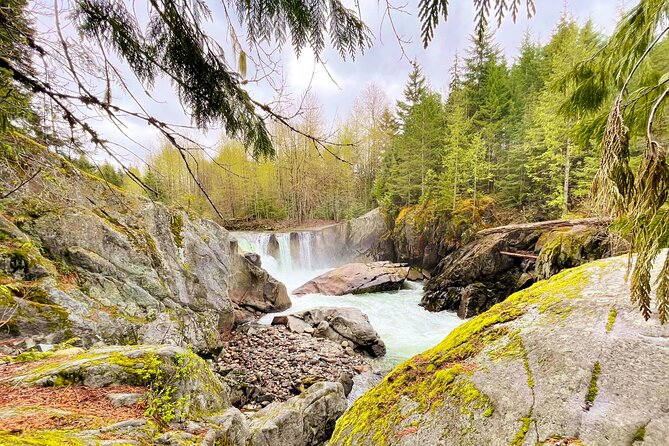
From above, the turquoise water provides the clearest visual contrast to the Train Wreck. The boxcars are painted and angular. The river is open, moving, and shaped by the rock around it. In a short tour, this change of setting keeps the outing from feeling one-note.
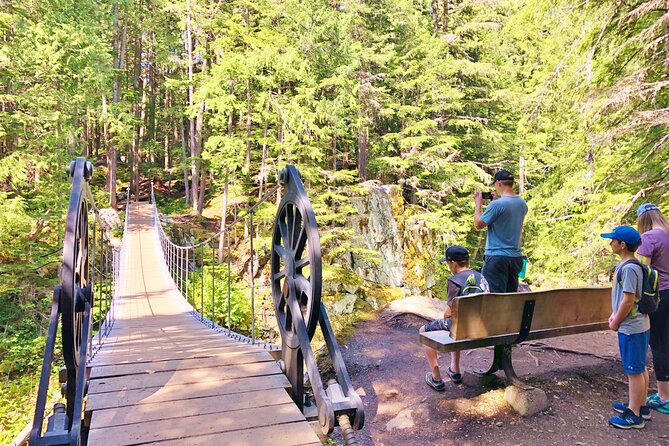
You will spend about an hour at the Cheakamus River area, including the suspension bridge. The bridge offers views down toward the water, with the river running through the canyon below. The route also includes views of waterfalls, though the supplied details do not promise a separate waterfall viewpoint or a walk directly to a particular cascade. I would book this for the river and bridge experience first, with the waterfalls as part of the scenery rather than the sole reason to go.
The bridge is beautifully constructed, according to the tour description, but you should still be comfortable crossing a suspended structure above the river. If heights make you uneasy, this is worth considering before booking. The tour does not state that the bridge can be skipped or bypassed, so ask the provider if that is important to you.
Same line, a different day out:
- Old Quebec Classique Walking Tour with Funicular
★ 5.0 · 1,317 reviews - Quebec City: Old Quebec Classic Walking Tour with Funicular
★ 4.9 · 695 reviews - Private Walking Tour of Old Quebec with Funicular
★ 5.0 · 238 reviews - Shore Excursion: Private Walking Tour with Funicular
★ 5.0 · 31 reviews
What the two-hour schedule really gives you
Two hours is a useful length for a morning activity in Whistler. You start at 9:30 a.m. and return to the same meeting point, so the experience has a clear beginning and end without taking over the day.
The schedule divides the outing into two roughly equal sections:
- About one hour on the Whistler Train Wreck Trail
- About one hour at the Cheakamus River and Suspension Bridge
That division gives you variety. You are not spending the entire morning on a single attraction, and you do not need to commit to a full-day hike. If you have other plans in Whistler, this timing leaves room for lunch or another activity afterward, though you should allow extra time beyond the stated two hours if you prefer not to schedule things tightly.
The central meeting point is the Gondola Transit Exchange in Whistler. This is practical for anyone already staying in the resort area or using public transportation. The activity ends back there as well, which removes the need to arrange a separate return point.
Because the tour is offered in English, you should expect guiding and explanations in English. A mobile ticket is provided, which is convenient for keeping the booking details on your phone.
Small-group guiding and the value of Ryan’s approach
A group limit of 10 is one of the better features of this experience. A small group can move more naturally on a forest trail, and you have a better chance of asking questions without competing with a crowd.
The feedback about Ryan is especially specific. He is described as helpful, well-informed, and generous with his time. One person had the tour to themselves and appreciated being able to explore with him at a personal pace. That does not mean every departure will be private, but it shows the small-group format can feel very personal when demand is light.
A good guide adds value here because neither stop is simply a landmark to photograph. At the Train Wreck, context helps explain the old boxcars and the graffiti. At the river, guidance helps you notice the water, canyon, bridge, and waterfalls as parts of one setting.
The listed price is $116.44 per person. That is not a bargain-priced walk, so value depends on what you want from the morning. You are paying for a guided small-group experience, admission to the included stops, local interpretation, and a planned route that combines two different Whistler sights. If you only want to see the boxcars and are comfortable finding your own way, the price may feel high. If you prefer a guide, a fixed meeting point, and a compact outing with both forest and river scenery, the cost is easier to justify.
Who should book this experience
I would recommend this outing to you if you want a short activity with a strong sense of place and something a little different from standard resort sightseeing.
It suits:
- Visitors with a free morning in Whistler
- People who enjoy outdoor art and unusual historic remnants
- Hikers comfortable with moderate, uneven walking
- Small groups and solo visitors who want guide access
- Visitors interested in forest, river, bridge, and waterfall scenery in one trip
- Anyone who prefers a two-hour activity rather than a full-day excursion
It may not suit you if you want a fully accessible, level route, dislike suspension bridges, or expect a dedicated waterfall hike. The supplied information confirms service animals are allowed and that the activity is near public transportation, but it does not provide details about wheelchair access, exact trail length, washrooms, or food and drink. Ask the operator about those needs before paying.
The tour is also weather dependent. Poor weather can lead to a different date or a full refund. That policy is useful in Whistler, where outdoor conditions can affect trail comfort and bridge views.
Booking timing, cancellation, and practical planning
This experience is booked an average of 34 days ahead, which suggests you should not leave it until the last day of a short Whistler visit if the date matters to you. The maximum group size is 10, and a small outing can fill sooner than a large sightseeing bus.
You can cancel at least 24 hours before the start time for a full refund. Changes or cancellations made less than 24 hours before the 9:30 a.m. start are not accepted for a refund. If the provider cancels because of poor weather or because the minimum number of participants is not reached, you are offered another date or experience, or a full refund.
Wear enclosed shoes with solid soles. Plan for a hike over undulating terrain, not a casual walk from one paved viewpoint to another. Bring only what you are comfortable carrying for two hours, since the information provided does not mention storage or transport for large bags.
Should you book the Train Wreck and Suspension Bridge tour?
Book it if you want a compact, guided introduction to two distinctive Whistler settings: graffiti-covered railway boxcars in a cedar forest and turquoise glacial water below a suspension bridge.
The strongest reasons to choose it are the small group, the unusual Train Wreck stop, and the chance to ask a guide such as Ryan about the area as you walk. The main reasons to hesitate are the price, the moderate walking requirement, and the fact that the waterfall portion is described as scenic river views rather than a clearly defined waterfall hike.
For an active morning that feels more personal than a large organized outing, I think it is a sensible choice. Wear proper shoes, keep your schedule flexible for weather, and book ahead if you have only a few days in Whistler.
FAQ
Where does the tour start?
The tour starts at the Gondola Transit Exchange in Whistler, British Columbia.
What time does the activity begin?
The scheduled start time is 9:30 a.m.
Where does the tour finish?
The activity ends back at the Gondola Transit Exchange, the same place where it begins.
How long does the experience last?
The experience lasts approximately two hours.
How large is the group?
The activity has a maximum of 10 participants.
What should I wear?
You must wear sturdy enclosed footwear. You should also be prepared to walk or hike over undulating terrain and have a moderate level of physical fitness.
Is the tour offered in English?
Yes. The experience is offered in English.
Can I cancel for a full refund?
Yes, if you cancel at least 24 hours before the scheduled start time. Cancellations or changes made less than 24 hours before the start are not refunded. If poor weather or an insufficient number of participants causes the provider to cancel, you are offered another date or experience, or a full refund.
Just added for rail travellers in Canada
- 6-Day Rocky Mountaineer Train Tour, From Vancouver to Rockies★ 4.5 · 10 reviews
- 5-Day Rocky Mountaineer Train Tour, From Vancouver to Rockies★ 4.5 · 8 reviews
- Quebec City Scenic Walking Tour with 1 Funicular Ride★ 4.5 · 7 reviews
- Guided Bike Tour on Historical Kettle Valley Railway at Myra Canyon & Wine Tour★ 5.0 · 19 reviews
- Quebec City Private Walking Tour with Funicular Ride★ 4.8 · 10 reviews
- Exporail, the Canadian Railway Museum★ 4.2 · 5 reviews
- Shore Excursion: Private Walking Tour with Funicular★ 5.0 · 31 reviews
- Bicyle Tour on Historical Kettle Valley Railway from Myra Canyon to Penticton★ 5.0 · 62 reviews
Canada Train Journeys, compared.
Old Quebec Classique Walking Tour with Funicular
Read our review →
Private Walking Tour of Old Quebec with Funicular
Read our review →
Niagara Parks: Power Pass + Falls Incline Railway
Read our review →
Bicyle Tour on Historical Kettle Valley Railway from Myra Canyon to Penticton
Read our review →
Shore Excursion: Private Walking Tour with Funicular
Read our review →
Guided Bike Tour on Historical Kettle Valley Railway at Myra Canyon & Wine Tour
Read our review →
Browse the lists this tour appears in