Review · TRAIN JOURNEYS
From Sarajevo: Višegrad, Andrićgrad, Šargan Train, Drvengrad
Višegrad’s graceful Ottoman bridge is the star of this cross-border day trip, but the real pleasure is the changing scenery between Sarajevo and Serbia. You’ll walk across the Mehmed Paša Sokolović Bridge, then ride a historic mountain railway and explore two very different stone and timber creations.
I like the small groups, limited to seven people, and the guides’ personal knowledge of Bosnia’s recent past. Guides such as Senad, Amir, Vedad, and Enis are praised for clear history, good driving, and thoughtful conversation. I also like the variety: bridge, monastery, train, film village, and mountain views in one outing. The drawback is simple: 12 hours is a long day, with several hours in the vehicle and extra charges for the train and Drvengrad.
Key points to know before booking
- Višegrad’s UNESCO bridge is the emotional center: Walk across the 16th-century Ottoman crossing made famous by Ivo Andrić.
- The Šargan Eight is the best activity: This narrow-gauge train winds through Serbia’s hills on one of Europe’s last operating lines of its type.
- You cross an international border: Bring your passport and allow time for border checks between Bosnia and Herzegovina and Serbia.
- The tour is scenic but demanding: You get a full day of sights, though some of it is spent on winding roads in a car or minivan.
- The price is not fully all-inclusive: The $84 fee covers transport and guiding, but the train costs about €10 and Drvengrad costs €3.
- The guide shapes the day: Expect English commentary, historical context, and, depending on your guide, personal stories about Sarajevo and the war years.
Why this Sarajevo day trip feels different
Most first excursions from Sarajevo head toward Mostar. This one takes you east, through the Romanija Mountains, toward Višegrad and the Serbian border. The route gives you a look at a quieter part of Bosnia and Herzegovina, then adds a short visit to western Serbia.
That change of direction matters. You are not simply checking off a famous town. You are watching the scenery shift from Sarajevo’s mountain setting to the Drina River, then across the border toward Mokra Gora. The day also places literature, Ottoman architecture, Orthodox tradition, railway history, and modern film culture side by side.
The tour works best if you enjoy context as much as photographs. A good guide can explain the complicated political and religious story of the region without reducing it to a few easy labels. Several guides, including Amir, Vedad, Senad, and Samir, have been praised for giving this background in a patient and personal way.
You should also set your expectations correctly. This is not a relaxed village outing with long free periods. It is a packed circuit with fixed stops, border formalities, and a lot of driving. You will see a great deal, but you will not linger everywhere.
More Train Journeys in the world:
- Mt Fuji & Hakone Cruise, Drum Show Bullet Train 1 Day from Tokyo
★ 4.0 · 7,413 reviews - Montserrat & Cogwheel Train, Gourmet Wine Tasting & Tapas/Lunch
★ 5.0 · 6,290 reviews - From Milan: Lake Como Cruise, St. Moritz & Bernina Red Train
★ 4.6 · 5,648 reviews
The drive through the Romanija Mountains
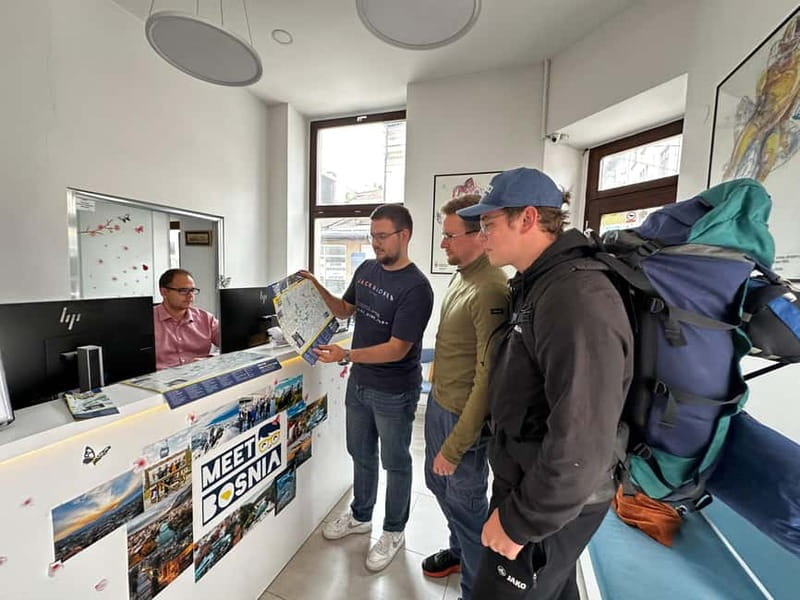
Pickup is from your Sarajevo hotel, with the usual request to wait in the lobby about 10 minutes before departure. Transport is in an air-conditioned car or minivan, and groups are limited to seven people. That small size is useful on this route because it keeps the vehicle more comfortable and lets you ask questions without speaking over a large crowd.
The first major drive takes roughly two hours. The road passes through the Romanija Mountains, where the scenery is a major part of the day rather than a gap between attractions. Expect forested slopes, open mountain views, and changing views of the valleys below.
The long ride has two sides. I enjoy it because the scenery helps explain the geography of the region. You also have time to talk with the guide, and past guests have particularly valued discussions about Bosnia, Serbia, Yugoslavia, and the war. On the other hand, anyone prone to car fatigue should prepare for a full day seated in a vehicle. One experience included a noisy suspension, though this does not appear to be a general feature of the tour.
A bottle of water is included. Food and drinks are not, so bring snacks or plan to buy something during the day. Lunch at a waterside restaurant is part of the expected flow of the outing, but the meal itself is not included in the price.
Višegrad and the bridge over the Drina
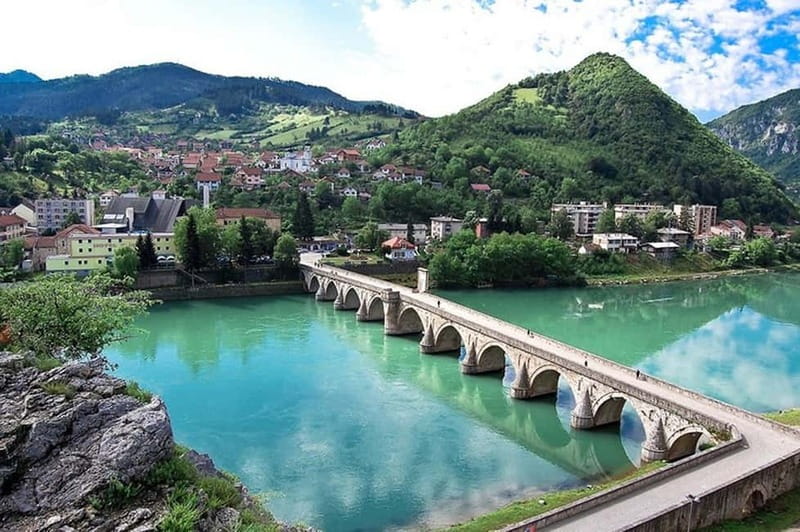
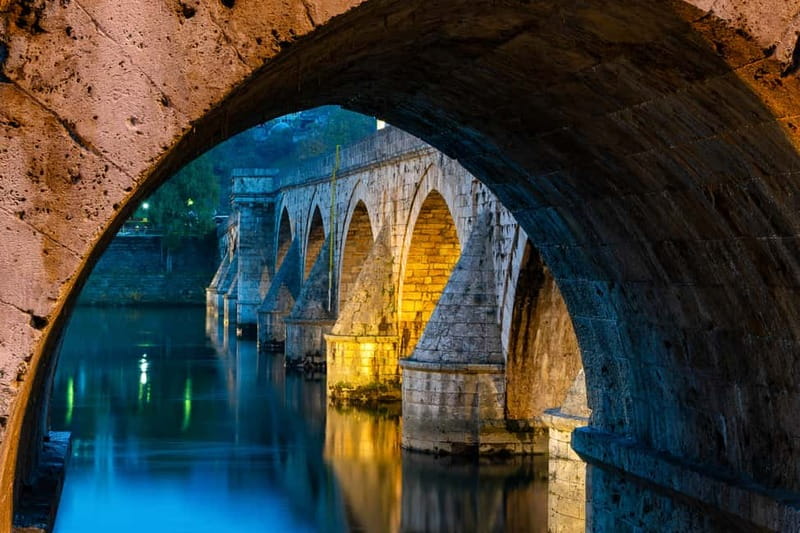
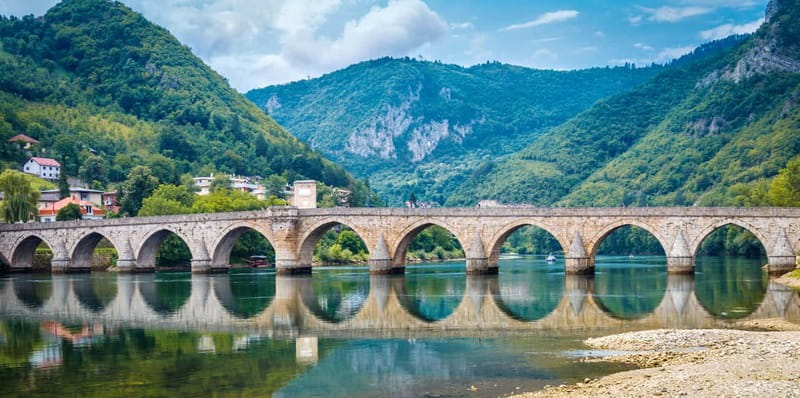
Višegrad is the first major stop, and the bridge is worth the journey on its own. The Mehmed Paša Sokolović Bridge crosses the Drina with a row of stone arches and a broad pedestrian roadway. Built during the Ottoman period, it is linked to Ivo Andrić’s Nobel Prize-winning novel The Bridge on the Drina.
You have time to walk across the bridge and take in the river from the middle of the crossing. This is not a museum visit with a long indoor presentation. The value comes from being in the place itself, seeing the stonework, the river, and the town’s position between hills.
The official stop is fairly brief, listed at about 20 minutes. That is enough for a walk and photographs, but not enough for an unhurried exploration of every corner of Višegrad. If the bridge is your main reason for booking, use the time well and listen closely while the guide explains its role in the town and in Andrić’s work.
The bridge also gives the guide a natural way to discuss the Ottoman period and the mixed cultural story of the region. This is one of the strongest parts of the excursion because the architecture is not presented as an isolated monument. It is tied to literature, local identity, and the Drina itself.
Andrićgrad, Ivo Andrić’s stone town
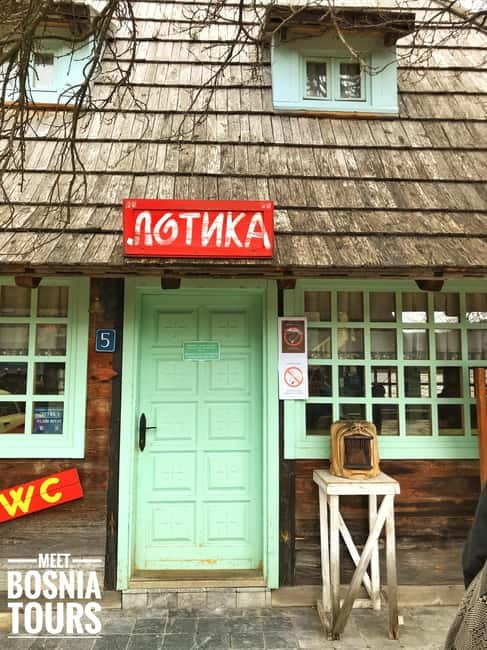
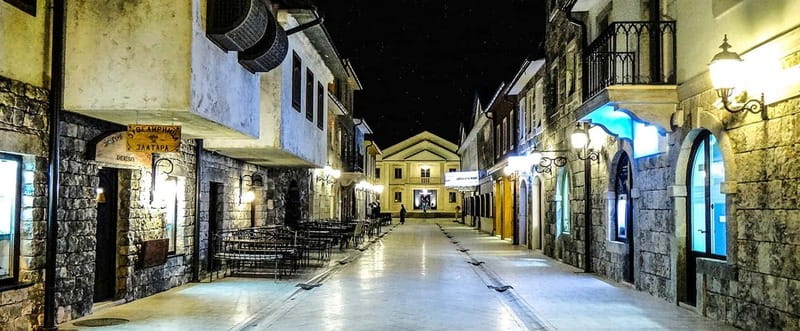
A short distance away, Andrićgrad offers a very different kind of sight. This stone-built complex was created in honor of Ivo Andrić and draws on settings, characters, and architectural ideas connected with his writing.
You will see a mixture of styles rather than one pure historical quarter. The buildings bring together Ottoman, Byzantine, Renaissance, and other references in a compact setting. That blend is intentional, but it can feel more like a designed cultural complex than an old town that developed naturally over centuries.
The usual visit lasts about 30 minutes. That gives you time for a guided walk and photographs, though not a full cultural program. I found this stop most rewarding when the guide explains the link between Andrić, Višegrad, and the surrounding region. Without that explanation, you may simply see attractive stone façades.
If you have watched films by Serbian director Emir Kusturica, the next part of the tour may make more sense to you. If not, you can still enjoy the setting, but some of its cultural references may feel less familiar. One useful point from the experience is that the Serbia portion works better when you know a little about Kusturica’s film world beforehand.
Same line, a different day out:
- Tokyo Mt Fuji 5th St & Hakone Cruise Bus Tour w/Bullet Train
★ 4.4 · 5,024 reviews - From Milan: Bernina Train and St. Moritz Day Trip
★ 4.5 · 4,495 reviews - Christ the Redeemer Entry Ticket by Corcovado Train
★ 4.4 · 4,476 reviews - From Málaga: Ronda+Setenil de las Bodegas with Little Train
★ 4.6 · 4,115 reviews
Dobrun Monastery and the religious story of the route
The stop at Dobrun Monastery is short, around 15 minutes, and usually works as a photo stop. The monastery dates from the 15th century and adds an Orthodox Christian site to a day that has already introduced you to Ottoman architecture and Bosnian Muslim history.
Because the visit is brief, do not expect a long service, museum tour, or detailed examination of the interiors. Its value is in seeing the setting and understanding how different religious traditions appear across this part of Bosnia and Serbia.
This is also one of the places where respectful clothing and quiet behavior make sense. The supplied details do not promise access to every part of the monastery, so your guide will determine how much of the site you can see during the short stop.
Crossing into Serbia at Mokra Gora
The border crossing is an important practical detail, not a footnote. Every person on the tour must pass border security, and you need your passport. Keep it easy to reach rather than buried in your luggage.
Mokra Gora is the gateway to the train and Drvengrad portion of the day. It brings a different feel from Višegrad: more rural, more associated with railway tourism and film, and set among the hills of western Serbia.
The listed visit time is about 40 minutes, but the actual rhythm can depend on train departures and border delays. That is one reason not to plan another fixed activity in Sarajevo for the evening. The return drive can be affected by traffic, waiting at the border, and the train schedule.
Riding the Šargan Eight railway
The Šargan Eight is the tour’s most distinctive activity. This narrow-gauge railway follows a twisting route through the hills, using a looping alignment that gives the line its name. It is one of the last operating narrow-gauge railways in Europe, and the ride offers a welcome break from the road.
The train is scenic rather than fast. You are there for the views, the old railway atmosphere, and the unusual engineering of the route. From the carriage, you may see wooded slopes, valleys, and changing views as the train climbs and turns through the hills.
The train ticket is not included. The stated cost is 1,200 Serbian dinars, or about €10, payable by card or cash. It is subject to availability and seasonal operation. In winter, the ride may be shorter than the schedule shown for warmer months. One winter experience had a ride of about 1 hour and 15 minutes instead of 2 hours and 30 minutes.
That seasonal difference matters. If the train is the main reason you want this tour, check availability before booking and accept that the ride length can change. There is no real substitute within the tour if the train is unavailable. You may still visit the surrounding area, but the railway is the signature activity.
Drvengrad, the timber village
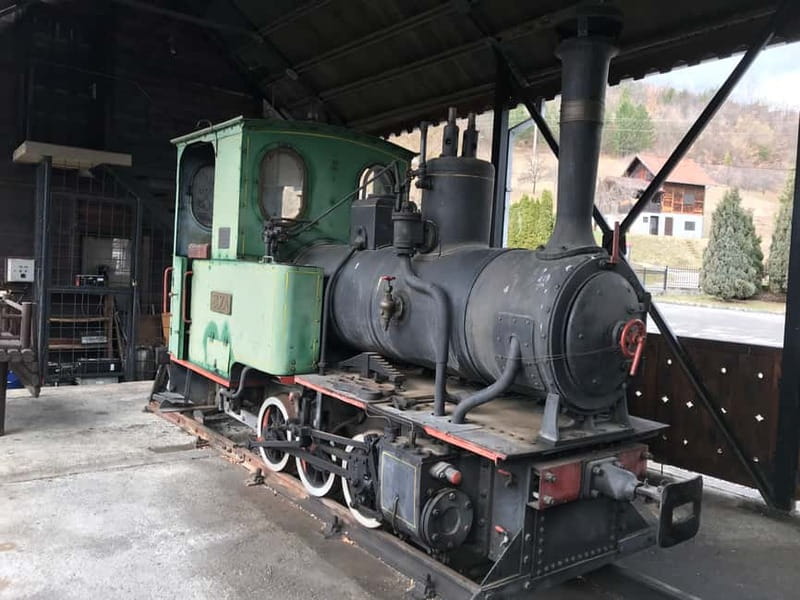
Drvengrad, also called Mećavnik, is a timber village connected with filmmaker Emir Kusturica. It was built as a film setting and now functions as a small cultural and architectural attraction.
The wooden buildings, lanes, and mountain setting give you a pleasant final stop. It feels quite different from Andrićgrad. Andrićgrad is a stone town built around literary identity, while Drvengrad uses timber, film, and rural imagery.
You generally have about 30 minutes for a guided visit, photographs, and a short break. That is enough to understand the design and take in the atmosphere, but it is not a full afternoon at the site. Entry costs €3 per person and is not included.
I would not make Drvengrad the sole reason to book this excursion unless you already have an interest in Kusturica’s work. If you know his films, the village can have more meaning. If you do not, it remains a photogenic stop, but Višegrad and the Šargan Eight are likely to leave a stronger impression.
What $84 really covers
At $84 per person, this is a fair price for a full-day cross-border trip, especially if you are traveling without a car. The fee includes hotel pickup and drop-off, a professional English-speaking guide, a small group, modern air-conditioned transport, bottled water, and luggage storage.
The price does not include the two most obvious paid attractions. Add about €10 for the Šargan Eight and €3 for Drvengrad, plus food and drinks. The extra cost is modest, but the tour description should be read as transport and guiding with add-on admission, not as a fully covered package.
The value is strongest when you consider the route. Driving yourself would mean managing mountain roads, an international border, train timing, and parking while trying to learn about the sites. Here, you can watch the scenery and let the guide handle the route.
The value is weaker if you dislike long drives or want lots of independent time. A private tour would give you more control, but this small-group option keeps the cost down and still avoids the stress of driving across the border.
Guides, history, and the human side of the day
The guides are a major part of the experience. Names associated with especially strong guiding include Senad, Amir, Vedad, Enis, Armina, Samir, and Ismet. You may receive a different guide, but the pattern to look for is clear: a person who can connect the monuments with Bosnia’s recent past and answer questions without turning the day into a lecture.
Some guides share personal memories of growing up during the war. That can make the drive more meaningful, but it also calls for sensitivity. The history of Bosnia, Serbia, and the former Yugoslavia is complicated, and good commentary should leave room for different identities and painful memories.
You may find that the discussion becomes as memorable as the sights. One experience valued time to pray, while another praised the guide for stopping so the group could rest. These small acts matter on a long day.
Who should book this excursion?
Book it if you want to see eastern Bosnia and a slice of western Serbia without arranging transport yourself. It suits you especially well if you enjoy mountain scenery, architecture, railway history, literature, and serious regional context in one day.
It is also a good choice for anyone who has already seen Sarajevo’s main sights and wants a less obvious day out. The bridge at Višegrad gives the tour a clear historical anchor, while the train supplies the most active and memorable part.
Think twice if you want a slow day, extensive time in one town, or a tour centered on food. The schedule is full, the road time is substantial, and the train and Drvengrad require extra payment. You should also confirm that your passport is valid for the border crossing and that the train is operating on your date.
FAQ
How long is the tour from Sarajevo?
The experience lasts about 12 hours, including pickup, the return journey, border formalities, and visits to the sites.
Do I need a passport?
Yes. All visitors must pass border security between Bosnia and Herzegovina and Serbia, and passports are required.
Is the Šargan Eight train ticket included?
No. The train costs about 1,200 Serbian dinars, or €10 per person, payable by card or cash. The ride depends on availability and the season.
Is entry to Drvengrad included?
No. Entrance to Drvengrad costs €3 per person.
What language is the tour conducted in?
The live tour guide speaks English.
How many people are in the group?
The tour is limited to seven participants and uses an air-conditioned car or minivan.
Is food included?
No. Food and drinks are not included, so you should budget separately for lunch and refreshments.
Should you book the Višegrad and Šargan Eight tour?
I would book this trip if you want a wide view of the region rather than a single headline sight. The bridge, Dobrun Monastery, Andrićgrad, Šargan Eight, and Drvengrad give you five different ways to understand the area, and the mountain roads are part of the appeal.
The best reason to go is the combination of Višegrad’s bridge and the Šargan Eight train. Add a strong guide, and the day becomes much more than a border crossing and a string of photo stops.
Just go prepared: passport in hand, comfortable clothes, money for the train and Drvengrad, snacks for the road, and patience for a long day. If that sounds worthwhile, this is one of the more unusual and useful day trips you can make from Sarajevo.
Just added for rail travellers in the world
- Domodossola: Centovalli Train & Valle Vigezzo Museums Ticket★ 4.2 · 5 reviews
- Chinnor: Chiltern Hills Steam Train Ride★ 4.5 · 2 reviews
- Chiang Mai : Cook in Farm, Market tour & Go by a Local Train★ 4.8 · 6 reviews
- Cairns: Cattana Wetlands, Barron Falls & Kuranda Railway★ 4.6 · 7 reviews
- Casablanca to Tangier Guided Day Trip By High-Speed Train★ 3.6 · 10 reviews
- Canela/Gramado: South Wineries, Wine Train, & Italian Park★ 3.2 · 7 reviews
- BKK: Ayutthaya, Maeklong Railway, Damnoen Saduak Floating★ 4.2 · 6 reviews
- Cairo–Luxor Sleeper Train Experience: 2 Days or 1-Day Return★ 5.0 · 4 reviews
Train Journeys, compared.
Mt Fuji & Hakone Cruise, Drum Show Bullet Train 1 Day from Tokyo
Read our review →
Montserrat & Cogwheel Train, Gourmet Wine Tasting & Tapas/Lunch
Read our review →
Lake Como Cruise, St. Moritz & Bernina Red Train
Read our review →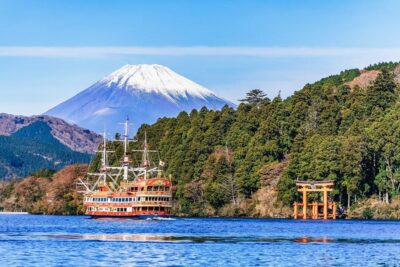
Tokyo Mt Fuji 5th St & Hakone Cruise Bus Tour w/Bullet Train
Read our review →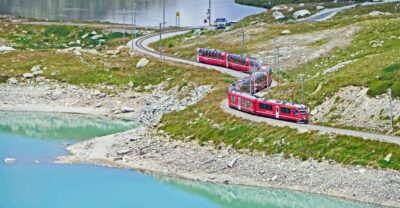
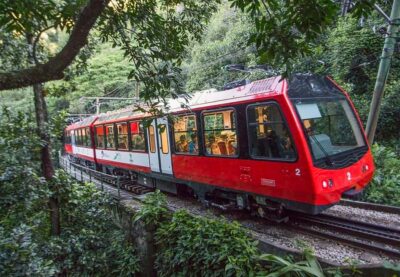
Christ the Redeemer Entry Ticket by Corcovado Train
Read our review →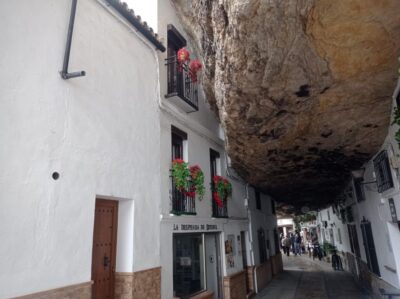
Ronda+Setenil de las Bodegas with Little Train
Read our review →