
Review · AUSTRALIA TRAIN JOURNEYS
Blue Mountains: Zig Zag Railway Heritage Train Ride
The most memorable part of this Blue Mountains outing is the working heritage locomotive. You do not simply sit on a train and watch the scenery slide past. At the terminus, you can watch the engine run around the carriages and prepare for the return journey, a bit of old railway theatre that gives the trip its character. I like the sandstone cliffs, forests, and broad valley views, and I like that the route options let you fit the ride into a shorter or longer visit.
The main drawback is practical rather than scenic: there are no toilets on the train, and wheelchair access is limited. Some routes use stairs at Zig Zag station, so check the service details before booking. The railway is run by a friendly volunteer team, and the recent feedback is especially strong on the staff, the professional operation, and the appeal for returning visitors, including one family outing with an 88-year-old father.
Key points to know before you book
- The locomotive run-around is part of the show: Watch the engine reposition at a terminus instead of treating the trip as a simple train ride.
- You can choose a 45 to 90-minute option: Routes vary, including a Clarence to Bottom Points return service with a stop at Top Points.
- The Blue Mountains scenery changes quickly: Expect sandstone cliffs, forest, and wide valley views from the train and station viewing areas.
- The railway dates from the 1860s: The restored line offers a useful look at old railway engineering as well as a scenic outing.
- Station facilities add time to your visit: You can use the café, souvenir shop, toilets, and photo stops before or after the ride.
- Access needs careful planning: Toilets are at the stations, not onboard, and wheelchair access is not suitable on some services.
Riding an old railway through the Blue Mountains
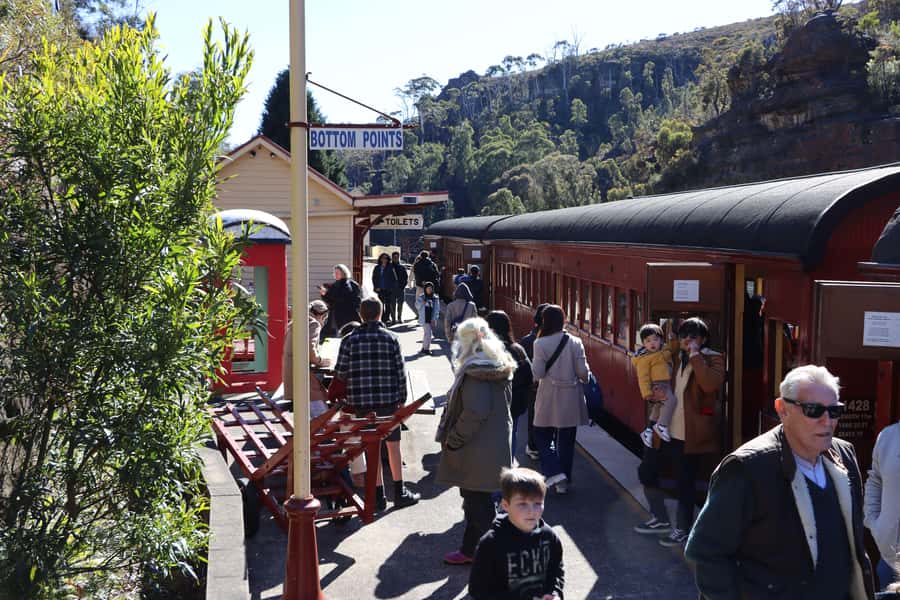
The Zig Zag Railway gives you two outings at once. First, you get a scenic ride through the Blue Mountains. Then you get a close look at how a heritage railway operates, with the locomotive repositioning itself at the end of the line.
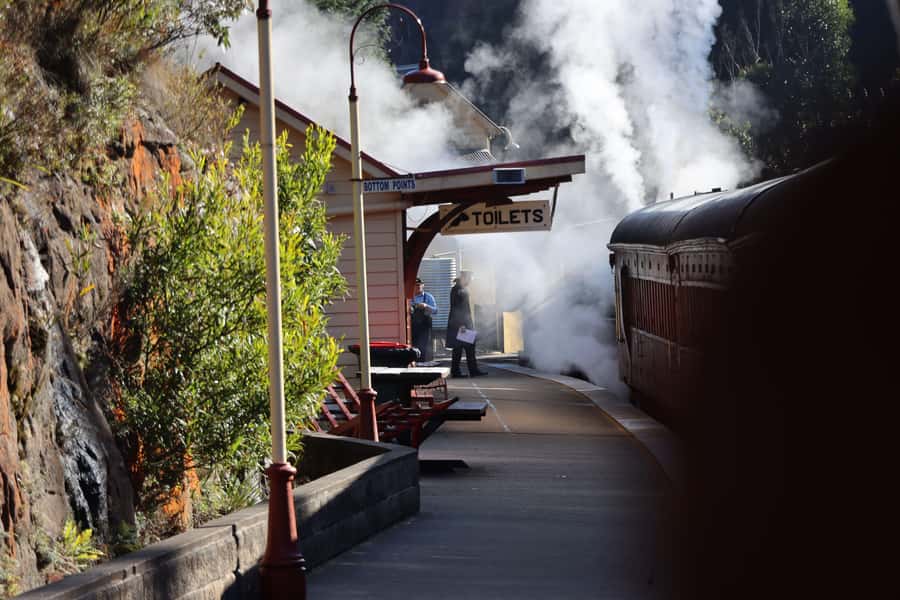
That second part matters. A modern train usually makes its turnaround invisible to passengers. Here, the engine run-around is something you can watch. The locomotive uncouples or repositions as part of the service, allowing you to see the practical work behind the journey. For anyone who enjoys trains, machinery, or old transport systems, this is more than a photo stop.
The line was originally built in the 1860s and has since been restored and maintained by volunteers. You can feel that connection in the way the railway is presented. This is not a polished theme-park ride with a manufactured story. It is a working heritage operation that depends on people who care about keeping the line and its equipment in use.
The ride suits train enthusiasts particularly well, but you do not need to know much about railway engineering to enjoy it. The views give the trip broad appeal, while the locomotive movements provide enough action to hold the attention of children and adults who might otherwise tire of a simple scenic journey.
More Train Journeys in Australia:
- From Cairns: Self-Guided Kuranda Trip with Train and Skyrail
★ 4.6 · 3,392 reviews - Puffing Billy Railway: Heritage Steam Train Journey
★ 4.6 · 1,195 reviews - Kuranda Scenic Railway Day Trip from Cairns
★ 4.5 · 1,075 reviews
Choosing between 45 and 90 minutes
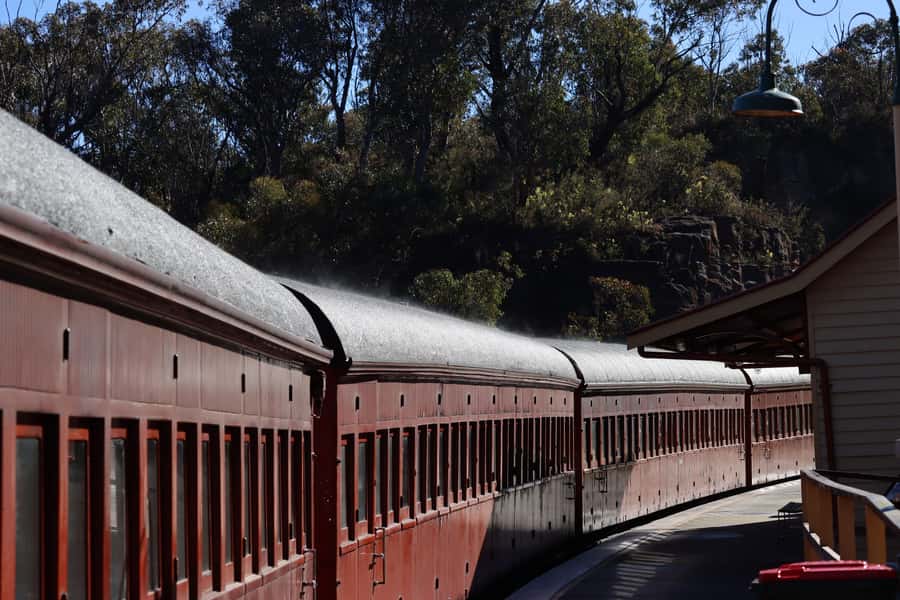
The available services range from about 45 to 90 minutes. That makes the railway easier to fit into a Blue Mountains day than a fixed, half-day excursion. You can choose a shorter option if you are adding the train to a wider sightseeing plan, or select a longer route if the railway is one of your main reasons for visiting.
One described option runs from Clarence to Bottom Points and back, with a stop at Top Points for the locomotive run-around. Route availability can change, and some services may not operate on certain days because of track work or maintenance. Check the specific departure before you set your wider schedule.
I would allow extra time around the ride if you want photographs, a café stop, or a close look at the station facilities. The advertised train time does not necessarily represent the full visit. The stations provide viewing areas, and the locomotive work deserves more than a quick glance if you have come specifically for the railway.
The best choice depends on your priorities:
- Choose a shorter service if you want a quick heritage ride and scenic views.
- Choose a longer route if you want more time on the line and a fuller railway visit.
- Leave room before or after the train to explore the station, café, shop, and photo points.
- Check for maintenance notices, since the planned route can change on some days.
Clarence, Top Points, and Bottom Points
Clarence is the departure point for the example round trip. Before boarding, you can use the station facilities, take photographs, and get familiar with the railway setting. The café and souvenir shop are useful if you arrive early or want something to browse after the ride.
From Clarence, the train heads into the Blue Mountains. The scenery includes sandstone cliffs, thick forest, and sweeping valley views. These are best enjoyed at a relaxed pace. The train is not designed to rush from one attraction to the next, so keep your attention on the changing views rather than expecting a series of named photo stops.
Top Points is important because it is where you can watch the locomotive run around on the described service. This is the most hands-on part of the trip. You can see the engine reposition itself and use the station area for photographs while the railway crew prepares the train for the next part of the journey.
The service then continues toward Bottom Points before returning. The exact arrangement depends on the route operating that day, so do not assume every ticket includes the same sequence. If the run-around is the main reason you are coming, confirm that your chosen departure includes it.
At each terminus, the station surroundings give you a chance to stretch your legs and look at the railway from another angle. You are not confined to your seat for the whole visit, although the amount of time available to explore will depend on the service.
What the scenery looks like from the train
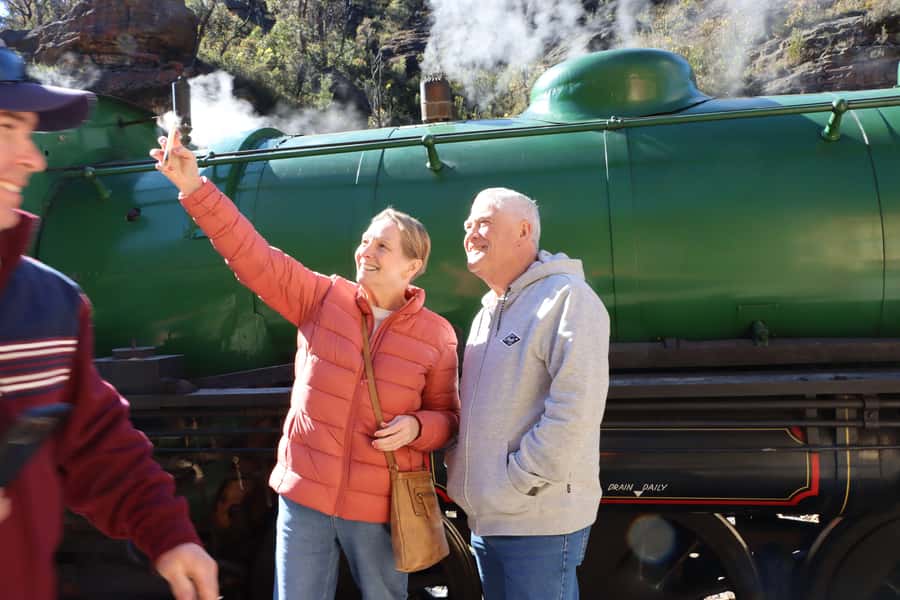
The Blue Mountains are the main visual reward. From the train, you can expect views of sandstone cliffs, forested areas, and broad valleys. The scenery has enough variety to keep the ride from feeling repetitive, particularly when the route changes between cuttings, wooded sections, and more open viewpoints.
Station viewing areas add another useful angle. Instead of taking every photograph through a train window, you can step off at the appropriate points and frame the locomotive, tracks, and mountain scenery together. Bring a camera if you enjoy railway images, but even a phone should work well at the station stops.
Do not expect a narrated sightseeing tour with a constant stream of facts. The attraction is the combination of scenery and railway activity. You get historical and engineering context, but the train itself remains the focus.
The views also depend on where you sit and how busy the service is. Since no seating arrangement is specified, arrive with enough time to get settled rather than arriving at the last possible moment. If scenery matters most to you, keep your camera ready and use the station stops to make up for any less favorable view from the carriage.
Same line, a different day out:
- From Melbourne: Puffing Billy Steam Train & Wildlife Tour
★ 4.7 · 640 reviews - From Melbourne: Puffing Billy Train & Penguin Wildlife Tour
★ 4.8 · 605 reviews - Grand Kuranda including Skyrail and Kuranda Scenic Railway
★ 4.5 · 598 reviews - Skip the Line Kuranda Scenic Railway Gold Class and Skyrail Rainforest Cableway
★ 4.5 · 574 reviews
The railway history and volunteer work
The line began in the 1860s, giving the trip a clear connection to the early development of rail transport in the Blue Mountains. Its importance is not only age. The route also shows the engineering challenges involved in taking a railway through mountainous country.
The restoration and ongoing maintenance are handled by volunteers. That gives your ticket a practical value beyond the ride itself. You are helping support the continued operation of a heritage line, its locomotives, stations, and track.
I also like the human side of the operation. The railway is described as professionally run by a friendly group of enthusiasts. That balance is worth noting. You get an organized activity, but not one stripped of personality. Staff can help you understand what is happening, and the working railway atmosphere feels more genuine than a purely decorative old train.
The experience can also work well across generations. A recent family visit brought an 88-year-old passenger onto the railway for the first time, after another family member had last visited about 25 years earlier. That points to one of the railway’s strengths: it can reconnect people with a place from their past while also introducing it to someone new.
Station facilities, toilets, and the café
The station facilities make the visit easier, particularly if you plan to stay longer than the train ride itself. You can use the café, browse the souvenir shop, and look for photo positions around the stations.
Toilets are available at all stations, but there are none onboard the train. This is the single most important comfort detail to plan around. Use the facilities before boarding, especially if you are traveling with children, older family members, or anyone who prefers not to wait between stops.
The café gives you a simple way to extend the outing. You might arrive early for a drink, or stay afterward rather than leaving as soon as the locomotive returns. The souvenir shop is also a natural stop for anyone who wants a railway memento.
Do not confuse the station amenities with a full visitor complex. The main attraction remains the train, the line, and the mountain scenery. Facilities support the visit, but they are not the reason to book.
Price and overall value at $26
At $26 per person, the ride offers solid value if you want a distinct Blue Mountains activity rather than only a viewpoint stop. Your ticket covers the heritage train ride, station access, locomotive run-arounds, photo opportunities, and historical and engineering insights.
The value improves if you take time to enjoy the whole visit. A quick ride straight to the car afterward may feel brief, particularly on a 45-minute service. Add time for the station, café, shop, and locomotive movements, and the outing becomes more substantial.
Train enthusiasts will probably find the price especially fair because the ticket supports a volunteer-maintained heritage operation. You are paying for access to a working railway, not just transport from one point to another.
The value is less clear if you want a fully guided mountain sightseeing tour. The service offers views and railway context, but it is not described as a broad Blue Mountains excursion with multiple unrelated attractions. Choose it for the train, engineering, and scenery, not as a replacement for every other mountain activity.
The flexible booking terms also reduce the risk of committing too early. You can reserve now and pay later, and cancellation is allowed up to 24 hours before the activity for a full refund. Track works and maintenance remain the bigger planning concern, so check the service date and route carefully.
Access, comfort, and practical limits
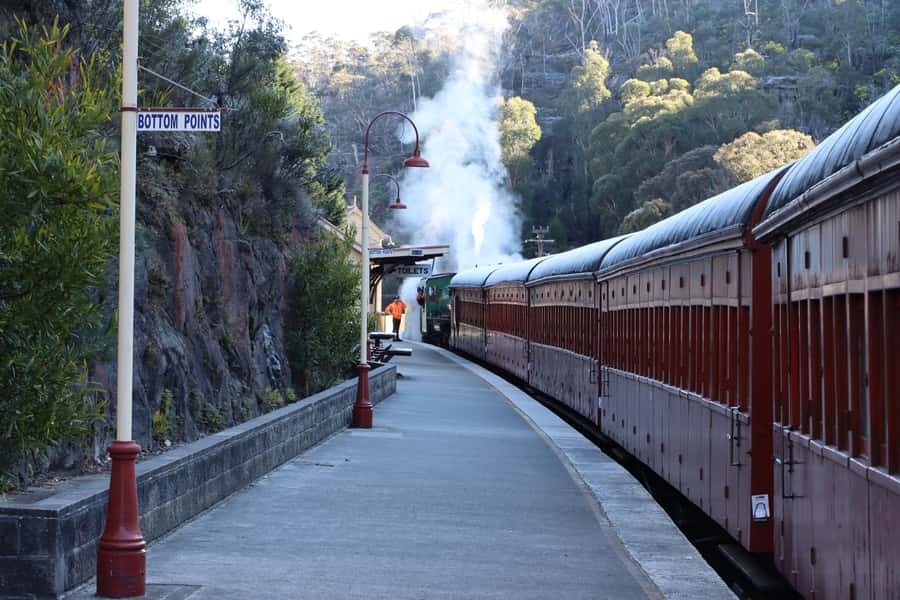
This is not a suitable activity for wheelchair users. Access is limited, and some routes have stairs at Zig Zag station. If you have reduced mobility but do not use a wheelchair, check the exact route and station arrangements before booking rather than assuming every part of the visit is step-free.
There is no toilet onboard, so plan around the stations. Pets are not allowed, and smoking is prohibited.
The host or greeter language is English. That is useful if you want to ask questions about the locomotive, route, or railway history, but you should not expect multilingual guiding based on the information available.
Some services may not run on certain days because of track work or maintenance. This is normal for a restored railway, but it means you should treat the published route as service-dependent. Check availability before building a tight day around a particular terminus or run-around.
Who will enjoy the Zig Zag Railway most
I would recommend this ride to:
- Train fans who want to see a heritage locomotive working in a real railway setting.
- Families looking for a manageable activity with scenery and machinery.
- Older relatives who enjoy historic transport and station visits.
- Visitors who want a shorter Blue Mountains outing rather than a full-day tour.
- Photographers interested in locomotives, tracks, cliffs, forests, and valley views.
- Anyone who likes supporting volunteer-run heritage projects.
I would be more cautious if you need step-free access, dislike pauses at stations, or want an attraction with constant narration. The train moves at a pace that lets you enjoy the line, but the run-around and station stops are part of the attraction, not delays to rush through.
The service also works well for repeat visitors. If you saw the railway years ago, the return visit can have a personal quality, particularly if you are bringing a parent or older family member who remembers the line. The route, locomotive, and station facilities give you more to do than simply looking out of a carriage window.
Should you book this Blue Mountains train ride?
Book it if you want a proper heritage railway outing with scenic mountain views, a visible locomotive turnaround, and enough station time for photographs and refreshments. At $26, it is a reasonable way to spend 45 to 90 minutes, especially when you value the volunteer work keeping the historic line operating.
Before booking, check three things: the route running on your chosen date, the access arrangements at Zig Zag station, and the location of the station toilets. If those points work for you, this is an enjoyable and well-priced addition to a Blue Mountains visit.
FAQ
How long does the Zig Zag Railway ride last?
Available services last between 45 and 90 minutes. Check the selected departure for the exact duration.
How much does the heritage train ride cost?
The listed price is $26 per person.
Where does the train travel?
One route option runs from Clarence to Bottom Points and back, with a stop at Top Points for a locomotive run-around. Other route options may be available.
Can I watch the locomotive turn around?
Yes. The experience includes locomotive run-arounds at the termini, including a stop at Top Points on the described Clarence to Bottom Points return route.
Are toilets available on the train?
No. Toilets are available at all stations, but there are none onboard the train.
Is the railway wheelchair accessible?
Wheelchair access is limited, and the activity is not suitable for wheelchair users. Some routes involve stairs at Zig Zag station.
Are there facilities at the stations?
Yes. Station facilities include toilets, a café, a souvenir shop, and areas suitable for photographs.
Can I bring a pet or smoke during the activity?
No. Pets are not allowed, and smoking is prohibited.
Could the route change or a service be unavailable?
Yes. Some services or routes may not operate on particular days because of track works or maintenance. Check availability for your chosen date.
Just added for rail travellers in Australia
- Cairns: Cattana Wetlands, Barron Falls & Kuranda Railway★ 4.6 · 7 reviews
- Port Douglas: Kuranda tour with Skyrail or Scenic Train★ 4.5 · 64 reviews
- Rottnest Island Grand Tour Including Lunch and Historical Train Ride★ 4.5 · 71 reviews
- Koala & Kangaroos Experience, Waterfalls and Scenic Train Journey★ 5.0 · 67 reviews
- Kuranda Village, Army Duck Tour with Train and Skyrail (KDB)★ 4.0 · 71 reviews
- Classic Kuranda by Skyrail and Scenic Railway, Rainforestation & lunch. CKB★ 4.5 · 105 reviews
- Cairns Small-Group Kuranda Tour: Skyrail & Scenic Railway★ 5.0 · 112 reviews
- Rottnest Island: Grand Bus and Train Tour with Lunch★ 4.6 · 106 reviews
Australia Train Journeys, compared.
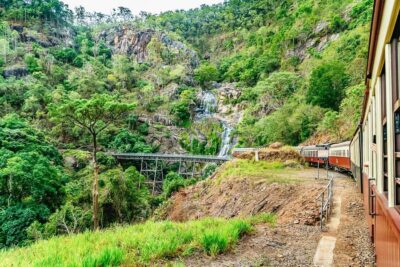
Self-Guided Kuranda Trip with Train and Skyrail
Read our review →
Puffing Billy Railway: Heritage Steam Train Journey
Read our review →
Grand Kuranda including Skyrail and Kuranda Scenic Railway
Read our review →
Skip the Line Kuranda Scenic Railway Gold Class and Skyrail Rainforest Cableway
Read our review →
Browse the lists this tour appears in