
Review · TAJ MAHAL TRAIN TOURS
Delhi Agra Jaipur & Varanasi Tour – Taj Mahal & Ganga Aarti
The most powerful part of this trip comes at both ends of the schedule: Delhi’s Mughal monuments open the story, then Varanasi brings you to the Ganges for evening lamps and prayer. In between, you see Jaipur’s royal buildings and Agra’s Taj Mahal. The private car and local guides make a complicated route much easier to manage.
I like the range. In seven days, you visit four major North Indian cities, move by private vehicle and train, and get time for both famous sights and less expected stops such as Galta’s Monkey Temple and Mehtab Bagh. I also like that hotel pickup and breakfast are included, which removes several small chores from a demanding itinerary.
The tradeoff is the pace. You change cities often, spend up to five or six hours on some road transfers, and may sleep in a different hotel each night. Admission fees are extra, and you should check the Taj Mahal date carefully because it closes every Friday.
Key points at a glance
- Four major cities in seven days: Delhi, Jaipur, Agra, and Varanasi are linked in one ambitious North India route.
- A private trip for your group: You travel with private transportation and local guides rather than joining a large shared coach.
- The Taj Mahal is only one part of Agra: Agra Fort, Itmad-ud-Daulah, and Mehtab Bagh add useful context.
- Varanasi has two very different river moments: You see the Ganges at sunset for Ganga Aarti and again at sunrise.
- Train travel is built into the plan: AC First Class or Second Class train tickets are included, unless your selected option uses flights.
- The itinerary is full-on: It suits an active first visit, but you should speak up if you need slower mornings or fewer stops.
What the seven-day route is really like
This is not a relaxed stay in one city. It is a sightseeing circuit designed to cover the classic Golden Triangle, then add Varanasi, one of India’s most important sacred cities.
The price is listed at $366.16 per person. That is good value if your selected package includes the advertised hotel category, private car, guides, train tickets, airport or hotel transfers, and six breakfasts. Still, the final cost will rise once you add monument tickets, optional boat rides, meals beyond breakfast, and any extras not listed.
The private format matters here. India’s distances, traffic, railway stations, and monument entrances can take work to handle. You have a driver and local guide for each sightseeing area, while the operator arranges the larger movement between cities. Drivers such as Siri are specifically noted for being calm, patient, and safe, qualities that matter more than polished small talk on long Indian roads.
Before departure, ask for the final hotel names, transport schedule, and exact sightseeing order. The published times can shift, and the route is tiring enough that clarity helps.
More Taj Mahal Train Tours in New Delhi:
- From Delhi: Taj Mahal & Agra Tour by Gatimaan Express Train
★ 4.8 · 1,041 reviews - “Taj Mahal” Tour from Delhi by India’s Fastest Train (Gatiman Express)
★ 5.0 · 298 reviews - From Delhi: Taj Mahal and Agra Day Tour by Super-fast Train
★ 4.9 · 270 reviews
Delhi’s Mughal opening: Raj Ghat, Red Fort, Jama Masjid, and Qutub Minar
Your Delhi arrival begins with pickup from the airport or a Delhi hotel. The first day combines practical arrival support with a sharp introduction to the city’s past.
Raj Ghat is the memorial to Mahatma Gandhi. The stop is brief, but it gives the day a quiet start before you move into Old Delhi. At the Red Fort, you see the former residence of the Mughal emperors, commissioned by Shah Jahan in 1638. This is the ruler who later commissioned the Taj Mahal, so the fort helps connect the two famous monuments.
Jama Masjid is one of Delhi’s largest mosques and another major work from Shah Jahan’s reign. Allow an hour here. Dress respectfully and expect the atmosphere to change from monumental stonework to an active place of worship.
Qutub Minar brings a different chapter of Delhi’s story. The 73-meter victory tower was begun in 1193 by Qutab-ud-din Aibak, after the defeat of Delhi’s last Hindu kingdom. Its five levels and carved surface reward a slower look than the brief itinerary time may allow.
The listed first day can feel crowded, especially if your arrival is late or delayed. You may be asked to visit only some of the stops depending on traffic and opening hours. That is a sensible moment to set priorities with your guide rather than trying to force every sight into a rushed afternoon.
Jaipur after the five-hour road transfer
After breakfast, the drive to Jaipur is scheduled to leave at 8:30 a.m. and arrive around 2 p.m. This is a long road day, so keep water nearby and do not plan a demanding evening outside the listed program.
Amber Fort is the main afternoon visit. Once the royal capital, the fort is a large complex of courtyards, halls, and defensive walls. Two hours gives you time to understand its scale, though slopes and uneven surfaces may make the visit more tiring for some people.
Jal Mahal, the Water Palace, gets only about 15 minutes. The palace sits in Man Sagar Lake, and the stop is mainly for views and photographs rather than a full interior visit. Treat it as a scenic pause, not a major sightseeing block.
Jaipur itself adds color and shape to the trip. Its Rajput architecture feels different from Delhi’s Mughal monuments, and the city works best when you let your guide explain how the palaces, observatory, temples, and old royal center fit together.
Jaipur’s royal center and six-stop sightseeing day
The third day starts at 8 a.m. and covers a lot of ground. Hawa Mahal, the Palace of Wind, is a short visit. Its famous facade was designed with many windows, and it is best understood as part of the old royal city rather than as a large palace interior.
City Palace gets about an hour. This is where Jaipur’s royal identity comes through most clearly, with palace buildings and courtyards linked to the former ruling family. Jantar Mantar follows, also with an hour. Sawai Jai Singh II built this group of 19 astronomical instruments in 1734, including the world’s largest stone sundial. Your guide can make the instruments far easier to understand than a quick look at the shapes would.
Albert Hall Museum adds art and architecture to the day. The building began as a concert hall in 1876 and takes its name from London’s Victoria and Albert Museum because of its similar design. Birla Mandir, a white-marble Hindu temple built in 1988, provides a more recent contrast to Jaipur’s older royal sites.
The last stop is Galta, often called the Monkey Temple. This temple group sits at a sacred bathing place among the Aravalli hills. It offers a quieter setting and a change from palace interiors, although the visit is brief at about 30 minutes.
This is one of the itinerary’s most demanding days. Six stops leave little room for lingering. I would ask in advance which sites matter most to you, especially if you prefer museums or religious places over a long list of quick photo stops.
Same line, a different day out:
- Jaipur Day Trip from Delhi by Car or Train – All Inclusive
★ 5.0 · 663 reviews - Taj Mahal Day Trip From Delhi By Superfast Train With 5* Meal
★ 5.0 · 136 reviews - Private Day Tour of Taj Mahal by India’s Fastest Train or Car – All Inclusive
★ 5.0 · 131 reviews - Taj Mahal Tour with High-Speed Train Experience – All Inclusive
★ 5.0 · 130 reviews
Agra and the Taj Mahal on day four
The Agra day is the emotional center of the route. The Taj Mahal is scheduled for two hours, enough to see the main grounds and the monument, though the crowds and entry process can affect the pace.
The Taj was commissioned by Shah Jahan as a mausoleum for his wife, Mumtaz Mahal. Its white marble changes with the light, but the real value of a guide here is context: the building makes more sense when you connect it to the Mughal power, design, and family story introduced at Delhi’s Red Fort.
The schedule places breakfast at 9:30 a.m., followed by sightseeing. Check the exact opening arrangements before you go. Most importantly, do not schedule the Taj Mahal for Friday. It is closed that day for prayer, and one booking error caused a serious disruption for a past passenger.
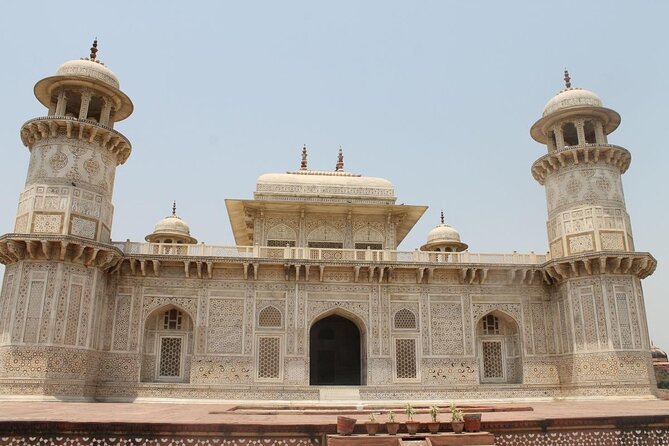
Itmad-ud-Daulah is a small Mughal mausoleum often called the Baby Taj. Its inlaid decoration and intimate scale make it a useful contrast after the vast Taj Mahal. Agra Fort then returns you to the world of emperors, military power, and royal residence. The fort was built between 1565 and 1573 for Akbar and later used by other Mughal rulers.
Mehtab Bagh sits across the Yamuna River from the Taj Mahal. The garden provides a different angle and a little breathing room after the main monument. The stop is only about 30 minutes, so it is more of a viewpoint and garden visit than an extended walk.
Admission fees are not included for these monuments. Budget for them separately, and confirm which ticket prices apply to your nationality and selected sites.
Overnight movement toward sacred Varanasi
The route then turns east toward Varanasi. The program describes arrival at the Varanasi railway station in the morning, followed by pickup and hotel check-in. AC First Class or Second Class train tickets are included in the relevant package, while some options use flights instead.
Train travel is a useful part of the experience because it avoids putting every long distance on the road. It also means your schedule depends on railway timing. Keep your essential items in a small day bag, since your main luggage may be handled separately during transfers.
Sarnath is included on this part of the route. It is a short visit in the listed schedule, but its importance is large: it is associated with the Buddha’s first sermon after enlightenment. The site gives Varanasi a wider religious setting beyond Hindu traditions.
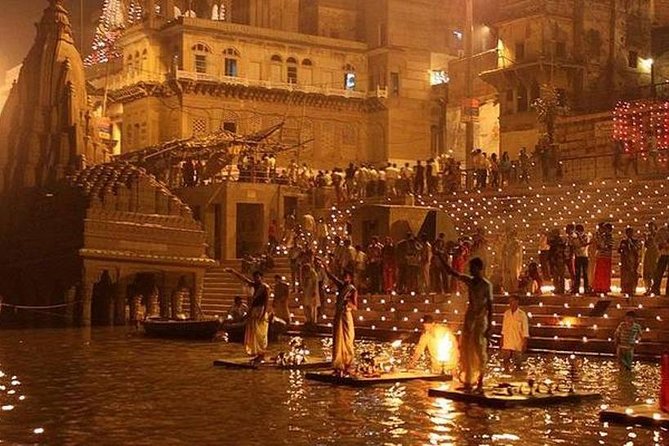
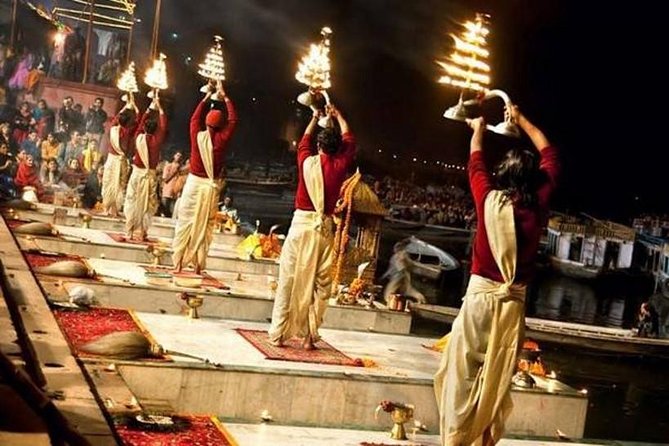
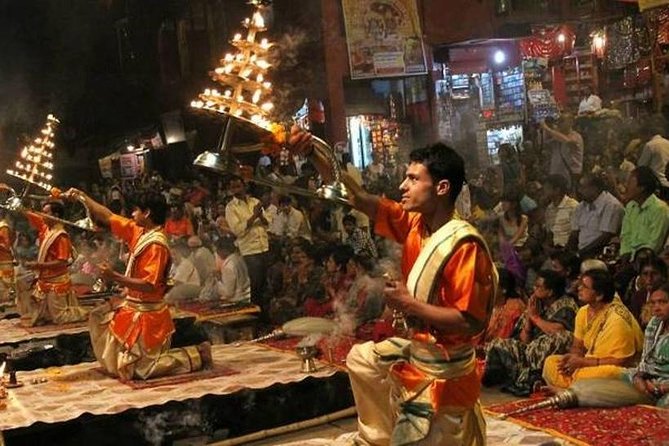
In the evening, you take a sunset cruise on the Ganges for Ganga Aarti. The ceremony uses oil lamps, prayer, and music along the riverfront. A boat gives you a broad view of the ghats and the ceremony, rather than placing you only within the crowd on shore. The sunset cruise for Ganga Aarti is included, while other Varanasi boat rides are listed as optional, so confirm exactly which river trips are covered by your package.
Sunrise on the Ganges and Varanasi’s ghats
The next morning starts early with a boat ride on the Ganges. Sunrise changes the mood completely. You see the river and the historic ghats before the evening ceremony returns the city to its more dramatic, public rhythm.
Dashashwamedh Ghat is the best-known of Varanasi’s ghats and receives about an hour in the plan. From the water, you can watch daily activity along the steps, including bathing, prayer, yoga, and ordinary morning routines. This is one of the places where a guide adds real value by explaining what you are seeing and how the ghats function.
The itinerary also includes Bharat Kala Bhavan, a museum with paintings, Hindu and Buddhist sculptures, and archaeological material. It gives you an indoor break after the early river outing and adds art to a schedule otherwise focused on monuments and religious sites.
The same day includes a train journey back toward Delhi and an overnight stay. That makes it another long day, so do not expect a leisurely afternoon. The Varanasi portion is memorable, but it asks you to accept early starts, rail travel, and a short stay in the city.
Delhi’s final morning: Humayun’s Tomb, India Gate, and Lotus Temple
After breakfast, the final Delhi sightseeing begins at about 10 a.m. Humayun’s Tomb is the strongest opening stop. This grand Mughal mausoleum predates the Taj Mahal and helps you see the architectural ideas that later reached a more famous form in Agra.
India Gate shifts the focus to modern national memory. It was first called the All India War Memorial and honors more than 70,000 soldiers who died in the First World War and the Third Anglo-Afghan War. The visit is short, so you mainly see the monument and its setting.
The Lotus Temple closes the route with a striking modern building shaped like a lotus. It is known for its unusual design and connection to the Baháʼí faith. The planned hour gives you more time than the India Gate stop, although entrance arrangements can affect the visit.
Your final day is easier than the Jaipur and Agra days, but it still depends on your departure time. The tour includes hotel or airport drop-off, so give the operator your flight details and keep enough space for traffic.
Hotels, guides, transport, and what is included
Accommodation is provided for six nights, with breakfast each morning. The selected package may use 3-star, 4-star, or 5-star hotels, although the main description refers to comfortable 4-star accommodation. Check your exact option before paying because hotel quality and location can change the feel of the trip.
Private transportation is provided by sedan or SUV, with air conditioning. This is valuable on long road sections between Delhi, Jaipur, and Agra. It also lets you stop or adjust the pace more easily than a large group coach, though you still need to discuss changes with the tour team.
Local guides are supplied for sightseeing in each destination. The best use of them is not simply asking for dates and names. Ask them to explain how Mughal, Rajput, Hindu, Buddhist, and modern Indian sites connect across the route.
The company provides personal care and attention, taxes, service charges, hotel or airport transfers, and either train tickets or flights according to the option selected. Monument admission fees, optional Varanasi boat rides, and anything not specifically listed remain your responsibility.
Who should book this North India circuit?
I would choose this tour if you want a first look at North India and prefer someone else to handle the complicated connections. It is especially useful for solo visitors, couples, or small private groups who want guides without joining a large coach tour.
It also suits you if your priority list includes the Taj Mahal, Jaipur’s forts and palaces, Delhi’s Mughal monuments, and Ganga Aarti. The route gives you a strong range of places in a short period.
I would hesitate if you want slow travel, long hotel stays, or free afternoons. The schedule can include sightseeing followed by five or six hours of driving, and one night in each city can leave you tired by the final day. Tell the operator what you want to skip or shorten. The private format gives you room to shape the plan, but you need to take control of that advantage.
Free cancellation is available up to 24 hours before the local start time. Changes made inside that window are not accepted, and poor weather can lead to a new date or a full refund.
Should you book it?
Book this tour if coverage and convenience matter more to you than a slow pace. The private car, local guides, train arrangements, breakfasts, and airport or hotel transfers provide solid value at the listed price, provided you understand that monument tickets and some river rides cost extra.
Before booking, confirm the hotel category, the train or flight option, the exact Taj Mahal date, and which Varanasi boat trips are included. If you can handle early mornings and frequent moves, this is an efficient way to connect four major North Indian destinations. If you want a gentler holiday, cut a few stops and build in more rest.
FAQ
How long is the Delhi, Agra, Jaipur, and Varanasi tour?
The tour lasts approximately seven days and includes six nights of accommodation.
Is this a private tour?
Yes. The activity is private, and only your group participates. Private transportation and local tour guides are included.
Is hotel or airport pickup available?
Yes. Pickup and drop-off are provided from a Delhi hotel or airport, and the tour also includes hotel or airport transfer service.
Are monument admission fees included?
No. Entry fees for monuments are not included and must be paid separately.
Are train tickets included?
AC First Class or Second Class train tickets are included according to the selected option. Some package options use flights instead.
Is the Ganga Aarti boat ride included?
The sunset cruise connected with Ganga Aarti is listed as included. Other Varanasi boat rides are described as optional, so confirm the exact package details before departure.
Can I cancel for a full refund?
You can cancel up to 24 hours before the experience start time for a full refund. Cancellations or changes made less than 24 hours before the start time are not accepted for a refund.
Just added for rail travellers in New Delhi
- Taj Mahal & Agra Tour From Delhi By Fastest Train★ 5.0 · 7 reviews
- Private Tajmahal Day Tour From New Delhi By Gatiman Express Train★ 5.0 · 14 reviews
- Taj Mahal and Agra Fort Tour By Fastest Train – Gatiman Express★ 5.0 · 2 reviews
- Taj Mahal and Agra Tour By India’s Fastest Train★ 5.0 · 2 reviews
- From Delhi: Taj Mahal & Agra Tour by Gatimaan Express Train★ 5.0 · 11 reviews
- Taj Mahal Tour by Gatimaan Express Train With Lunch At 5 Star Hotel★ 5.0 · 8 reviews
- Taj Mahal & Agra Fort Visit by Gatimaan Express Train★ 5.0 · 4 reviews
- Enchanting Taj Mahal Same Day Tour by Gatiman Train From Delhi★ 5.0 · 4 reviews
Taj Mahal Train Tours, compared.
Taj Mahal & Agra Tour by Gatimaan Express Train
Read our review →
“Taj Mahal” Tour from Delhi by India’s Fastest Train (Gatiman Express)
Read our review →
Taj Mahal Day Trip From Delhi By Superfast Train With 5* Meal
Read our review →
Private Day Tour of Taj Mahal by India’s Fastest Train or Car – All Inclusive
Read our review →
Taj Mahal Tour with High-Speed Train Experience – All Inclusive
Read our review →
Private Taj Mahal & Agra Day Trip by Car or Rail
Read our review →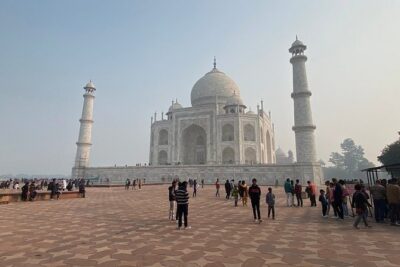
Luxury Taj Mahal by super fast train from Delhi all inclusive
Read our review →
Taj Mahal Same Day Tour by India’s Fastest Train
Read our review →Browse the lists this tour appears in