
Review · SCENIC RAILWAYS
Dunedin: Scenic Railway Tour Through the Taieri Gorge
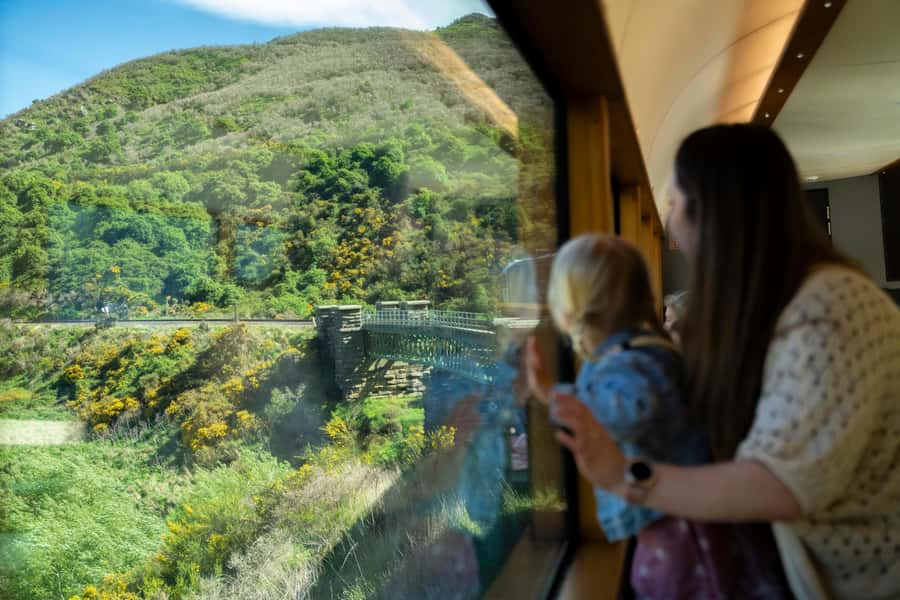
The most memorable part of this five-hour railway journey is the way the train carries you from Dunedin’s grand station into the remote Taieri Gorge. The route crosses century-old bridges, enters hand-carved tunnels, and follows the Taieri River through country that is difficult to see from a road.
I like two things especially: the onboard storytelling, which brings early settlement and gold-rush history into focus, and the viewing platform, which gives you a better chance at clear photographs. Dave McFarland has drawn particularly warm praise for his commentary, while guard Austin is known for taking time to chat with passengers.
The main drawback is limited outdoor viewing space. The platform can become crowded, so you may need patience when the best scenery appears. Bring cash for the café too, since mobile service is patchy and card payments are not always possible.
Key points to know before you go
- Five hours from Dunedin to Pukerangi and back: You get a proper half-day rail outing rather than a short sightseeing ride.
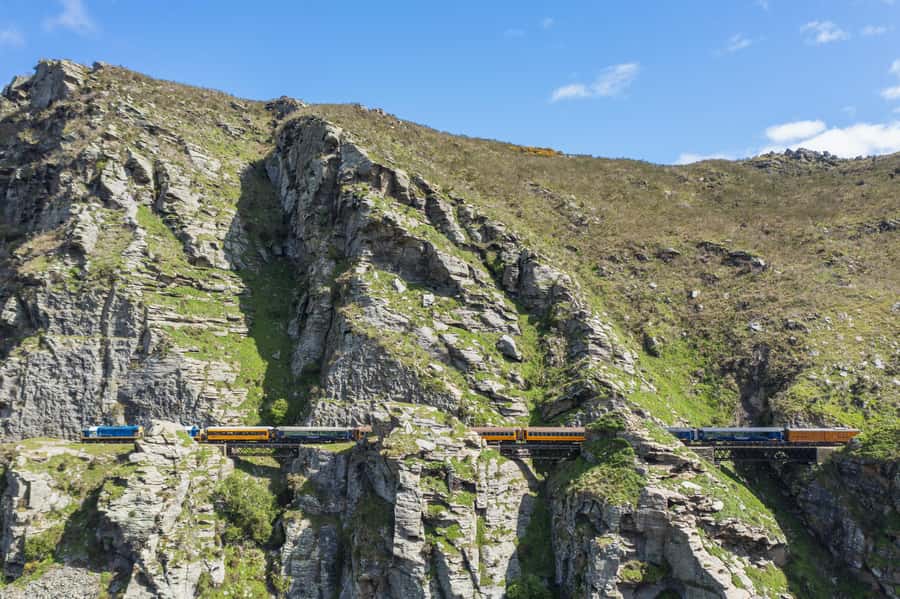
- Historic engineering at close range: The line uses old bridges, viaducts, and tunnels built by early railway workers.
- Dave McFarland’s storytelling: Commentary covers local people, settlement, gold mining, and the work behind the route.
- Viewing platform access is limited: It is useful for photographs, but space may be tight when several people want the same view.
- Precinct café onboard: Fresh local food and drinks are available to buy, though you should carry cash.
- Comfortable but changeable conditions: Wear casual clothes, bring a warm layer, and choose flat shoes.
Starting at Dunedin Railway Station
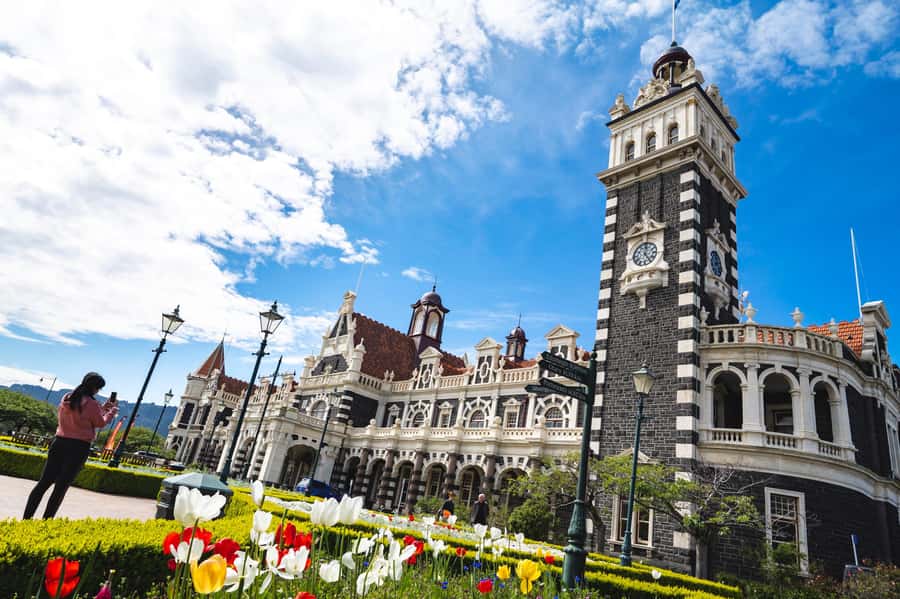
Your day begins at 22 Anzac Avenue, at Dunedin Railway Station. The station itself is an apt starting point for a railway trip, with a grand historic setting that gives the outing a sense of occasion before the train even moves.
Check-in begins one hour before departure and ends 15 minutes before the train leaves. That early arrival matters. It gives you time to find the right platform, settle into your carriage, and avoid beginning a five-hour trip in a rush.
Starting times vary, so you need to check availability when booking. Parking is available at the station, but the operator advises checking current parking information before you arrive.
The train returns to the same station after reaching Pukerangi. That makes the trip simple to fit into a day in Dunedin, since you do not need to arrange a separate pickup or find your way back from the countryside.
More Scenic Railways in New Zealand:
- TranzAlpine Train, Arthur’s Pass and Castle Hill Day Trip
★ 5.0 · 426 reviews - TranzAlpine Train Journey: Christchurch to Greymouth
★ 4.5 · 312 reviews - Arthur’s Pass Discovery and TranzAlpine Train – Small Group Tour
★ 5.0 · 272 reviews
Leaving Dunedin for the Taieri Gorge
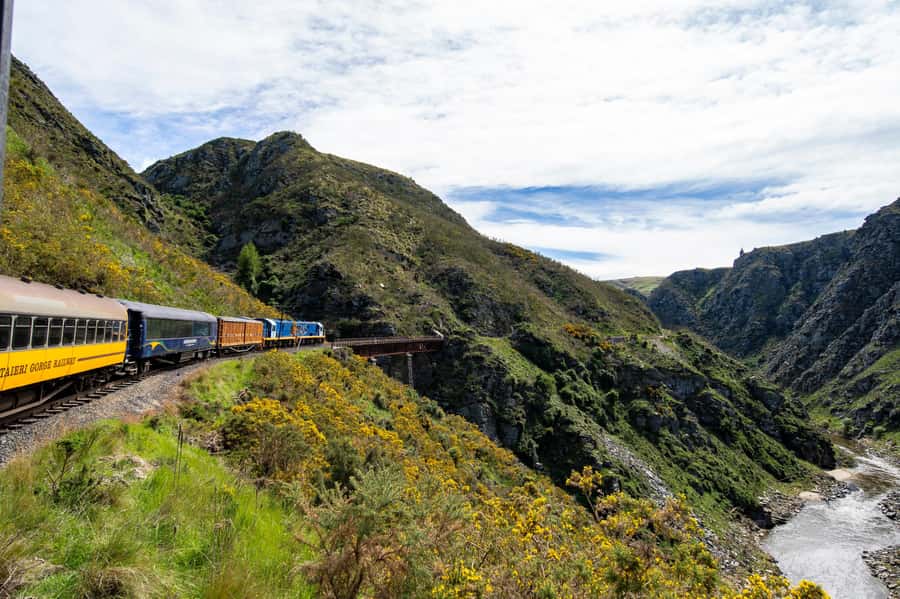
The first stretch takes you away from the city and toward the open Otago countryside. This gradual change is part of the appeal. You begin with the familiar urban setting of Dunedin, then watch the surroundings become quieter and more spacious as the railway follows the route of the Taieri River.
The train moves at a pace that lets you study the scenery. This is not a fast connection designed to get you somewhere. It is a viewing trip, and the slower rhythm gives the commentary room to explain what you are seeing.
Your onboard storyteller adds useful context about the people and places connected to the railway. The most appreciated commentary has come from Dave McFarland, whose talks cover early New Zealand life, settlement, gold-rush activity, and the engineering needed to push a railway through difficult country.
That information changes the way you see the route. A bridge is not just a photo stop. A tunnel is not just a dark patch in the journey. You begin to notice the practical problems faced by the early builders and the effort required to keep a railway line open through the gorge.
Century-old bridges, viaducts, and tunnels
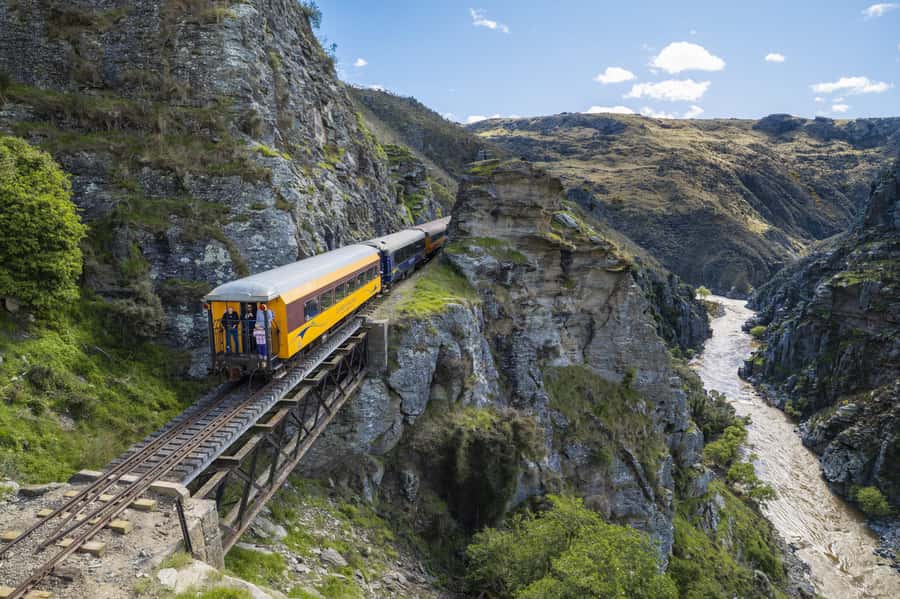
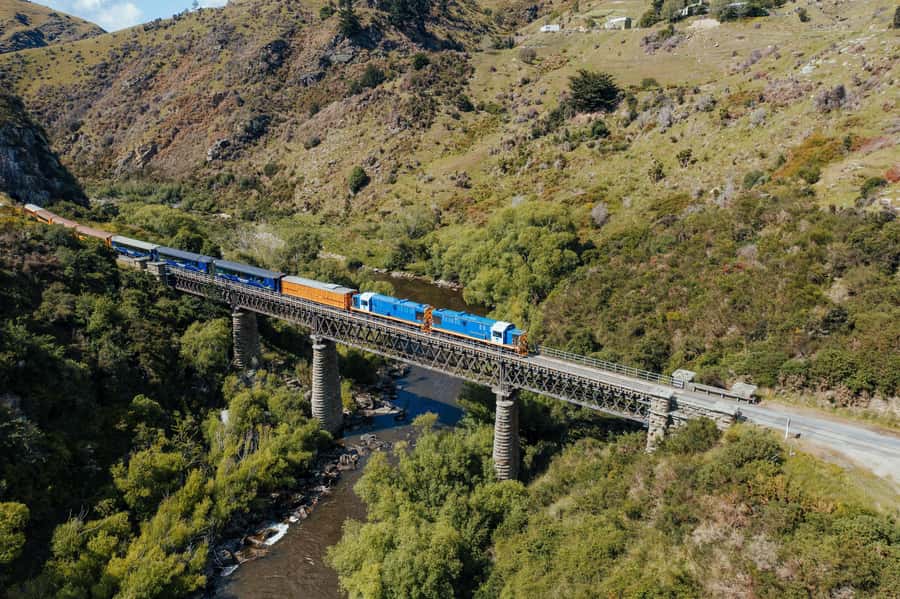
The central attraction is the railway itself. The route crosses old bridges and tall viaducts, then passes through tunnels cut into the surrounding rock. These structures are the reason this trip feels different from a standard coach tour.
From a road, you may see the gorge from one angle and move on. From the train, the route unfolds in stages. The river appears, disappears, and reappears. The train enters a tunnel, then emerges onto a bridge or a broad view of the surrounding hills.
The route’s engineering is also part of the story. You are seeing the work of early railway builders in the actual setting where it was carried out. The onboard commentary helps connect the physical structures with the history of settlement and gold mining in Otago.
The scenery is strongest after the train has left the Dunedin area. Several passengers have singled out the views as breathtaking, and that description fits the changing scale of the trip. You move from city streets to open country, then into a more enclosed gorge where rock, river, bridge, and railway compete for your attention.
Keep your camera ready, but do not spend the entire journey looking through a screen. The best views can arrive quickly after a tunnel or around a bend. The large carriage windows are good for general viewing, and you can move toward the viewing platform when the train reaches a particularly photogenic section.
The viewing platform and the photo problem
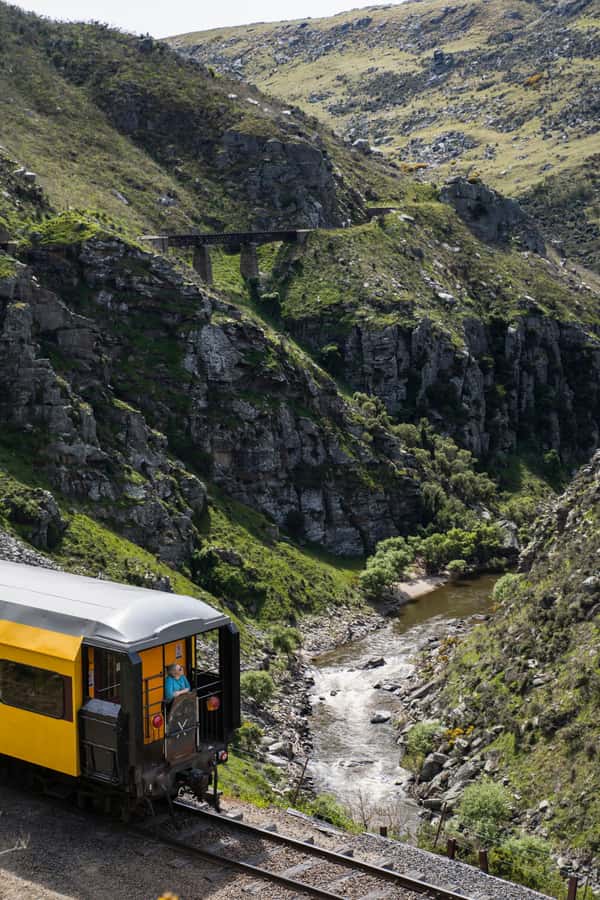
The viewing platform is one of the most useful features of the train. It gives you fresh air and a clear angle for photographs, especially when the railway passes over a bridge or opens onto a broad view.
It is not an open-sided viewing carriage, though. The platform is small, and several people have found it congested at busy moments. You may not get an uninterrupted view when the most dramatic scenery appears.
This is the one area where expectations need adjusting. If your main goal is to photograph every bridge from an open wagon, this trip may leave you wanting more. Some passengers have suggested that a full open-sided viewing carriage would improve the experience.
For most people, the platform is still worthwhile. Go out when you can, take your photographs, then give someone else a chance. Inside, the windows provide good views too, and the carriage offers a warmer, calmer place to follow the commentary.
Wear flat shoes because the train may offer chances to disembark at points of interest. A warm layer is also sensible. Even if the day begins pleasantly in Dunedin, conditions can feel cooler when you are outside or near the gorge.
More Train Journeys in New Zealand:
- Northern Explorer Train Journey from Wellington to Auckland
★ 4.0 · 513 reviews - Coastal Pacific Train Journey from Picton to Christchurch
★ 4.5 · 345 reviews - Arthur’s Pass: TranzAlpine Train and Castle Hill Day Tour
★ 4.8 · 270 reviews - Northern Explorer Train Journey from Auckland to Wellington
★ 4.0 · 204 reviews
Pukerangi, the high-country turning point
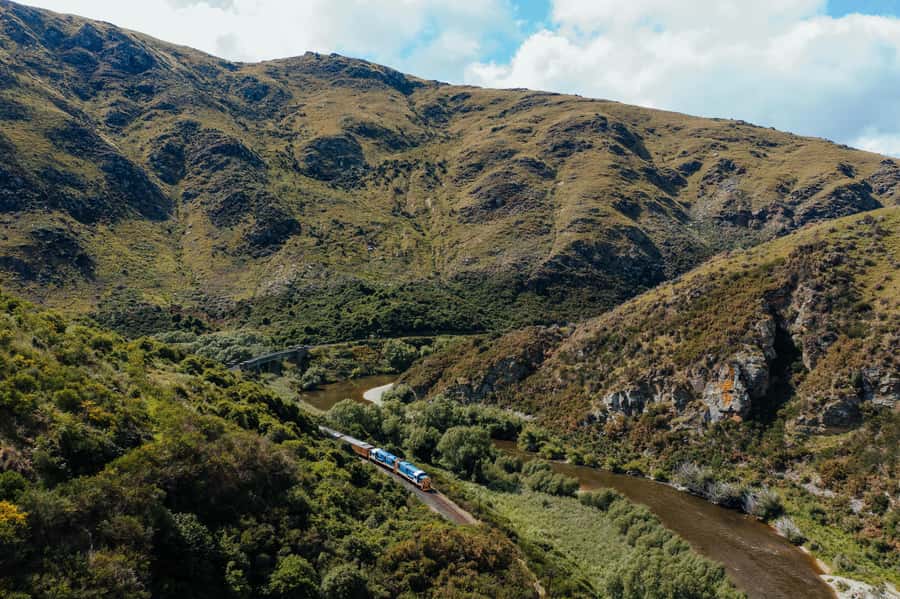
Pukerangi is the railway’s destination before the return trip to Dunedin. It is described as a peaceful high-country outpost, and that quiet setting gives the journey a clear midpoint.
Do not think of Pukerangi as a large attraction with a long list of facilities. Its value is the setting and the fact that the railway has carried you into a remote part of Otago before turning back.
The stop also breaks up the five-hour ride. You can stretch your legs, take in the open surroundings, and prepare for the return journey. Exact stop details can vary, so listen to the onboard staff and follow their instructions about leaving the train and returning on time.
The return trip is not wasted time. You see familiar sections from the opposite direction, and the light may have shifted since the outward journey. It is also a chance to focus on details you missed earlier, listen to more commentary, or settle in with a drink from the café.
Stories that make the route matter
The scenery gets you onto the train, but the stories give the journey its shape. Commentary explains the railway’s connection to early settlement, the gold rush, and the engineering feats that made this route possible.
That human detail is important. Without it, a bridge is simply an old bridge and a tunnel is simply a tunnel. With the story, you can think about the labor, planning, and transport needs behind the line.
Dave McFarland has been especially effective for this part of the trip. His commentary is clear, engaging, and grounded in the history of the area. Other staff contribute as well, and the experience is not limited to a recorded announcement.
Guard Austin has also been noted for his friendly conversations with passengers. Small interactions like this help the train feel more personal than a purely automated sightseeing service.
You should still expect a shared group experience rather than a private tour. Staff need to speak to everyone, and the carriage will have its own background noise. Sit where you can hear the commentary, then use the platform or quiet moments to take photographs.
Food and drinks from the Precinct café
The onboard café sells fresh local food and drinks from the Precinct team. That is useful on a five-hour outing, especially if you do not want to carry a full picnic.
Food and drinks are not included in the $95 price. You pay separately onboard, so budget for that when comparing the total cost of the experience.
The food has received strong praise, including positive comments about the quality of the drinks and café service. Still, I would not rely only on the café if you have specific meal needs or want a full lunch at a particular time. The supplied information confirms that refreshments are available, but it does not promise a particular menu.
Carry some local cash. Mobile phone connection is limited in the remote sections, and card or EFTPOS payments may not work outside internet range. You may be able to settle your tab after returning to reception, but cash is the safer choice.
There are toilets onboard, which is another practical advantage on a five-hour trip. You can enjoy the scenery without worrying that the remote route lacks basic facilities.
Is $95 good value for five hours?
At $95 per person, this is not the cheapest way to see the Otago countryside. It is also more than a quick train ride around Dunedin. The value comes from the length of the trip, the historic railway route, the commentary, the onboard café, and the fact that transport, scenery, and local interpretation are combined in one outing.
I think the price makes sense if you want a substantial half-day experience and have an interest in railway heritage. You are not simply paying for a seat and a view. You are paying to travel through a route shaped by early engineering, with staff explaining the places and people connected to it.
The value is less clear if you mainly want unrestricted photography. The small viewing platform can feel crowded, and food and drinks cost extra. If an open-sided carriage is essential to your trip, you should take that limitation seriously.
The overall rating is 4.7 from 73 reviews, with repeated praise for the scenery, staff, food, and commentary. I would treat that as a useful sign of consistency, especially since the strongest comments focus on several different parts of the experience rather than one isolated feature.
Who should book the Taieri Gorge Railway?
I would recommend this trip to you if you enjoy:
- Historic railways and old engineering
- Scenic rides that allow time to look around
- Local stories and spoken commentary
- A relaxed half-day outing from Dunedin
- Comfortable carriage travel with food available onboard
It suits families, older visitors, railway fans, and anyone who wants to see more of Otago without driving. The five-hour length gives the trip substance, but it also means you should be happy spending much of a day on a train.
You may want to think twice if you dislike long rides, need constant mobile service, or want a large open-air carriage for photography. The train has a viewing platform, but it is not spacious enough for everyone to stand outside at once.
Wheelchair access is available through an accessible carriage and lift, but capacity is limited and you must request it in advance by email. That detail matters, so do not wait until the day of departure.
Practical timing and booking advice
Plan to arrive at least one hour before departure. Check-in closes 15 minutes before the train leaves, and missing that cutoff could create a serious problem because this is a scheduled return service.
Wear comfortable casual clothing and bring something warm. Flat shoes are the sensible choice because there may be opportunities to leave the train at points of interest.
The tour allows cancellation up to 24 hours before departure for a full refund. You can also reserve now and pay later, which gives you more flexibility while arranging a Dunedin itinerary.
For the smoothest day, I would bring:
- A warm layer
- Flat, comfortable shoes
- A camera or phone with spare battery
- Local cash for the café
- Any food you need beyond the onboard options
Should you book this Dunedin train trip?
Book it if you want a scenic railway journey with real local context, not just a ride through pretty countryside. The Taieri Gorge route, old railway structures, excellent storytelling, and comfortable five-hour format make this one of Dunedin’s stronger sightseeing choices.
Go in knowing that the outdoor viewing area is limited and refreshments cost extra. Arrive early, bring cash and warm clothing, and treat the commentary as part of the experience. If that sounds like your kind of day, the $95 fare is a fair price for a historic route, a remote high-country destination, and a full return journey from Dunedin.
FAQ
Where does the Taieri Gorge Railway tour depart?
The train departs from Dunedin Railway Station at 22 Anzac Avenue, Dunedin 9016, New Zealand.
How long does the railway tour last?
The return journey lasts five hours.
Where does the train travel?
The train travels through the Taieri Gorge, follows the Taieri River, and reaches Pukerangi before returning to Dunedin.
What is included in the ticket price?
The ticket includes the five-hour return scenic railway trip, access to the viewing platform, and onboard storytelling about the people, places, and engineering connected with the route.
Are food and drinks included?
No. Food and drinks are available for purchase from the onboard Precinct café, but they are not included in the ticket price.
Should I bring cash?
Yes. Mobile connection is limited on the remote sections, and card or EFTPOS payments may not always work onboard. You may be able to settle your café tab after returning to reception.
When should I arrive at the station?
Check-in begins one hour before departure and ends 15 minutes before departure.
Is the train wheelchair accessible?
A wheelchair accessible carriage and lift are available by request. Capacity is limited, so you need to email in advance to request access.
Is parking available at Dunedin Railway Station?
Yes, parking is available at the station. You should check the railway website for current parking information.
Can I cancel for a refund?
Yes. You can cancel up to 24 hours in advance for a full refund. You can also reserve now and pay later.
Just added for rail travellers in New Zealand
- Christchurch to Arthur’s Pass Day Tour: TranzAlpine Train & Lunch★ 4.5 · 90 reviews
- Coastal Pacific Train Journey from Christchurch to Picton★ 4.5 · 92 reviews
- Tranz Alpine Train Tour★ 5.0 · 92 reviews
- TranzAlpine Train Journey from Greymouth to Christchurch★ 4.5 · 182 reviews
- Northern Explorer Train Journey from Auckland to Wellington★ 4.0 · 204 reviews
- Arthur’s Pass and TranzAlpine Train Day Tour from Christchurch★ 4.5 · 202 reviews
- Arthur’s Pass: TranzAlpine Train and Castle Hill Day Tour★ 4.8 · 270 reviews
- Arthur’s Pass Discovery and TranzAlpine Train – Small Group Tour★ 5.0 · 272 reviews
Scenic Railways, compared.
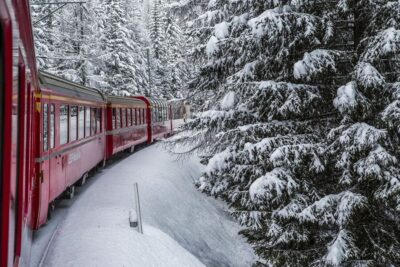
Lake Como Cruise, St. Moritz & Bernina Red Train
Read our review →
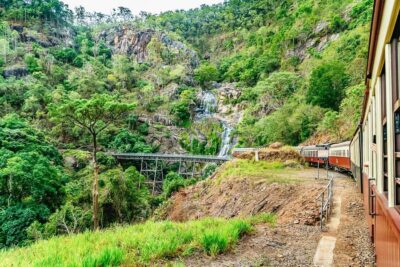
Self-Guided Kuranda Trip with Train and Skyrail
Read our review →
Bernina Red Train, Swiss Alps & St Moritz From Milan
Read our review →
Swiss Alps Bernina Red Train and St.Moritz Tour from Milan
Read our review →
Milan to St. Moritz: Scenic Bernina Train Tour with Guide
Read our review →
Bernina Train, Swiss Alps & St. Moritz Day Trip
Read our review →Browse the lists this tour appears in