
Review · HIGH-SPEED AND BULLET TRAINS
Gyeongju UNESCO Sites Tour by KTX train; The Museum Without walls
Gyeongju is Korea’s museum without walls, and this long day gives you a sharp introduction to why. In one circuit, you see royal burial mounds, an ancient observatory, a palace pond, Korea’s best-known Buddhist temple, and the superb Silla collections at Gyeongju National Museum.
I like the private format, which keeps the day flexible and removes the stress of changing trains or finding distant monuments on your own. I also like the early KTX departure and included Seoul pickup, since Gyeongju sits far enough from the capital to make planning a nuisance.
The tradeoff is simple: this is a full day with about four hours of train travel alone. Rain can also matter, since several of the most important sights are outdoors, and hotel drop-off in Seoul is not included.
Key points to know before booking
- KTX makes Gyeongju possible in one day: Round-trip economy train fare and transfers to the station are included.
- Six major Silla sites are covered: You visit royal tombs, a museum, an observatory, a palace pond, Bulguksa Temple, and Seokguram Grotto.
- The tour is private: Only your own group participates, with a private vehicle in Gyeongju.
- The early start is useful: Pickup begins at 7:00 am, giving you more time in a distant city.
- Guide quality matters: Guides named on recent tours include Jay, Andrew, John, and Dylan, with strong praise for their history knowledge and care with train boarding.
- The price buys convenience: At $470 per person, this is costly, but it bundles trains, transport, admissions, hotel pickup, and a private guide.
Why Gyeongju deserves a day from Seoul
Seoul gives you palaces, markets, museums, and modern city life. Gyeongju gives you the remains of the Silla kingdom, which ruled much of the Korean Peninsula for centuries. The old capital is spread across parks, hills, temple grounds, and archaeological sites rather than gathered in one compact historic center.
That layout is why a guided day trip has real value. You could reach Gyeongju by train on your own, but fitting six widely separated stops into one day would require careful local transport planning. Here, the KTX gets you south quickly, and a private vehicle handles the movement between sites.
The day begins at 7:00 am with pickup in Seoul. A private transfer takes you toward the station, and the round-trip KTX ticket is in the price. Two hours on the train each way is not trivial, but it is far easier than spending the day on slower road transport.
The train arrangements also remove small points of friction. Andrew, one guide named in past tour accounts, picked up a group at its accommodation, waited at the station, and helped with boarding. Another arrangement included a staff member escorting the group to the subway station and seats before guide Jay met them in Gyeongju.
Those details matter when you are visiting Korea for the first time, especially with an early start. They also explain why this tour suits people who want the day organized from door to door.
More High-Speed Trains in Seoul:
- Mt Fuji & Hakone Cruise, Drum Show Bullet Train 1 Day from Tokyo
★ 4.0 · 7,413 reviews - Tokyo Mt Fuji 5th St & Hakone Cruise Bus Tour w/Bullet Train
★ 4.4 · 5,024 reviews - Rome to Pompeii Guided Tour with Wine & Lunch by High Speed Train
★ 5.0 · 1,379 reviews
Cheonmachong Tomb and the royal burial grounds
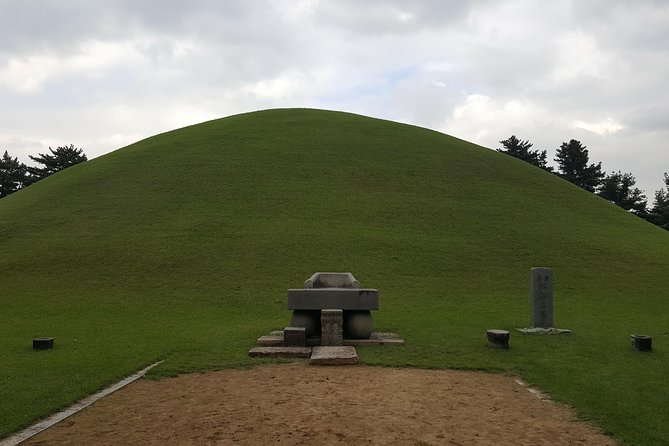
Your first major stop is Cheonmachong Tomb, within an area containing more than 20 large and small burial mounds from the Silla period. The rounded earthen tombs give Gyeongju its unusual look. Instead of a palace wall or grand stone gate, the old royal center announces itself through grassy hills built over the dead.
Cheonmachong is especially useful as an introduction because you can enter an excavated tomb. You get a closer sense of how the mound was constructed and why these were not ordinary graves. The tombs are linked with kings and court officials, and excavations have produced important objects connected with Silla rulers.
Allow about an hour here. The stop works best when your guide explains what you are looking at. Without that context, the mounds can seem like pleasant green hills. With it, the site becomes a royal cemetery and an archaeological record of power, ritual, and craftsmanship.
The drawback is that the visit is mostly outdoors. Wear shoes you can walk in and bring protection from sun or rain. The tour does not list a meal break at this point, so you should have breakfast before pickup or carry something for the morning.
Gyeongju National Museum puts the city together
The Gyeongju National Museum is the intellectual center of the day. After seeing tombs and monuments in the open air, you can view the objects that explain the Silla capital’s importance.
The archaeological hall contains ceremonial items and other remains from the dynasty. This is where small objects can add meaning to the large sites. Metalwork, religious pieces, burial goods, and court treasures help you picture the people who built and used the monuments.
I would give the museum your full hour rather than treating it as a quick indoor pause. It is also a useful break if the weather turns wet. The admission fee is included, and there is no extra museum charge listed.
Your guide’s role matters here. John is described as a guide who told stories about the city and its past, while another guide was praised for having a strong command of Korean history and culture. One person found the guide’s English accent difficult to follow, so if clear spoken English is a major concern for you, it is worth raising that preference when you book.
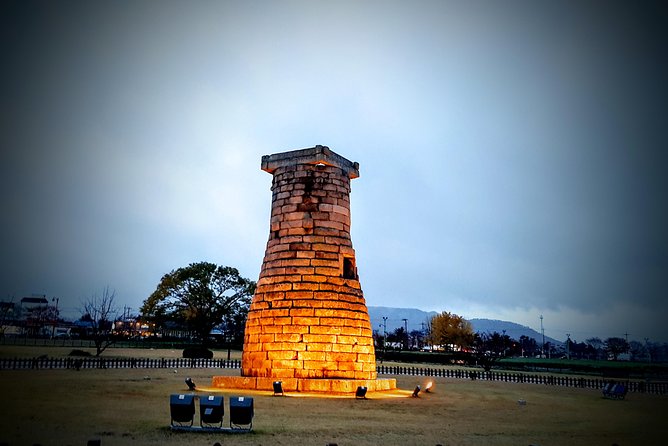
Cheomseongdae, the oldest surviving observatory
Cheomseongdae means Star Gazing Tower. Built in 634 during the reign of Queen Seondeok, it is described as the oldest existing observatory in the Far East. Its compact stone form is easy to overlook if you expect a tall tower, but the structure is one of Gyeongju’s most distinctive early scientific monuments.
The tower is made from carefully arranged stone levels. Your guide can explain its connection with astronomy and the Silla court, where observing the sky had practical, religious, and political importance.
This stop takes about an hour and is free to enter. It is also close in character to the royal tomb area: you are walking through an open archaeological zone, not entering a preserved palace room. That makes comfortable footwear and sensible weather clothing useful again.
Cheomseongdae is a good example of what this tour does well. You see the object, then move on before the day becomes too specialized. If you want a detailed study of Silla science, you would need more time. If you want a broad first visit, the stop is well judged.
More Museum Visits in Seoul:
- Brussels: Train World Museum Entrance Ticket
★ 4.7 · 524 reviews - London: Postal Museum Entry Ticket and Underground Rail Ride
★ 4.6 · 363 reviews - Brussels Train World Museum Entrance Ticket
★ 4.5 · 220 reviews - From Krakow: Zakopane Tour with Gubalowka Funicular & Museum
★ 4.5 · 80 reviews
Donggung Palace and Wolji Pond after dark in spirit
Donggung Palace and Wolji Pond, formerly called Anapji Pond, was created in 674 after the unification of the Korean Peninsula. The palace complex included artificial hills, planted trees and flowers, and animals brought into the grounds.
The pond is one of Gyeongju’s most attractive historic settings, but its value goes beyond scenery. It shows how the Silla court shaped gardens and water features for royal gatherings. The combination of buildings, water, and carefully planned grounds gives you a glimpse of palace life that the burial mounds cannot provide.
You have about an hour here. The site is included in the admission package, and the visit is generally easy to fit into the day because you are not dealing with a long mountain walk. Still, much of the appeal is outside, so rain can change the experience.
If you have seen photographs of the pond at night, keep your expectations in check. This day trip is built around daytime touring, and the schedule also includes Bulguksa and Seokguram. You are seeing the historic site itself, not planning a separate evening visit.
Bulguksa Temple and the Silla Buddhist world
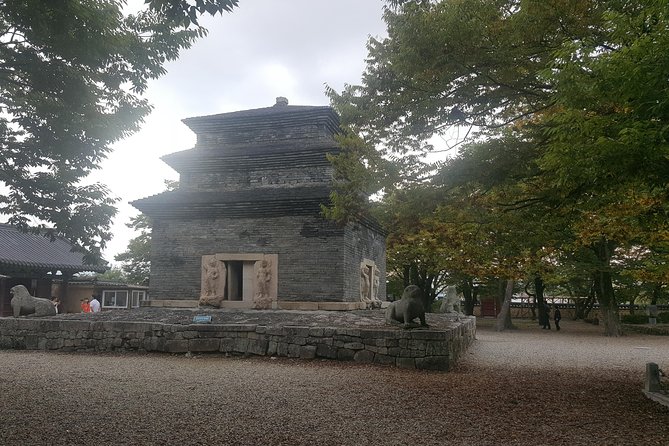
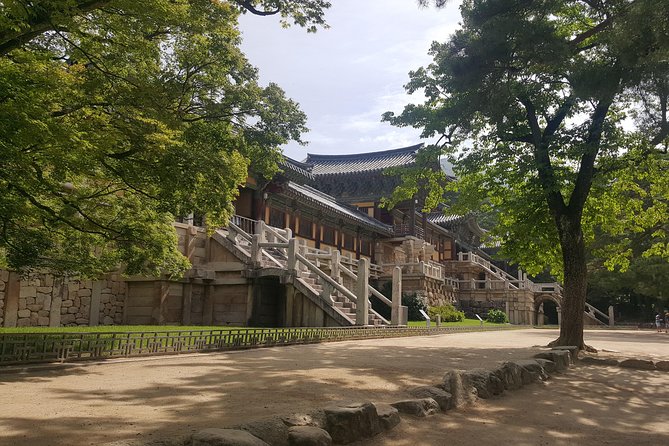
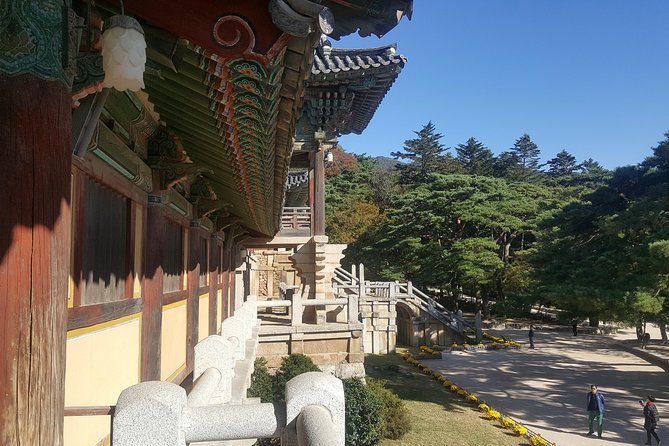
Bulguksa is Korea’s most famous Buddhist temple and one of the main reasons to visit Gyeongju. The grounds hold important Silla-era relics, including the stone pagodas Dabotap and Seokgatap.
The temple gives the day a different rhythm. The tombs are quiet earthworks, the museum is object-focused, and Bulguksa brings you into a living religious setting with stairs, halls, stonework, and ceremonial design. Your guide can help you notice details that are easy to miss when you are simply walking from gate to gate.
Plan for an hour, although the site can easily reward more time. The tour schedule is tight, so you will get an introduction rather than every corner of the complex. That is a fair trade for seeing both Bulguksa and Seokguram on the same day.
The temple also involves walking and some uphill movement. Most people can take part, but anyone with mobility concerns should ask the operator for current details before paying. The supplied information says most participants can join, not that every path is suitable for every ability.
Seokguram Grotto on the mountain
Seokguram Grotto is a hermitage connected with Bulguksa. It sits about 750 meters above sea level and looks toward the East Sea. Inside is a celebrated Buddhist sculpture, protected within the grotto.
This is the day’s most dramatic setting. You leave the lower temple area and reach a mountain site where the view and the sculpture work together. The grotto is not simply another building to tick off. It shows how Silla builders joined religious art with a carefully chosen natural setting.
You have about an hour here, and that is enough for a focused visit, though not an unhurried one. The high location also makes weather important. Fog, rain, or low cloud can reduce the view, while wet conditions may make walking less pleasant.
Seokguram is one reason I would not book this tour only for a casual city outing. The day asks you to move from tombs to museum displays, then to temple grounds and a mountain hermitage. For anyone interested in ancient Korea and Buddhist art, that range is the heart of the experience.
What the $470 price really covers
At $470 per person, this is not a cheap day trip. The price makes more sense when you separate out what is included: Seoul-area hotel pickup, a private vehicle, round-trip KTX fare in economy class, an English-speaking local guide, and admission fees to the paid sites.
You are paying for time and reduced hassle as much as transport. A lower-cost independent visit could be possible, but you would need to buy train tickets, reach the station, arrange transport around Gyeongju, manage admissions, and keep six stops moving on schedule.
The private setup is especially valuable for couples, families, and small groups with a shared interest in history. Group discounts are offered, but the exact saving is not provided, so check the total for your party rather than assuming the per-person price will drop by a set amount.
Lunch is not included. The schedule allows for food, and one guide took a group to a small local restaurant with generous portions, but the exact restaurant and lunch arrangement are not guaranteed. Hotel drop-off in Seoul is also excluded, so plan your evening ride back from the station or final drop point.
The long day, weather, and guide fit
The tour runs about eight to nine hours, though the early start and KTX travel make it feel like a full day. The train is comfortable and efficient, but you should not mistake this for a relaxed local outing. You are covering a large distance and a demanding list of historic sites.
Rain deserves serious attention. Cheonmachong, Cheomseongdae, Donggung Palace and Wolji Pond, Bulguksa, and the approach to Seokguram all involve outdoor time. One person found heavy rain greatly reduced the pleasure of the day, even though the operator helped with schedule changes.
Guide fit can shape the experience. Names associated with recent tours include Jay, Andrew, John, and Dylan. Dylan was praised for being personable and well informed about Silla history, while John was valued for stories and a good lunch choice. Jay met a group directly at the Gyeongju station after its escorted train journey.
English ability appears strong overall, but one person had trouble with an accent. That is not a reason to reject the tour, but it is a fair point to consider if you need very easy-to-follow spoken explanations.
Who should book this Gyeongju day trip?
I would choose this tour if you have limited time in Korea and want Gyeongju handled in one organized day. It is particularly good for first-time visitors who want the main Silla sites without learning the local transport system.
It also fits people who care more about historical context than free time. You will not have hours to wander, shop, or pause wherever you like. In exchange, you get a broad, well-connected look at the old capital.
I would hesitate if you dislike early starts, long train rides, or tightly scheduled sightseeing. I would also think twice if your main goal is photography at a slow pace, since six stops and the return to Seoul leave limited room for lingering.
The cancellation policy is forgiving if your plans change: cancel at least 24 hours before the start for a full refund. Changes or cancellations inside that window are not accepted for a refund, and the experience can be moved or refunded if its minimum group requirement is not met.
Should you book it?
Book this if you want maximum historical coverage with minimum transport planning. The strongest parts are the private vehicle, careful KTX support, and the mix of major sites: tombs, museum treasures, palace grounds, temple architecture, and mountain Buddhist art.
Skip it if Gyeongju deserves a slower overnight visit for you. At $470, the tour is best understood as a high-convenience introduction, not the least expensive way to reach the city. For a first visit from Seoul, especially with only one spare day, I think the convenience earns its keep.
FAQ
How long does the Gyeongju tour from Seoul take?
The experience lasts approximately eight to nine hours, including travel between Seoul and Gyeongju.
What time does pickup begin?
The listed start time is 7:00 am. Hotel pickup is offered in Seoul areas.
Is the KTX train fare included?
Yes. Round-trip KTX fare in economy class is included in the price.
Is transportation within Gyeongju included?
Yes. The tour includes round-trip transfer service by private vehicle.
Which sites are visited?
The stops are Cheonmachong Tomb, Gyeongju National Museum, Cheomseongdae Observatory, Donggung Palace and Wolji Pond, Bulguksa Temple, and Seokguram Grotto.
Are admission fees included?
Yes. Admission fees to the tourist sites are included. The museum admission is listed as free.
Is lunch included?
No. Meals are not included in the tour price.
Does the tour include hotel drop-off in Seoul?
No. Hotel pickup is included, but hotel drop-off service in Seoul is not included.
Is this a private tour?
Yes. Only your own group participates in the activity.
Can I cancel for a full refund?
Yes, if you cancel at least 24 hours before the experience start time. Cancellations or changes made less than 24 hours before the start are not refunded.
Just added for rail travellers in Seoul
- Scenic Escape: Nami Island, Garden of Morning Calm, and Rail Bike★ 3.0 · 2 reviews
- Nami Island & Petite France & Italian Village & Gangchon Rail Bike One-Day Tour★ 4.5 · 52 reviews
- Special Private Tour Nami Island, Rail Bike, Petite France★ 5.0 · 42 reviews
- Private Tour Rail Bike & Nami Island & (Petite France or Garden of Morning Calm)★ 4.5 · 13 reviews
- Alpaca World with Gangchon Rail Park One Day Tour★ 4.5 · 3 reviews
- Eobi Ice Valley, Nami Island, Morning Calm and Rail Bike Seoul★ 5.0 · 9 reviews
- Eobi+Nami+Hanbok Tour with Rail Bike or Strawberry Option★ 5.0 · 10 reviews
- Nami Island Trip with Petite France & Italian Village and Gangchon Rail Bike★ 4.5 · 41 reviews
High-Speed and Bullet Trains, compared.
Mt Fuji & Hakone Cruise, Drum Show Bullet Train 1 Day from Tokyo
Read our review →
Tokyo Mt Fuji 5th St & Hakone Cruise Bus Tour w/Bullet Train
Read our review →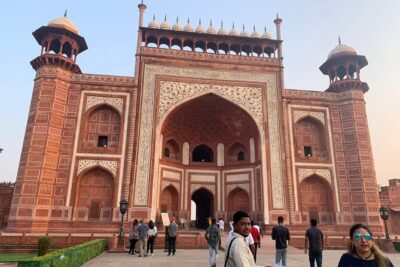
Taj Mahal & Agra Tour by Gatimaan Express Train
Read our review →
Pompeii Tour with Wine and Lunch by High Speed Train
Read our review →
Venice Day Trip from Rome by High-Speed Train with Happy Hour
Read our review →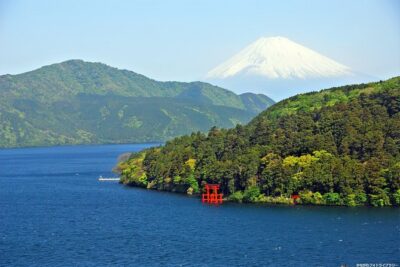
Mt. Fuji and Hakone Day Trip From Tokyo with Bullet Train Option
Read our review →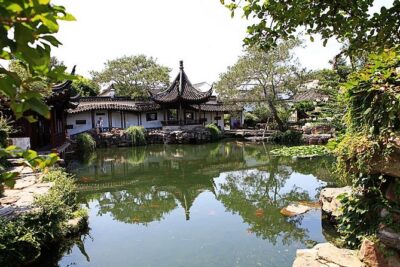
Suzhou Private Day Trip from Shanghai with Bullet Train Option
Read our review →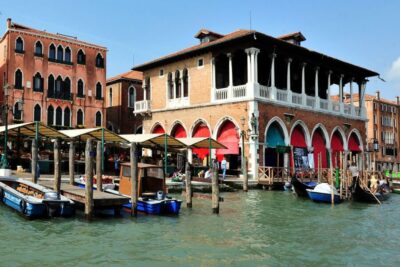
Browse the lists this tour appears in