
Review · USA TRAIN JOURNEYS
Rockies to the Red Rocks Train – Denver to Moab – SilverLeaf Plus
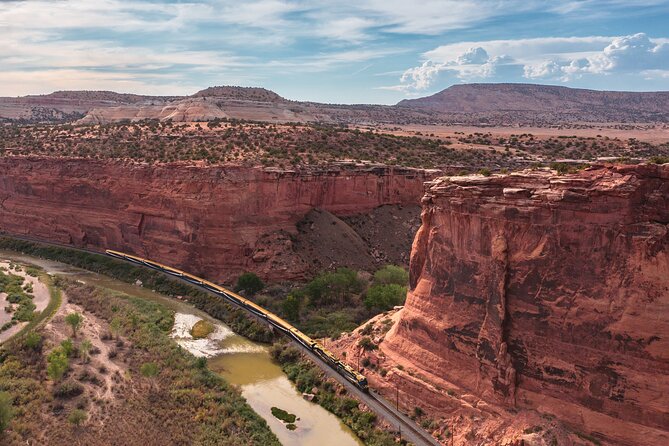
The best part of this journey is the route itself. From Denver, you climb through the Rockies, cross the Continental Divide through the 6.2-mile Moffat Tunnel, then follow the Colorado River into canyon country before red rock formations appear near Moab. The train gives you a calm view of places that are hard to reach by road.
I like the all-in rail service, with meals, drinks, storytelling, hotel baggage transfers, and an overnight stop handled for you. I also like the SilverLeaf Plus lounge car, which gives you another place to sit when you want a change from your main coach. The main drawback is the price: at $2,327 per person, this is a special-occasion journey, not a cheap way to get from Colorado to Utah.
Key points to know
- The Moffat Tunnel crossing: You pass beneath the Continental Divide through a 6.2-mile railroad tunnel before descending toward Winter Park and the Colorado River.
- Gore Canyon by rail: More than 1,000-foot cliffs rise around one of the route’s most dramatic sections, but the train does not stop there.
- One night in Glenwood Springs: Your overnight is in a moderate, clean, comfortable hotel, with the exact property assigned shortly before departure.
- SilverLeaf Plus comforts: You get lounge-car access, a small outdoor viewing area, premium alcoholic drinks, and signature cocktails.
- A full day beside the Colorado River: Day two brings De Beque Canyon, red sandstone walls, old railroad towns, and views toward Arches National Park.
- Limited changes after booking: The fare is non-refundable and cannot be changed, so you need firm plans before paying.
Why this rail route is worth considering
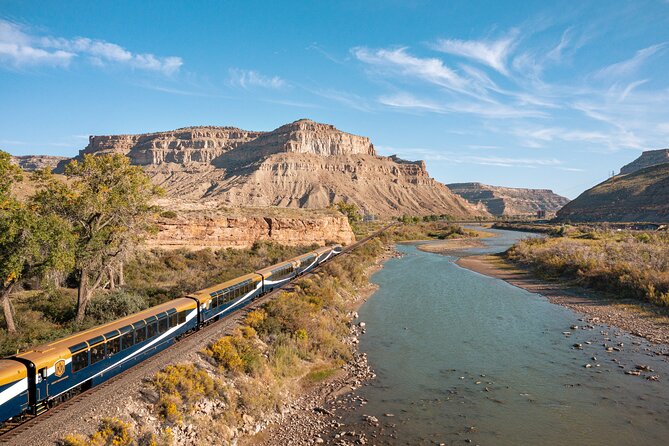
This is not a sightseeing train that makes frequent stops. It is a slow, polished way to cross a large stretch of the American West while keeping your attention on the scenery instead of the road.
The route covers two very different regions. Day one is a mountain journey, with steep walls, pine-covered slopes, river bends, and engineering works built to tame difficult terrain. Day two shifts toward broad desert views, sedimentary cliffs, red sandstone, and the first unmistakable signs of Moab country.
I find that contrast more interesting than a route that serves only one type of scenery. You begin among high Rocky Mountain valleys and finish near the red cliffs of Utah. The train also lets you watch the scenery without stopping for fuel, checking directions, or keeping your eyes on traffic.
Still, you should know what you are buying. This experience is about comfort, service, and passing scenery, not independent exploring at each viewpoint. The train passes many places that would reward a longer visit, including Gore Canyon and the Colorado River canyons, but you remain onboard.
More Train Journeys in the USA:
- Key West Conch Tour Train
★ 4.5 · 792 reviews - Skunk Train: Pudding Creek Express from Fort Bragg
★ 4.0 · 260 reviews - Skunk Train: Wolf Tree Turn from Willits
★ 4.5 · 258 reviews
Denver departure and the climb into the Rockies
Boarding begins in Denver in the morning. Before the train gets into the mountains, the transfer route passes through RiNo, Denver’s River North Art District, known for creative businesses and colorful street murals. It is a brief city introduction rather than a full neighborhood tour, but it gives the morning a local touch before the scenery changes.
Once the train leaves the urban area, breakfast and lunch are served at your seat, along with drinks and snacks during the day. That matters because the route is long and the best views do not arrive on a predictable schedule. You can keep watching the windows instead of leaving the scenery to find food.
One of the early engineering highlights is the Big 10 Curve. The tight 10-degree radius curves add track mileage so the railroad can keep the grade at about 2 percent. You may notice the train taking a patient, winding route rather than charging straight uphill. That extra track is part of the story of how railroads cross mountain country.
The route then gives you views toward Boulder and the Flatirons, where the Rocky Mountains meet the Plains. The Gross Reservoir Dam comes into view as the train gains height. The reservoir supplies water to Denver and to agricultural areas farther east, so this is more than a pretty mountain view. It also shows how closely Colorado’s cities and farms depend on mountain water.
Crossing the Continental Divide through Moffat Tunnel
The Moffat Tunnel is one of the day’s major moments. The train spends about 6.2 miles cutting through mountainous terrain beneath the Continental Divide. You will be in darkness for a while, then emerge near the Winter Park area, with the scenery changing as the train moves beyond the divide.
This section gives you a useful sense of scale. The tunnel is not a quick photo stop. It is a long passage through solid mountain, built to create a more practical railroad route across difficult terrain. After the tunnel, the train continues toward the Colorado River and the high country around Winter Park.
For the best experience, pay attention to the transition rather than expecting a single postcard view. The appeal here is the sequence: city, foothills, reservoir, tight curves, tunnel, mountain resort country, then river canyon.
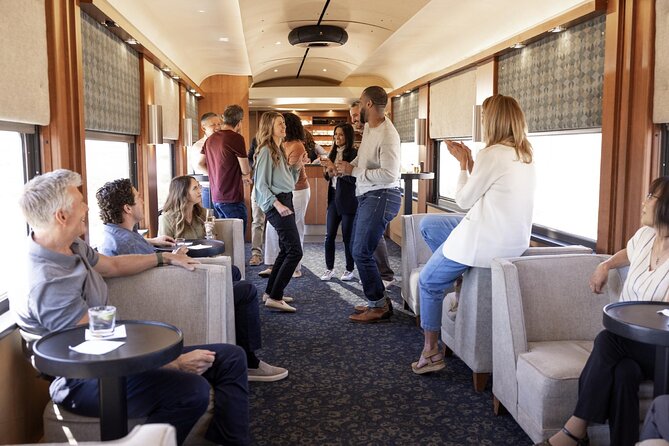
SilverLeaf Plus is particularly useful on this first day. The lounge car offers extra room when you want to stretch out or talk with other people in your group. A small outdoor viewing area gives you a different way to see the route, though the supplied details do not describe its size or how long you can use it at any one time.
Gore Canyon and the Colorado River
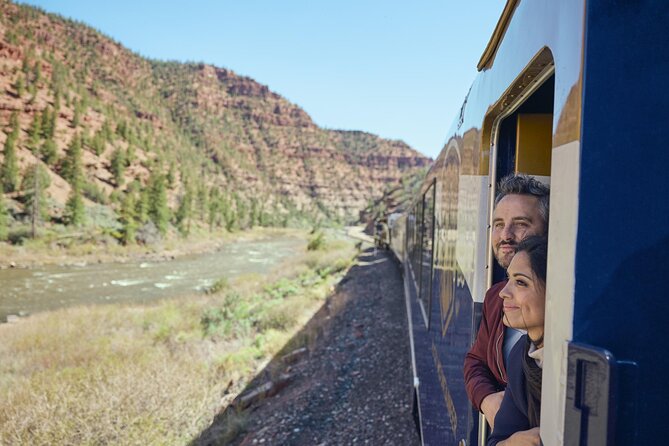
Much of the journey follows the Colorado River. The river is famous for its canyon walls and whitewater, and you may spot rafters offering a playful greeting as the train passes. It is a nice reminder that this corridor serves both railroad history and outdoor recreation.
Byers Canyon brings narrower, more rugged scenery, with the possibility of seeing wildlife. No sightings are guaranteed, so keep your eyes open without treating wildlife as a scheduled part of the trip.
Gore Canyon is the dramatic centerpiece of day one. Cliffs more than 1,000 feet tall surround parts of the route, and the upper and lower sections have different drops and rock forms. The train passes through this area but does not stop, so have your camera ready and do not wait for an announcement before watching the windows.
This is also where the limits of a rail-only journey become clear. You get a strong moving view of the canyon, but you cannot step out for a walk or spend extra time at a viewpoint. If you want hikes, rafting, or close-up photography, you will need to add separate time before or after the train journey.
Same line, a different day out:
- Key West Conch Train Tour
★ 4.5 · 234 reviews - Fairbanks: Gold Dredge 8 Historic Train Tour
★ 4.7 · 219 reviews - Wild West Day Trip to Virginia City from Tahoe with Train Ride
★ 4.0 · 142 reviews - All-Day Guided Zipline Tour with Train Ride and Lunch in Durango
★ 5.0 · 133 reviews
Glenwood Springs makes a useful overnight stop
The train reaches Glenwood Springs in the evening. Your one-night accommodation is included, and your checked bags are transferred to and from the hotel, which saves you from hauling large luggage through town.
The hotel is described as moderate, clean, and comfortable, with essential amenities and good service. The exact property is assigned a few days before departure and appears on your boarding pass at train check-in. That means you should not plan your evening around a specific hotel until the assignment is confirmed.
Glenwood Springs is known as a historic resort town and spa destination. You can relax in your room or use the evening for a soak at the Glenwood Springs Hot Springs. The hot springs are mentioned as an option, but admission details are not included in the rail fare, so check the current arrangements before counting on that as part of your evening.
The overnight break is practical as well as pleasant. A two-day route without a hotel stop would make for a very long rail day. Glenwood Springs divides the mountain and desert portions into two manageable sections, while giving you a chance to sleep in a real bed.
Day two follows the river toward Utah
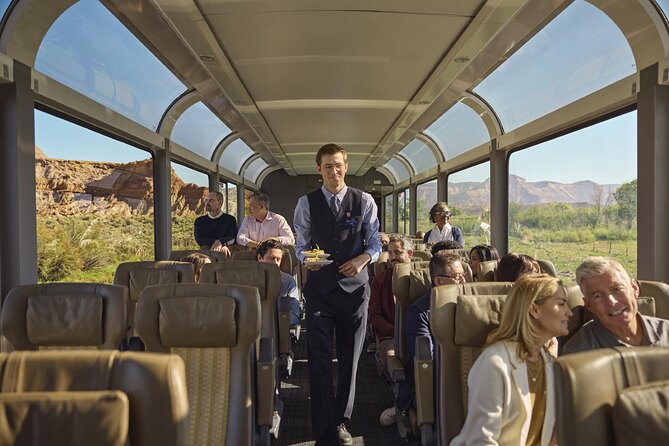
The second morning begins with a two-course hot breakfast made with locally sourced ingredients. As the train leaves Glenwood Springs, the scenery starts to shift from steep mountain corridors toward drier canyon country.
New Castle comes first, with the Colorado River passing through town. The area is linked to trout fishing, rafting, and kayaking, and deer, elk, and black bear are found in the surrounding region. Again, wildlife is possible rather than promised, but the mix of river activity and open country gives this part of the route a different feel from the tighter canyons of day one.
The train then passes Parachute Creek and Mount Logan before reaching De Beque Canyon. This 15-mile canyon is marked by stair-step layers of sedimentary rock. The rock strata are the main attraction here, showing how long periods of deposition and erosion can create broad, patterned canyon walls.
Grand Junction appears at the meeting point of the Gunnison River and the Colorado River, which was once called the Grand River. It is the largest city along this section of the route and serves as a useful marker between the higher country and the drier western valleys.
Near Fruita, the setting becomes more open, with mesas and a connection to dinosaur fossils. Fruita also has the unusual claim of being associated with Mike the Headless Chicken, a local character remembered each May during a festival. It is a small, odd detail, but it gives the route some personality beyond geology.
Red sandstone, abandoned rail towns, and Moab
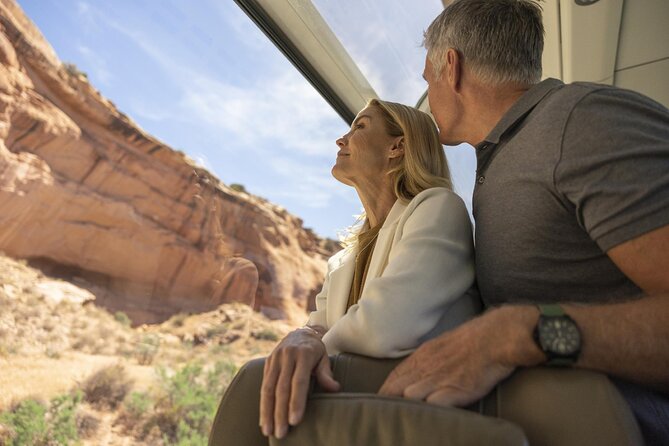
The Colorado River continues through a roughly 25-mile canyon lined with red sandstone walls. Much of this stretch is difficult to access from land, which is one of the strongest arguments for taking the train. You get a continuous view of the river corridor without needing a raft, a four-wheel-drive vehicle, or a long hike.
The route passes Cisco, Utah, once a busy community and a water stop for steam locomotives on the Denver and Rio Grande Western Railroad. Interstate 70 and the decline of steam rail service changed Cisco’s role, leaving it with a much quieter character.
Thompson Springs suffered a similar decline. Only a few residents remain, and the town has very few buildings. These places are not polished attractions with large visitor facilities. Their value is in what they reveal about older transport routes, changing technology, and the way a highway can replace a railroad town.
As you approach Moab, red rock formations begin to dominate the view. You can see toward Arches National Park, with the La Sal Mountains rising in the distance. The La Sals are Utah’s second-highest mountain range, and their snow or darker peaks can create a striking contrast with the desert rock around Moab.
The train ends in Moab, the gateway to Arches, Bryce Canyon, Canyonlands, Capitol Reef, and Zion National Parks. This journey does not tour those parks, so plan extra nights and transport if you want to visit them. Its job is to bring you into Moab by a scenic rail route, not to replace a national park itinerary.
What SilverLeaf Plus adds
SilverLeaf Plus is the upgraded service level for this route. The clearest benefit is the lounge car, which gives you extra space beyond your regular seat. That can be valuable over two long days, especially if you want to change your view or have a quieter place to sit for part of the trip.
You also receive access to a small outdoor viewing area. This may help you see the river and canyon walls without glass between you and the scenery, but outdoor space is limited by nature. Do not expect a large open-air carriage or unlimited private viewing time.
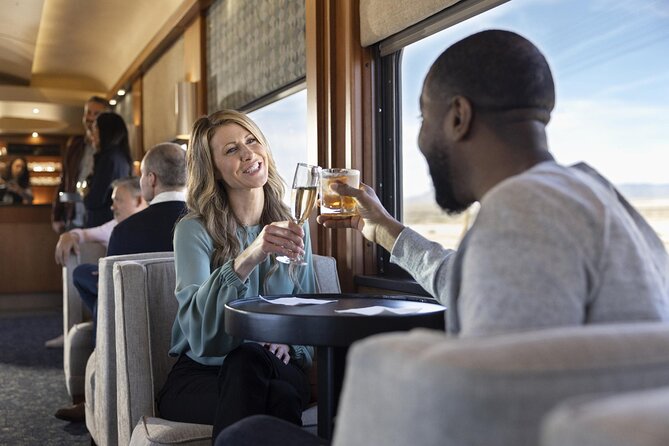
Food and drink are brought to your seat. The trip includes breakfast, lunch, snacks, and drinks, while premium alcoholic beverages and signature cocktails are part of the SilverLeaf Plus service. Gratuities are included too, so you do not need to keep calculating tips during meals and service.
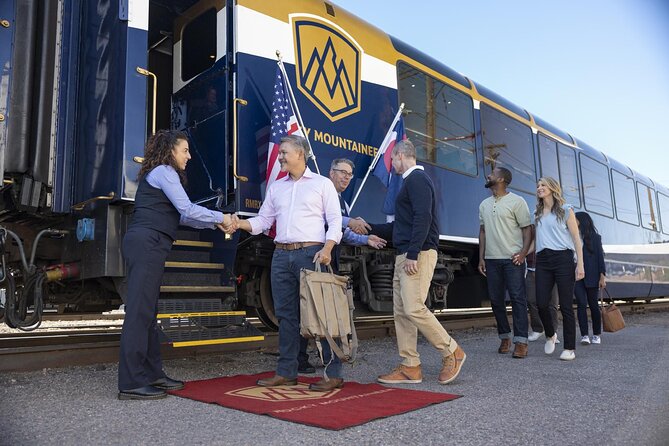
The onboard hosts provide route stories and practical help. No individual host names are supplied, so you should not book this expecting a particular guide. The service is designed around attentive onboard staff rather than a single guide leading a walking tour.
Is $2,327 a fair price?
At $2,327 per person, the fare is high compared with driving, bus travel, or a basic flight between Colorado and Utah. But those options do not provide the same moving views, meals, lounge access, hotel night, baggage handling, and onboard service.
I would judge the value by asking how much you care about the journey itself. If Moab is only a destination and you want to arrive quickly, this is hard to justify. If the railroad route is the main event, the cost includes two full days of service and a hotel night, not just transportation.
The fare covers lunch, the Glenwood Springs accommodation, onboard restroom access, gratuities, food and drinks, luggage transfers, hosts, and SilverLeaf Plus benefits. It does not cover lodging before Denver or after Moab, airfare, connecting transport, or onboard Wi-Fi.
The lack of Wi-Fi may be a drawback if you need to work. I see it as a reason to plan for offline time, though that will not suit everyone. You should also budget separately for your stay in Moab and for national park visits after arrival.
Who should book this journey?
I would recommend it for people who value scenery, comfort, and a slower way to cross the West. It suits couples, families with older children, rail fans, and anyone who would rather watch the road than drive through two states.
It is less suitable if you want frequent stops, hiking, close-up wildlife viewing, or control over every hour. The train passes through major scenic areas but does not stop in Gore Canyon, Byers Canyon, the Colorado River canyon, Cisco, or Thompson Springs.
Most people can participate, and service animals are allowed. The trip has a maximum of 15 participants, according to the supplied tour details, though the train itself is clearly a larger shared setting. The small group figure may apply to the organized tour portion rather than the entire rail carriage, so ask the operator if group size matters to you.
Luggage rules are straightforward: two pieces per person, with a combined maximum of 30 kilograms or 60 pounds. No single piece may weigh more than 23 kilograms or 50 pounds. Since baggage is transferred to your Glenwood Springs accommodation, pack a small overnight bag if you want quick access to essentials.
Should you book Rockies to the Red Rocks?
Book this if you want the route to be part of your holiday, not just a way to get from Denver to Moab. The best reasons are the Continental Divide crossing, Gore Canyon, the Colorado River corridors, and the gradual change from Rocky Mountain scenery to Utah red rock.
Skip it if your main goal is saving money, reaching Moab quickly, or spending time off the train. The price is substantial, the fare cannot be refunded or changed, and many scenic sections pass by without a stop.
For the right person, SilverLeaf Plus makes the two-day ride feel like a destination in itself. You get the comfort of organized service without giving up the changing scenery outside your window.
FAQ
How long is the Rockies to the Red Rocks journey from Denver to Moab?
The journey lasts approximately two days, with one overnight stay in Glenwood Springs, Colorado.
Where does the westbound journey end?
For westbound departures from Denver to Moab, the train disembarks at the Hoodoo Moab Hotel.
What time does the journey start?
The stated start time is 8:30 am.
Is a hotel night included?
Yes. One night of accommodation in Glenwood Springs is included.
What type of hotel is used in Glenwood Springs?
The accommodation is described as moderate, clean, and comfortable, with essential amenities and good service. The specific hotel is assigned a few days before departure.
Are meals included?
Yes. Meals include breakfast and lunch, with snacks and drinks during the journey. Day two includes a two-course hot breakfast with locally sourced ingredients.
What does SilverLeaf Plus include?
SilverLeaf Plus includes access to a lounge car, a small outdoor viewing area, premium alcoholic beverages, and signature cocktails.
Is Wi-Fi available onboard?
No. Wi-Fi is not included onboard.
How much luggage can each person bring?
Each person may bring a maximum of two pieces, with a total combined weight of 30 kilograms or 60 pounds. No single piece may weigh more than 23 kilograms or 50 pounds.
Can I cancel or change the booking?
No. The experience is non-refundable and cannot be changed for any reason. Cancellations or amendment requests are not refunded.
Just added for rail travellers in the USA
- Skip the Line: Historic RailPark and Train Museum Ticket with Guided Tour★ 4.5 · 59 reviews
- Sedona: Grand Canyon Railway Full-Day Scenic Rail Tour★ 4.7 · 89 reviews
- Chattanooga: Derailed Trolley Tour and Train Ride★ 4.5 · 126 reviews
- Sedona, AZ: Grand Canyon Guided Tour and Historic Railway★ 4.6 · 122 reviews
- Derailed Adventure – Chattanooga Trolley & Train Combo Tour★ 4.5 · 125 reviews
- All-Day Guided Zipline Tour with Train Ride and Lunch in Durango★ 5.0 · 133 reviews
- Wild West Day Trip to Virginia City from Tahoe with Train Ride★ 4.0 · 142 reviews
- Key West Conch Train Tour★ 4.5 · 234 reviews
USA Train Journeys, compared.
Skunk Train: Pudding Creek Express from Fort Bragg
Read our review →
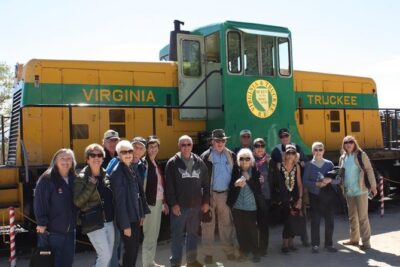
Wild West Day Trip to Virginia City from Tahoe with Train Ride
Read our review →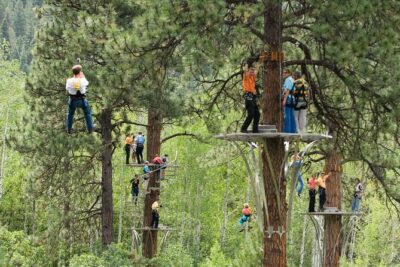
All-Day Guided Zipline Tour with Train Ride and Lunch in Durango
Read our review →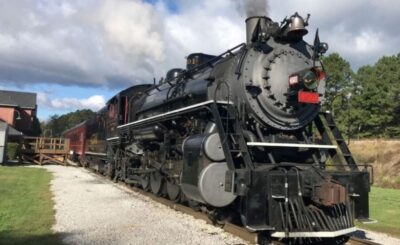
Chattanooga: Derailed Trolley Tour and Train Ride
Read our review →Browse the lists this tour appears in