
Review · USA TRAIN JOURNEYS
Rockies to the Red Rocks Train Moab to Denver SilverLeaf
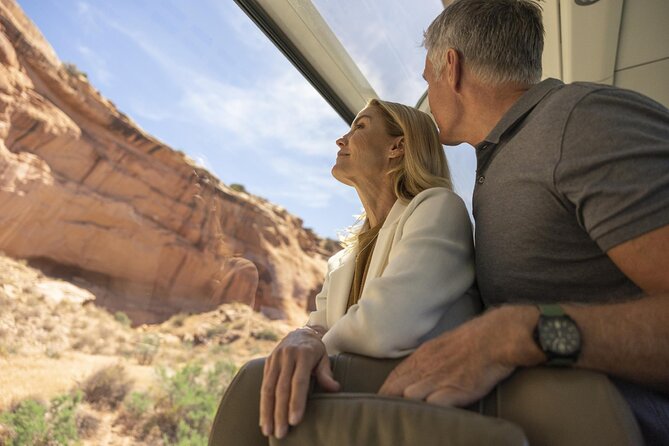
Moab to Denver by rail is a rare way to see the American West. Instead of threading traffic through southern Utah and western Colorado, you watch red cliffs, desert rivers, old railroad towns, and mountain canyons pass your window from a comfortable SilverLeaf seat. The route includes an overnight in Glenwood Springs, so the trip feels like a small journey rather than a long transfer.
I like the steady sightseeing pace and the fact that meals, drinks, luggage handling, and a hotel night are part of the package. I also like the onboard storytelling. Tristan, one of the hosts, has been praised for explaining geography, history, plants, and animals, while chef Rae prepares creative meals onboard.
The main consideration is cost: $1,723 per person is a serious spend for two days, and most stops are viewed from the train rather than explored on foot. You need to value comfort, scenery, and service more than independent sightseeing time.
Key points to know before booking
- You cross from Utah into Colorado through Ruby Canyon, with red sandstone walls and the Colorado River close to the tracks.
- The overnight stop is Glenwood Springs, where you can use the included hotel and may have time for the famous hot springs.
- SilverLeaf meals come to your seat, along with snacks and complimentary beverages.
- Day two brings the most dramatic mountain scenery, including Glenwood Canyon, Gore Canyon, Byers Canyon, and the Continental Divide.
- The train passes through, rather than stops at, most sights, including Arches National Park, Cisco, Winter Park, Boulder, and the Big 10 Curve.
- The trip ends at Denver Union Station, with a motorcoach transfer involved at the Denver end.
Why this rail route is different from a road trip
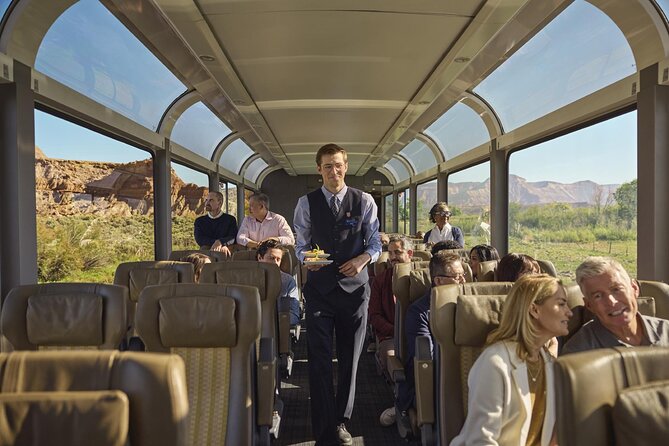
This is not a hop-on, hop-off tour of Utah and Colorado. It is a moving viewpoint, designed for scenery and service. You remain onboard for much of the route, with meals brought to your seat and hosts sharing information as the train moves through the country.
That distinction matters. A car lets you stop at Arches National Park, walk to an overlook, or linger in a small town. Rocky Mountaineer gives you a better view of places that are difficult to reach by road, especially narrow river canyons. You can watch the scenery without driving, navigating, or keeping an eye on the road.
The route is split into two very different days. The first begins in Moab’s dry red-rock country and gradually follows the Colorado River into western Colorado. The second leaves Glenwood Springs for steep mountain country, high passes, ski towns, and views toward Boulder and Denver.
The advertised start time is 2:00 pm at the Rocky Mountaineer Moab Guest Centre at 59 South Main Street, Suite 3. A motorcoach transfer takes you from the central meeting point to the train departure location. Because pickup timing can differ, check your final documents carefully. One recorded trip had a bus pickup at 1:15 pm, earlier than the general start time shown for the experience.
More Train Journeys in the USA:
- Key West Conch Tour Train
★ 4.5 · 792 reviews - Skunk Train: Pudding Creek Express from Fort Bragg
★ 4.0 · 260 reviews - Skunk Train: Wolf Tree Turn from Willits
★ 4.5 · 258 reviews
Day one: Moab, arches, and the Colorado River
Moab is a fitting starting point. It is known as the gateway to Utah’s five major national parks, and the train leaves from one of the most recognizable desert towns in the region. You board in the afternoon, settle into your SilverLeaf seat, and begin with dinner, snacks, and complimentary beverages.
The first major visual treat is the red-rock country near Arches National Park. The train does not stop inside the park, so you will not visit Delicate Arch or walk among the formations. Still, the passing view gives you a different angle on the red cliffs and the La Sal Mountains, Utah’s second-highest mountain range.
Arches contains more than 2,000 natural arches, including Landscape Arch, whose opening stretches about 306 feet. You will not see the whole park from the train, but the route helps explain why Moab became such a popular base for outdoor trips. If Arches is a priority for you, plan a separate visit before boarding.
The train then passes Thompson Springs, a small settlement with few remaining buildings. Nearby Thompson Wash contains rock art listed on the National Register of Historic Places, including petroglyphs and pictographs left by early Native Americans. Again, there is no stop. This is a brief look at a place you would likely miss on a normal interstate drive.
Cisco offers another reminder that rail towns have changing fortunes. Once a watering stop for steam engines, it declined after steam locomotives disappeared and Interstate 70 changed the flow of traffic. The town is also associated with the 1990 film Thelma and Louise. You see Cisco from the train, not as a walking stop, so keep your expectations modest.
Ruby Canyon and western Colorado
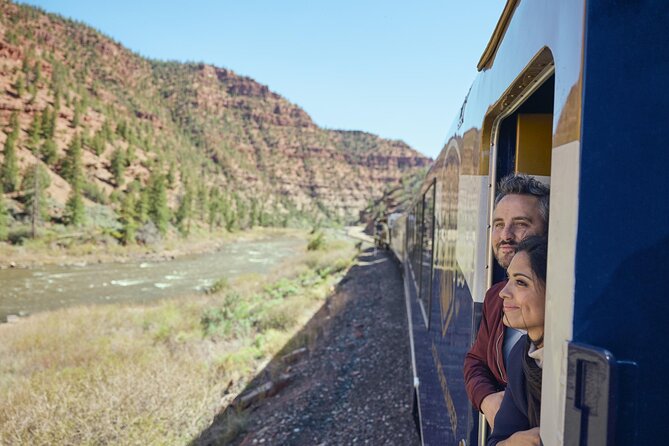
Ruby Canyon is one of the strongest parts of the first afternoon. Red sandstone walls rise around a section of the Colorado River that is difficult to reach by road. The canyon extends about 25 miles, and the train gives you a long, close look at its changing rock formations.
The painted words Utah I Colorado mark the state line on the canyon wall. Keep your camera ready, but do not spend the whole passage staring at a screen. The value here is the changing scale of the view: river, track, canyon wall, and open sky appear together in a way that is hard to appreciate from a highway.
The train continues through Fruita and Grand Junction. Fruita is known for dinosaur fossils and for the unusual story of Mike the Headless Chicken, remembered each May with a festival. Grand Junction, at the meeting point of the Gunnison and Colorado rivers, is the largest city on Colorado’s western slope and has long been tied to fruit growing.
Palisade brings more agricultural character. The town is known for its peaches and is Colorado’s first wine region. Above it rises Mount Garfield, the highest point of the Book Cliffs. These cliffs stretch for about 200 miles and help mark the broad change from Utah desert to Colorado’s western valleys.
You continue through New Castle, where the Colorado River supports fishing, rafting, and kayaking. The surrounding mountains are home to deer, elk, black bears, and mountain lions. You may spot wildlife, but the route’s real strength is the river corridor and the succession of canyons.
Glenwood Springs: the useful midpoint
You arrive in Glenwood Springs in the evening and leave the train for the night. A hotel, luggage handling, and a motorcoach transfer are included. The hotel may be within walking distance, but the exact arrangement and next-morning pickup details are supplied during the trip.
Glenwood Springs is more than a practical overnight stop. It is a historic spa town with hot springs, giving you a chance to relax after the first day. If your arrival time allows, a soak can be a pleasant use of the evening. The schedule is not built around a long town visit, though, so do not book this trip expecting a full Glenwood Springs sightseeing day.
I like this overnight format because it breaks up the rail journey. You are not trapped in a seat for two very long consecutive days, and you get a bed instead of trying to sleep onboard. The tradeoff is that the hotel and evening schedule are part of a packaged rail trip, not an independent overnight chosen around your own plans.
Same line, a different day out:
- Key West Conch Train Tour
★ 4.5 · 234 reviews - Fairbanks: Gold Dredge 8 Historic Train Tour
★ 4.7 · 219 reviews - Wild West Day Trip to Virginia City from Tahoe with Train Ride
★ 4.0 · 142 reviews - All-Day Guided Zipline Tour with Train Ride and Lunch in Durango
★ 5.0 · 133 reviews
Day two: canyons, rapids, and high country
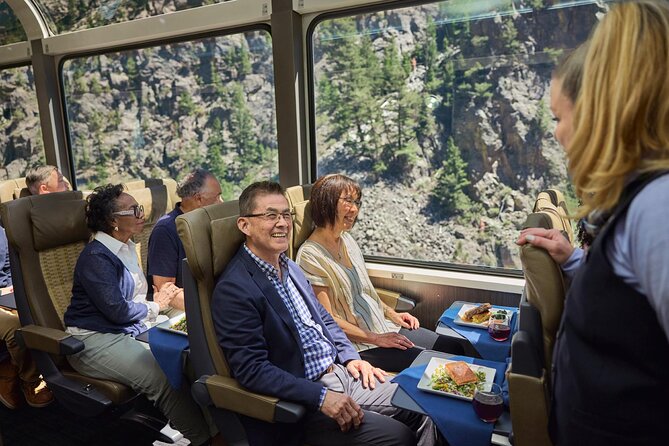
The second morning begins with a two-course hot breakfast using locally sourced ingredients. SilverLeaf service brings meals and drinks directly to your seat, which is convenient and keeps your attention on the view. It also means you do not need to plan separate meal stops during the rail day.
Leaving Glenwood Springs, the train enters Glenwood Canyon. This is among the route’s most impressive sections, with rugged walls and the Colorado River close by. Highway travelers get glimpses of the canyon, but rail passengers can sit back and watch the corridor unfold without concentrating on traffic.
Gore Canyon brings an even wilder feeling. Cliffs rise more than 1,000 feet above the river, and the river drops sharply through upper Gore Canyon. The rapids have names such as Fisherman’s Nightmare and Applesauce, a reminder that this is serious whitewater country. You will not raft the canyon on this trip, but you may see rafters and get a sense of the river’s force.
Byers Canyon continues the river scenery. Keep watching the slopes for wildlife, although sightings are never guaranteed. Much of day two is about patience. The train moves through one rugged section after another, and the pleasure comes from the gradual change in rock, vegetation, river, and elevation.
The Colorado River remains your companion for much of the journey. Rafters sometimes offer a playful greeting to passing trains, adding a human moment to an otherwise remote stretch of country.
Winter Park, the Continental Divide, and Boulder views
Winter Park appears as a mountain resort town with a strong railroad connection. Skiing began there in 1940 with access from the Denver and Rio Grande Western Railroad Ski Train. The area now has about 3,000 acres of ski terrain and receives roughly 300 inches of snow each year.
The train does not stop for a ski day. You see the resort as part of the passing route, then continue toward the Moffat Tunnel. At 6.2 miles, the tunnel cuts through the mountains as the train crosses the Continental Divide. This is an important engineering and geographic moment, even though much of it happens in darkness inside the tunnel.
Afterward, the train gains elevation near Gross Reservoir Dam. Boulder appears in the distance, with the Flatirons providing the most recognizable feature. Boulder sits where the Rocky Mountains meet the Great Plains, and the view helps you understand that change from steep mountain country to open eastern Colorado.
The Big 10 Curve is another engineering detail worth watching for. Its tight curves add track distance while keeping the grade manageable at about 2 percent. You may appreciate this more if you enjoy railroads, but even casual passengers can see how much the route bends to handle the terrain.
SilverLeaf service and the onboard rhythm
SilverLeaf is the standard service level. You receive meals, snacks, complimentary beverages, a restroom onboard, and help from the hosts. Food is brought to your seat rather than served in a separate dining room, so your meal does not require you to abandon the view for long.
Service quality matters on a trip like this. A good host turns passing scenery into a story instead of a string of place names. Tristan has been singled out for clear explanations of geography, history, plants, and wildlife. Chef Rae has been praised for creative meals with strong flavor, which is useful to know if you are comparing this with a basic train transfer.
SilverLeaf Plus is available as an upgrade. It adds access to a lounge car, more room to relax, and a small outdoor viewing area. It also includes a more elaborate dining setup with wine pairings, premium alcoholic drinks, and signature cocktails. You do not need Plus to see the route, but it may appeal if extra space and a change of setting matter to you.
WiFi is not included, and the trip works better if you treat that as a feature rather than a problem. Download anything you need before departure, then use the two days to watch the river and rock instead of refreshing a phone.
What $1,723 buys you
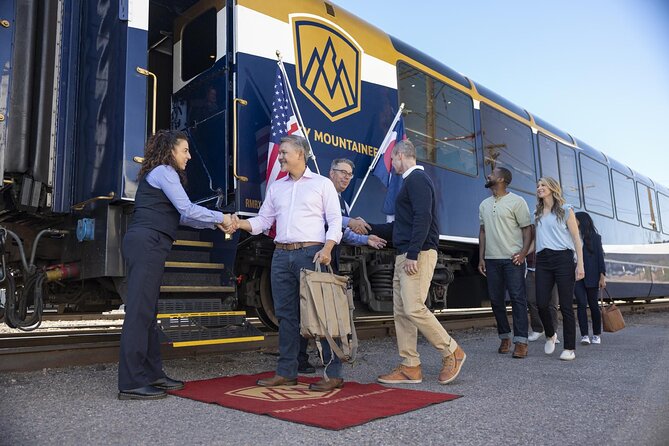
At $1,723 per person, this is not a bargain rail ticket. The price includes breakfast, lunch, dinner, snacks, drinks, one night of accommodation, gratuities, baggage transfers to and from the midpoint hotel, onboard hosts, and motorcoach transfers connected with the train.
That bundle makes the price easier to judge. You are paying for a managed scenic journey, not simply transportation from Moab to Denver. If you would otherwise book a hotel, arrange meals, move your own luggage, and pay for a long-distance transfer, the difference narrows.
Still, the value depends on what you want to do. I would not choose this trip if my main goal were hiking in Arches, exploring Canyonlands, visiting every town, or spending a full day in Glenwood Springs. The train passes through most places without stopping.
I would consider it good value for someone who wants comfort, scenery, meals, and a clear schedule without driving. The service and food are important parts of the purchase. If you only need to get from Moab to Denver, a road transfer will likely be a simpler comparison.
The experience has a maximum group size of 15, according to the booking details, though the rail setting itself is designed around the onboard service rather than a tiny private tour. Service animals are allowed, and most people can participate. Connecting flights, pre-trip lodging, and post-trip lodging are not included.
Denver Union Station and the final transfer
The train journey ends at Denver Union Station. A motorcoach transfer takes you through RiNo, Denver’s River North Art District, known for colorful murals and creative businesses. Look for rhino motifs in the art and signs as you pass through.
You finish in a useful central location rather than at an isolated terminal. From there, you can continue with a Denver hotel, an evening meal, live music, or a walk through Lower Downtown. Those plans are yours to arrange, since lodging after the rail journey is not included.
Who should book this journey?
You should consider it if you enjoy scenery more than constant activity, prefer not to drive, and appreciate having meals, luggage, and accommodation handled for you. It also suits anyone who wants to see river canyons and mountain corridors that are hard to appreciate from a car.
I would be cautious if you need frequent stops, independent timing, or active sightseeing each day. The route is scenic, but it is not a national park tour with trail time. Most named places are viewed through the windows.
The non-refundable policy deserves attention before payment. You cannot change or cancel the booking for a refund, so confirm your dates, connecting plans, and lodging before committing.
FAQ
Where does the journey begin?
It begins at the Rocky Mountaineer Moab Guest Centre, 59 South Main Street, Suite 3, Moab, Utah.
What time does the tour start?
The listed start time is 2:00 pm. Your final travel documents provide the exact meeting and transfer details.
Where does the journey end?
The rail journey ends at Denver Union Station, at 1701 Wynkoop Street in Denver.
How long is the experience?
The journey takes approximately two days, with one overnight stay in Glenwood Springs.
Is accommodation included?
Yes. One night of accommodation at the midpoint destination of Glenwood Springs is included.
Are meals included?
Yes. Breakfast, lunch, and dinner are included, along with snacks and complimentary beverages onboard.
Is luggage handling included?
Yes. Luggage transfers to and from the Glenwood Springs accommodation are included.
Does the train stop at Arches National Park?
No. The train passes by the area but does not stop there.
Is WiFi included?
No. WiFi onboard is not included.
Can I cancel or change the booking?
No. The experience is non-refundable and cannot be changed after booking.
Should you book it?
Book this Rocky Mountaineer journey if you want the West presented from a comfortable seat, with meals, stories, and logistics handled for you. The best sections are Ruby Canyon on day one and Glenwood Canyon, Gore Canyon, and the Continental Divide on day two.
Skip it if you want long stops, hiking, or the freedom to change plans. At $1,723, this is a premium scenic journey. Its value comes from the combination of hard-to-reach views, thoughtful service, a Glenwood Springs overnight, and a relaxed ride from Moab to Denver.
Just added for rail travellers in the USA
- Virginia City Day Tour From Lake Tahoe with Train Ride★ 4.8 · 19 reviews
- Ventura: Rail Bike Guided Tour with Farm Stand Stop★ 4.1 · 18 reviews
- Winnipesaukee Scenic Railroad★ 4.5 · 7 reviews
- Laughton Glacier Hike and White Pass Rail Adventure★ 5.0 · 12 reviews
- Grape Train Escape: Wine Tasting and Verde Canyon Railroad Adventure★ 4.5 · 30 reviews
- Grand Canyon Excursion from Sedona with First Class Train Ride★ 4.5 · 47 reviews
- Snoqualmie Fall & Railway Museum 3-Hours (Private Tour)★ 5.0 · 4 reviews
- Verde Canyon Rail Day Adventure from Scottsdale or Phoenix★ 5.0 · 4 reviews
USA Train Journeys, compared.
Skunk Train: Pudding Creek Express from Fort Bragg
Read our review →
Wild West Day Trip to Virginia City from Tahoe with Train Ride
Read our review →
All-Day Guided Zipline Tour with Train Ride and Lunch in Durango
Read our review →
Chattanooga: Derailed Trolley Tour and Train Ride
Read our review →Browse the lists this tour appears in