
Review · SCENIC RAILWAYS
TranzAlpine Train Journey from Greymouth to Christchurch
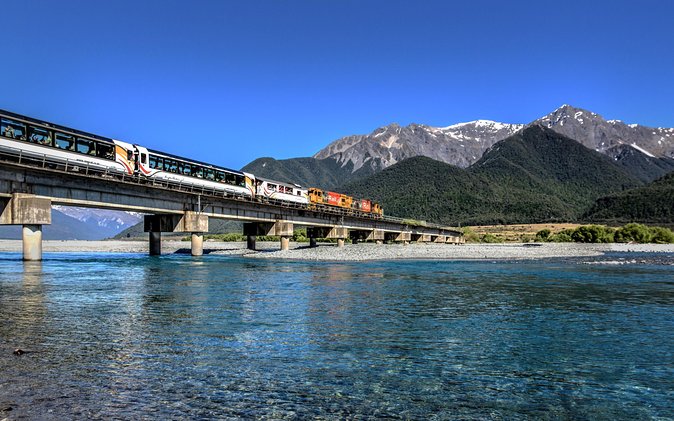
The TranzAlpine’s best moments come when the train leaves Greymouth’s forests and climbs toward Arthur’s Pass, where sharp peaks, river valleys, and steep gorges fill the windows. I like the open-air viewing deck for photographs and the GPS-triggered commentary, which gives the scenery some useful context as it passes.
I also like the comfortable reserved seating and the freedom to move between your carriage, the café, and the viewing areas. The main thing to consider is the price, about $151.26, and the five-hour commitment. Delays have happened, and the trip can feel less dramatic in a dry, snowless season.
Key points to know before boarding
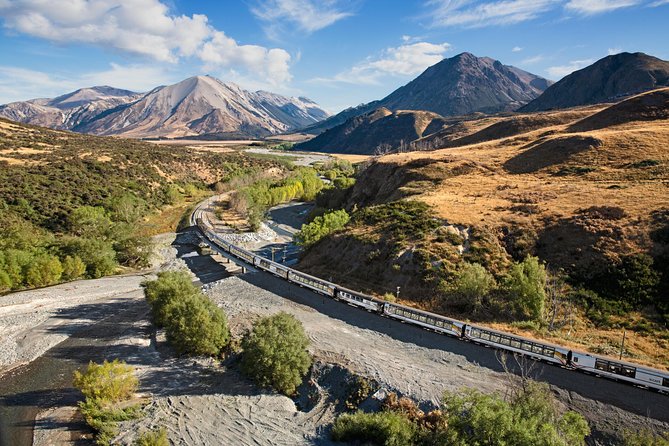
- The route crosses the Southern Alps: The strongest mountain scenery comes around Arthur’s Pass and the Waimakariri River gorges.
- It is a one-way trip: You finish at Christchurch Railway Station in Addington, not back in Greymouth.
- Open-air viewing is a major advantage: You can step outside for unobstructed photographs, though the deck may get crowded.
- Your seat is reserved: You can move around the train and return to your assigned place.
- Commentary uses GPS and onboard technology: Bring headphones, and connect to the train WiFi or use the Great Journeys New Zealand app if needed.
- The café car sells food and drinks: Meals and drinks are not included, and alcoholic drinks cost extra.
What the Greymouth to Christchurch journey is really like
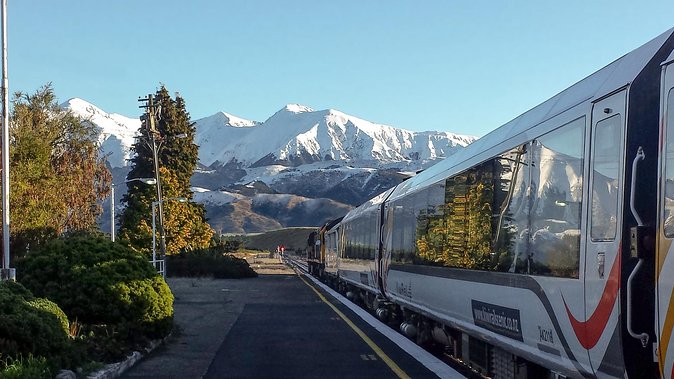
This is not simply transport between two South Island towns. It is a full scenic rail crossing from the wet West Coast to the drier Canterbury Plains, with the Southern Alps providing the main event in the middle.
The train leaves from 164 MacKay Street in Greymouth at 2:15 pm. You should arrive at least 20 minutes early to check in and receive your boarding pass. The check-in process is generally simple, but arriving early gives you time to find the station, sort out luggage, and settle in before departure.
The advertised journey takes about 4 hours and 50 minutes. That is long enough to see several different parts of New Zealand without spending the day behind the wheel. It is also long enough that you should bring a little patience. Track maintenance, technical problems, or congestion at Christchurch can cause delays, and even a one-hour hold-up can affect evening plans.
The train has specially designed seats, a licensed café carriage, and viewing areas. You are not assigned to sit in one place for the entire trip. Your reserved seat gives you a home base, while the open viewing deck lets you change the experience when the scenery becomes especially good.
More Scenic Railways in New Zealand:
- TranzAlpine Train, Arthur’s Pass and Castle Hill Day Trip
★ 5.0 · 426 reviews - TranzAlpine Train Journey: Christchurch to Greymouth
★ 4.5 · 312 reviews - Arthur’s Pass Discovery and TranzAlpine Train – Small Group Tour
★ 5.0 · 272 reviews
From Greymouth through West Coast beech forest
The first part of the route takes you away from Greymouth and into the forested interior. The West Coast is known for heavy rainfall, and the train passes through thick native beech forest before reaching Arthur’s Pass National Park.
This stretch is quieter than the high mountain section. You’ll see trees, hills, farmland, and changing river views rather than constant grand vistas. That makes the GPS commentary useful. It helps explain what you are passing instead of leaving you to guess at every ridge and bridge.
The train moves at a steady pace, which works well for photography. You can watch the view develop rather than seeing it flash past like it might from a car. On the other hand, the slow speed is part of what some people find frustrating, especially if they have already spent a week driving around the South Island and have seen plenty of forest and open country.
I would treat this first section as the warm-up. Save your energy, keep an eye on the route map or commentary, and make sure you are ready when the mountains begin to close in.
Arthur’s Pass and the Southern Alps
The route’s emotional high point is the approach to Arthur’s Pass. Here, the train enters the most dramatic country on the journey, with steep mountain walls, high peaks, viaducts, and narrow river valleys.
The exact visual experience depends heavily on the season and weather. Winter and spring can bring snow to the peaks, while periods of higher water make the rivers more forceful. In a clear, dry season, the views can still be excellent, but the mountains may not have the same sharp contrast that makes photographs memorable.
Several people find that the stretch around Arthur’s Pass is the part they most want to see. If your main goal is alpine scenery rather than the full coast-to-coast crossing, consider the practical point that much of the mountain drama begins after Arthur’s Pass. The complete trip gives you the changing scenery on both sides, but it also costs more time and money than focusing only on the central section.
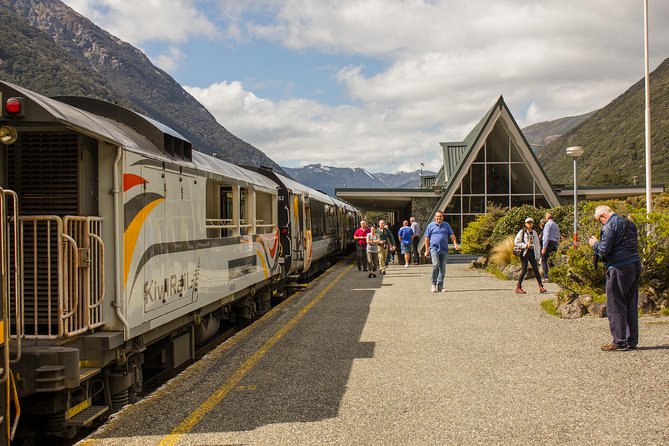
The train may provide an opportunity to get out around Arthur’s Pass, but you should not build your whole plan around a long sightseeing stop. This is a scheduled rail journey, not a hop-on, hop-off tour. Listen for staff instructions and use any stop carefully.
The open-air viewing deck is especially valuable here. Through the glass, reflections and window angles can get in the way. Outside, you can photograph the peaks, bridges, and river valleys without that barrier. Bring a warm layer, even if Greymouth feels mild. Alpine conditions can be cool, windy, or wet, and the deck is exposed.
The Waimakariri River gorges
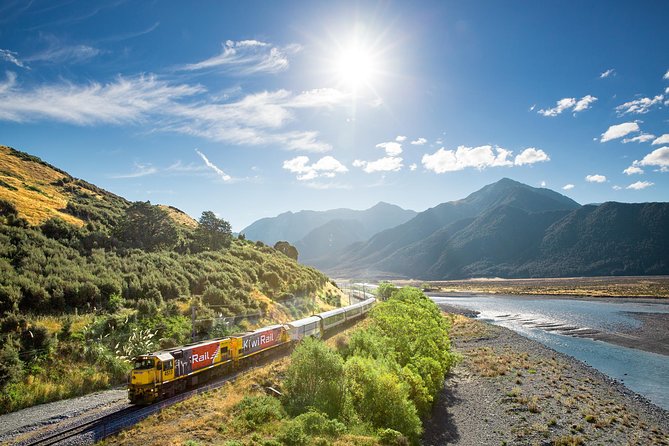
After the high point of the route, the train follows the spectacular gorges and valleys of the Waimakariri River. This is one of the most rewarding sections for anyone who likes strong contrasts: gray river stones, blue or green water, steep rock faces, and mountain slopes rising on either side.
The train gives you a view of places that are not always easy to reach by road. You see viaducts, rail cuts, river bends, and the way the railway holds to the valley. This is one reason the train can be more than a substitute for driving. You are not watching traffic or concentrating on the next turn. You can look down into the gorge, then turn to the opposite window as the route changes.
The viewing deck can get busy during the best scenery. If you want clear photographs, go out early when the train begins entering the alpine section, then return to your seat when the crowd builds. A reserved seat means you do not lose your place, which makes moving around far easier than on an ordinary unreserved train.
This part of the route also shows why weather matters. Clouds can hide the upper peaks, while rain can make the river valleys feel more dramatic. Poor visibility will not ruin the ride entirely, but it can reduce the value of an expensive scenic ticket.
More Train Journeys in New Zealand:
- Northern Explorer Train Journey from Wellington to Auckland
★ 4.0 · 513 reviews - Coastal Pacific Train Journey from Picton to Christchurch
★ 4.5 · 345 reviews - Arthur’s Pass: TranzAlpine Train and Castle Hill Day Tour
★ 4.8 · 270 reviews - Northern Explorer Train Journey from Auckland to Wellington
★ 4.0 · 204 reviews
From the mountains to Canterbury farmland
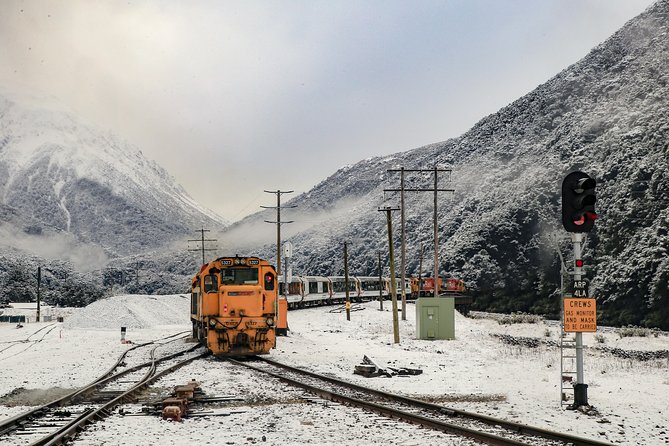
The final part of the journey changes mood again. The train leaves the narrow valleys and reaches the broad, open fields of the Canterbury Plains before arriving in Christchurch.
After several hours of mountains and forest, the open farmland gives you a sense of scale. The views become wider and less enclosed, with long sightlines across fields and distant hills. This is a calmer finish, though some people find it less exciting than the alpine section.
You arrive at Christchurch Railway Station in Addington, which is the end of this one-way service. If you have a hotel booking, restaurant reservation, or onward connection, leave room in your plans for possible delays. A technical problem or track work can hold the train for an hour, and arrival at the terminal has also been delayed by other rail traffic.
That is not a reason to avoid the journey, but it is a reason not to schedule something time-sensitive immediately after it.
Seats, viewing decks, and the café car
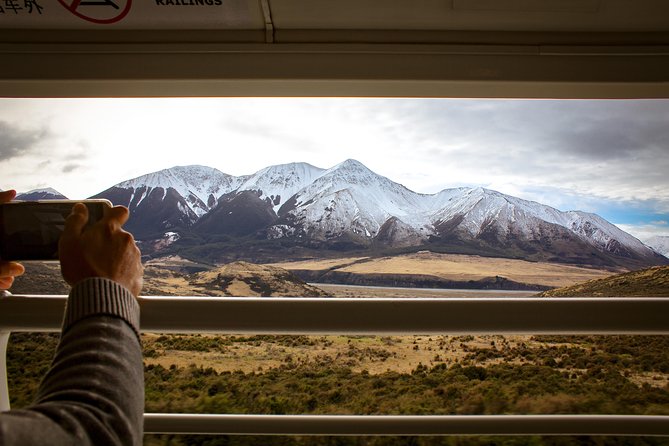
The seating is one of the train’s practical strengths. Seats are described as spacious and comfortable, and the reserved arrangement means you can get up without worrying that someone else will take your place.
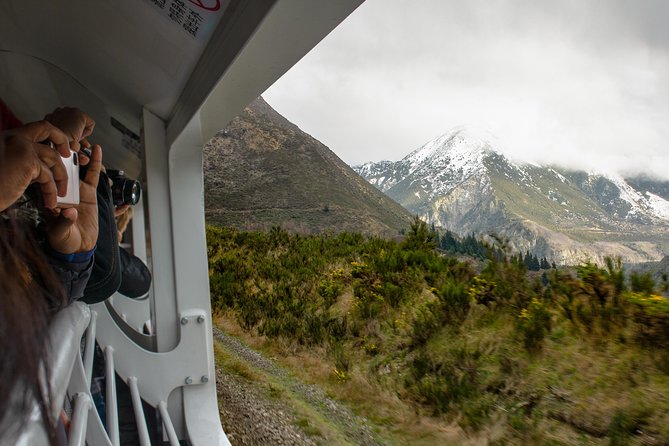
The open viewing carriage is the highlight for many people. It has no glass between you and the scenery, so it is the best place for wide photographs and fresh air. It can become busy, especially near the Southern Alps, and the temperature may be noticeably cooler than inside.
The café car sells snacks, light meals, and drinks. Food is not included in the fare, and some menu items may not be available for the entire trip. If you have dietary needs or simply want to keep costs down, bring something suitable with you, subject to the train’s rules.
The onboard service is generally friendly and helpful. Staff can assist with the commentary system, seating questions, and basic travel needs. There is no personal tour guide walking through the train, so this is a self-directed sightseeing experience supported by staff and recorded commentary.
How the GPS commentary works
The audio commentary is triggered by your location along the route. Personal headsets are available at the seats, and the system explains places as the train approaches them.
In practice, you may need to connect to the onboard WiFi or use the Great Journeys New Zealand app. If the commentary does not work, check your phone settings and disconnect a VPN if you use one. That small technical detail has caused confusion for some passengers, but staff can help identify the problem.
The commentary is useful, though it is not continuous live narration. Some sections have more information than others, and a few riders find the explanations too limited. I would listen when you want context, then put the headset away and simply watch the route. The best moments do not need a voice in your ear.
Is the $151.26 fare good value?
At around $151.26 per person, this is not a cheap way to cross the island. The fare covers the one-way rail journey, taxes, handling charges, and GPS commentary. You still pay for food and drinks, and alcoholic drinks are extra.
The value depends on what you are comparing it with. Driving gives you more control and lets you stop at places along the way, but the driver misses much of the scenery. Flying is faster, but it removes the forests, bridges, gorges, and gradual change from coast to plains. The train also saves you from managing a long mountain drive.
For a first visit to the South Island, a railway crossing can be a memorable part of the trip. For someone who has already driven the same route and wants only the most dramatic mountain views, the full fare may feel high. A Scenic Plus ticket can add service features and access to a viewing area nearer your carriage, but it does not change the scenery outside the windows.
The strongest value comes when you treat the journey as an attraction, not merely as transport. If you only need to get from Greymouth to Christchurch, another option may suit your budget better. If you want a relaxed day of scenery, photography, and rail travel, the price is easier to justify.
Who should take the TranzAlpine?
I would recommend this trip to you if you enjoy scenic railways, prefer looking out a window to driving, or want a comfortable way to cross the Southern Alps. It also suits families, older passengers, and solo travelers because the seating is reserved and the staff are available when needed.
It is a good choice for photographers who value the open-air deck. Bring layers and be ready to move quickly when the best views appear. A phone or camera with spare battery power is useful, since you may spend much of the journey taking pictures.
You may want to skip it if you dislike long train rides, need a guaranteed arrival time, or expect nonstop alpine scenery. The route includes forest, farmland, and open plains, not just mountains. Weather and season also matter, and the views can be less striking when clouds cover the peaks or snow is absent.
The maximum group size is listed as 15 for this activity, though the train itself has public rail carriage arrangements rather than functioning like a small private tour. Children must be accompanied by an adult, and service animals are allowed. Most people can participate, but you should dress for alpine conditions.
Should you book this one-way rail crossing?
Book it if you want to see the South Island from a moving train and can accept a full afternoon plus evening commitment. The combination of Arthur’s Pass, Waimakariri gorges, open viewing decks, and reserved seats gives the journey real appeal.
I would book with a flexible Christchurch schedule and avoid placing an important connection right after arrival. Choose the trip in clear weather if possible, bring food money or a packed snack, and download the Great Journeys New Zealand app before boarding if you want the commentary.
Skip it if your priority is the lowest-cost transport or a short visit focused only on Arthur’s Pass. For everyone else, this remains one of New Zealand’s more distinctive ways to cross from the West Coast to Christchurch, provided you give the scenery time to unfold.
FAQ
Where does the TranzAlpine journey begin?
The train begins at 164 MacKay Street, Greymouth 7805, New Zealand.
Where does the train finish?
The one-way service finishes at Christchurch Railway Station in Addington, Christchurch 8011, New Zealand.
What time does the train depart Greymouth?
The scheduled start time is 2:15 pm.
How long is the journey?
The journey takes approximately 4 hours and 50 minutes.
Is the train a return service?
No. This experience is a one-way rail journey from Greymouth to Christchurch.
Is food included in the ticket?
No. Food and drinks are available to buy in the licensed café carriage, but they are not included in the fare. Alcoholic drinks are also available for purchase.
Is there commentary during the journey?
Yes. GPS-triggered audio commentary is available through headphones at the seats. Onboard WiFi and the Great Journeys New Zealand app may be used to access the commentary.
What should I wear?
Dress for alpine conditions because the train passes through the Southern Alps. Warm or waterproof layers are sensible, especially if you plan to use the open viewing decks.
Can I cancel the booking?
The experience is non-refundable and cannot normally be changed. If the service is canceled because of poor weather, you will be offered another date or a full refund.
Just added for rail travellers in New Zealand
- Dunedin: Scenic Railway Tour Through the Taieri Gorge★ 4.7 · 73 reviews
- Christchurch to Arthur’s Pass Day Tour: TranzAlpine Train & Lunch★ 4.5 · 90 reviews
- Coastal Pacific Train Journey from Christchurch to Picton★ 4.5 · 92 reviews
- Tranz Alpine Train Tour★ 5.0 · 92 reviews
- Arthur’s Pass and TranzAlpine Train Day Tour from Christchurch★ 4.5 · 202 reviews
- Northern Explorer Train Journey from Auckland to Wellington★ 4.0 · 204 reviews
- TranzAlpine Train Journey: Christchurch to Greymouth★ 4.5 · 312 reviews
- Arthur’s Pass: TranzAlpine Train and Castle Hill Day Tour★ 4.8 · 270 reviews
Scenic Railways, compared.
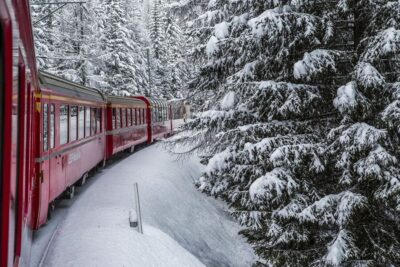
Lake Como Cruise, St. Moritz & Bernina Red Train
Read our review →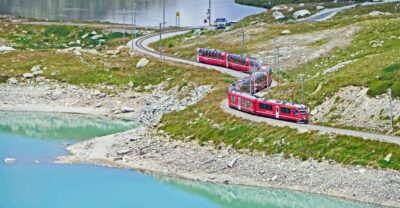
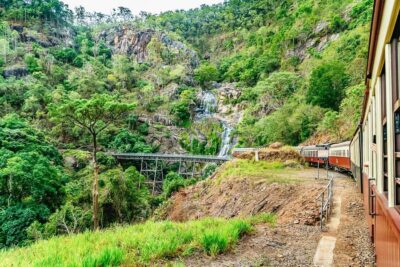
Self-Guided Kuranda Trip with Train and Skyrail
Read our review →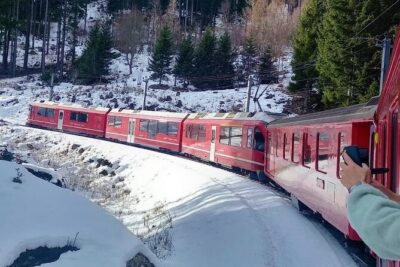
Bernina Red Train, Swiss Alps & St Moritz From Milan
Read our review →
Swiss Alps Bernina Red Train and St.Moritz Tour from Milan
Read our review →
Milan to St. Moritz: Scenic Bernina Train Tour with Guide
Read our review →
Bernina Train, Swiss Alps & St. Moritz Day Trip
Read our review →Browse the lists this tour appears in