
Review · HIGH-SPEED AND BULLET TRAINS
Busan and Gyeongju 2 days Tour from Seoul by KTX Bullet Train
Busan and Gyeongju make a powerful contrast: Busan is a salty, hilly port city shaped by war and trade, while Gyeongju is the quiet old capital of the Silla kingdom. This private two-day trip from Seoul links both places by KTX, then uses a private minivan in Busan so you can see a lot without wrestling with unfamiliar routes.
I like the small private format, which gives your guide room to adjust the pace and explain places such as the Choi Min-Shik Gallery, Jagalchi Market, and the UN Memorial Cemetery. I also like the careful family service associated with Kyung Ae, especially for a group traveling with two elementary-age children.
The main catch is the price: $800 per person is a serious outlay, and food and accommodation are not included. The advertised duration of 16 to 18 hours also sounds shorter than a full two-day program, so confirm the overnight plan and exact return schedule before paying.
Key points to know before booking
- KTX cuts the Seoul to Busan distance quickly, leaving more time for sightseeing than a road journey.
- Busan’s private minivan covers a wide spread of sights, from Gamcheon to Haedong Yonggungsa and Haeundae.
- The tour gives equal weight to modern Busan and ancient Gyeongju, rather than treating Gyeongju as a quick add-on.
- Kyung Ae has been especially attentive with families, a useful detail if you are traveling with young children.
- The $800 price includes major transport and admission costs, but not meals or lodging.
- A 6:30 a.m. start and a packed schedule require energy, particularly on the first day.
Why this route works from Seoul
South Korea is compact on a map, but Seoul, Busan, and Gyeongju still cover a lot of ground. The KTX is the smart link between Seoul and Busan. Your round-trip economy fare is included, and the train avoids the fatigue of a long road transfer.
The early start matters. At 6:30 a.m., you will be giving up a slow Seoul morning, but that trade lets you reach Busan with enough time for a full day of sightseeing. After arriving, private transportation in Busan removes much of the work of connecting steep neighborhoods, coastal temples, beaches, and the harbor district.
This is not a relaxed, choose-one-or-two-sights kind of trip. Day one contains eight stops, and day two contains six. I would view it as a fast survey of southeastern Korea, useful if you have limited time and want an expert to handle the moving parts.
The private format is important here. You are not tied to the pace of a large coach group, and the guide can tailor the day to your interests. That may mean spending longer at a historical site, keeping children moving, or shortening a stop that does not suit your group.
More High-Speed Trains in South Korea:
- Busan city tour from Seoul by KTX bullet train
★ 5.0 · 39 reviews - Gyeongju UNESCO Sites Tour by KTX train; The Museum Without walls
★ 4.5 · 11 reviews - Busan day trip including Gamcheon culture village from Seoul by KTX train
★ 5.0 · 3 reviews
Day one begins with Busan’s human story
The Choi Min-Shik Gallery is a thoughtful first stop. Choi Min-Shik was a first-generation documentary photographer who photographed ordinary people living through war, poverty, and Busan’s rapid modernization. His black-and-white portraits focus on people rather than grand monuments.
You get about 30 minutes here, which is enough for a concentrated look at his work. I like this opening because it gives Busan a human face before you move on to its famous viewpoints and beaches. It also helps explain why the city feels so shaped by hardship, migration, and rebuilding.
The gallery is free, and the short visit keeps the morning moving. If photography is a major interest, you may wish the schedule allowed more time.
Amidong and Gamcheon show how Busan grew
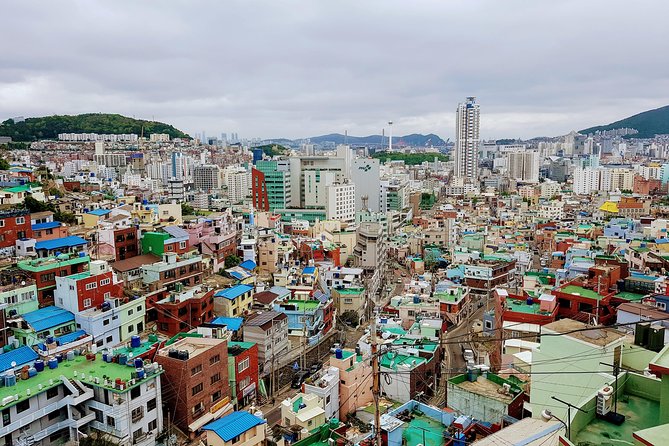
Amidong Tombstone Culture Village offers one of the most unusual stops. People first lived here in tents after arriving during the Korean War in 1951. As the settlement became more permanent, homes were built over Japanese graves because there was so little available land.
That history makes the neighborhood more than a photo stop. From the village, you can see across much of Busan, and the setting helps you understand the city’s steep terrain and postwar growth. You have about an hour here, with no admission fee.
Nearby Gamcheon Culture Village presents a different chapter. It also became a refuge for people fleeing to Busan during the Korean War, but an urban renewal project launched in 2010 reshaped the area with art and color. The result is the famous hillside neighborhood often compared to Machu Picchu because of its stacked homes and dramatic setting.
You get another hour in Gamcheon. Expect steps, slopes, and plenty to look at. The appeal is the mix of lived-in streets, artwork, and wide views, though its popularity means this is not an untouched village. Your guide can add context that you would miss by treating it as only a place for photographs.
Jagalchi Market puts seafood at the center
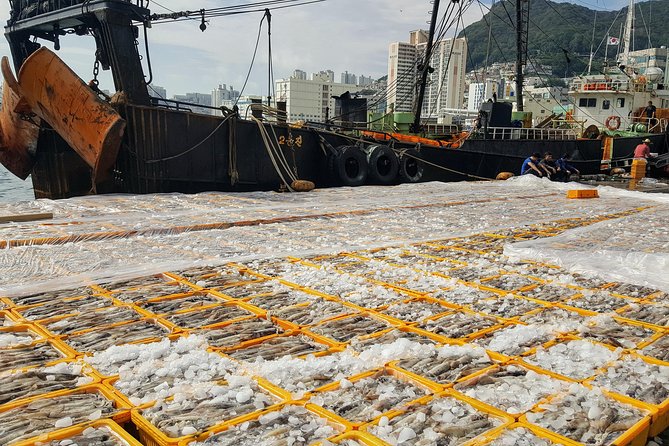
Jagalchi Market is Korea’s largest seafood market, with live and dried fish sold in a port setting. After the Korean War, the market became firmly established as a fish market, and many of the sellers are women known as Jagalchi Ajumma. In Korean, ajumma refers to a married or middle-aged woman.
You have an hour to look around. Food is not included, so any meal or purchase is your responsibility. That is worth remembering when comparing the cost of the tour.
I like this stop because it is direct and local. You are not being shown a polished attraction built only for sightseeing. You are seeing one of the places that helped feed and define the city. If you are sensitive to strong seafood smells or prefer museums to markets, this may be less appealing than the cultural stops.
More Two-Day Trips in South Korea:
- Granada City Train 1 or 2-Day Hop-On Hop-Off Ticket
★ 3.5 · 3,128 reviews - Cusco: Machu Picchu 2-Day Inca Trail with Panoramic Train
★ 4.9 · 260 reviews - From Hanoi: 2-Day 2-Night Sapa Tour by Overnight Train
★ 4.4 · 96 reviews - From Hanoi: Sapa Hill Tribes 2-Day Tour by Overnight Train
★ 4.4 · 62 reviews
Gwangalli and Haeundae give you two different beaches
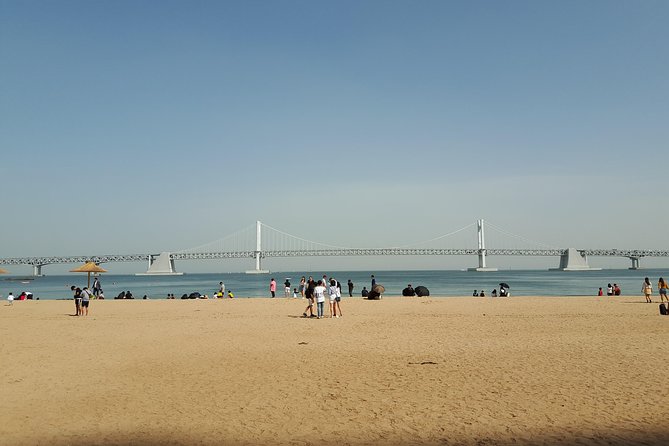
Gwangalli Beach is known for fine sand, cafés, restaurants, and views of the bridge. The tour allows about an hour, giving you time to walk beside the water and see the bridge in daylight or after illumination, depending on the schedule.
The area has a social, evening-friendly feel, while Haeundae Beach is Busan’s most famous stretch of sand. Haeundae runs about 1.5 kilometers beside a shallow bay, with a beach roughly 30 to 50 meters wide. Its size makes it easy to understand why it is a major seaside stop.
Only 30 minutes are assigned to Haeundae. That is enough for a look and a short walk, not a beach day. I would not choose this tour expecting time to swim, sit in the sand, or explore every café. The beaches work better here as part of a broad city portrait.
Haedong Yonggungsa is the day’s great setting
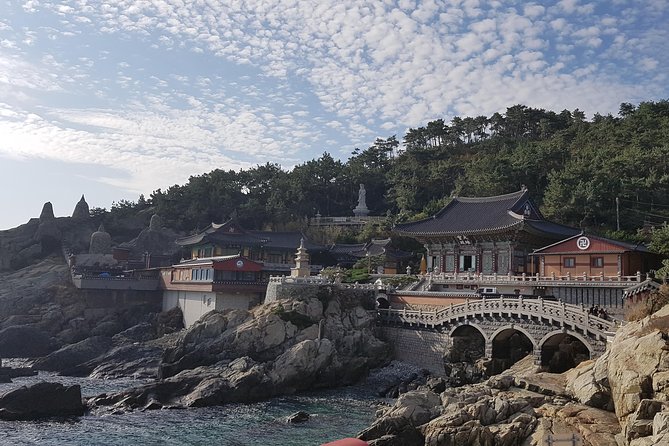
Haedong Yonggungsa sits on Busan’s northeastern coast, a rare Korean temple located beside the sea rather than in the mountains. You have about one hour and 40 minutes, the longest stop on day one.
That extra time is useful. The temple’s position gives it a very different feel from inland Buddhist sites, with the coast forming the backdrop as you move through the complex. It is also one of the places where a private guide adds value, since the setting is impressive but the religious and historical details can be easy to miss.
The schedule is still demanding. You will be combining a coastal temple with markets, beaches, and hillside neighborhoods on the same day. Comfortable footwear is a sensible choice, though the supplied information does not give specific accessibility details.
The UN Memorial Cemetery adds quiet and weight
The UN Memorial Cemetery honors soldiers who died during the Korean War while serving under the UN flag. Its central memorial, participating nations’ flags, and names of the fallen give the site a calm, reflective character.
You have 40 minutes here. That is a short but meaningful pause after the more active parts of Busan. I would give this stop your full attention rather than treating it as a quick photo opportunity. It connects the city’s refugee story and postwar growth to the international conflict that shaped modern Korea.
Day two turns to Silla-era Gyeongju
Gyeongju changes the mood completely. The city was the capital of the Silla kingdom, and the second day concentrates on royal tombs, palace remains, Buddhist architecture, and museum collections.
Daereungwon Tomb Complex is the natural starting point. Its large burial mounds hold Silla kings and queens, and the green mounds are visually striking even before you know the details behind them. One hour gives you time to walk among the tombs and let the scale of the site sink in.
Admission to Daereungwon is included. This is one of the places where the guide’s explanation matters, since the mounds can look simple from the outside while representing an important royal burial tradition.
Banwolseong Fortress follows, with about 30 minutes. Also called the Half-Moon Fortress, it was built during the Silla period and served as a defensive structure. The stop is brief, so think of it as a focused look at the archaeological site and its open surroundings rather than a long exploration.
Donggung Palace and Wolji Pond bring Silla alive
Donggung Palace was a secondary palace for the Silla crown prince, and Wolji Pond formed part of the palace complex. Together, they show the courtly side of Gyeongju, with reconstructed structures and a pond that is especially well known when illuminated at night.
The schedule gives you one hour, and admission is included. The site is scenic, but its real value comes from linking architecture, royal life, and water design. If the timing places you here after dark, the lighting can change the mood considerably. The stated program does not guarantee a nighttime visit, so do not book solely for that view.
Gyeongju National Museum fills in the missing pieces
The Gyeongju National Museum holds pottery, sculpture, gold treasures, and other objects connected to Silla. You get one hour, and admission is free according to the tour details.
This is an important balance to the outdoor stops. Tombs and palace foundations show you where history happened, while the museum shows what Silla artists and craftspeople made. The collection can also make the next two stops easier to understand, especially if ancient Korean Buddhist art is new to you.
One hour is enough for a purposeful visit, not every gallery. I would ask your guide which displays best match your interests rather than trying to cover the museum without a plan.
Bulguksa and Seokguram complete the Gyeongju day
Bulguksa Temple is a UNESCO World Heritage Site built during the Silla period in the eighth century. Its stone carvings and temple buildings reflect the skill and religious ambitions of that era. You have about an hour here.
The program then continues to Seokguram Grotto, also a UNESCO World Heritage Site near Bulguksa. The grotto contains a celebrated stone-carved Buddha and is regarded as one of Korea’s finest achievements in Buddhist art.
Each stop receives about an hour. That gives you a useful introduction, but it can feel brief if you want a slow temple visit or detailed photography. The wording of the program lists Seokguram as Seokgulam in one place, but the site is commonly known as Seokguram Grotto.
The two sites work well together. Bulguksa lets you see a full temple complex, while Seokguram focuses attention on a single sacred sculpture and the space built around it. If ancient architecture and Buddhism are your main reasons for visiting Gyeongju, these are the stops that justify the second day.
What the $800 price really covers
At $800 per person, this is not a budget excursion. The cost includes an English-speaking guide, round-trip KTX economy fare, admission fees, private transportation with a private minivan in Busan, and hotel pickup and drop-off in Busan.
It does not include food, drinks, accommodation, or hotel drop-off in Seoul. That last point matters. You should plan how you will get back to your Seoul hotel after the return train, and you should confirm exactly where the Busan accommodation fits into the schedule.
For a solo visitor, the cost may be hard to justify. For a family or small group, the calculation improves because the private guide, vehicle, and flexible pacing are shared by your party. The trip also saves you from arranging KTX tickets, local transport, admissions, and a separate Gyeongju day.
The tour requires a minimum number of participants, though it remains private for the group that books. Free cancellation is available up to 24 hours before the start time. Changes or cancellations inside that window are not accepted for a refund.
Who should book this Busan and Gyeongju trip?
I would choose this for a family, first-time visitor, or small group that wants the major sights without managing a complicated two-city plan. The special care shown by Kyung Ae toward a family with two elementary-age children is a useful sign for parents, although the schedule itself is still full.
It also suits you if you value historical context. The route is not just beaches and picture stops. Choi Min-Shik’s portraits, Amidong’s postwar settlement, Jagalchi’s working market, the UN cemetery, and Gyeongju’s Silla sites create a fairly broad view of Korea.
I would hesitate if you want long meals, free time, nightlife, or a slow cultural visit. The early start, many stops, and two-day pace leave little room for wandering. I would also clarify the accommodation and the 16 to 18 hour duration before booking, since those details affect the real cost and comfort.
Should you book it?
Book this tour if your priority is efficient coverage with private support. The KTX, private Busan vehicle, guide, and included admissions take care of the hardest planning, while the route gives you both Busan’s modern story and Gyeongju’s ancient sites.
Skip it if $800 excludes too much for your budget, or if you would rather spend several days slowly exploring one city. For the right group, especially a family splitting the cost, the convenience can make the premium worthwhile. Just confirm the overnight arrangements, Seoul return logistics, and exact timetable before you commit.
FAQ
What cities does this tour visit?
It visits Busan and Gyeongju, beginning from Seoul. Busan is covered on day one, while Gyeongju is covered on day two.
How do I travel from Seoul to Busan?
The tour includes round-trip economy-class KTX fare. The start time in Seoul is 6:30 a.m.
Is the tour private?
Yes. Only your group participates, and the itinerary can be tailored with a private guide.
Is an English-speaking guide included?
Yes. A qualified English-speaking guide is included. Kyung Ae is named in the available family booking experience.
Are meals and accommodation included?
No. Food, drinks, and accommodation are not included. Hotel pickup and drop-off are provided in Busan, but Seoul hotel drop-off is not included.
Are admission fees included?
Yes. The tour includes admission fees to tourist sites. The details specifically list admission as included for Daereungwon Tomb Complex and Donggung Palace and Wolji Pond, while several other stops are listed as free.
Can I cancel for a refund?
You can cancel up to 24 hours before the experience start time for a full refund. Cancellations or changes made less than 24 hours before the start time are not accepted for a refund.
Just added for rail travellers in South Korea
- Scenic Escape: Nami Island, Garden of Morning Calm, and Rail Bike★ 3.0 · 2 reviews
- Nami Island & Petite France & Italian Village & Gangchon Rail Bike One-Day Tour★ 4.5 · 52 reviews
- Gyeongju UNESCO Sites Tour by KTX train; The Museum Without walls★ 4.5 · 11 reviews
- Special Private Tour Nami Island, Rail Bike, Petite France★ 5.0 · 42 reviews
- Alpaca World with Gangchon Rail Park One Day Tour★ 4.5 · 3 reviews
- Private Tour Rail Bike & Nami Island & (Petite France or Garden of Morning Calm)★ 4.5 · 13 reviews
- Eobi Ice Valley, Nami Island, Morning Calm and Rail Bike Seoul★ 5.0 · 9 reviews
- Eobi+Nami+Hanbok Tour with Rail Bike or Strawberry Option★ 5.0 · 10 reviews
High-Speed and Bullet Trains, compared.
Mt Fuji & Hakone Cruise, Drum Show Bullet Train 1 Day from Tokyo
Read our review →
Tokyo Mt Fuji 5th St & Hakone Cruise Bus Tour w/Bullet Train
Read our review →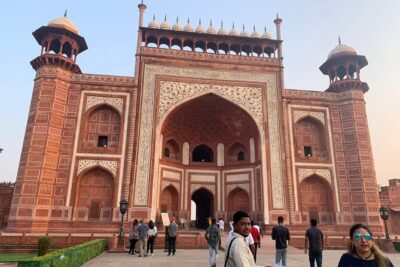
Taj Mahal & Agra Tour by Gatimaan Express Train
Read our review →
Pompeii Tour with Wine and Lunch by High Speed Train
Read our review →
Venice Day Trip from Rome by High-Speed Train with Happy Hour
Read our review →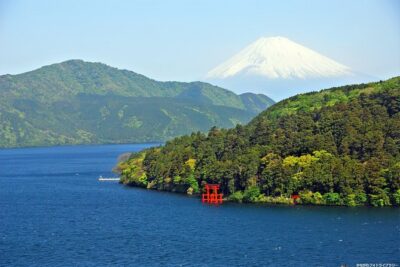
Mt. Fuji and Hakone Day Trip From Tokyo with Bullet Train Option
Read our review →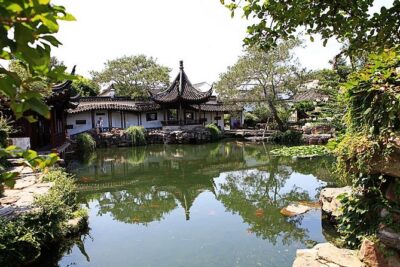
Suzhou Private Day Trip from Shanghai with Bullet Train Option
Read our review →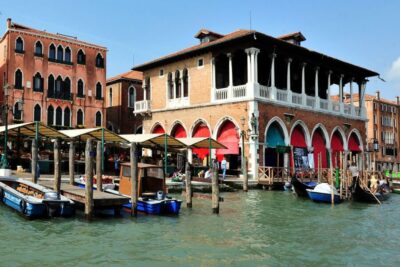
Browse the lists this tour appears in