
Review · GERMANY TRAIN JOURNEYS
Guided Dachau Concentration Camp Memorial Site Tour with Train from Munich
Dachau is not a light sightseeing stop. It is a place of murder, suffering, and difficult questions, and the right guide can help you face it with care. This half-day tour uses Munich’s train and bus system to reach the memorial, then gives you about three hours on site with licensed guide Alun Evans.
I like two things right away: the small maximum group of 15, and the balance between guided explanation and time alone in the museum. You get a clear route through the camp instead of wandering without context, but you also have room to pause and read.
The main drawback is the pace. Three hours sounds generous, but Dachau covers a lot, and some people may want more than the roughly one hour set aside for the museum. The subject is also emotionally heavy, so do not schedule this as a carefree morning before a beer hall lunch.
Key points at a glance
- Small group of up to 15: Easier to hear the guide and stay together on public transport.
- Alun Evans leads the visit: He explains the camp’s history, prisoner life, and the meaning of each major area.
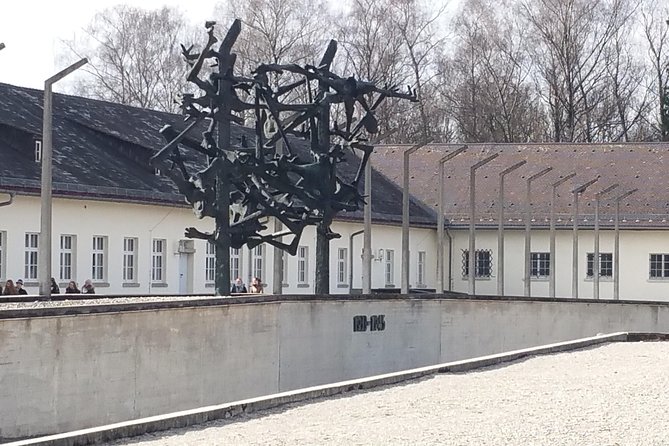
- About three hours at Dachau: The route includes the barracks, crematorium, gas chamber, bunker, maintenance building, and museum.
- Public transport is included: The tour covers the train and local transport from central Munich and back.
- English-language experience: The meeting point is outside the Tourist Information Centre at Marienplatz at 8:50am.
- Serious but well-organized: Expect outdoor walking, all-weather conditions, and a return to Munich around 2pm.
Why a guide matters at Dachau
You can visit Dachau on your own, but this is one of those places where facts on signs do not always explain the full picture. The memorial has buildings, reconstructed areas, photographs, documents, and an extensive museum. Without a clear route, it is easy to miss how the camp developed and how its purpose changed under the Nazi regime.
Alun Evans focuses on the camp’s 12-year history and explains events from the prisoners’ point of view. That matters because Dachau was not simply a collection of buildings. Its layout, rules, punishments, work systems, and daily routines were part of a deliberate system of control.
The guide also helps connect the memorial to the rise and fall of the Third Reich. You are not left with isolated dates or frightening images without context. Instead, the visit builds a picture of how political persecution grew into organized imprisonment, forced labor, and mass murder.
The best part of this format is that the guide does not fill every minute with a speech. The main walk takes roughly two hours, according to the tour structure, followed by about an hour for the museum. That division gives you useful direction first, then private time to read, think, and move at your own speed.
More Train Journeys in the world:
- Mt Fuji & Hakone Cruise, Drum Show Bullet Train 1 Day from Tokyo
★ 4.0 · 7,413 reviews - Montserrat & Cogwheel Train, Gourmet Wine Tasting & Tapas/Lunch
★ 5.0 · 6,290 reviews - From Milan: Lake Como Cruise, St. Moritz & Bernina Red Train
★ 4.6 · 5,648 reviews
Meeting at Marienplatz at 8:50am
The morning begins outside the Tourist Information Centre at Marienplatz 8, in the center of Munich. You should arrive before the 9am departure because the group needs to catch public transport on schedule. Look for the guide holding a black and white sign marked Dachau Memorial Tour.
This is a practical meeting point. Marienplatz is easy to reach and central to Munich’s old town, but do not assume that arriving at exactly 9am is good enough. The group moves from the meeting point to the train, and a late arrival could mean missing the departure.
The transport is part of the tour price. You do not need to work out the correct train ticket or figure out how to connect with the local bus on your own. Alun explains the route, keeps the group together, and identifies the stops. That makes a difference on a morning when your attention should be on the memorial, not on transport maps.
The ride to Dachau takes about 20 minutes on Munich’s modern train network, followed by local transport to the memorial site. The return trip is handled in the same way. You can leave the group at Munich Main Station on the way back if that suits your plans, although the official end point is Marienplatz.
Arriving at Germany’s first concentration camp
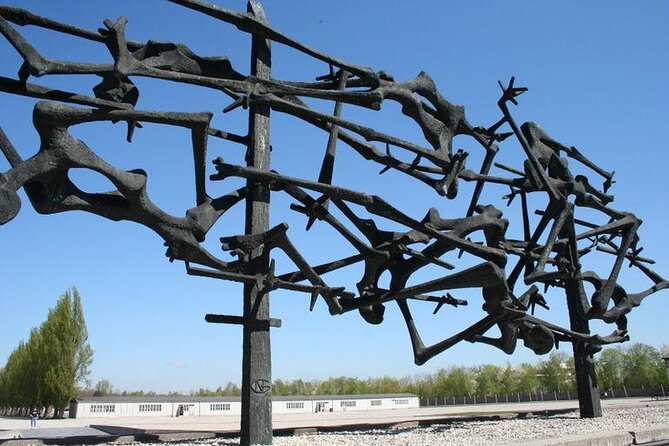
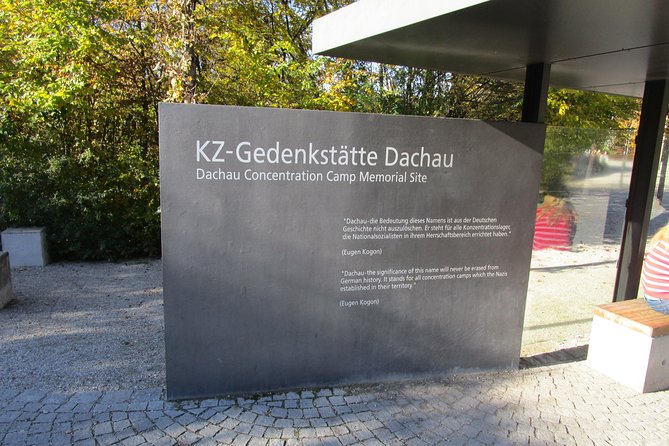
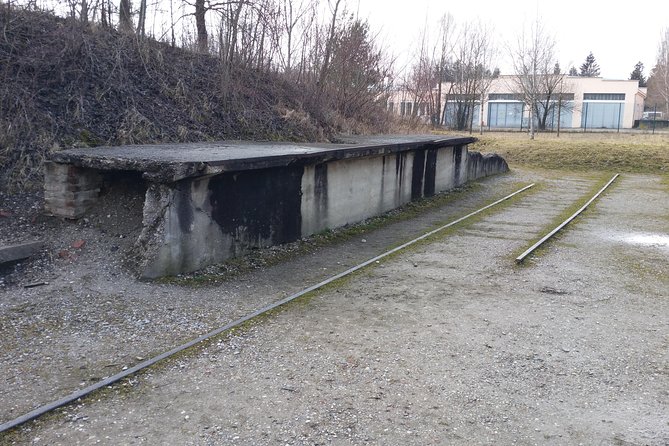
Dachau was the first concentration camp established by the Nazi regime in Germany, and it became a model for the camp system that followed. The memorial site asks you to understand both the place itself and the wider machinery of Nazi persecution.
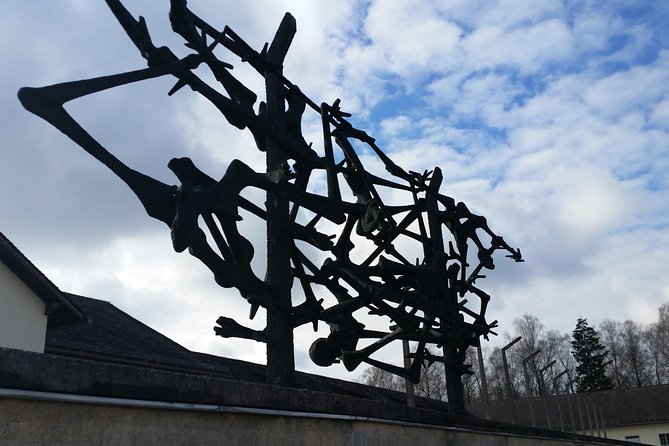
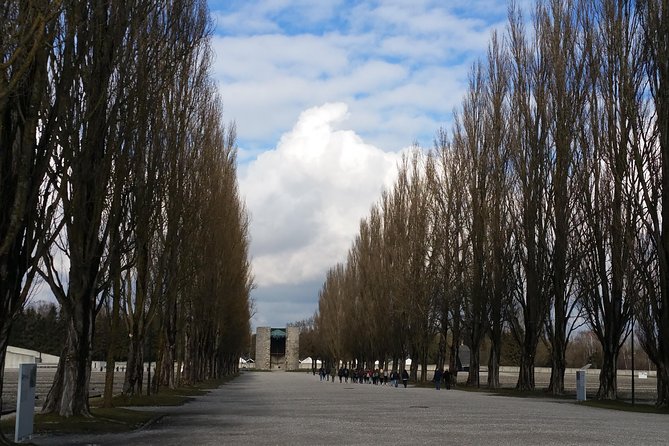
The first impression is not a theme-park recreation or a polished historical attraction. This is a memorial site, and the tone is restrained. Some areas are preserved, some are reconstructed, and the museum provides documents and testimony that help explain what happened there.
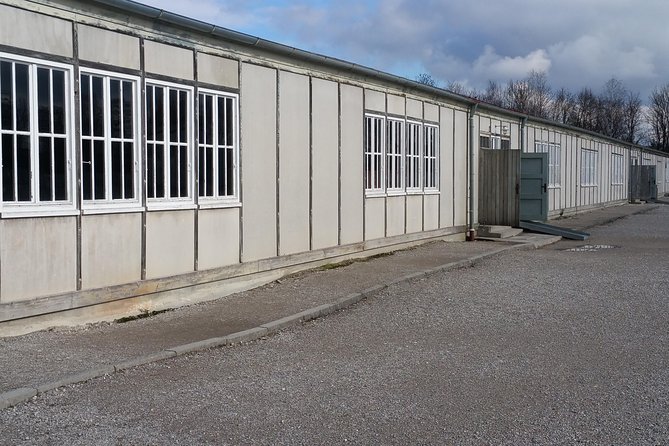
Your guide gives historical context as you move through the grounds. That is important because the physical remains can otherwise be hard to interpret. A barracks building may look plain from the outside, while its design and use tell you much about overcrowding, control, and the loss of personal freedom.
The tour also addresses life inside the camp. Expect discussion of prisoners’ treatment, the punishment system, work, hunger, fear, and the rules imposed on daily life. This is difficult material, but it is handled as history rather than spectacle.
The barracks, bunker, and maintenance building
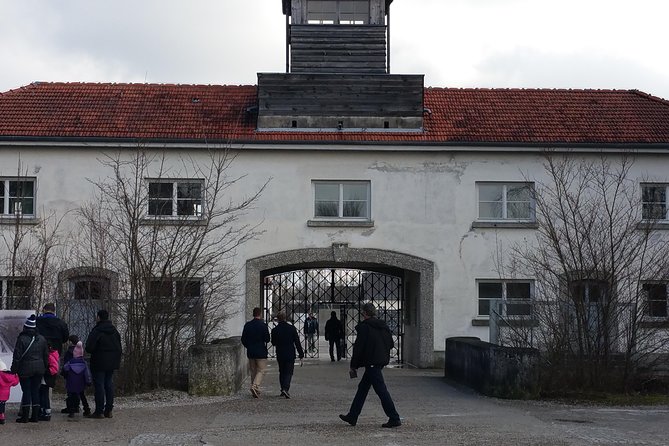
The barracks area helps you understand the camp’s scale and the conditions imposed on prisoners. The guide explains how the buildings functioned and what they reveal about the system. You have time to look closely rather than simply walk past a row of structures.
The bunker, or punishment block, is another important stop. It shows how imprisonment inside the camp could become even more severe. The term bunker can sound ordinary, but here it refers to a place of punishment and confinement. This part of the visit can be especially unsettling.
The maintenance building is included as well. Moving through several different parts of the site helps you see that Dachau was not just a prison surrounded by fences. It was an organized compound with multiple buildings and functions, all serving the camp system.
Alun’s role is particularly useful in these less immediately recognizable areas. He explains why a particular building matters and connects it to the wider story. The result is a visit that feels structured without being rushed from one photo stop to the next.
Same line, a different day out:
- Tokyo Mt Fuji 5th St & Hakone Cruise Bus Tour w/Bullet Train
★ 4.4 · 5,024 reviews - From Milan: Bernina Train and St. Moritz Day Trip
★ 4.5 · 4,495 reviews - Christ the Redeemer Entry Ticket by Corcovado Train
★ 4.4 · 4,476 reviews - From Málaga: Ronda+Setenil de las Bodegas with Little Train
★ 4.6 · 4,115 reviews
Crematorium and gas chamber
The crematorium area is among the most emotionally difficult parts of the memorial. The tour includes the crematorium and gas chamber, with historical explanation from the guide. This is not a section to treat as a quick checklist item.
The setting is quiet, and the subject requires respectful behavior. You should be prepared for a serious atmosphere and for the possibility that different parts of the visit affect you in different ways. Some people find the museum’s documents hardest to process, while others respond more strongly to the buildings themselves.
The guide’s approach matters here. Alun is described as compassionate, objective, and careful with the subject. He explains the facts without turning the visit into a performance. That balance is one reason this tour suits people who want a serious educational experience rather than a sensational presentation.
Allow yourself time after this section. You do not have to rush into conversation or take photographs. A moderate pace and a quiet attitude are appropriate throughout the memorial.
The museum: useful, extensive, and easy to underestimate
The museum exhibition is included in your three hours at the memorial. It contains a large amount of written material, photographs, films, and historical information. You could easily spend much longer there than the roughly one hour commonly allocated at the end of the guided portion.
That hour is useful because Alun has already explained the main structure of the site. You can then choose what to examine more closely. If you read every panel and watch every film, you may want more time than the standard schedule allows.
I see this as the tour’s main compromise. One hour keeps the half-day plan moving and leaves you time in Munich afterward, but it will not satisfy everyone. If museums are your priority, you may wish to ask how much independent time is available on the day. The schedule is designed to give most people a meaningful introduction, not an all-day study visit.
The museum is also a reason to avoid planning another demanding attraction immediately afterward. Dachau can stay with you. You may want a quiet meal, a walk through Munich, or time to talk about what you have seen.
Walking, weather, and what to bring
The memorial requires a moderate amount of walking, much of it outdoors. Comfortable walking shoes are essential. Proper walking or hiking shoes may be useful if the weather is poor, though the tour does not require strenuous hiking.
The experience operates in all weather. Bring clothing suitable for the forecast, including rain protection or extra layers when needed. The open grounds can feel very different in cold, wet, or hot weather, and there are few reasons to dress as if this were a short indoor museum visit.
Food and drinks are not included. You should eat before meeting the group or plan to eat afterward in Munich. Food and drink are not appropriate inside the memorial, and discreet water may be sensible during a long outdoor visit.
Children under 14 are not permitted. The subject matter and the amount of walking make this more suitable for older teenagers and adults. Service animals are allowed, and the site is near public transportation.
Is $90.70 a fair price?
The price is $90.70 per person. That is more than the cost of reaching Dachau independently, especially since the memorial admission itself is listed as free. You are paying mainly for the guide’s time, the transport coordination, the small group, and the historical explanation.
For this particular site, I think the price can be justified if you want a guided interpretation. The hardest part of visiting Dachau alone is not reaching it. Munich’s public transport is efficient. The harder part is knowing what you are seeing, how the pieces fit together, and how to give the memorial the attention it deserves.
The group limit of 15 improves the value. A guide can speak to the full group without needing a loudspeaker, and you can ask questions without being one person in a crowd of dozens. The guide also handles the train and bus connections, which removes a layer of morning stress.
The value is weaker if you already have extensive knowledge of Dachau and prefer to spend several hours reading independently. In that case, the fixed schedule and limited museum time may feel restrictive. For most first-time visitors seeking structure, context, and a respectful route through the site, the cost buys more than transport.
The five-hour schedule and return to Munich
The tour begins at 9am and ends back at Marienplatz at approximately 2pm. That makes it easy to fit into a Munich itinerary, provided you do not book another activity too tightly against the return time.
The schedule includes transport from the center, roughly three hours at the memorial, and the return journey. The guide escorts you all the way back to the original meeting point. If you want to continue your day from Munich Main Station, you can leave the group during the return journey.
This timing also explains why arriving early matters. The group must coordinate several transport steps, and the memorial visit has a planned sequence. A late start would reduce time at the site or disrupt the group.
After the tour, you can return to Munich’s old town for food, shopping, or a quieter walk. Keep your afternoon flexible if you can. The visit is educational, but it is also emotionally demanding, and you may not want to hurry straight into a packed schedule.
Who should book this Dachau tour?
I would choose this tour if you are visiting Dachau for the first time, want clear English explanations, and prefer a small group over a large organized outing. It suits anyone who wants the guide to handle transport while they focus on the memorial.
It is also a strong choice if you value personal interpretation. Alun Evans has a clear role: explain the historical setting, describe prisoner life, guide you through the important buildings, and then allow independent time in the museum. That mix avoids two common problems, a rushed walk with no time to think, or an unguided visit where the site feels confusing.
You should think twice if you want a full day at the museum, need extensive time for photography, or find difficult historical sites emotionally overwhelming. The tour is not designed to soften the subject. It is designed to explain it carefully.
Book at least 24 hours ahead if your plans may change, since cancellations made less than 24 hours before departure are not refundable. The tour is often reserved well ahead, so this is not an activity I would leave until the last morning of a short Munich stay.
Should you book it?
Book it if you want a serious, well-organized introduction to Dachau with a guide who can put the buildings and documents into context. The small group, included transport, and balance of guided time and museum time make this a strong half-day option.
Skip it only if you want to explore at your own pace for most of the day or already know the site well. For a first visit, I would choose the guided format. Dachau deserves more than a quick independent walk, and the right explanation helps you understand what you are seeing without turning the memorial into ordinary sightseeing.
FAQ
Where does the Dachau tour begin?
It begins outside the Tourist Information Centre at Marienplatz 8, 80331 Munich, Germany. Meet at 8:50am for the 9am departure.
How do I identify the guide?
The guide will hold a black and white placard marked Dachau Memorial Tour.
What time does the tour return to Munich?
The tour returns to the original meeting point at Marienplatz at approximately 2pm.
Is transport from Munich included?
Yes. Transportation costs for the duration of the tour are included, including the public transport journey to Dachau and the return trip.
How long do I spend at the memorial site?
You spend about three hours at the Dachau Concentration Camp Memorial Site.
What parts of Dachau are included?
The route covers the barracks, crematorium, gas chamber, bunker punishment block, maintenance building, and museum exhibition.
Is museum time included?
Yes. Time is set aside for the museum after the guided portion of the visit.
Is the tour offered in English?
Yes. The experience is offered in English.
Are children allowed on the tour?
Children under 14 are not permitted.
What should I wear?
Wear comfortable walking shoes and dress for the weather. The tour operates in all weather conditions and involves a moderate amount of outdoor walking.
Can I cancel for a refund?
You can cancel up to 24 hours before the experience starts for a full refund. Cancellations or changes made less than 24 hours before the start time are not accepted for a refund.
Just added for rail travellers in the world
- Sa Pa Trekking 2 Days 3 Nights Homestay by Night Train★ 4.5 · 11 reviews
- 2 Day Tour of Yala & Ella with Hill Country Scenic Train Ride – All Inclusive★ 5.0 · 5 reviews
- Private Day Tour: Suzhou Incredible Highlights from Shanghai by Car or Train★ 5.0 · 47 reviews
- Private Mutianyu Great Wall Tour with Bullet Train Experience★ 5.0 · 3 reviews
- Shanghai Hongqiao Railway Station to Hotels:Private with Meet & Great service★ 5.0 · 7 reviews
- Vienna: Kingdom of Railways Museum Entry Ticket★ 3.6 · 50 reviews
- West of Belgrade: Woodentown, Šargan 8 train & Drina River★ 4.7 · 42 reviews
- From Porto Douro Valley Tour with Train and Vinho Verde★ 4.7 · 16 reviews
Germany Train Journeys, compared.
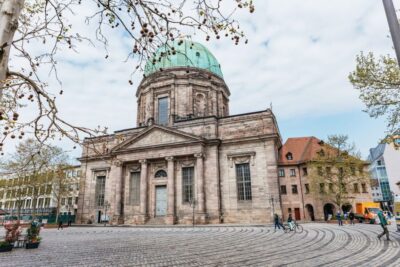
Nuremberg: City Tour with the Bimmelbahn Train
Read our review →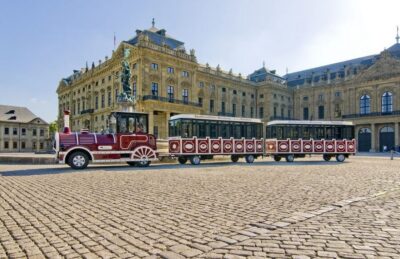
Würzburg: City Tour with the Bimmelbahn Train
Read our review →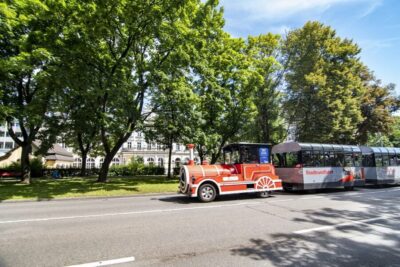
Regensburg: City Tour with the Bimmelbahn Train
Read our review →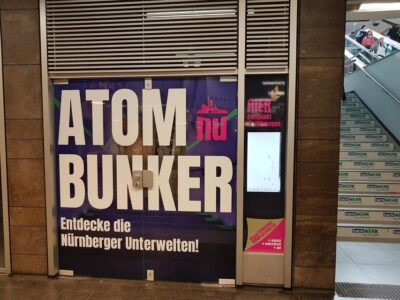
Nuremberg: Nuclear Bunker in Main Railway Station
Read our review →
Private Sachsenhausen Concentration Camp tour with train
Read our review →
Herrenchiemsee Palace and Fraueninsel Rail Trip from Munich
Read our review →
Potsdam Bike Tour with Rail Transport from Berlin
Read our review →
City tour through Regensburg with the little train
Read our review →Browse the lists this tour appears in