
Review · GERMANY TRAIN JOURNEYS
Private Sachsenhausen Concentration Camp tour with train
Sachsenhausen is not a sightseeing stop in the usual sense. It is a place of remembrance where the camp layout, empty barracks, roll call square, and Station Z force you to face how persecution became an organized system. A private guide such as Martin, Ioana, Maria, Klaus, or Nickolai gives the visit a human scale and helps you pause when the subject becomes heavy.
I like the one-to-one attention and the way the tour starts before you reach the gate. Your guide can explain Berlin’s Nazi past on the train, point out the role of Oranienburg, and adjust the pace to your questions. I also like the chance to see the camp with a guide trained by the memorial authority, rather than simply walking around with a map.
The catch is the amount of walking. The trip can involve a train, a bus or taxi, and roughly 11,000 to 16,000 steps, with uneven ground at the memorial. At $338.15 per person, this is a costly choice, especially if transport tickets or a taxi are not covered, so you should confirm the details before booking.
Key points to know before you book
- Sachsenhausen is a memorial first: Expect a sober educational visit, not a light day out.
- Your guide meets you at your hotel: The service includes hotel pickup and drop-off, with public transport used for the journey.
- Oranienburg adds important context: The town was tied to the camp through forced labor and local wartime industry.
- The private format matters: Your group can ask questions, slow down, or spend longer at areas that matter to you.
- Plan for a full six hours: The route includes city transport, walking, and time inside the memorial.
- Bring water and comfortable shoes: Amenities are limited and the site can be tiring to cross.
Why Sachsenhausen requires more than a quick visit
Sachsenhausen was built just north of Berlin in 1936, during the period of the Berlin Olympics. The SS designed it to hold political opponents of Nazi Germany, and the camp later became a model for the concentration camp system.
About 200,000 people were imprisoned there over the next decade. They faced hunger, disease, forced labor, punishment, and systematic dehumanization. When the camp was evacuated in 1945, the Soviet authorities took over the site and used it for another five years. Around 60,000 people, including Nazis and Nazi collaborators, were imprisoned there during that period.
That second chapter matters. A good guide does not stop with the Nazi era but explains how the camp was reused under Soviet rule and how memory of the site changed over time. The result is a more honest visit, even when the history becomes complicated.
I would set aside the idea of trying to see Sachsenhausen quickly between other Berlin sights. The memorial deserves attention, and the journey from central Berlin takes time. The six-hour schedule is useful because it leaves room for transport, orientation, the camp grounds, and quiet reflection.
More Train Journeys in the world:
- Mt Fuji & Hakone Cruise, Drum Show Bullet Train 1 Day from Tokyo
★ 4.0 · 7,413 reviews - Montserrat & Cogwheel Train, Gourmet Wine Tasting & Tapas/Lunch
★ 5.0 · 6,290 reviews - From Milan: Lake Como Cruise, St. Moritz & Bernina Red Train
★ 4.6 · 5,648 reviews
From your hotel to Oranienburg by train
The tour begins with hotel pickup. Your guide then takes you through Berlin’s public transport system toward Oranienburg, a town north of the capital. This is one of the more useful parts of the experience because the history begins before you reach the memorial.
Guides have used the train ride to explain the camp’s purpose, Nazi policy, and the way Sachsenhausen fitted into the wider system of persecution. You are not simply deposited at a gate and handed a set of facts. The journey gives you time to understand what you are about to see.
The transport arrangement also deserves careful attention. This is a tour by train, not a private car excursion. Hotel pickup and drop-off mean that your guide meets and returns with you, but public transport remains part of the day. Some groups have taken a bus after reaching Oranienburg, while others have used a short taxi ride to reduce the walking.
The supplied information does not clearly say that train fares are included. Some bookings have involved guests paying for their own tickets, while guides in other cases have arranged transport passes. I would ask the operator exactly what is covered before paying, especially at this price.
Oranienburg and the local cost of forced labor
The first planned stop is a short, roughly 25-minute walk through Oranienburg. It is easy to treat the town as a transfer point, but that would miss part of the story.
Local businesses used prisoners from Sachsenhausen as forced labor. Factories producing war materials benefited from this labor, tying the town’s economy to the Nazi war effort. Some residents took part directly, while others knew enough to understand that something terrible was happening nearby and chose not to challenge it.
A guide can help you think about the uncomfortable distance between the camp and ordinary life. Sachsenhausen was not isolated from the society around it. The town’s businesses, authorities, and residents were connected to the camp in different ways, and the tour uses Oranienburg to show how exploitation can become hidden behind routine work and economic gain.
This stop is brief, so do not expect a separate town tour. Its value is in the explanation. You get a setting for the memorial and a reminder that the camp’s crimes were not happening in a sealed-off world.
Entering the memorial through Tower A
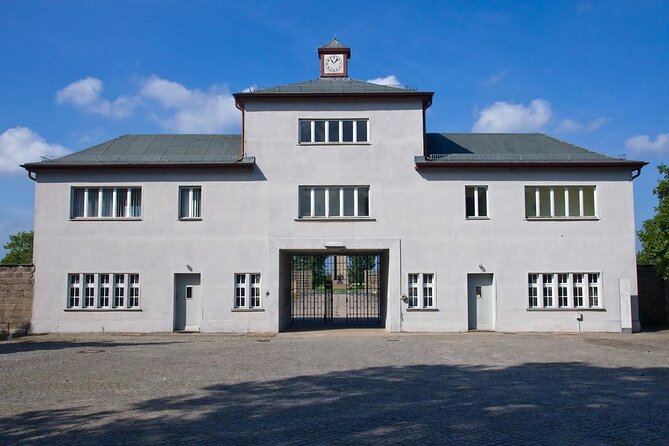
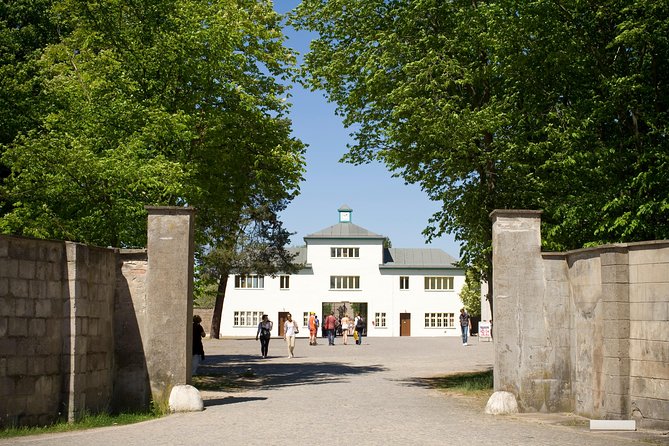
At Sachsenhausen, the camp’s design speaks before your guide does. Tower A served as the main entrance, and the layout was carefully planned to control prisoners and project SS authority.
The triangular design, the central roll call area, and the arrangement of prisoner buildings all helped turn the camp into a machine for surveillance and control. Your guide can explain how prisoners were counted, worked, punished, and reduced to their capacity for labor.
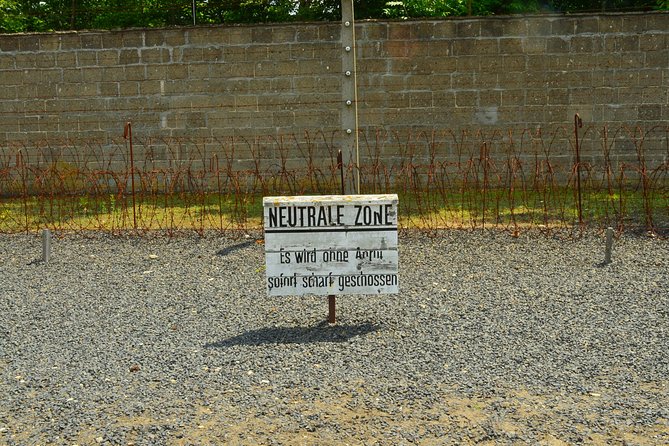
The roll call square is one of the places where the scale of daily suffering becomes easier to grasp. Prisoners could be forced to stand outside in the cold for long periods while guards counted them. The setting is open and stark, which makes it difficult to retreat from the reality of what happened there.
The camp’s barracks also show the gap between official design and actual conditions. Buildings intended for far fewer people could hold many hundreds. One account used on the tour describes barracks built for 150 people holding around 700. Details like this explain why the memorial should not be reduced to a list of dates and names.
Same line, a different day out:
- Tokyo Mt Fuji 5th St & Hakone Cruise Bus Tour w/Bullet Train
★ 4.4 · 5,024 reviews - From Milan: Bernina Train and St. Moritz Day Trip
★ 4.5 · 4,495 reviews - Christ the Redeemer Entry Ticket by Corcovado Train
★ 4.4 · 4,476 reviews - From Málaga: Ronda+Setenil de las Bodegas with Little Train
★ 4.6 · 4,115 reviews
Station Z and the machinery of killing
Station Z is among the most chilling locations at Sachsenhausen. The name referred to the area used for industrialized killing, positioned as a grim counterpart to the entrance at Tower A.
Your guide will explain the role of the site and the murders carried out there. This is difficult material, and the best guides know when to speak plainly and when to let the location speak for itself. Guides praised for their judgment, including Klaus and Nickolai, have been described as giving visitors time to absorb what they have heard rather than filling every silence.
You should not expect the tour to soften the subject. That is part of its purpose. The camp was designed to strip people of identity and dignity, and the memorial asks you to confront that process without turning suffering into spectacle.
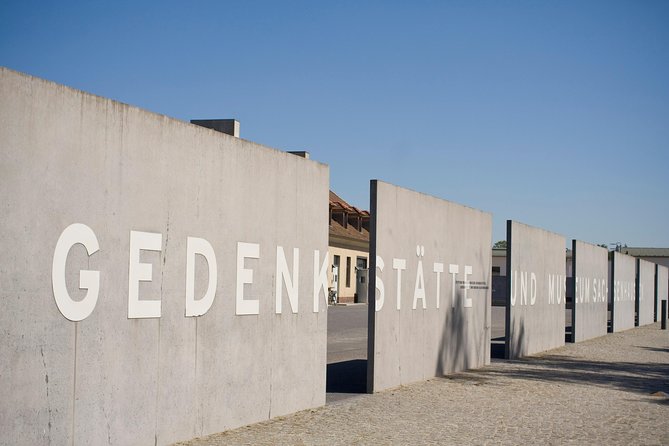
The museum displays and preserved areas add evidence to the outdoor visit. The visitor center has museum material and audio guides for those who want to continue at their own pace, though the private tour is built around your guide’s explanations and discussion.
Prison life, forced labor, and resistance
The central question is not only what the SS intended, but what daily life demanded from prisoners. Your guide will cover overcrowding, forced labor, punishment, hunger, and the constant pressure to survive.
The labor system was meant to exploit bodies and break people psychologically. Prisoners were valued according to their ability to work, while exhaustion, illness, and injury could make survival less likely. Guides also explain how prisoners depended on solidarity and small acts of mutual help in conditions designed to isolate them.
Survivor testimony gives this history a human voice. The tour uses first-person accounts to show fear, confusion, endurance, and the importance of community. That approach is especially valuable for families or students who already know the basic outline of Nazi history but need help understanding what life inside a camp felt like.
A private tour also lets you ask questions that might not fit a fixed group schedule. You can ask about the camp’s leadership, prisoner groups, Nazi propaganda, or the wider political setting. Guides such as Paul, Daniel, Xavier, and Brian have been praised for connecting the physical site to Hitler’s rise, German society, and present-day questions about extremism.
The value of a private guide
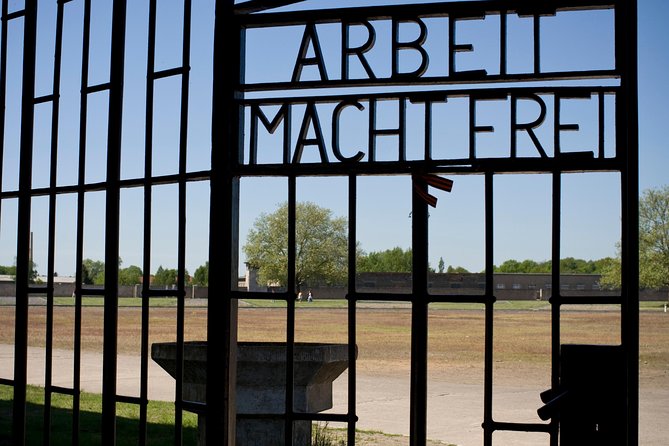
The private format is the strongest reason to choose this experience over a cheaper group outing. Only your group takes part, so your guide can shape the day around your knowledge, interests, and energy.
If you are traveling with children or teenagers, you can ask the guide to explain difficult material in an age-appropriate way. If your group includes someone who needs more time, you can request pauses. One guide, Natalie, found an accessible route for a mother using a wheelchair, though the general information warns that the tour is not recommended for people with limited mobility.
That example should not be treated as a guarantee. The site is large, the pavement can be uneven, and the usual route demands plenty of walking. Speak with the operator before booking if anyone in your group has mobility concerns.
The guide quality appears to be the main variable in the experience, and the named guides receive especially warm praise. Martin brings long experience with the memorial and local East German history. Ioana is noted for careful explanations and strong organization. Maria, Paul, Daniel, Hannah, Klaus, Nickolai, and others are described as patient, respectful, and able to handle a difficult subject without turning the tour into a lecture.
No guide can make Sachsenhausen pleasant. The real measure is whether your guide treats the place with care, answers questions honestly, and recognizes when silence is more appropriate than another fact.
Walking, weather, food, and the six-hour schedule
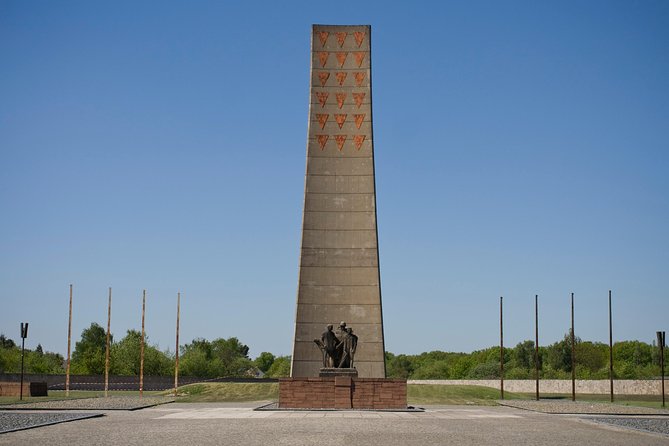
The stated duration is about six hours, but the physical effort can make it feel longer. One route included a 20-minute walk from Oranienburg station to the memorial. Other groups reduced that section with a taxi, sometimes at a modest extra cost.
Reports of 11,000 and 16,000 steps give you a useful idea of the range. The exact total depends on your hotel, transport choices, pace, and how much of the grounds you explore. You should wear sturdy, comfortable shoes and bring water.
Food and drinks are not included. Amenities around the memorial are limited, so pack something small to eat if you need it. This is also a day to check the weather forecast. Rain, cold, or heat will matter more when you are outdoors for hours on a large site.
The wide choice of departure times helps you fit the tour into a Berlin itinerary. Still, I would not schedule a major evening event immediately afterward. You may need time to return to the city, eat, and process what you have seen.
Is $338.15 per person good value?
At $338.15 per person, this is expensive for a six-hour outing that uses public transport. If you want only a basic visit to Sachsenhausen, you can likely find less costly options, including group tours where you meet a guide at a central Berlin station.
The private price pays for more than admission. It covers a licensed guide trained by the memorial authority, hotel pickup and return, a tailored pace, and personal discussion throughout the day. For a family or small group, the price may make more sense when divided among several people, especially if you value convenience and detailed interpretation.
The value is weaker if you expect a private vehicle, a driver, or all transport costs to be included. The tour title makes the train element clear, but the hotel pickup wording could still lead to a mistaken assumption. Confirm the transport plan, ticket costs, and likely walking distance before booking.
The experience receives a 4.9 rating from 205 reviews, with 99 percent recommending it. That strong record is consistent with the repeated praise for the guides, but it does not erase the practical drawbacks. This is a serious, physically demanding day, and the price will feel high if you are not prepared for a public-transport journey.
Who should book this Sachsenhausen tour?
I would choose it if you want detailed interpretation, dislike following a large group, and prefer starting and ending at your hotel. It suits visitors with a strong interest in World War II, Nazi Germany, memorial culture, or the history of Berlin.
It is also a good choice for families who want to ask questions freely. A private guide can adjust the language and pace better than a fixed group itinerary.
I would hesitate if you have limited mobility, dislike long walks, or want a vehicle for the whole day. I would also compare prices if you are comfortable meeting a guide in central Berlin and handling the train journey yourself.
Should you book it?
Book this private Sachsenhausen tour if the guide’s expertise and your own pace matter more to you than getting the lowest price. The Oranienburg context, public-transport journey, camp design, survivor accounts, and discussion of the Soviet prison period make it far more useful than a quick independent walk through the grounds.
Before you pay, confirm train tickets, taxi or bus arrangements, and the walking plan. Bring water, food, weather protection, and comfortable shoes. If you do that, the tour offers a careful way to visit one of Germany’s most important memorials, with enough time to learn and enough quiet to reflect.
FAQ
How long does the Sachsenhausen tour last?
The tour lasts approximately six hours, including hotel pickup and drop-off, public transport, walking, and time at the memorial.
Is hotel pickup included?
Yes. Hotel pickup and drop-off are included, with the guide meeting your group at your accommodation.
Does the tour use a private vehicle?
No. The experience is described as a train tour from Berlin. After reaching Oranienburg, the group may walk, use a bus, or take a taxi depending on the arrangement.
Are train tickets included in the price?
The provided tour details do not clearly confirm that train tickets are included. Some bookings have involved guests paying for transport, while some guides have arranged tickets or passes. Confirm this before booking.
Is the tour private?
Yes. Only your group participates, so you can ask questions and request adjustments to the pace.
How much walking is involved?
A substantial amount of walking is involved. The route from Oranienburg station can take about 20 to 25 minutes on foot, and some groups have recorded roughly 11,000 to 16,000 steps during the day.
Is the tour suitable for people with limited mobility?
The tour is not recommended for people with limited mobility or walking impairments because the site is large and includes uneven ground. An accessible route has been arranged for at least one wheelchair user, so contact the operator before booking to discuss your specific needs.
Can I cancel for a full refund?
Yes. You can cancel at least 24 hours before the local start time for a full refund. Cancellations or changes made less than 24 hours before the experience are not accepted for a refund.
Just added for rail travellers in the world
- From Porto Douro Valley Tour with Train and Vinho Verde★ 4.7 · 16 reviews
- From Ella – Day Trip of 8 Iconic Sights & Scenic Train Ride★ 4.4 · 5 reviews
- Prague: Railway Kingdom Giant Model Railway Museum★ 4.4 · 54 reviews
- Sarajevo: Visegrad, Sarkan Eight Railway & Kurstendorf Tour★ 4.8 · 13 reviews
- Skip the Line: Historic RailPark and Train Museum Ticket with Guided Tour★ 4.5 · 59 reviews
- Sa Pa Trekking 2 Days 3 Nights Homestay by Night Train★ 4.5 · 11 reviews
- 2 Day Tour of Yala & Ella with Hill Country Scenic Train Ride – All Inclusive★ 5.0 · 5 reviews
- Private Day Tour: Suzhou Incredible Highlights from Shanghai by Car or Train★ 5.0 · 47 reviews
Germany Train Journeys, compared.
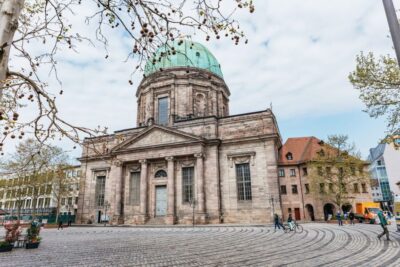
Nuremberg: City Tour with the Bimmelbahn Train
Read our review →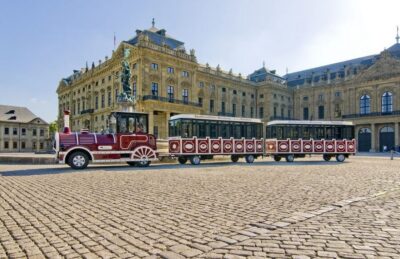
Würzburg: City Tour with the Bimmelbahn Train
Read our review →
Regensburg: City Tour with the Bimmelbahn Train
Read our review →
Nuremberg: Nuclear Bunker in Main Railway Station
Read our review →
Herrenchiemsee Palace and Fraueninsel Rail Trip from Munich
Read our review →
Potsdam Bike Tour with Rail Transport from Berlin
Read our review →
City tour through Regensburg with the little train
Read our review →Browse the lists this tour appears in