
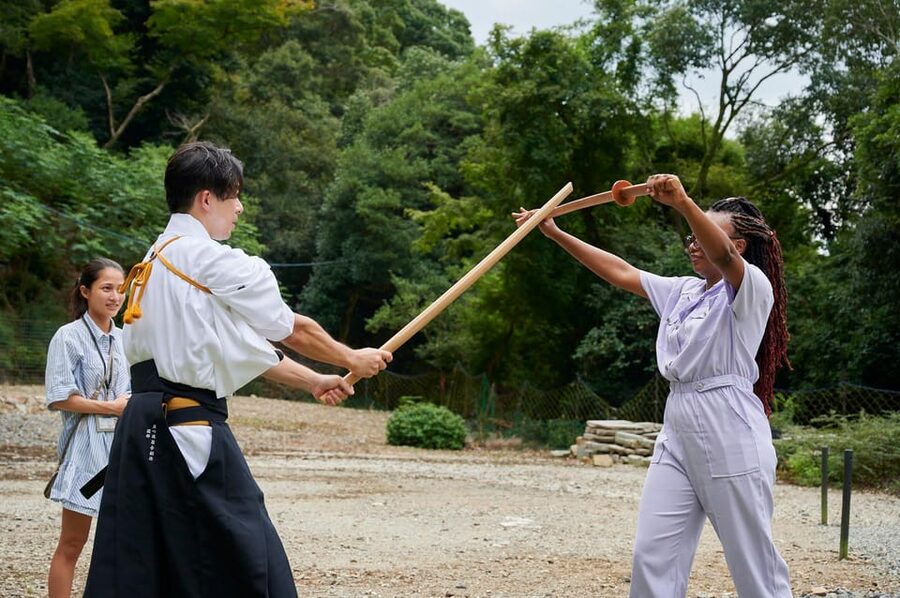
Review · JAPAN TRAIN JOURNEYS
Osaka: Private Samurai Experience – Train with Sword Master
At a secluded temple in Minoh, you’ll train under sword master Tatsuya Watanabe, headmaster of Suishin-ryu, in grounds normally closed to the public. This is not a costumed photo stop. It is a focused lesson in posture, controlled strikes, and the mental side of traditional sword practice, paired with a look at temple life and old weapons.
I like two things right away: the private setting gives the lesson a quiet sense of purpose, and the instruction goes beyond swinging a sword for a picture. Guides such as Benoit, Aimu, and Claire have provided translation and local context, while Watanabe teaches the movements and ideas behind them.
The main consideration is time. The class has a lot to cover, and the English translation adds pauses between explanations. The activity is listed as three hours in places and 270 minutes in others, so check the confirmed schedule before booking. At $158 per person, this suits you best if you want a serious cultural activity rather than a quick samurai-themed attraction.
Key points to know before booking
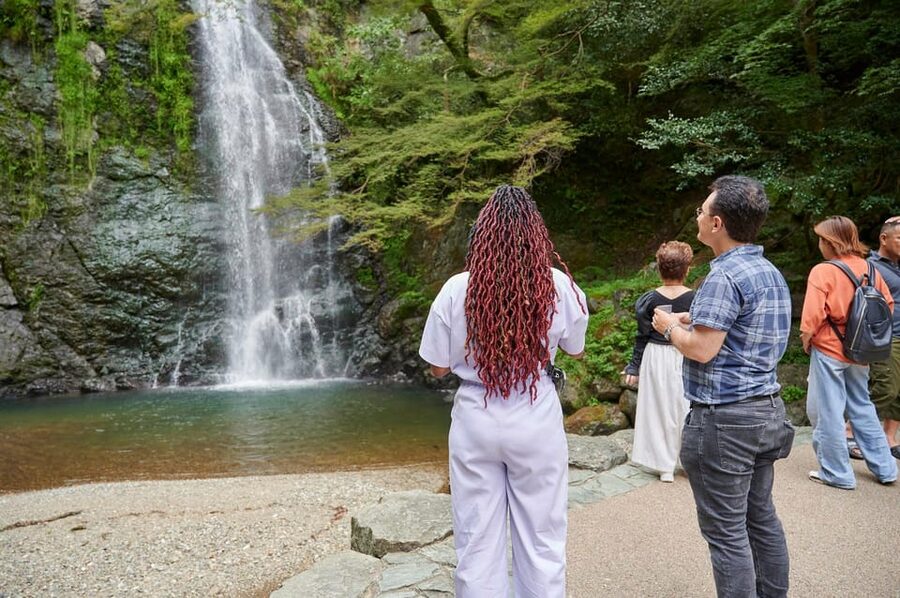
- Train with Tatsuya Watanabe: He studied kendo, Yagyū Shinkage-ryu, and Suishin-ryu, and became soke, or headmaster, of Suishin-ryu at a notably young age.
- Enter a restricted temple area: The training grounds at Ryuan-ji or Saiko-ji are not generally open to the public.
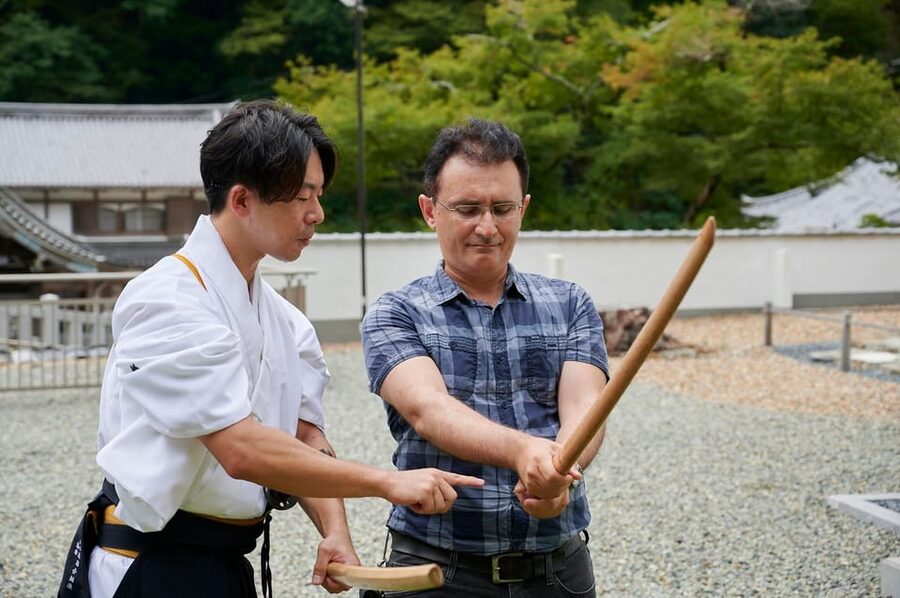
- Expect a real lesson: You practice basic posture, handling, cuts, and strikes, mainly with wooden swords.
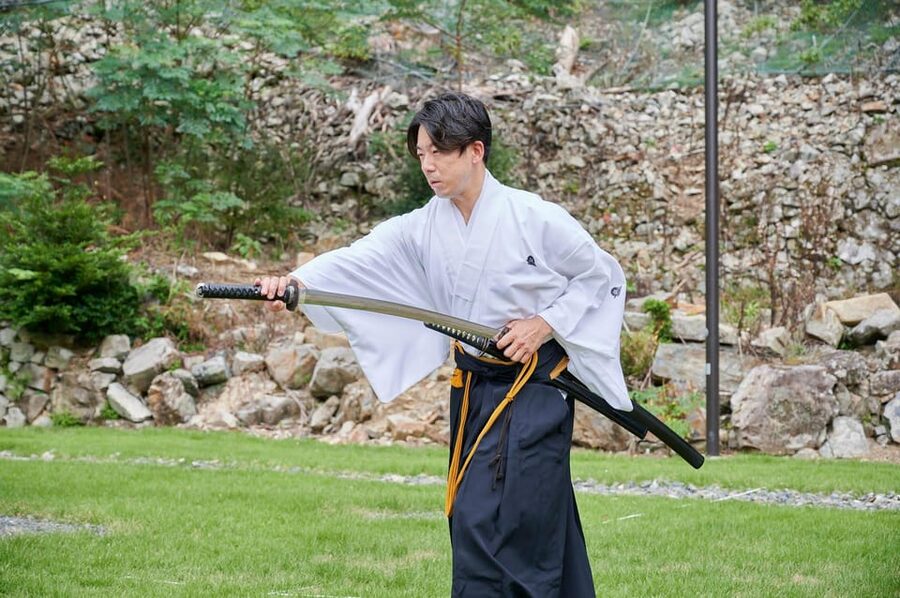
- See a special performance: Watanabe demonstrates the control, timing, and discipline that give the lesson its context.
- Use a translator: English, Japanese, and French support is available, with past sessions assisted by guides including Benoit, Aimu, and Claire.
- Meet at Minoh Station: Your guide carries a yellow DeepExperience sign, then leads you to the temple.
Why this Osaka sword experience feels different
Many samurai-themed activities are built around costumes, staged poses, and a few minutes of supervised sword movement. This one takes a quieter route. You meet at Minoh Station, walk toward a temple, and spend time learning how a classical martial tradition links movement, focus, discipline, and personal conduct.
The setting matters. Ryuan-ji Temple, and in some arrangements Saiko-ji Temple, provides a secluded place for the session. The training space is normally restricted, so you are not simply joining a public demonstration in a busy tourist venue. You are entering a part of the temple that is opened for this program.
I especially like that the sword lesson is tied to the place around it. You can learn about the temple and the surrounding area as you go, rather than treating Japanese culture as a separate stage set. The quiet grounds also make it easier to pay attention to the details of the practice: the position of your feet, the line of your arms, and the controlled rhythm of each movement.
This is still an organized activity, of course. You are not entering an unstructured school for an afternoon of free practice. The guide manages the visit, Watanabe directs the training, and the session follows a set program. That structure is helpful if you are new to martial arts, but it also means the lesson cannot adapt endlessly to every participant.
More Train Journeys in Japan:
- Mt Fuji & Hakone Cruise, Drum Show Bullet Train 1 Day from Tokyo
★ 4.0 · 7,413 reviews - Tokyo Mt Fuji 5th St & Hakone Cruise Bus Tour w/Bullet Train
★ 4.4 · 5,024 reviews - Mt. Fuji and Hakone Day Trip From Tokyo with Bullet Train Option
★ 4.0 · 368 reviews
Meeting at Minoh Station and walking to the temple
Your starting point is in front of Minoh Station. Look for the guide holding the yellow sign with the DeepExperience logo. This detail is worth taking seriously, since the meeting point is not the temple itself and the group begins together at the station.
The walk to the temple is part of the cultural introduction. Guides have explained local sights and temple background along the way, giving you some context before the sword practice starts. Benoit has provided English interpretation on several sessions, and Aimu and Claire have also been mentioned as helpful interpreters. The exact guide may vary, but English, Japanese, and French are listed as available languages.
I would arrive early. One participant arrived late and still received the full session, but that should not be your plan. The temple is outside the station meeting point, and a late arrival can make the opening explanation and first demonstration harder to follow.
The walk and orientation also set the right pace. You move from the ordinary station area into a quieter religious setting. That change helps explain why the organizers place the training here instead of in a standard martial arts studio.
The temple visit and restricted training grounds
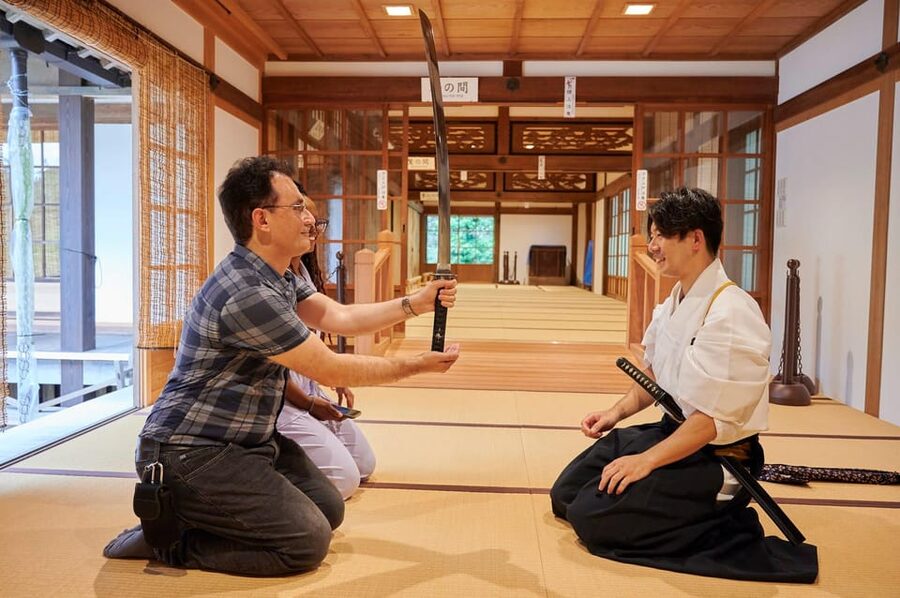
The temple portion is more than a quick backdrop for photographs. You receive a guided visit and learn about the site before moving into the private training area. The program describes this section as a class and guided visit lasting about 1.5 hours, though the full activity is described elsewhere as three hours or 270 minutes.
That conflicting timing is one of the few practical points I would clarify before paying. The experience is clearly designed as a substantial half-day activity, not a 30-minute demonstration, but the published duration is not perfectly consistent. Check the available starting times and confirmation details.
The restricted grounds are the strongest setting-related feature. You can practice in an area that is not normally open to the public, surrounded by the atmosphere of a working religious site rather than a commercial attraction. You should treat the temple with care: listen closely, follow instructions, and remember that the sword lesson takes place in a sacred setting.
The temple visit also gives the activity a wider frame. You learn about the area, the site, and the relationship between physical training and spiritual practice. That connection is central to the way Watanabe presents swordsmanship. The aim is not only to make a strong strike. It is to develop calm movement, discipline, and awareness.
Meeting the sword master, Tatsuya Watanabe
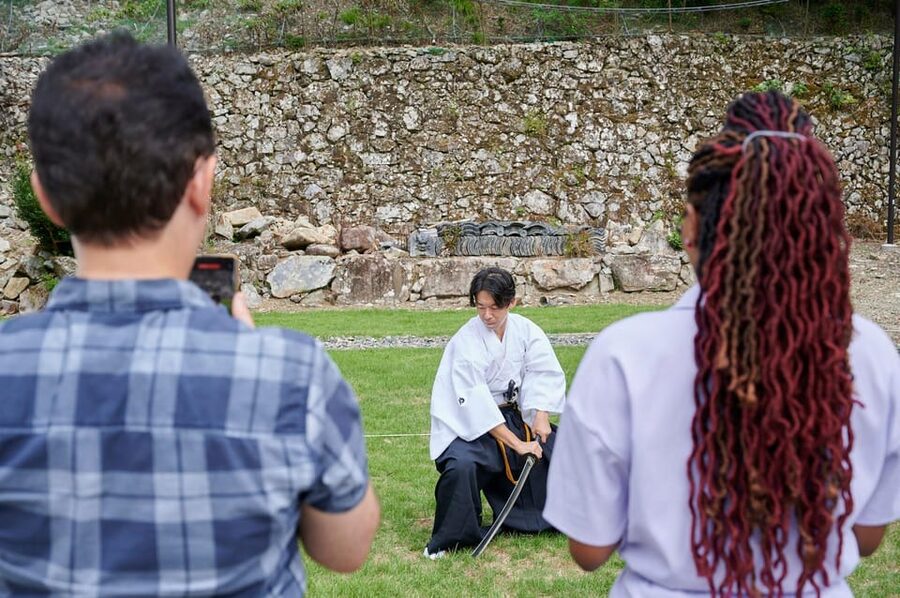
Tatsuya Watanabe’s background gives this program more substance than a generic introduction to katana handling. He began kendo as a teenager, then studied Yagyū Shinkage-ryu, one of Japan’s established classical schools of kenjutsu, during university.
He later trained in other lineages, including Suishin-ryu. His dedication led to his appointment as soke, or headmaster, of that school while he was still in his twenties. In that role, he is responsible for preserving not only techniques but also the school’s philosophy, aesthetics, and view of samurai discipline.
That background explains why the lesson is not framed as combat entertainment. Watanabe presents swordsmanship as a living tradition with physical and mental parts. He continues daily training and works to share Japanese sword culture through performances and hands-on programs.
You should not expect a long academic lecture on every branch of Japanese martial arts. The activity has limited time and a practical goal. Instead, Watanabe gives you a direct introduction through demonstration, correction, and repetition. His teaching style, as described in the supplied details, emphasizes fluidity, meditation, posture, and purpose.
The language arrangement is important here. Watanabe speaks Japanese, so interpretation can affect the pace. A strong interpreter is not just a convenience. The translator makes it possible to understand why a movement is done in a certain way, not merely copy the shape of it.
Same line, a different day out:
- From Osaka: Sagano Train Ride and Kyoto Guided Day Tour
★ 4.3 · 180 reviews - Fukuoka: Takachiho Gorge & Scenic Railway One Day Tour
★ 4.8 · 178 reviews - Sagano Romantic Train & Arashiyama, Kiyomizudera, Fushimi Inari Taisha Day Tour
★ 4.5 · 171 reviews - Hakone: Train Pass with Unlimited Rides & Activity Discounts
★ 4.4 · 102 reviews
Watching the special sword performance
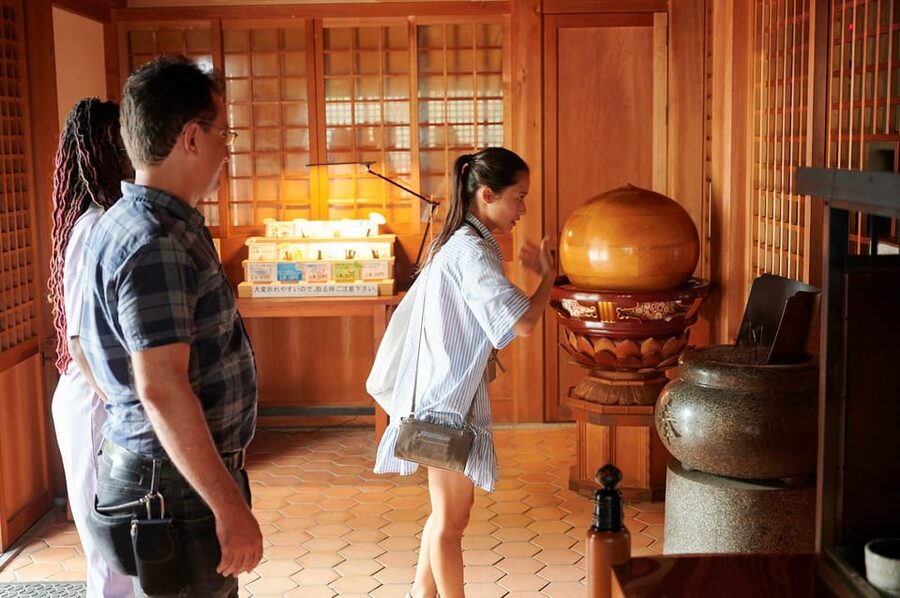
The opening performance is one of the most memorable parts of the program. Before you begin, Watanabe demonstrates the precision and restraint expected from a trained swordsman. This gives you a useful reference point: you see the finished movement before attempting a basic version yourself.
A performance also shows what a short lesson cannot teach in full. The speed, balance, timing, and quiet concentration come from years of practice. You may leave with a wooden sword and a few new movements, but the demonstration makes clear how much more there is to learn.
Some sessions have also included a look at personal weapons, including an old sword said to date from 1370. Another account describes participants moving from wooden sword practice to handling real swords and cutting paper. Those details may depend on the day, the group, and the instructor’s judgment, so I would not book the tour on the assumption that you will handle a particular antique or perform a live cut.
The reliable promise is the special sword performance and hands-on instruction. Anything involving actual blades should be treated as an added possibility, not a guarantee. Follow every safety direction without exception.
What the sword lesson is really like
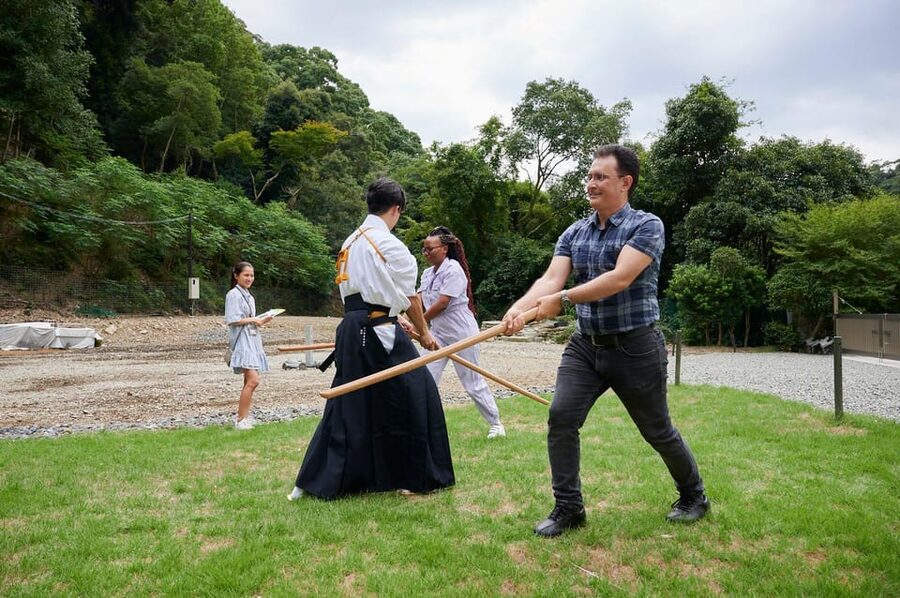
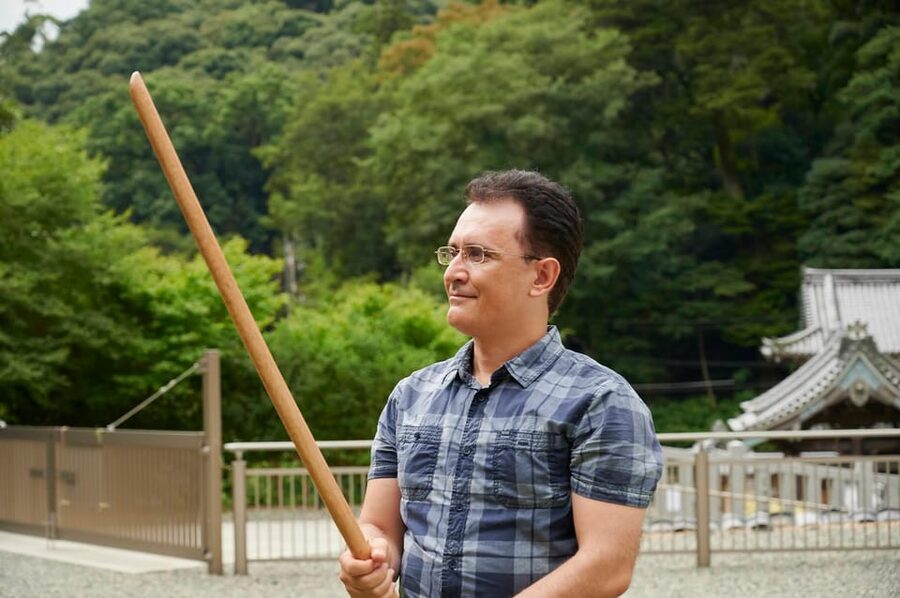
The training focuses on fundamental techniques. You may work on how to stand, hold the sword, strike, and cut, with attention to the smooth connection between each movement. Beginners can take part because the lesson is built around basic instruction rather than prior rank or experience.
The wooden sword is an important part of the format. It allows you to learn the broad movement without beginning with a sharpened blade. You will likely spend much of the practical session working with a bokken or similar wooden practice sword.
Do not expect to become a samurai in one afternoon. The value is in feeling how much attention a simple movement requires. A strike that looks easy during the performance can feel surprisingly exact when you must coordinate your hands, stance, direction, and breathing.
The instruction is also personal. Guides have described participants receiving different corrections for posture and strikes. In a private group, that kind of adjustment is more useful than watching a large class from the back of a room. If you are traveling with a child or family member, the private format can make the activity easier to manage, though the information does not specify a minimum age.
The lesson may feel physical, but it is not presented as a hard-contact fight. It is controlled practice in traditional techniques. You should be comfortable following close instruction and repeating movements carefully rather than rushing through them.
The cultural side, from temple history to old swords
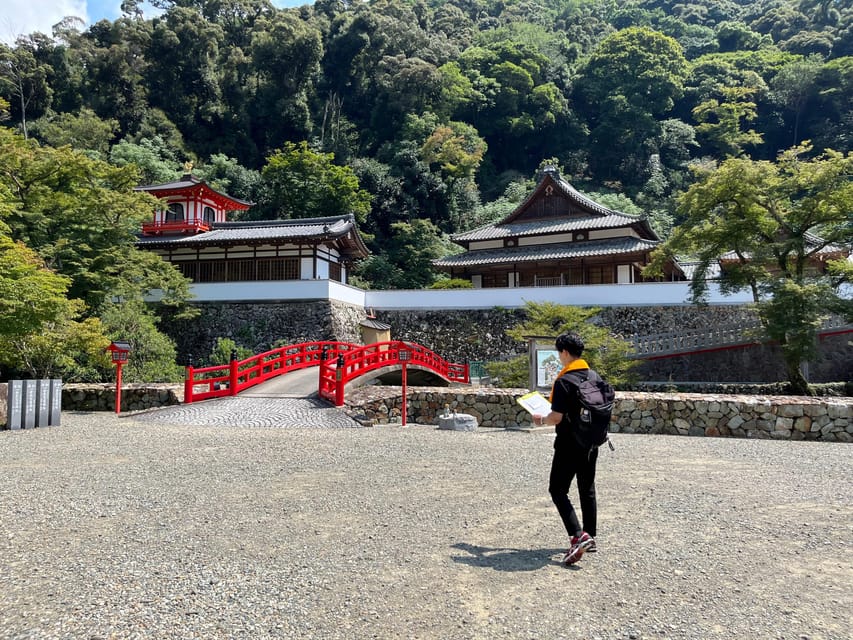
The sword is only half of the experience. The other half is the cultural setting and the way Watanabe explains his craft. You learn about the temple, the area around Minoh, the history of sword practice, and the personal traditions connected with the school.
A visit inside the temple house may include a look at Watanabe’s personal sword collection and an older sword. These objects help connect the lesson to actual historical material rather than leaving the samurai idea in the realm of film and fiction.
The spiritual side is also central. Watanabe’s approach connects sword practice with self-control and mental focus. That does not mean the session becomes abstract or overly solemn. You still practice strikes and handling, but the explanation gives those movements a reason.
I like this balance. You get something to do with your hands, something to see, and something to think about. If you only want an action activity, the cultural discussion may seem slow. If you want a meaningful introduction to Japanese tradition, it is one of the program’s strongest features.
Is $158 per person good value?
At $158 per person, this is not a bargain activity. You are paying for a private group, specialist instruction, a restricted temple setting, a translator, and a guided cultural visit. The cost makes more sense if you value access and context, not just the number of minutes holding a sword.
A standard martial arts class may cost less and provide more repeated practice. A museum may offer more historical objects for a lower price. This program combines elements that are usually separate: a temple visit, a private demonstration, a lesson with a school headmaster, and language support.
The value is strongest for someone who wants an experience that feels specific to Osaka and Minoh. You are not simply booking a sword lesson that could take place anywhere. The walk from the station, the temple grounds, and Watanabe’s personal approach all shape the day.
The private format also matters for the price. You avoid the feel of a large public workshop and have more room for questions and corrections. Still, the session is short compared with years of martial arts study. Think of the fee as payment for a focused introduction and rare access, not as a complete course in kenjutsu.
Free cancellation up to 24 hours before the activity and the option to reserve now and pay later reduce the risk of fitting it into a changing Osaka schedule. You still need to check the confirmed duration, start time, and meeting instructions before you go.
Who should book this experience?
I would recommend it to you if you want:
- A private cultural activity away from the busiest Osaka sights
- A first lesson in Japanese swordsmanship
- Direct instruction from a highly experienced sword master
- A temple visit with historical and spiritual context
- A guided activity in English, Japanese, or French
- Something suitable for a small private group rather than a large class
It is especially appealing if you enjoy learning by doing. You will remember the lesson better because you stand, hold the wooden sword, repeat the motion, and receive corrections.
I would hesitate if you want a fast, casual photo opportunity, a full day of intensive martial arts training, or a guarantee of handling an antique or sharp sword. The activity has a thoughtful pace and a cultural focus. It asks you to listen as much as you practice.
Should you book the Minoh samurai experience?
Book it if the idea of practicing basic sword movements in a private temple area sounds more appealing than a polished tourist show. The combination of Watanabe’s instruction, the special performance, temple access, and translator support gives the activity a clear identity.
Before booking, confirm the duration because the published information gives both three hours and 270 minutes. Also make sure your group is happy with a lesson that mixes physical practice, history, and spiritual ideas.
For the right person, $158 buys more than sword handling. It buys a close look at a living tradition, in a place most Osaka sightseeing plans would miss. I would choose it for a curious first-time visitor, a family seeking a memorable shared activity, or anyone who wants a quieter and more thoughtful side of Japan.
FAQ
Where does the experience begin?
Meet your guide in front of Minoh Station. The guide will hold a yellow sign with the DeepExperience logo.
Where does the sword training take place?
The training takes place in a secluded, restricted area at Ryuan-ji or Saiko-ji Temple, depending on the arrangement for the activity.
How long does the activity last?
The experience is described as three hours in some details and 270 minutes in others. Check the available schedule and confirmation for the exact duration.
What languages are available?
Live guide support is available in English, Japanese, and French.
Is this a private activity?
Yes. The activity is offered for a private group.
Who leads the sword instruction?
Sword master Tatsuya Watanabe leads the sword instruction. He studied kendo, Yagyū Shinkage-ryu, and Suishin-ryu, and is the soke, or headmaster, of Suishin-ryu.
Will I use a real sword?
The training includes wooden sword practice. Some sessions have also included real swords and paper cutting, but this is not stated as a guaranteed part of every booking.
Is a sword performance included?
Yes. The experience includes a special sword performance by the sword master.
Can I cancel for a full refund?
You can cancel up to 24 hours in advance for a full refund. The activity also offers reserve now and pay later booking.
Just added for rail travellers in Japan
- Train in Samurai Swordsmanship and Defeat the Demon in Tokyo★ 5.0 · 5 reviews
- Tokyo-Izu: Volcano, Ocean& Capybara Cuddle with Izu Scenic Train★ 3.5 · 3 reviews
- Private tour with Yasushi and Yoko – by car, train, on foot★ 5.0 · 2 reviews
- Bullet Train Experience & Mishima Shrine Private Tour from Tokyo★ 5.0 · 9 reviews
- Bullet Train and Mt. Fuji Famous Food Tour★ 5.0 · 4 reviews
- Mt Fuji & Hakone Private Tour from Tokyo: Return by Bullet Train★ 5.0 · 22 reviews
- 3-Day Private Tokyo and Nagano: Snow Monkeys, Tsukiji Market and Bullet Train★ 5.0 · 2 reviews
- Guided Half-day Tour(PM) to Toyota Commemorative Museum & SCMAGLEV Railway Park★ 5.0 · 3 reviews
Japan Train Journeys, compared.

Mt Fuji & Hakone Cruise, Drum Show Bullet Train 1 Day from Tokyo
Read our review →
Tokyo Mt Fuji 5th St & Hakone Cruise Bus Tour w/Bullet Train
Read our review →
Mt. Fuji and Hakone Day Trip From Tokyo with Bullet Train Option
Read our review →

Fukuoka: Takachiho Gorge & Scenic Railway One Day Tour
Read our review →
Sagano Romantic Train & Arashiyama, Kiyomizudera, Fushimi Inari Taisha Day Tour
Read our review →
Hakone: Train Pass with Unlimited Rides & Activity Discounts
Read our review →
Kamakura & Enoshima Day Tour with Pickup & Train Ride
Read our review →Browse the lists this tour appears in