
Review · DEATH RAILWAY TOURS
Small Group: Kanchanaburi Death Railway, Erawan Waterfall and Elephant
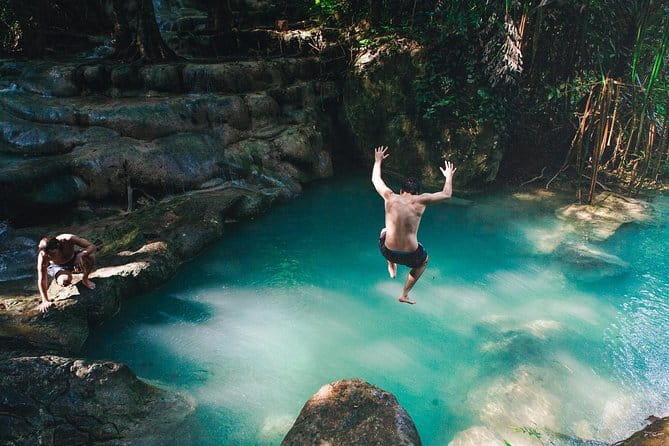
Erawan Waterfall is the star here: seven levels of forest water, emerald pools, and a chance to swim before the day’s history lessons begin. You can spend three hours climbing and bathing, or stop at lower levels if the heat and rough footing catch up with you.
I like the small maximum group of nine, which should make hotel pickup and a long day in a van easier to manage. I also like the mix of nature and history: the River Kwai Bridge means more when you have already walked beside the railway and seen Kra Sae Cave. The drawback is the pace. With a 6:00 AM start, several stops, and roughly six hours on the road, this is a demanding day.
Key points to know before booking
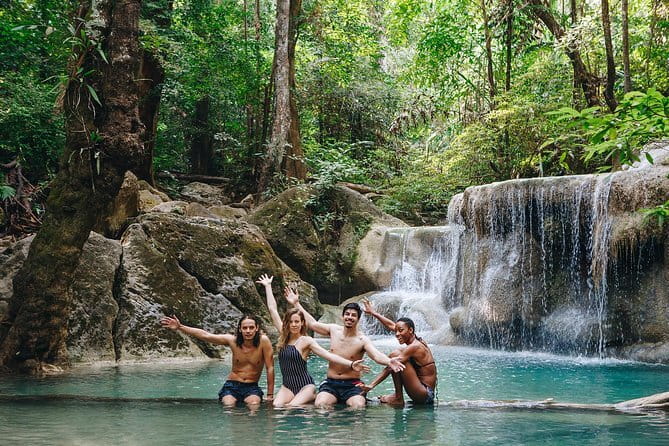
- Erawan gets three hours: You have time to swim, climb several levels, or take the waterfall at a slower pace.
- The hike needs proper footwear: Flip-flops are accepted by the operator, but shoes with a secure sole are a much better choice for wet, uneven paths.
- The history stops are brief: The Death Railway area, Kra Sae Cave, and River Kwai Bridge give you important glimpses, not long museum visits.
- The elephant stop includes a wet activity: The exact activity is not described in detail, so ask what you will do before booking if animal welfare or water activities matter to you.
- Lunch, water, transport, and admission are included: You still pay for personal expenses.
- Plan for a full 12-hour day: Pickup is at 6:00 AM, and you return to the Bangkok meeting point.
Why this Kanchanaburi day trip works
This is not a single-sight excursion. It joins three very different parts of Kanchanaburi in one long circuit: a waterfall park, World War II railway sites, and an elephant camp. That variety is the main reason to choose it.
I like trips that give you a clear sense of place rather than keeping you in one attraction all day. Here, the morning begins with water and trees, the middle of the day turns to the Death Railway, and the afternoon brings an animal-related stop before the famous bridge.
The trade-off is simple. You gain coverage, but not much spare time. Erawan receives the largest block, with three hours, while the railway and cave stops are short. If you want a quiet day with long museum visits, this is not the right format. If you have only one free day from Bangkok and want to see several major sights, it makes more sense.
The group limit of nine is useful. A small van group usually makes it easier to get moving at each stop, and a guide can answer questions without addressing a large crowd. The provided details do not name the guide, so do not book expecting a particular person or a specific guiding style.
More Death Railway Tours in Bangkok:
- From Bangkok: Death Railway & Hellfire Pass Tour with Lunch
★ 4.6 · 931 reviews - Bridge on the River Kwai and Thailand-Burma Railway Tour
★ 4.5 · 658 reviews - Bridge on the River Kwai and Thailand-Burma Railway Guided Tour
★ 4.5 · 353 reviews
6:00 AM departure and the road to Kanchanaburi
The day begins at the meeting point at Hua Lamphong Rong Muang in Bangkok. You meet the guide at 6:00 AM, then travel in an air-conditioned vehicle toward Kanchanaburi.
That early departure is not decorative. Erawan Waterfall is about three hours away by the schedule, and the tour needs enough time for the park, railway sites, lunch, elephant activity, and bridge. You should be ready to leave promptly and bring anything you need for a long day away from your hotel.
Air conditioning matters in Thailand, especially after a hike or swim. Bottled water is included, and lunch at a local restaurant is also part of the package. Personal purchases are not included, so keep some money available for anything beyond the planned meal and refreshments.
The meeting point is given as the start and end location. Hotel pickup is mentioned in the morning instructions, but the formal meeting details identify Hua Lamphong Rong Muang. Confirm the exact pickup arrangement before the day of departure, especially if you are staying outside central Bangkok.
Three hours at Erawan Waterfall
You are scheduled to reach Erawan Waterfall around 9:00 AM. This is the most active part of the day and the place where you have the most freedom.
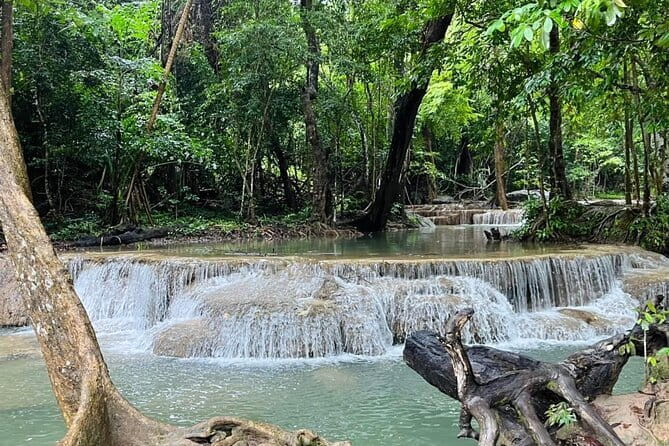
The waterfall has multiple levels. You can walk upward to see the changing pools and cascades, or settle at a lower section and swim. The water is described as emerald green, and the appeal is easy to understand: after a very early start, a swim gives the morning a clear purpose.
Three hours is a useful amount of time. You are not limited to a quick photograph and a rushed exit. You can climb for a while, rest, swim, and return at the agreed time. Still, do not confuse free time with an easy walk. The tour requires a moderate level of physical fitness, and the route can be wet and uneven.
Footwear deserves special attention. The operator says flip-flops are acceptable, but also recommends proper shoes for faster hiking and better support. One reported experience involved a participant asking about footwear, arriving in flip-flops, and then having trouble on the climb, including walking barefoot. That is a preventable problem.
I would pack secure walking shoes that can get wet, plus swimwear and a dry change of clothes. The supplied details do not state that towels or lockers are provided, so do not count on them. A small bag for wet clothing is sensible.
You may also be asked to carry a life jacket during the climb. The reason and exact procedure are not clearly explained in the available information, but one account found this inconvenient. Ask the guide at the start how the flotation equipment is used, where it must be carried, and when it can be left behind.
The best approach is to set your own limit. You do not need to reach the top levels to enjoy the stop. If the path becomes slippery or tiring, a lower pool and a relaxed return may be smarter than forcing the climb.
Walking beside the Death Railway
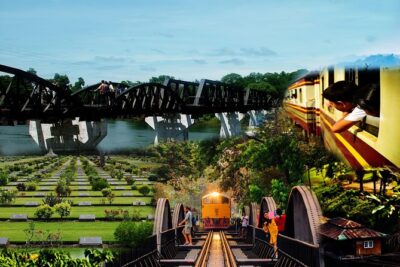
After Erawan, the trip turns from natural scenery to wartime history. At the Death Railway Museum and Research Centre area, you visit the railway built along the cliff beside the River Kwai.
The scheduled stop is about 30 minutes, with no separate admission charge listed. That is enough for a look at the setting and a walk along the railway, but not enough for a detailed museum study. You will need to listen closely to the guide and use the short visit to understand the basic story.
The phrase thrilling walk railway suggests that the physical setting is part of the experience. You are not simply viewing a line from a parking area. The railway follows a difficult cliffside route, and the river scenery adds a sharp contrast to the suffering connected with its construction.
This is where the tour’s combination of stops helps. The later bridge visit can otherwise feel like a quick photo stop. Seeing another section of the railway first gives the bridge more context.
More Train Journeys in Bangkok:
- Day Trip to Bangkok Floating Market & Maeklong Railway
★ 5.0 · 1,528 reviews - Bangkok: Railway and Floating Market Tour with Dragon Temple
★ 4.6 · 1,225 reviews - Private Excursion to Maeklong Railway and Floating Markets
★ 5.0 · 850 reviews - From Bangkok: Railway & Damnoen Saduak Floating Market Tour
★ 4.6 · 775 reviews
Kra Sae Cave and the cliffside railway
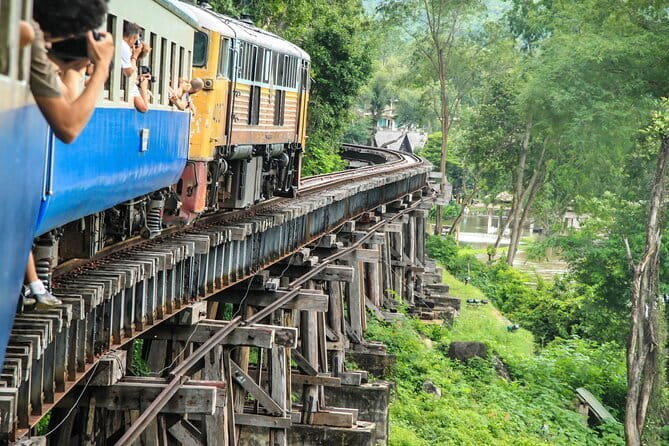
The next stop is Tham Kra Sae, also called Kra Sae Cave. You have about 20 minutes here.
Inside the small cave is a Buddha statue. The cave was formerly used as a camp by prisoners of war during the railway’s construction, giving this modest religious site a serious historical weight. It is not a large cave complex or a long underground tour. Its value comes from the connection between the confined space, the railway, and the people forced to work in the area.
Twenty minutes passes quickly. Stay close to the guide, look carefully, and ask questions while you have the chance. The stop is short enough that you should not expect a full historical presentation or much time to linger.
The railway walk and cave can also be physically awkward after Erawan. Your legs may be tired, and the morning’s wet footwear can make the next part less comfortable. This is another reason to choose shoes with good grip and to bring dry clothing.
The one-hour elephant camp visit
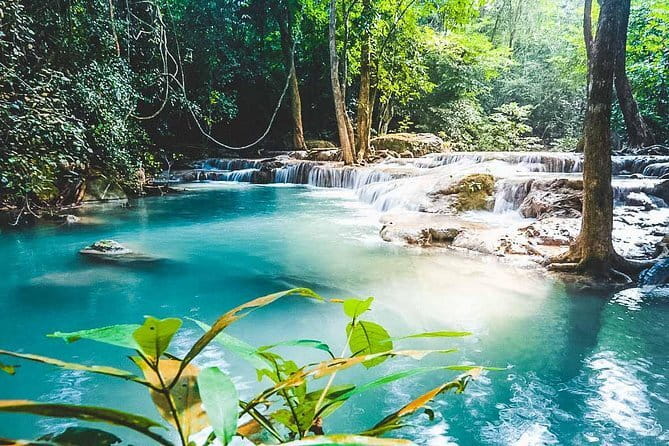
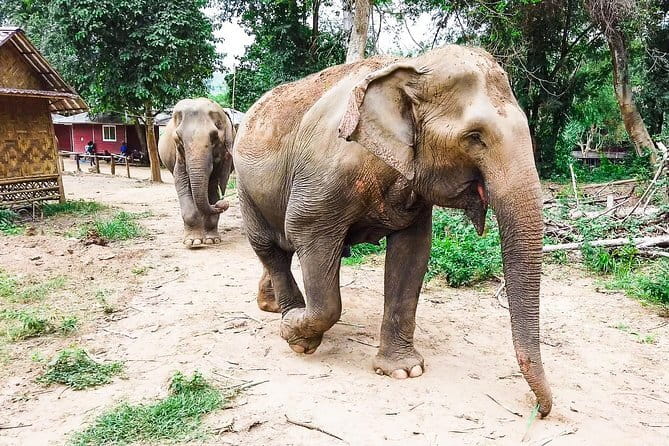
The Kanchanaburi stop lasts about an hour and focuses on rescued elephants. A wet activity at the elephant camp is included, along with admission fees and transport.
This is the least detailed part of the plan. The materials do not specify the name of the camp, the number of elephants, or exactly what the wet activity involves. You should ask before booking if you want to know whether you will bathe elephants, handle water, observe them, or take part in another activity.
That missing detail matters. Elephant experiences vary widely, and the label rescued does not tell you enough about daily care, visitor contact, or the animals’ ability to avoid interaction. Ask the operator what the activity requires and how the elephants are treated. The tour information promises a wet activity, but it does not promise riding, feeding, bathing, or any other specific encounter.
An hour is enough for a focused visit, not a full education about elephant care. I would treat this as one stop in a broad day rather than the sole reason to book. If elephants are your main interest, seek more information about the camp before paying.
The Bridge over the River Kwai
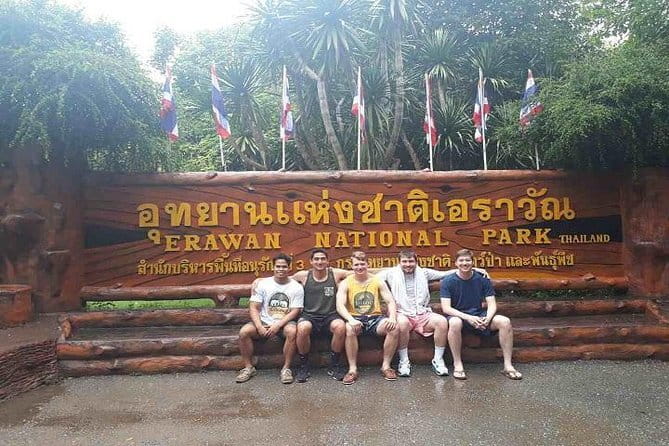
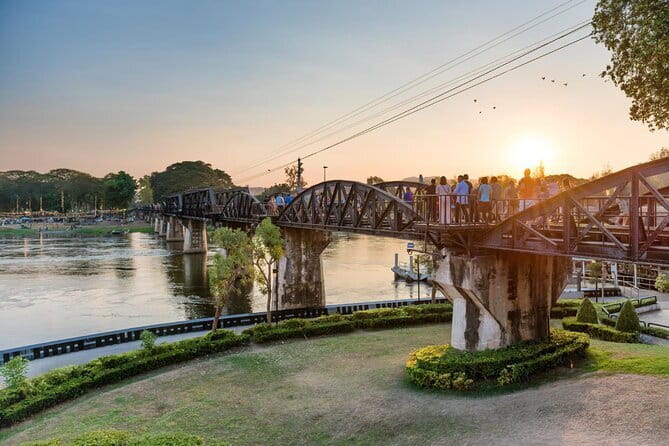
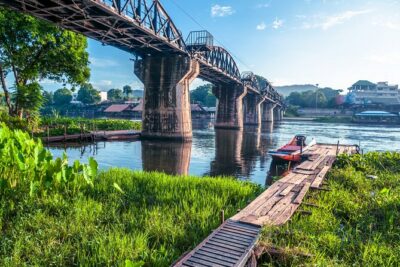
The final major sight is the Bridge over the River Kwai. You have about an hour to walk along the iron bridge and take in the river setting.
The bridge is famous, but the power of the stop comes from the history behind it. The tour presents it as a place marked by World War II bloodshed and conflict, not simply as a scenic crossing. After visiting the railway and cave, you have a better frame for understanding why this structure matters.
An hour gives you time to cross part of the bridge, look along the rails, and hear the guide’s explanation. The supplied details do not promise a museum visit here, so expect an outdoor historical stop rather than a large indoor exhibit.
Use care while walking. The bridge is made of iron, and the surface is not described in detail. Keep your attention on footing and other people while still giving yourself time to look at the river.
What the price and inclusions really mean
The supplied price is listed as $0.00. That figure does not provide enough information to judge the true cost, and you should verify the live price before booking. It may reflect a display issue rather than a genuinely free 12-hour guided trip.
For the correct price, the value depends on how much you want to cover in one day. The package includes an air-conditioned vehicle, a professional guide, lunch at a local restaurant, admission fees, bottled water, and the wet elephant-camp activity. Those inclusions reduce the number of extra payments you need to manage.
The strongest value comes from combining transport and planning. Kanchanaburi is far from Bangkok, and arranging Erawan, the railway, the cave, the camp, and the bridge independently can take time. You also avoid making separate decisions about how to connect each stop.
The weaker value is time at the historical sites. You are paying for access to a wide range of places, but the railway museum area receives only about 30 minutes and the cave about 20 minutes. If you prefer slow, detailed history, you may find the schedule too compressed.
Who should book this experience
I would choose this trip if you have one day for Kanchanaburi and want nature, history, and an elephant-related activity in one package. It suits people who are comfortable with an early start, a long drive, walking, swimming, and a full schedule.
It is also a reasonable fit for a small group of friends or family members with different interests. One person can enjoy the waterfall, another can focus on the railway, and the group still shares the same day.
I would hesitate if you dislike wet clothing, uneven paths, or long van rides. I would also hesitate if you want a relaxed waterfall visit or a serious study of the Death Railway. The tour gives you a broad sample rather than a slow examination of one subject.
The moderate fitness requirement should be taken seriously. You can choose not to climb every level of Erawan, but the day still includes walking, heat, and repeated stops. Good shoes are the simplest way to improve your comfort.
Practical packing advice for this exact route
Bring secure shoes with a good sole, swimwear, a dry change of clothes, and a small bag for wet items. Flip-flops are accepted, but they are not the sensible choice for a slippery waterfall path or a day that includes railway walking.
Pack sun protection and personal necessities for 12 hours. Bottled water is included, but you may still want to carry a small amount between stops. Since personal expenses are excluded, keep money available for anything extra.
Before departure, confirm the meeting point, pickup instructions, and the elephant activity. Ask about the life jacket procedure at Erawan, especially if you plan to climb. These questions take little time and can prevent the most avoidable frustrations.
Cancellation is free up to 24 hours before the start time. Within 24 hours, the amount paid is not refunded, and changes are not accepted. The experience also needs a minimum number of participants. If that minimum is not reached, you are offered another date or experience, or a full refund.
Should you book this Kanchanaburi tour?
Book it if you want a packed day that combines Erawan’s pools with the Death Railway, Kra Sae Cave, the River Kwai Bridge, and an elephant camp. The small group, included lunch, transport, water, and admission fees make the planning easy.
Do not book it expecting a gentle day or long historical visits. Wear proper shoes, confirm the 6:00 AM meeting details, and ask for specifics about the wet elephant activity. With those points clear, this is a useful one-day introduction to Kanchanaburi, with the waterfall providing the fun and the railway sites supplying the weight.
FAQ
How long does the tour last?
The tour lasts approximately 12 hours and begins at 6:00 AM.
Where does the tour start and end?
The listed meeting point is Hua Lamphong Rong Muang, Pathum Wan, Bangkok 10330. The activity ends back at the meeting point.
How many people can join the tour?
The tour has a maximum of nine participants.
Is lunch included?
Yes. Lunch at a local restaurant is included.
Are admission fees included?
Yes. All admission fees are included in the tour package.
Do I need a high level of fitness?
You should have a moderate level of physical fitness. The day includes walking at Erawan Waterfall, possible swimming, a climb between waterfall levels, and railway-area visits.
Can I cancel for a full refund?
Yes, if you cancel at least 24 hours before the experience start time. Cancellations made less than 24 hours in advance are not refunded.
Just added for rail travellers in Bangkok
- Train trip death railway Bridge on river Kwai from Bangkok to Kanchanaburi trip★ 4.0 · 17 reviews
- Historic Kanchanaburi:Train, Boat, Skywalk from Bangkok(No Lunch)★ 5.0 · 2 reviews
- River Kwai Bridge and Death Railway World War II Tour in Thailand★ 5.0 · 2 reviews
- Historic Kanchanaburi: Train, Boat & Skywalk + Lunch From Bangkok★ 4.5 · 3 reviews
- Bangkok: Railway and Floating Market Tour + Dragon Temple★ 4.5 · 9 reviews
- Private tour : Railway & Floating Market and the Bridge over river Kwae★ 5.0 · 2 reviews
- Maeklong & Damnoen Saduak Markets: Railway & Floating Market Tour★ 4.0 · 17 reviews
- Private Historic River Kwai Death Railway, War Cemetery and Hellfire Pass Tour★ 4.5 · 12 reviews
Death Railway Tours, compared.
Bridge on the River Kwai and Thailand-Burma Railway Guided Tour
Read our review →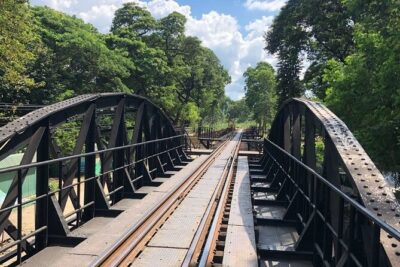
Bridge over River Kwai and Hellfire Pass Tour with Train Ride
Read our review →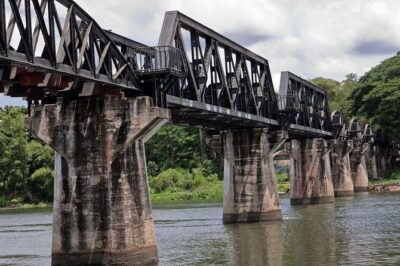
Private Tour: Thai–Burma Death Railway Bridge on the River Kwai from Bangkok
Read our review →
Death Railway & River Kwai Bridge Private Tour
Read our review →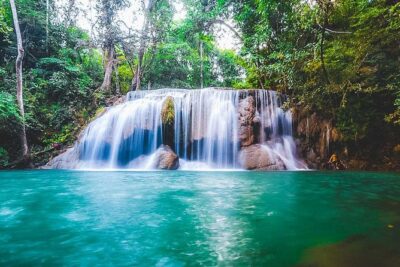
Private Tour: Death Railway, Hellfire Pass and Erawan Waterfall
Read our review →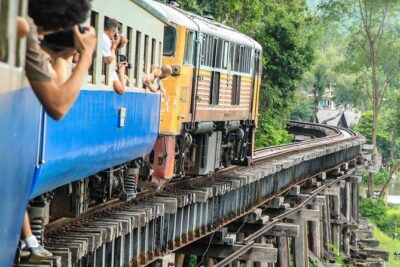
Bridge on the River Kwai and Thailand-Burma Railway Tour
Read our review →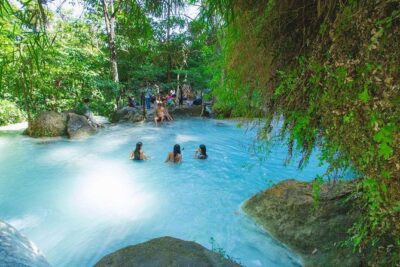
Erawan Waterfalls-Death Railway & River Kwai Tour
Read our review →Browse the lists this tour appears in