
Review · MUSEUMS
Skip the Line: Historic RailPark and Train Museum Ticket with Guided Tour
The best part of this Bowling Green experience is not just looking at old locomotives from the platform. You get to walk through actual railcars, including a mail car, Pullman diners, a sleeper, and a former presidential office car. The tour connects these objects to the way people, meals, mail, and business once moved by rail.
I like the $22 price, which covers both the museum and guided railcar tour. I also like the flexible schedule, with multiple departure times during the day, plus the clear educational focus on railroad mail and everyday life. The main drawback is size: the indoor exhibit area is modest, so the train cars carry most of the experience.
Key points to know before you go
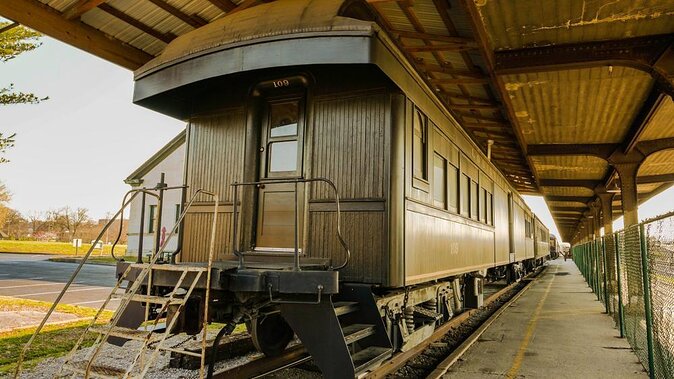
- The 1925 L&N Depot anchors the visit: This restored station once handled more than 20 trains a day between Louisville and Nashville.
- The guided portion takes you inside historic cars: The collection includes a Railroad Post Office car, two Pullman dining cars, a sleeper, and the 353 Presidential office car.
- The museum portion is self-guided: You can move through the galleries at your own pace before or around the guided railcar tour.
- Mail delivery is a major theme: The displays show how railroad workers sorted and moved mail between cities before modern delivery systems.
- The visit lasts about 45 minutes: That makes it an easy addition to a Bowling Green day, especially for families.
- The ticket is family-friendly and practical: Mobile admission, instant confirmation, service-animal access, and free cancellation at least 24 hours ahead simplify the visit.
Start at Bowling Green’s 1925 L&N Depot
The Historic RailPark and Train Museum begins with the station itself. The present L&N Depot was built in 1925 to replace an older station, at a time when Bowling Green sat along an important rail route between Louisville, Kentucky, and Nashville, Tennessee.
That location mattered. More than 20 trains once departed from this site each day, bringing passengers, workers, commercial goods, and mail through Bowling Green. The depot was not simply a waiting room for passengers. It helped support the city’s economy and connected local life to a much larger transportation network.
The building gives you useful context before you see the cars outside. Rail travel can look romantic in photographs, but this museum also shows its practical side. Trains moved people, meals, office equipment, and letters on a schedule that shaped how cities communicated and did business.
The indoor galleries are smaller than the railcar collection, so plan your expectations correctly. You will not spend hours in a giant transportation museum. Instead, the museum provides a compact introduction, then the guided tour supplies the most memorable part of the visit.
Because the ticket includes the self-guided museum, you can take time with the exhibits without being tied to every word of a guide. Read the displays that interest you, then focus on the railcars during the guided portion.
More Railway Museums in the USA:
- Prague: Railway Kingdom Giant Model Railway Museum
★ 4.4 · 54 reviews - Vienna: Kingdom of Railways Museum Entry Ticket
★ 3.6 · 50 reviews - Kyoto Railway Museum Admission Ticket
★ 4.3 · 23 reviews
The 450-foot rail line is the real centerpiece
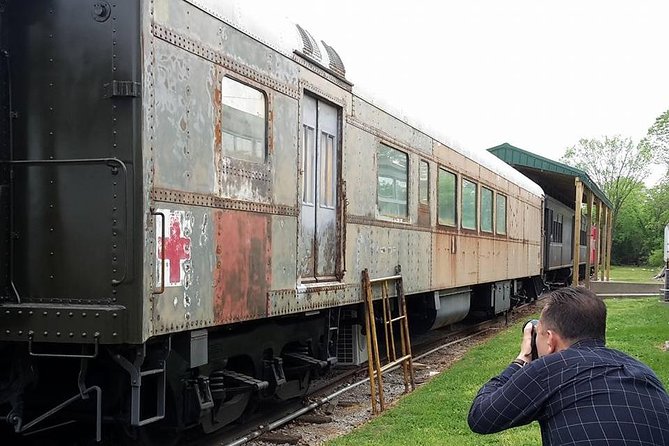
Behind the depot, 450 feet of track hold the museum’s main attraction. This arrangement lets you move from car to car and see how different parts of the rail system worked.
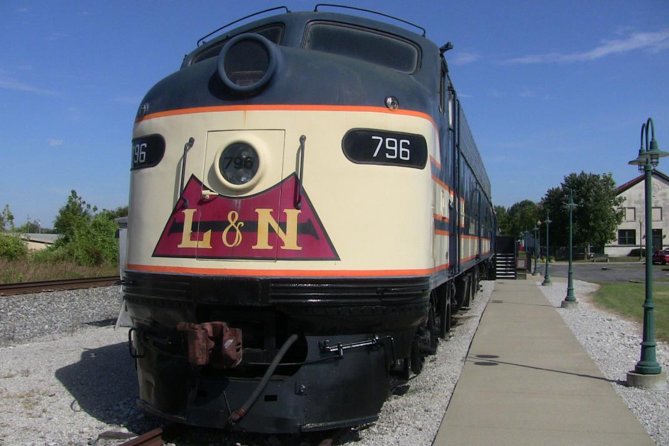
The collection includes an E8 engine, a Railroad Post Office car, the Duncan Hines Diner, a 1949 Pullman diner, the Pine, a 1953 Pullman sleeper, and the 353 Presidential office car. Each one represents a different job on the railroad.
The E8 engine gives you the working end of the train. The diners show how meals were prepared and served during long-distance journeys. The sleeper lets you consider how passengers rested while the train continued moving through the night. The presidential office car brings rail travel into the world of government and official business.
I find this variety more useful than a display made up only of engines. You can compare the public and private sides of rail travel, from postal workers sorting letters to passengers eating dinner and officials conducting business.
The cars are also the part most likely to hold a child’s attention. A young visitor may not care much about a wall panel, but walking through a real mail car or dining car gives the past a physical shape. Families can talk about what each car was designed to do as they move through it.
See how mail once moved between cities
The Railroad Post Office car is one of the strongest parts of the experience. Mail was once sorted on moving trains, allowing letters to be processed as the train traveled rather than waiting until arrival.
That system required specialized work. Mail employees handled bags of letters and packages, organized them for different destinations, and helped move correspondence across the country. The car makes a familiar modern task feel surprisingly physical and labor-intensive.
You get a useful comparison with today. Digital messages arrive almost instantly, while even ordinary letters once depended on train routes, schedules, sorting systems, and workers stationed inside moving cars.
The mail car also connects the museum to Bowling Green’s place between two major cities. This was not an isolated local operation. Rail lines tied communities together, and mail service was one of the clearest ways ordinary people experienced that connection.
If you have limited time, give this car close attention. It offers more than a look at old equipment. It explains how communication worked before online messages, overnight shipping, and automated sorting systems.
Walk through the Duncan Hines and Pullman diners
The dining cars provide a different view of rail travel. The Duncan Hines Diner and the 1949 Pullman diner show how meals became part of the passenger experience.
A diner on a train had to operate within a narrow, moving space. Kitchens, seating, staff areas, and serving routines all had to function while the car traveled down the line. The result was a dining room unlike an ordinary restaurant, with the train itself shaping every part of the meal.
The Duncan Hines name adds a familiar food connection, while the Pullman diner points to the company and design traditions that shaped American passenger rail. Together, the cars help you see that trains were not only a way to get somewhere. For many passengers, the journey included meals, social time, and a level of service that has largely disappeared from ordinary transportation.
You should not expect a working restaurant or food tasting. Food and drinks are not included, and the cars are presented as museum pieces. Their value comes from their design and the glimpse they provide into the routines of rail travel.
Still, these cars are highly approachable. You do not need a special interest in railroad engineering to appreciate a dining room preserved inside a train. The spaces make sense quickly, and the guide can explain how they fit into the larger trip.
More Museum Visits in the USA:
- Brussels: Train World Museum Entrance Ticket
★ 4.7 · 524 reviews - London: Postal Museum Entry Ticket and Underground Rail Ride
★ 4.6 · 363 reviews - Brussels Train World Museum Entrance Ticket
★ 4.5 · 220 reviews - From Krakow: Zakopane Tour with Gubalowka Funicular & Museum
★ 4.5 · 80 reviews
Step into the 1953 Pine sleeper
The Pine is a 1953 Pullman sleeper, and it shows how overnight rail travel worked. Sleeping cars changed the meaning of distance. A long trip did not always require a hotel stop, since passengers could travel and rest in the same vehicle.
The sleeper is useful because it shifts your attention from the train’s mechanical side to passenger comfort. You can consider the difference between sitting upright in a modern coach and having a dedicated place to sleep while crossing several states.
The car also gives the tour a sense of sequence. You see where people ate, where mail was sorted, and where they slept. Those separate functions once operated together as part of one moving system.
The supplied visit details do not specify how many compartments you will enter or how long the guide spends in each car. You should treat the 45-minute duration as an approximate total rather than a promise of equal time in every carriage.
See the 353 Presidential office car
The 353 Presidential office car adds an official and political side to the collection. An office car allowed important government figures to work, meet, and travel while remaining connected to the rail network.
This is different from a passenger coach or sleeper. The car represents rail travel as a tool for administration and public business, not only transportation or leisure.
The name may sound grand, but the useful question is how the car functioned. What did officials need while traveling? How were meetings, communications, and private work handled before air travel became the standard choice for many long journeys?
The guide-led setting helps here. Instead of simply passing through a preserved interior, you can connect the car to the broader story of transportation and government.
No individual guide names are provided for this experience, so you should not expect to request a particular guide. The quality of the tour will depend partly on the person leading it, but the subject gives the guide plenty to work with. The strongest tours will connect the cars to mail, work, dining, sleep, and official travel rather than reciting dates alone.
What the 45-minute schedule means for you
At about 45 minutes, this is a compact attraction. You can fit it into a morning or afternoon without giving up a full day in Bowling Green.
The time includes the self-guided museum and guided railcar tour. Since the indoor galleries are compact, the guided railcars are likely to take up much of the visit, though the exact division is not specified.
Multiple tour times are offered throughout the day. That helps if you are building a broader schedule, but you should still choose a start time carefully. A guided visit is not as flexible as wandering through a gallery whenever you please.
The ticket is mobile, and confirmation arrives immediately after booking. That is useful if you are making plans while already in town or deciding between several Bowling Green activities.
The experience is offered in English. Most people can participate, and service animals are allowed. The venue is near public transportation, which may help if you do not have a car. Dress is listed as smart casual, so simple neat clothing is the safe choice.
The information provided does not specify parking details, exact meeting instructions, tour group size, or the accessibility of every railcar. If any of those points matter to you, confirm them directly with the Historic RailPark and Train Museum before setting out.
Is $22 good value for the visit?
At $22 per person, the ticket covers two parts of the attraction: the self-guided museum and the guided railcar tour. That is fair value, especially because the guided portion takes you inside a collection that would be difficult to understand from exterior viewing alone.
The value is strongest for three types of visitors. First, families get an attraction with a manageable duration and plenty of physical details to discuss. Second, people interested in American transportation history get a focused collection covering engines, mail, dining, sleeping, and official travel. Third, anyone with a spare hour in Bowling Green gets a structured activity that does not require a full-day commitment.
The value is weaker if you expect a large museum with many galleries or a long guided program. The exhibit area is small, and the total visit is brief. You are paying for access to a specific historic site and its railcars, not an enormous collection.
The 4.7 rating from 59 ratings and a 97 percent recommendation rate fit the experience’s strengths: the train cars and educational guide work better than the small indoor exhibit area. I would book it for the railcars, not for a major museum outing.
Who should book the Historic RailPark tour?
I would recommend this to families, history-minded visitors, train enthusiasts, and anyone who enjoys seeing how ordinary systems once worked. The mail car is especially useful for children and adults who want a clear connection between past and present.
It also suits visitors who prefer a short attraction with a guide. You get enough explanation to understand the collection, while the self-guided portion lets you set your own pace.
It may not suit you if you want a large indoor museum, a long excursion by train, or an experience centered on food. You do not ride the historic cars as part of the visit, and food and drinks are not included.
The experience is also a good choice for mixed-interest groups. One person can focus on locomotives, another on railroad mail, and another on the dining or sleeping cars. The variety keeps the visit from depending on a single type of historical interest.
Booking, timing, and cancellation advice
The ticket includes all taxes, fees, and handling charges, so the advertised $22 price is the useful figure for comparing the experience with other activities. The tour is often booked around 10 days ahead, which suggests that planning early is sensible during busy periods.
Free cancellation is available if you cancel at least 24 hours before the local start time. Cancellations made less than 24 hours ahead are not refunded, and late changes are not accepted.
I would reserve a time that leaves you breathing room afterward. The visit is short, but the guided schedule means arriving late could make the day harder. Since mobile tickets and instant confirmation are included, keeping the booking on your phone should be simple.
Should you book this Bowling Green rail museum visit?
Book it if you want to walk through real historic railcars and understand how trains once handled mail, meals, sleeping, and official business. At $22, the combination of a self-guided museum and guided railcar tour gives you a solid hour-sized activity with strong family appeal.
Skip it if you need a large museum, a train ride, or a full-day attraction. The indoor galleries are limited, and the total experience is about 45 minutes.
For most visitors with an interest in transportation or local history, I would make the stop. The old depot supplies the setting, but the mail car, Pullman diners, Pine sleeper, and Presidential office car supply the reasons to go.
FAQ
How long does the Historic RailPark and Train Museum experience last?
The visit lasts approximately 45 minutes and includes both the self-guided museum and the guided railcar tour.
What is included in the $22 ticket?
The price includes admission to the self-guided museum, the guided railcar tour, and all taxes, fees, and handling charges.
Is the tour offered in English?
Yes. The experience is offered in English.
What historic railcars can I see?
The collection includes an E8 engine, a Railroad Post Office car, the Duncan Hines Diner, a 1949 Pullman diner, the 1953 Pullman sleeper called the Pine, and the 353 Presidential office car.
Is the experience suitable for families?
Yes. Most people can participate, and the visit is described as family-friendly. The collection’s mail car, dining cars, sleeper, and engine give children several physical exhibits to explore.
Can I cancel for a full refund?
Yes, if you cancel at least 24 hours before the experience’s local start time. Cancellations or changes made less than 24 hours before the start time are not accepted, and the amount paid is not refunded.
More Skip-the-Line Tickets in the USA
- From Naples: Guided tour of Pompeii skip-the-line and round-trip train
★ 4.5 · 811 reviews - Skip the Line Kuranda Scenic Railway Gold Class and Skyrail Rainforest Cableway
★ 4.5 · 574 reviews
Just added for rail travellers in the USA
- Sedona: Grand Canyon Railway Full-Day Scenic Rail Tour★ 4.7 · 89 reviews
- Rockies to the Red Rocks Train – Denver to Moab – SilverLeaf Plus★ 5.0 · 98 reviews
- Chattanooga: Derailed Trolley Tour and Train Ride★ 4.5 · 126 reviews
- Sedona, AZ: Grand Canyon Guided Tour and Historic Railway★ 4.6 · 122 reviews
- Derailed Adventure – Chattanooga Trolley & Train Combo Tour★ 4.5 · 125 reviews
- All-Day Guided Zipline Tour with Train Ride and Lunch in Durango★ 5.0 · 133 reviews
- Wild West Day Trip to Virginia City from Tahoe with Train Ride★ 4.0 · 142 reviews
- Key West Conch Train Tour★ 4.5 · 234 reviews
Museums, compared.
Postal Museum Entry Ticket and Underground Rail Ride
Read our review →

Browse the lists this tour appears in