
Review · EVENING EXPERIENCES
Kamakura Tour with Pro Photographer: Anime Train & Fuji Sunset
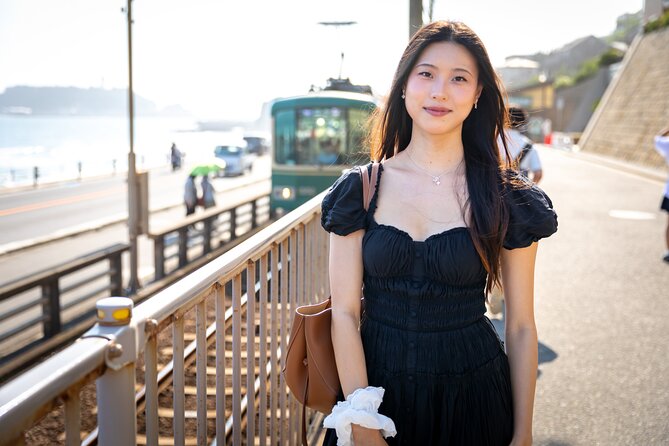
Kamakura’s famous Slam Dunk train crossing is more than an anime photo stop. It is a working railway crossing beside the sea, where Enoshima Line trains pass through the same view that fans know from the screen. With photographer Luis guiding you, the outing turns that quick photo opportunity into a relaxed portrait session.
I like two things here: the 30-plus edited photos arrive within 72 hours, and the walk continues to Shichirigahama Beach for views toward Enoshima and, on a clear day, Mount Fuji. The main drawback is weather. Rain can still produce good pictures, but Fuji and bright coastal views are never guaranteed.
Key points to know before you book
- The anime setting is real: You photograph the crossing at Kamakurakōkō-Mae Station, one of the most recognizable Slam Dunk locations.
- Luis provides personal direction: He helps with poses, candid moments, and flattering angles rather than leaving you to guess what to do.
- The tour ends at the coast: Shichirigahama Beach adds sea views and a second setting beyond the railway crossing.
- You receive a useful souvenir: At least 30 professionally edited portraits are sent through an online gallery within 72 hours.
- The group stays small: A maximum of eight people makes personal guidance more realistic.
- You arrange your own transport: The meeting point is Kamakurakōkō-Mae Station, and the tour begins at 3:30 pm.
Why the Slam Dunk crossing is the right starting point
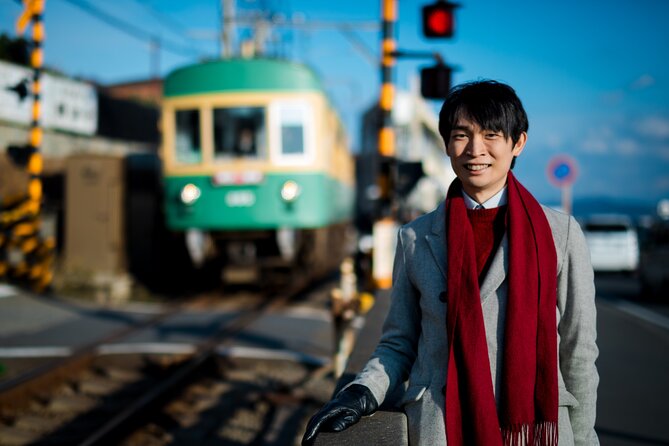
The appeal of this experience is immediate. You meet at Kamakurakōkō-Mae Station, a small coastal station on the Enoshima Line, and begin at the crossing made famous by Slam Dunk. The train, the road, the overhead wires, and the sea beyond create a recognizable frame without needing a set or a replica.
That matters if you are visiting for the anime connection. A quick stop on your own can leave you with one rushed snapshot and a crowd of other people trying to take the same picture. Here, Luis guides the session and works with you on both posed portraits and more natural moments.
The crossing is also a working public place, not a private photo studio. Trains continue to pass, and the scene depends on timing and public space. Your best images may come from a mix of planned poses and short unscripted moments as the train moves through the frame.
The tour description does not promise a private crossing or exclusive access, so you should expect a shared public setting. That is part of its charm, but it also means patience and awareness are important. Follow the photographer’s directions and stay clear of the railway area.
More Photo Sessions in Japan:
- Kamakura Tour with Pro Photographer: Anime Train & Fuji view
★ 5.0 · 2 reviews - Saigon Railway Village Photo Tour
★ 5.0 · 10 reviews
What Luis adds to a simple photo stop
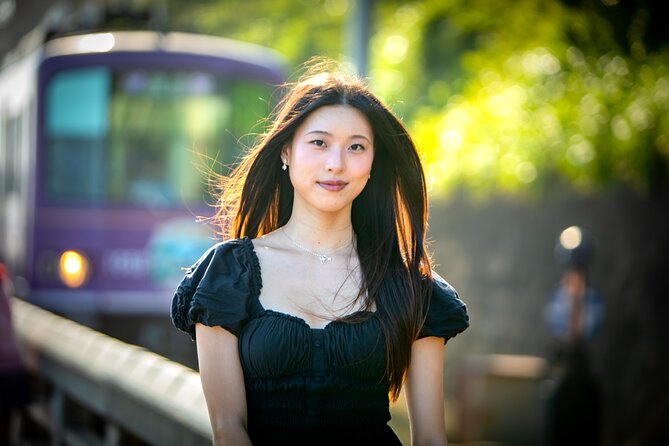
A professional camera alone does not guarantee good holiday pictures. The useful part of this experience is having someone tell you where to stand, how to angle your body, and what to do with your hands. Luis is described as patient and accommodating, and he also gives tips for looking natural in photographs.
That guidance is especially helpful if you normally take photos of everyone else and end up with very few of yourself. You can expect a relaxed portrait session rather than a formal studio shoot. The plan includes polished portraits as well as candid images, so the final gallery should not feel like a stack of identical poses.
Luis also lives nearby and knows the area well. That local connection is valuable because the outing is short, only about two hours. You are not spending half the session trying to locate the best angle or decide where to walk next.
The personal approach seems to hold up even when conditions are not perfect. On one rainy outing, Luis reassured the customer that the pictures could still work and continued with the session. That does not make rain desirable, but it suggests the photographer can adapt instead of treating cloudy weather as an automatic failure.
From Kamakurakōkō-Mae Station to the famous crossing
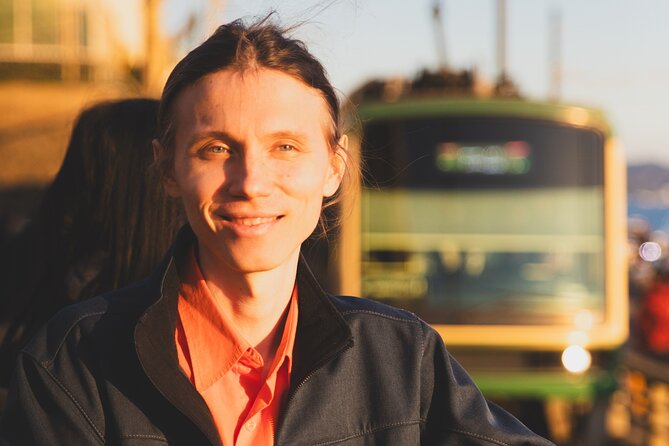
The first part lasts about an hour and centers on Kamakurakōkō-Mae Station. The station itself is free to visit as part of the tour, though you must arrange your own transportation to the meeting point.
This is where the anime connection gets its strongest treatment. You will photograph the Enoshima Line crossing, the passing trains, and the sea beyond. The photographer can place you in the frame in several ways, using the crossing as a direct reference to Slam Dunk or treating it as a broader Kamakura coastal scene.
I like that the session is not limited to one rigid pose. The plan includes elegant poses and candid moments, which gives you more variety in the final set. You may receive pictures that feel deliberately composed alongside images that look less formal.
The setting has some practical limits. A railway crossing is not an attraction with a large visitor center or a long list of facilities. You are coming for the view, the anime link, and the photographs. If you have no interest in Slam Dunk or portrait photography, an hour here may feel longer than necessary.
For fans, though, the location carries real meaning. You are standing in a place that connects a fictional high school sports story with an ordinary seaside railway line. That meeting of animation and daily life is the reason this stop works so well.
Shichirigahama Beach and the Fuji question
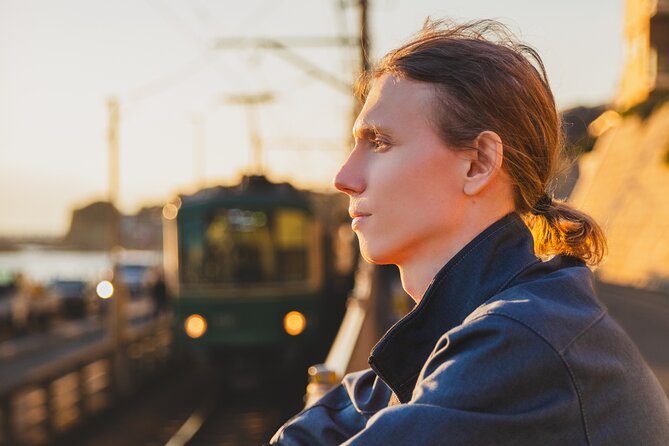
After the station area, the tour moves to Shichirigahama Beach for about 30 minutes. The beach gives the photographer a wider backdrop and changes the mood from railway action to open coast.
From here, you can pose with the sea, Enoshima Island, and Mount Fuji if the weather allows. Enoshima is the more dependable visual target, while Fuji is the bonus that depends on clear conditions. The late afternoon start at 3:30 pm also gives the outing a sunset focus, though the information provided does not promise a specific sunset time or exact visibility.
This is an important distinction when deciding how much to pay. Do not book this solely on the assumption that Mount Fuji will appear in every image. Weather can hide it, and poor conditions may lead to a different date or a full refund if the experience is canceled.
Even without Fuji, the beach adds value because it gives you a second location and a different set of backgrounds. You are not paying for one train-crossing snapshot. You are paying for a guided photo session that moves from a well-known anime spot to the coast.
The beach portion is shorter than the station portion, so expect a focused shoot rather than a long walk along the shoreline. If your priority is scenic portraits, tell the photographer early. If the anime crossing matters most, the first hour receives the greater share of the scheduled time.
More Evening Experiences in Japan:
- From Hanoi: 2-Day 2-Night Sapa Tour by Overnight Train
★ 4.4 · 96 reviews - Sapa: 3-Day, 3-Night Trek and Hotel with Overnight Train
★ 4.2 · 64 reviews - Night life in Bangkok – Jodd Fairs Train Night Market(Joint)
★ 4.0 · 11 reviews - Sa Pa Trekking 2 Days 3 Nights Homestay by Night Train
★ 4.5 · 11 reviews
How much value do 30 edited photos offer?
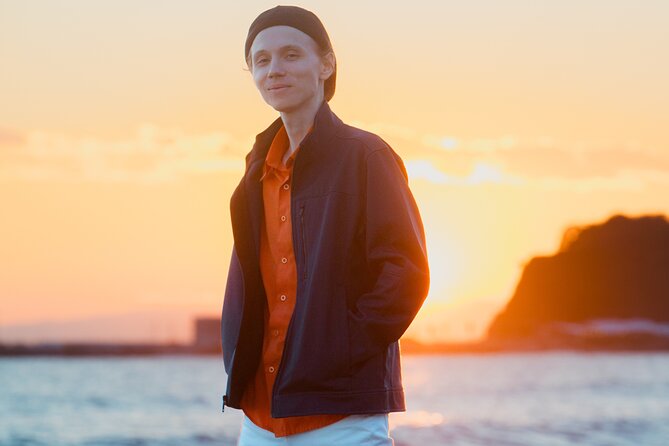
The price is $103.41 per person. That is not the cheapest way to visit Kamakura, since the station and beach themselves do not require an admission fee. The value comes from the photographer’s time, personal direction, local knowledge, editing, and the final online gallery.
You receive at least 30 professionally edited portraits within 72 hours. For a couple, friends, or a solo visitor, that can be a useful record of the day and a better result than relying on quick phone pictures. The gallery also makes it easy to share the images after returning home.
The number matters, but variety matters more. The session includes candid and stylized portraits, and the two locations provide different visual settings. You should still understand that 30 or more images does not mean 30 completely different scenes. They will come from a two-hour outing centered on two nearby areas.
For a solo visitor, the value is particularly clear. You can enjoy the location without asking strangers to take repeated photographs or carrying a tripod. Couples and friends may also appreciate having everyone in the frame, though the information does not specify whether the fee changes for private groups.
Group discounts are available, so check the price for your party before booking. The maximum group size is eight people. A smaller group should make it easier to receive individual attention, while a larger group may mean more shared time at the same stops.
Timing, transport, and the small-group setup
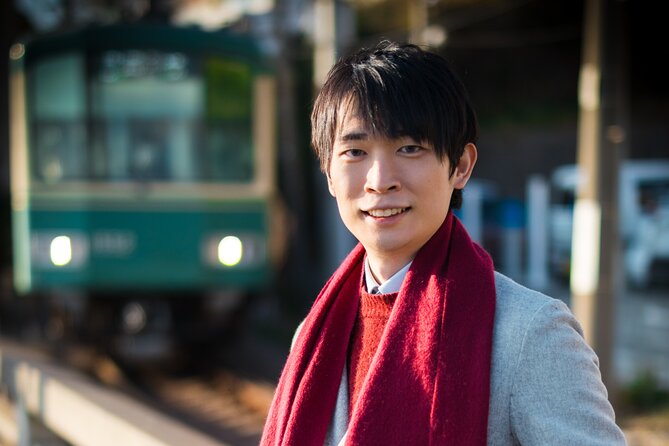
The experience begins at 3:30 pm and lasts about two hours. You meet at Kamakurakōkō-Mae Station and return to the meeting point when the activity ends.
Transportation to the meeting point is not included. You need to plan that part yourself, with the station serving as the clear arrival point. Since the outing starts at a fixed time, give yourself enough margin to find the station and meet the photographer without rushing into the first photographs.
The small maximum of eight people is one of the better practical features. Portrait sessions work best when the photographer has time to adjust each person’s position and expression. A group of eight is still large enough to share the experience, but it is more manageable than a big sightseeing tour.
The tour is near public transportation, and most people can participate. Service animals are allowed. No special fitness requirement is stated, but you should expect to move between the station area and the beach during the two-hour session.
The mobile ticket is handy for a phone-based booking, and confirmation is provided at booking. Those are minor details, but they reduce the need for printed paperwork on a short outing.
Weather, flexibility, and what can change
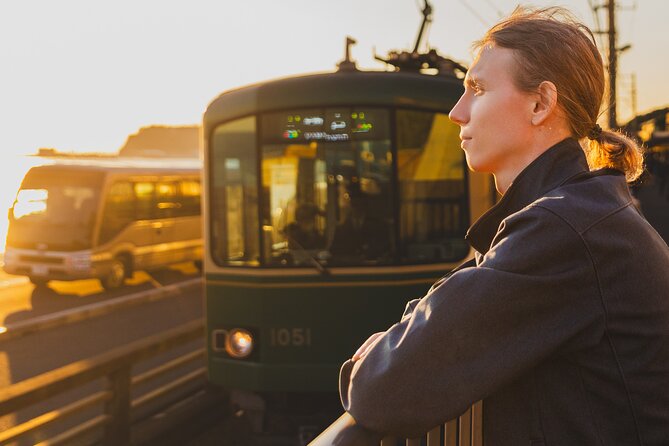
Weather is the main variable. The best version of this experience includes clear coastal views, Enoshima, and Mount Fuji in the distance. The least favorable version could mean rain, muted light, or no Fuji at all.
The photographer has shown flexibility in rainy conditions, and the session can still produce appealing images. Rain also changes the tone of the pictures, giving the crossing and beach a softer, more reflective look. Still, you should book this with realistic expectations. Fuji is an opportunity, not a guarantee.
If poor weather makes the experience impossible, the operator offers another date or a full refund. You can also cancel for a full refund up to 24 hours before the start time. Cancellations or changes made within 24 hours are not refunded or accepted, so watch the local cut-off time.
This policy is fair for a weather-dependent activity, but it means you should avoid waiting until the last minute if your schedule is tight. If the forecast looks uncertain, contact the operator or consider whether you have another day available.
Who will get the most from this photo walk?
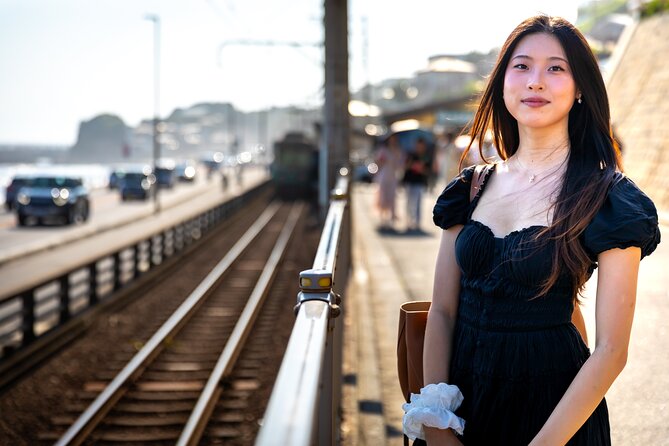
This tour is a strong match for Slam Dunk fans who want more than a quick stop at the famous crossing. It also suits solo visitors who want professional photographs, couples looking for coastal portraits, and friends who want a shared souvenir from Kamakura.
You do not need to be an anime expert. The crossing, trains, sea, and beach work as photo subjects even if you have never watched the series. The local stories and historical details from the photographer add some context beyond the portrait session.
You may want to skip it if you prefer exploring independently or if $103.41 feels high for a two-hour activity with free-access locations. You should also think twice if your schedule cannot tolerate a weather change or if your main goal is guaranteed Mount Fuji scenery.
For anyone who has tried to take flattering travel photos alone, the guided direction may justify the cost. You get help with posing, someone who knows the area, and a finished gallery instead of a phone full of near misses.
Should you book the Kamakura photo tour?
Book it if you want the real Slam Dunk crossing, personal photography help, and a set of edited images rather than a quick sightseeing stop. The combination of Kamakurakōkō-Mae Station, Shichirigahama Beach, Enoshima, and possible Fuji views gives the short outing a clear purpose.
The strongest reasons to choose it are Luis’s local knowledge, his patient posing advice, and the promise of 30 or more edited photos within 72 hours. The main caution is the weather and the fact that transport to the meeting point is your responsibility.
I would choose this experience for a solo visit, a couple’s photo session, or an anime-focused afternoon in Kamakura. I would pass if I only wanted to see the crossing for a few minutes or if I needed guaranteed Fuji views. For the right kind of visitor, it turns a famous public spot into a personal keepsake.
FAQ
Where does the tour begin?
The tour begins at Kamakurakōkō-Mae Station, at 1 Chome-1 Koshigoe, Kamakura, Kanagawa 248-0033, Japan.
What time does the activity start?
The scheduled start time is 3:30 pm.
How long does the tour last?
The experience lasts approximately two hours.
What locations are included?
The tour includes Kamakurakōkō-Mae Station and its famous Enoshima Line train crossing, followed by Shichirigahama Beach.
Is Mount Fuji guaranteed to be visible?
No. Mount Fuji can be seen if weather conditions allow, but visibility is not guaranteed.
Are photographs included in the price?
Yes. You receive 30 or more professionally edited photos through an online gallery within 72 hours.
Do I need to arrange transportation?
Yes. Transportation to the meeting point is not included, so you must make your own way to Kamakurakōkō-Mae Station.
What happens if the weather is poor?
If the activity is canceled because of poor weather, you are offered another date or a full refund. You can also cancel at least 24 hours before the start time for a full refund.
Just added for rail travellers in Japan
- Train in Samurai Swordsmanship and Defeat the Demon in Tokyo★ 5.0 · 5 reviews
- Tokyo-Izu: Volcano, Ocean& Capybara Cuddle with Izu Scenic Train★ 3.5 · 3 reviews
- Private tour with Yasushi and Yoko – by car, train, on foot★ 5.0 · 2 reviews
- Bullet Train Experience & Mishima Shrine Private Tour from Tokyo★ 5.0 · 9 reviews
- Bullet Train and Mt. Fuji Famous Food Tour★ 5.0 · 4 reviews
- Mt Fuji & Hakone Private Tour from Tokyo: Return by Bullet Train★ 5.0 · 22 reviews
- 3-Day Private Tokyo and Nagano: Snow Monkeys, Tsukiji Market and Bullet Train★ 5.0 · 2 reviews
- Guided Half-day Tour(PM) to Toyota Commemorative Museum & SCMAGLEV Railway Park★ 5.0 · 3 reviews
Evening Experiences, compared.
Sapa: 3-Day, 3-Night Trek and Hotel with Overnight Train
Read our review →
Night life in Bangkok – Jodd Fairs Train Night Market(Joint)
Read our review →
Sa Pa Trekking 2 Days 3 Nights Homestay by Night Train
Read our review →
12-Night Private Tour: Amarna and El Minya with Cruise and Train
Read our review →
2 days 3 Nights Sapa Trekking Tour by Night Train from Hanoi
Read our review →
Sapa Trekking Tour by Night Train from Hanoi 3 Nights – 2 days
Read our review →Browse the lists this tour appears in