
Review · KYOTO TRAIN JOURNEYS
Train Katana with Real Dojo Students in Kyoto
The unusual thing here is that you are not entering a staged samurai show. You join a working Kyoto dojo, put on training clothes, and practice beside students who are there for serious katana study. The headmaster has more than 20 years of experience, and the small group keeps the session personal.
I like the chance to learn both iai, the art of drawing the sword, and kenjutsu, the fighting techniques used with a katana. I also like the chance to watch real cutting of rolled tatami mats and a striking two-katana performance by the master. The drawback is clear: this is physical training, not a relaxed photo stop, and previous martial arts experience may help you get more from it.
Key points to know before you book
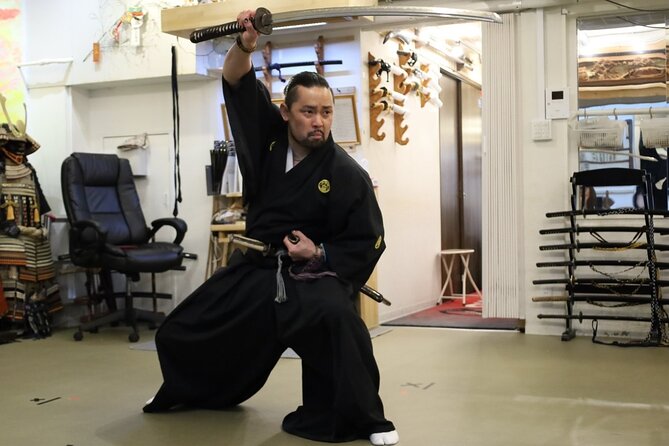
- Train beside local dojo students: You take part in a working class rather than a tourist-only demonstration.
- Wear full training clothing: The session includes a dōgi, obi, and hakama.
- Learn two parts of swordsmanship: You practice iai drawing methods and kenjutsu fighting techniques.
- Watch real katana cutting: The master and students cut rolled tatami mats during the session.
- See a two-katana performance: This is a special demonstration by the headmaster.
- Expect a tiny group: The maximum is three participants, and the activity lasts about three hours.
What makes this Kyoto dojo visit different
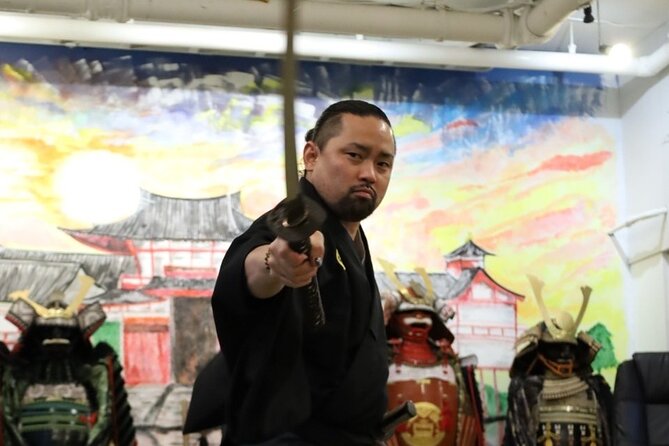
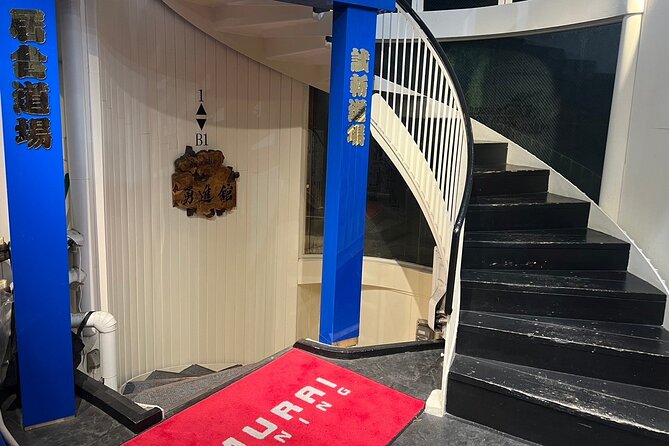
Kyoto offers plenty of activities built around samurai imagery. Many are designed as quick cultural photo opportunities. This one takes a more serious path. You enter Yushinkan Kyoto, a dojo with dedicated local students, and take part in the same kind of training environment rather than watching a performance made only for visitors.
That difference matters. A working dojo has its own rhythm, discipline, and expectations. You are not simply handed a plastic sword and asked to pose. You are dressed for training, taught basic techniques, and asked to pay attention to form and control.
The experience provider is Yushinkan Co., Ltd., also identified as SETO Yushin. The headmaster has more than 20 years of experience. The individual instructor’s full name is not provided, although the dojo’s international contact is identified as John in the booking information.
This is a good choice if you want a close look at how Japanese sword arts are practiced today. It is not a history lecture about medieval Japan, and it does not claim to recreate a samurai battle. The value lies in seeing a living martial art in a real training space.
More Train Journeys in Japan:
- Mt Fuji & Hakone Cruise, Drum Show Bullet Train 1 Day from Tokyo
★ 4.0 · 7,413 reviews - Tokyo Mt Fuji 5th St & Hakone Cruise Bus Tour w/Bullet Train
★ 4.4 · 5,024 reviews - Mt. Fuji and Hakone Day Trip From Tokyo with Bullet Train Option
★ 4.0 · 368 reviews
Getting dressed in dōgi, obi, and hakama
The session begins with the practical business of getting into samurai training gear. You wear a dōgi, obi, and hakama. The clothing is not just for photographs. It gives you the feel of a formal martial arts class and helps set the right tone before you handle a sword.
The hakama also changes how you move. Its pleats and wide shape require attention to your stance and footwork. You may find that even simple movements feel less casual once you are dressed for the dojo.
This part is useful for another reason: it marks a clear shift from sightseeing to training. You are not wandering into an attraction for ten minutes. You are preparing to follow instructions and work through techniques.
Bring a respectful attitude and be ready to listen closely. The activity is suitable for participants aged 12 and older, and a moderate level of physical fitness is required. The information provided does not give a detailed list of physical restrictions, so anyone with concerns should ask before booking.
Learning iai, the art of drawing the katana
One of the central lessons is iai, which focuses on drawing the katana. The movement looks simple when performed by an expert. It is not. The draw, the body position, the control of the blade, and the return of the sword all need care.
For you, the important point is that this is a technique session, not a sword-swinging free-for-all. You learn how the body works with the weapon. Small details matter, and the instructor’s attention goes toward safe, controlled movement.
Iai can be especially interesting if you have studied another martial art. One participant with experience in several martial arts, but limited katana training, described the session as a professionally arranged experience and strongly recommended it for people with a martial arts background. That is useful guidance. You do not need to be a sword expert, but you may appreciate the lesson more if you already understand basic discipline, balance, and repetition.
If you have never done martial arts, you can still find the lesson worthwhile. Just expect to spend time learning foundations rather than performing an advanced routine.
Practicing kenjutsu with a small group
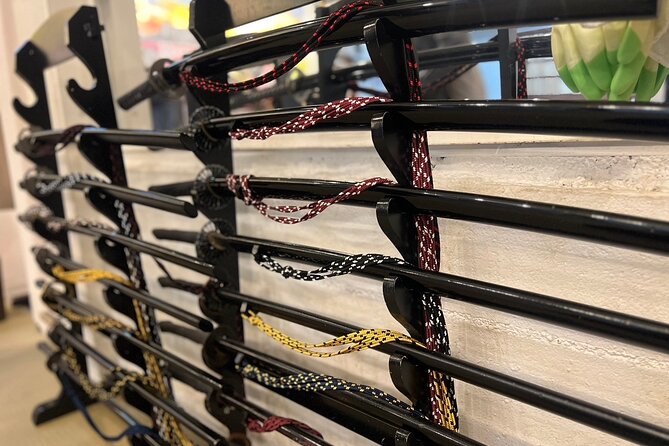
The next part covers kenjutsu, the fighting techniques associated with the katana. This adds a different layer to the session. Iai focuses on the draw and controlled movement, while kenjutsu introduces the idea of using the sword in combat techniques.
Because the maximum group size is only three people, you should have a better chance to follow the instructor’s directions than you would in a large class. A small group also makes the dojo feel less like a mass-market activity. At the same time, a three-hour session with hands-on practice demands concentration. This is not the best pick if you want a brief, low-effort cultural stop between major Kyoto sights.
The supplied information does not specify exactly how long each lesson lasts or which named techniques you will practice. You should therefore book it for the overall training experience, not for a guaranteed list of specific forms.
The safety boundary is important. Test cutting with a real katana is not offered to participants. You will practice techniques, but you will not be handed a live blade to cut targets yourself.
Same line, a different day out:
- From Osaka: Sagano Train Ride and Kyoto Guided Day Tour
★ 4.3 · 180 reviews - Fukuoka: Takachiho Gorge & Scenic Railway One Day Tour
★ 4.8 · 178 reviews - Sagano Romantic Train & Arashiyama, Kiyomizudera, Fushimi Inari Taisha Day Tour
★ 4.5 · 171 reviews - Hakone: Train Pass with Unlimited Rides & Activity Discounts
★ 4.4 · 102 reviews
Watching tatami mats cut with a real katana
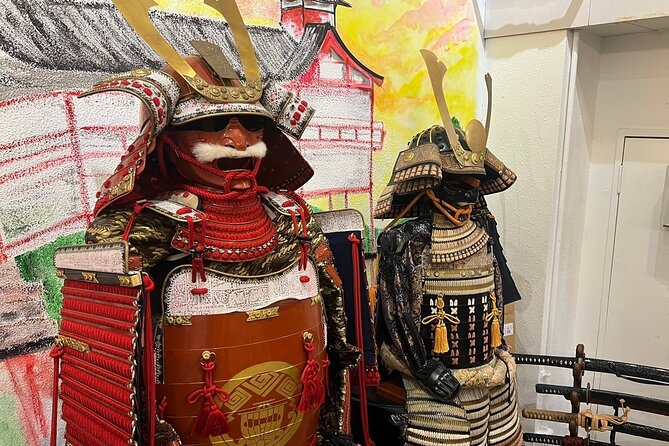
The cutting demonstration is likely to be the most dramatic part of the visit. The master and students cut rolled tatami mats with a real katana. Tatami rolls provide a visible target, so you can see the result of a properly controlled cut.
This moment helps explain why the earlier training matters. Swordsmanship is not only about looking impressive. The cutting display shows the need for alignment, timing, control, and precision. A fast swing without those elements would not produce the same result.
You should also keep expectations realistic. The information says that the master and students perform the cutting, but it clearly says participants do not. That distinction is part of the appeal for safety reasons, and it keeps the focus on learning rather than on a risky stunt.
Video recording is not allowed. That may disappoint anyone hoping to collect dramatic footage, but it also reinforces the dojo’s character as a training place rather than a show built for cameras. Put the phone away and watch the movement carefully. You will notice more when you are not worrying about getting the perfect clip.
The master’s two-katana performance
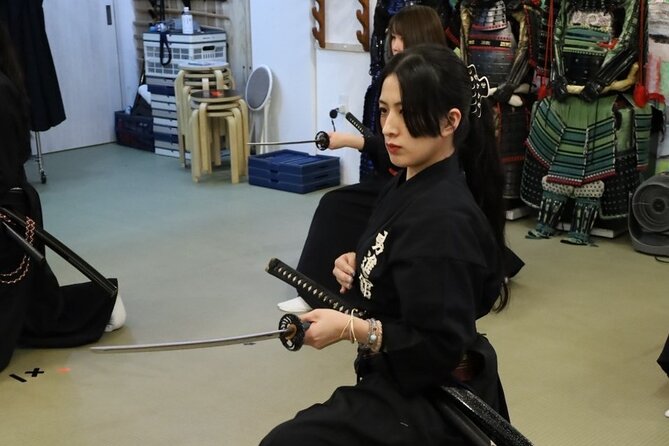
The headmaster also performs with two katana. This is a special part of the session and one of its most unusual features. Seeing a master manage two swords gives you a clear sense of the control and coordination involved in advanced practice.
It is worth separating this performance from the hands-on lesson. You will learn basic iai and kenjutsu methods, then watch the headmaster demonstrate skills far beyond what a first-time participant can reasonably perform. That contrast is useful. It shows the long path between learning the correct stance and mastering complex sword work.
The performance also adds variety to a session that could otherwise feel technical. You get instruction, observation, and a high-level demonstration in the same visit.
Why the three-hour length matters
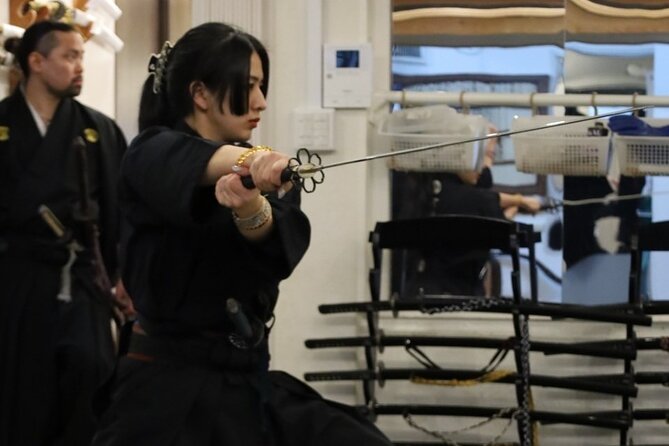
The activity lasts about three hours. That is long enough to change clothes, receive instruction, practice techniques, watch the students, and see the cutting and two-katana demonstrations without reducing the visit to a rushed photo opportunity.
The time commitment is also the main practical drawback. If you have only one day in Kyoto, you will need to plan around it carefully. The meeting point is at 452-4 Matsugaechō, Nakagyo Ward, Kyoto, 604-8034, and the activity ends back there. It is near public transportation, which helps, but you should still allow time to reach the dojo and arrive ready.
A small group can make three hours feel worthwhile because you are not waiting behind a large class. The maximum is three participants. Observing without paying is not allowed, so everyone who enters as part of the experience must book a place.
Is $195.09 a fair price?
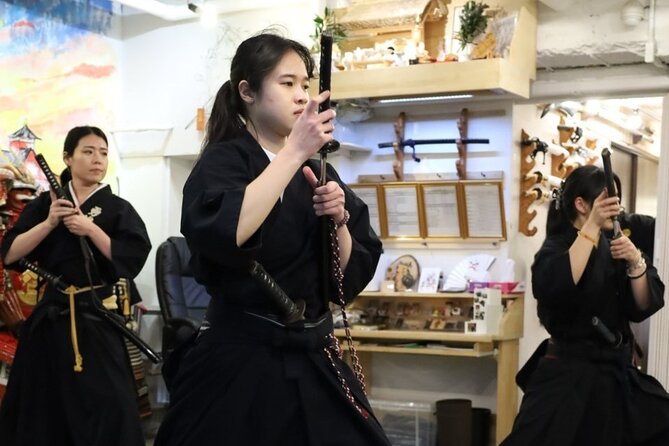
The price is $195.09 per person. That is not a bargain-priced Kyoto activity, especially when compared with a short demonstration or a simple cultural workshop. The value depends on what you want from the visit.
You are paying for roughly three hours, formal training clothing, instruction in iai and kenjutsu, access to a working dojo, a small group, and demonstrations involving real katana and tatami cutting. The small maximum group size is important here. A three-person class can offer more direct attention than a large group experience, even though the exact amount of one-on-one instruction is not specified.
I would consider the price reasonable for someone who already practices martial arts or has a strong interest in Japanese swordsmanship. You are getting more than a costume rental and a staged performance. The price is harder to justify if your main aim is a quick samurai-themed photograph.
Booking is usually done well ahead of time, with an average lead time of 29 days. That suggests you should not leave this until the last few days of a Kyoto trip, particularly because confirmation is subject to availability and is sent within 48 hours of booking.
Who will enjoy this most?
This experience suits adults and older children aged 12 and up who can manage a moderate level of physical activity and follow detailed instructions. It is particularly well matched to people with martial arts experience. You do not need previous katana training, but an understanding of practice, discipline, and controlled movement may make the session more rewarding.
It also suits travelers who value access over spectacle. You see local students training and watch the headmaster work in a genuine dojo setting. That is more interesting than a polished show if you want to understand how a martial art is practiced today.
I would think twice if you want to handle a real katana for cutting. Participant test cutting is specifically not offered. I would also skip it if you dislike structured physical activity, cannot commit to about three hours, or mainly want an informal photo session.
Children under 12 cannot take part. Video recording is not permitted, and unpaid observation is not allowed.
Useful booking and cancellation details
The meeting point is in central Kyoto’s Nakagyo Ward at 452-4 Matsugaechō. The tour returns to that same point, and public transportation is nearby. The activity uses a mobile ticket, so keep access to the booking details on your phone.
You receive confirmation within 48 hours, subject to availability. Since the experience is limited to three participants, book early if the date matters to your schedule.
Free cancellation is available when you cancel at least 24 hours before the local start time. Cancellations made less than 24 hours before the start time are not refunded, and changes during that final 24-hour period are not accepted.
FAQ
Where does the katana training take place?
The activity begins at 452-4 Matsugaechō, Nakagyo Ward, Kyoto, 604-8034, Japan. It ends back at the meeting point.
How long does the experience last?
The session lasts approximately three hours.
What will I wear during the training?
You will put on a dōgi, obi, and hakama for the session.
What techniques will I learn?
The training includes iai, which covers katana drawing techniques, and kenjutsu, which covers katana fighting techniques.
Will I cut tatami mats myself?
No. Test cutting with a real katana is not offered to participants. You will watch the master and students cut rolled tatami mats.
Will I see a demonstration by the master?
Yes. The master performs with a katana, including a two-katana performance.
Can I record video during the activity?
No. Video recording is not allowed.
Is there an age requirement?
Yes. Participants must be at least 12 years old.
What is the cancellation policy?
You can receive a full refund if you cancel at least 24 hours before the local start time. Cancellations or changes made less than 24 hours before the experience are not accepted for a refund.
Should you book this Kyoto katana experience?
Book it if you want serious instruction in a real dojo, a very small group, and a look at swordsmanship beyond the usual tourist show. The chance to train beside local students, watch tatami cutting, and see the headmaster handle two katana gives the session real substance.
Skip it if you want to perform test cutting, record videos, or spend less than three hours on a samurai-themed activity. At $195.09, it asks for a firm commitment of time and money. For someone with martial arts experience or a focused interest in Japanese sword arts, that commitment can be worthwhile. For a casual photo seeker, it is likely more training than you need.
Just added for rail travellers in Japan
- Train in Samurai Swordsmanship and Defeat the Demon in Tokyo★ 5.0 · 5 reviews
- Tokyo-Izu: Volcano, Ocean& Capybara Cuddle with Izu Scenic Train★ 3.5 · 3 reviews
- Private tour with Yasushi and Yoko – by car, train, on foot★ 5.0 · 2 reviews
- Bullet Train Experience & Mishima Shrine Private Tour from Tokyo★ 5.0 · 9 reviews
- Bullet Train and Mt. Fuji Famous Food Tour★ 5.0 · 4 reviews
- Mt Fuji & Hakone Private Tour from Tokyo: Return by Bullet Train★ 5.0 · 22 reviews
- 3-Day Private Tokyo and Nagano: Snow Monkeys, Tsukiji Market and Bullet Train★ 5.0 · 2 reviews
- Guided Half-day Tour(PM) to Toyota Commemorative Museum & SCMAGLEV Railway Park★ 5.0 · 3 reviews
Kyoto Train Journeys, compared.
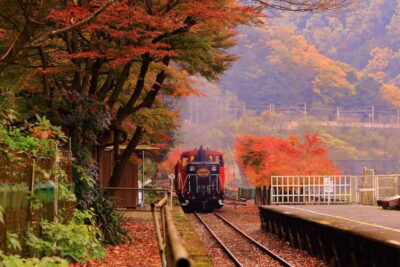
Arashiyama Day Tour with Train, Boat, and Onsen
Read our review →
Kyoto Bus Tour: Sagano Railway & Hozugawa River Boat Ride
Read our review →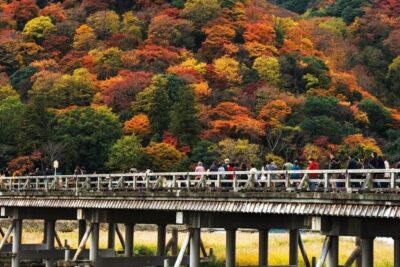
Arashiyama Tour with optional Sagano Romantic Train
Read our review →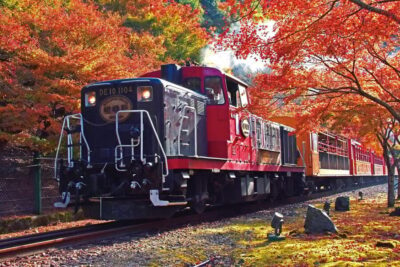
Kyoto Hozugawa River Boat Sagano Romantic Train Tour
Read our review →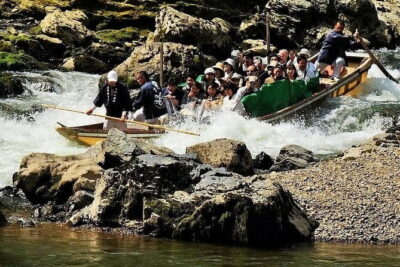
Kyoto Sagano Romantic Train in Arashiyama Bus Tour
Read our review →
Browse the lists this tour appears in