
Review · SLEEPER AND OVERNIGHT TRAINS
Khajuraho Tour from Delhi with a overnight train
Khajuraho is one of India’s great architectural surprises, and this trip gets you there without giving up two full nights to hotels. You board an overnight first-class train from New Delhi, spend the next day among temples carved around 950 to 1050 AD, then return by train.
I like the practical setup: meals and entrance tickets are included, and a guide meets you in Khajuraho to explain details you could easily miss. I also like the private format, since only your own group takes part. The tradeoff is clear: two overnight train rides make this a brisk trip, not a relaxed holiday.
Key points to know before booking
- Two overnight train journeys: You travel from Delhi to Khajuraho and back, with the first train listed as a first-class coach.
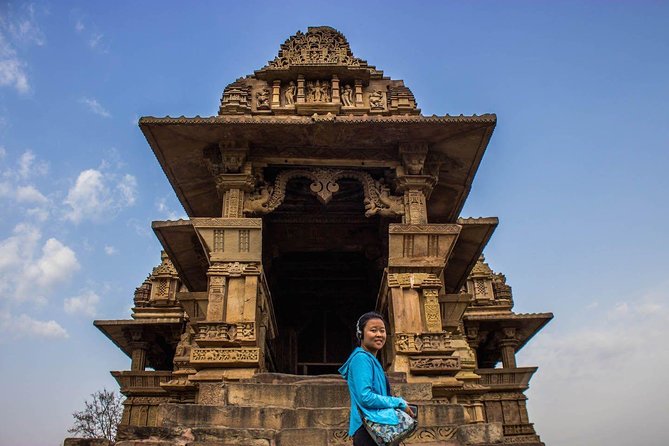
- Five Khajuraho stops: The day includes Dulhadev Temple, Kandariya Mahadev Temple, the Jain temple, Javari Temple, and the tribal and folk art museum.
- Ancient sculpture and architecture: The temples date mainly from the Chandela period, between about 950 and 1050 AD.
- Private group format: Only your group participates, which makes it easier to ask questions or request added sightseeing when time allows.
- Included value: Breakfast, lunch, dinner, an air-conditioned vehicle, entrance tickets, and a traditional Indian souvenir are included.
- A short but demanding schedule: The tour lasts about two days and begins at 7:00 pm at New Delhi Railway Station.
Why Khajuraho is worth the overnight train
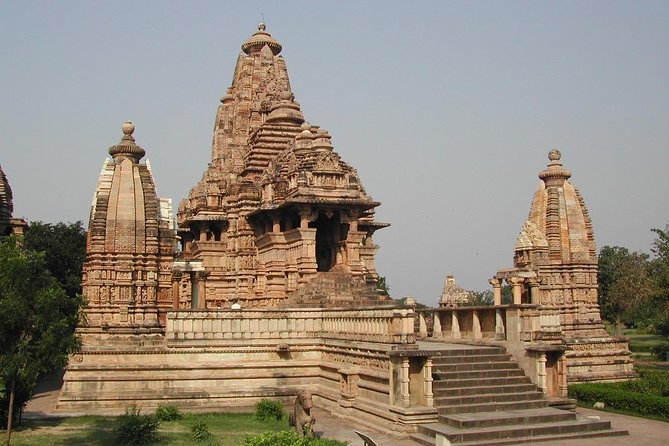
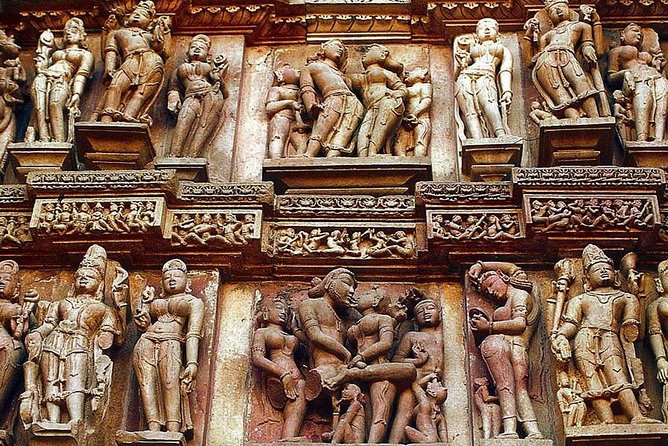
Khajuraho is famous for its temple carvings, but the appeal goes well beyond the often-mentioned erotic sculpture. The surviving monuments show gods, musicians, dancers, warriors, animals, household scenes, and finely dressed figures. You are looking at a complete visual world carved into sandstone, not a single theme.
The original complex contained about 75 temples. Only 22 remain today, and the group is recognized as a UNESCO World Heritage site. That makes the trip especially useful for anyone who wants to see a major Indian monument but has limited time in the country.
The train is part of the bargain. You leave from New Delhi Railway Station at 7:00 pm, on Bhavbhuti Marg near the Ajmeri Gate side of the station. The first overnight ride is in a first-class coach. The exact train arrangements are not detailed beyond that, so you should think of this as a practical rail trip, not a luxury sleeper journey.
The return also takes place overnight. That saves the cost and time of two hotel nights, but it asks you to sleep on a train twice in a short period. If you sleep well on rail journeys, this is an efficient way to reach Khajuraho. If you need a quiet room and a slow morning, allow more time for the city instead.
More Sleeper Trains in New Delhi:
- Egypt on Budget – 8 Days ( Cairo , Aswan , Nile Cruise – Luxor ) Sleeper Train
★ 4.5 · 121 reviews - From Hanoi: 2-Day 2-Night Sapa Tour by Overnight Train
★ 4.4 · 96 reviews - Sapa: 3-Day, 3-Night Trek and Hotel with Overnight Train
★ 4.2 · 64 reviews
The Delhi departure and overnight rail journey
The trip begins in the evening, when you meet at New Delhi Railway Station. A rail station in Delhi can feel confusing, especially if you are unfamiliar with Indian train travel, so having tour support is useful. One particularly helpful feature of the service is assistance with finding the right place to go.
You should arrive with enough time to locate the meeting point rather than treating 7:00 pm as the moment to walk through the station doors. Your booking confirmation is provided at the time of booking, and the meeting point is the station itself.
The first train is described as an overnight first-class coach. Food is included during the trip, and practical support may include snacks for the journey. You should still carry water and any small personal items you prefer, since train travel is easier when you have what you need close at hand.
The value here is not comfort on the level of a private hotel room. It is efficiency. You travel while sleeping, arrive near the monuments, and avoid adding separate hotel and transfer costs to a short visit.
Dulhadev Temple: a quiet opening to the monuments
Your Khajuraho sightseeing begins at Dulhadev Temple, built around 1130. It is a smaller stop than Kandariya Mahadev, but that is part of its charm. The temple contains a shivalingam and carved apsaras, along with ornamented figures that show the care given to even secondary monuments.
Look for the sculpture of Shiva with Parvati. The appeal is in the small details: jewelry, posture, hair, and the way the figures are fitted into the temple’s larger design. You have about 30 minutes here, enough for a guided explanation and a close look without making the visit feel rushed.
The temple is connected with Shiva, so your guide can help explain the religious meaning behind the central shrine and the figures around it. Admission is listed as free, though entrance tickets for the included paid sites are covered by the tour.
Kandariya Mahadev Temple: the main architectural event
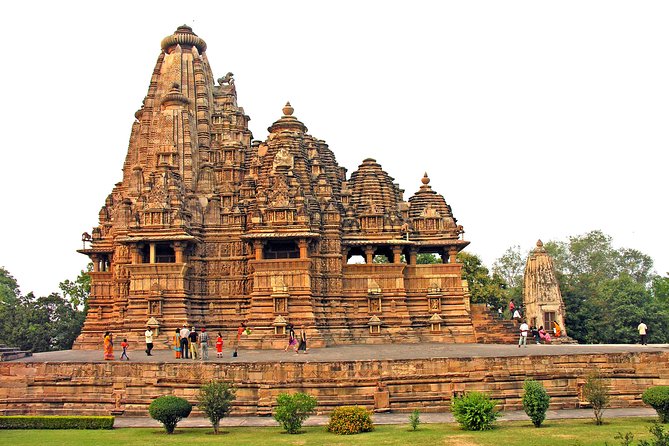
Kandariya Mahadev is the largest and most imposing stop on this compact day. Built around 1025 to 1050, it rises in a strongly vertical form, with a tall shikhara that suggests a mountain. The exterior is covered with rows of carved figures, creating an effect that can be hard to take in at first glance.
Give your attention to the arrangement, not just to individual sculptures. The temple’s design pulls your eye upward, while the carved bands keep offering new details at eye level. Figures of women in different poses appear among gods, musicians, and decorative forms.
You have roughly 30 minutes here. That is enough for a first visit with a good guide, but not enough to examine every wall slowly. If this is the main reason you came to Khajuraho, you may wish the schedule gave you longer. Still, the guide’s explanations matter. A bare walk around the temple can leave you seeing only surface decoration, while a strong explanation gives the images a place in the temple’s religious and artistic setting.
More Train Journeys in New Delhi:
- From Delhi: Taj Mahal & Agra Tour by Gatimaan Express Train
★ 4.8 · 1,041 reviews - Jaipur Day Trip from Delhi by Car or Train – All Inclusive
★ 5.0 · 663 reviews - “Taj Mahal” Tour from Delhi by India’s Fastest Train (Gatiman Express)
★ 5.0 · 298 reviews - From Delhi: Taj Mahal and Agra Day Tour by Super-fast Train
★ 4.9 · 270 reviews
The Jain temple and Khajuraho’s wider visual language
Bhagawan Parshwanath Digambar Jain Mandir is the largest temple in Khajuraho’s Eastern group. The visit lasts about 15 minutes, so expect a focused stop rather than a long inspection.
The carvings are detailed, and the temple is especially interesting for the way its decoration brings together Hindu, Muslim, and Buddhist artistic influences. That detail gives you a broader view of Khajuraho. The site was not an isolated artistic island. Its builders worked in a region where different religious and cultural ideas met.
A quick visit can make this stop feel secondary after Kandariya Mahadev, but do not dismiss it. The smaller temple scale lets you look more closely at the surface work. Your guide can also point out the difference between the temple’s Jain identity and the broader decorative language shared across the Khajuraho monuments.
Javari Temple and the unfinished feel of time
Javari Temple is a small Vishnu temple built in the shikhara style. The idol of the main deity is broken and headless, a reminder that historic monuments arrive in the present with damage, loss, and missing pieces.
That incomplete condition is worth noticing rather than treating as a flaw in the visit. You are not seeing a perfectly preserved stage set. You are seeing a building that has survived centuries of change.
The entrance to the sanctum includes sculptures of the Navagrahas, as well as Shiva, Vishnu, and Brahma. With only about 15 minutes here, your guide will need to keep the explanation tight. The stop works best as a concentrated look at temple design and iconography before you move on.
The tribal and folk art museum adds a different voice
The State Museum of Tribal and Folk Art is housed in the Chandela Cultural Complex. Its collection includes masks, terracotta sculptures, folk paintings, bamboo articles, old scriptures, and other objects connected with tribal art and culture.
This is a useful change of pace after several stone temples. The museum helps you compare formal temple sculpture with later or more local traditions expressed through portable objects and everyday materials. You also get a chance to see artistic work that is not limited to royal religious architecture.
The visit lasts about an hour, making it the longest scheduled stop. There is also a garden around the museum. The museum is described as small and well maintained, so do not expect a huge national collection. Its value comes from the contrast it provides and from the chance to see Indian art in materials other than carved sandstone.
What the guide adds to a fast day
A guide is especially important on this trip because the schedule is short. The temples can look impressive without explanation, but the religious symbols, architectural terms, and differences between Hindu and Jain sites are not always obvious.
The service uses a government-approved guide with strong knowledge of Indian history. A guide can explain why the temples were built, help identify figures on the walls, and point out details that disappear in a quick walk around the complex. The guide may also add sightseeing based on your interests when time allows, though you should not count on an expanded program beyond the listed stops.
The private format helps here. You are not sharing the day with a large bus group, and only your own party takes part. That makes it easier to ask questions, request clarification, or spend an extra moment at a particular carving if the schedule permits.
No guide’s name is provided in the tour details, so you cannot select a particular person in advance. What you can expect is a guide assigned for the Khajuraho visit, rather than a self-guided day.
Meals, transport, and what the price really covers
At $164 per person, the price needs to be judged against what is bundled in. Breakfast, lunch, dinner, an air-conditioned vehicle, entrance tickets, train travel, guide service, and a traditional Indian souvenir are included in the stated package. The two overnight rail journeys also reduce the need for hotel accommodation.
That can be good value if you want to see Khajuraho from Delhi in a narrow window. Buying train tickets, arranging station help, hiring a vehicle in Khajuraho, finding a guide, and covering admissions separately would take time and may not produce a lower total.
The price is less attractive if you already have train tickets, prefer to arrange your own guide, or plan to stay several nights in Khajuraho. In that case, a slower independent visit could give you more time at the monuments.
The air-conditioned vehicle is useful during the sightseeing day, especially since you move between several sites. The package does not list every minor expense, so bring money for anything not mentioned in the plan.
Who should book this two-day Khajuraho trip
I would choose this tour if you are based in Delhi, have only two days, and want the main Khajuraho monuments handled in one package. It also suits solo visitors who would rather have help at the railway station and a private group instead of joining a large departure.
It works well for visitors who care about context. The temples reward explanation, and the combination of a guide, museum visit, and several different temple styles gives you more than a quick photo stop.
You should think twice if you dislike overnight trains or need a leisurely pace. The plan puts a lot into one short period, and the return train means you may feel tired by the end. Families or older visitors should consider how comfortable everyone is with two night journeys before booking.
The tour is also a good match for people who want flexibility within a fixed framework. The scheduled stops are clear, but the guide may add sightseeing according to your interests when time allows. That is a useful middle ground between a rigid group trip and a fully independent visit.
Booking details and cancellation
The activity begins at 7:00 pm at New Delhi Railway Station and ends back at the same meeting point after the return journey. Mobile tickets are available, confirmation arrives at booking, and the activity is listed as suitable for most participants and close to public transportation.
You can cancel for a full refund up to 24 hours before the start time. Changes or cancellations made less than 24 hours before departure are not accepted for a refund, and the cut-off uses local time.
Should you book it?
Book this trip if speed, structure, and rail travel matter more to you than a slow Khajuraho stay. The temples are the real reward, and the guide, air-conditioned vehicle, meals, and station support make a complicated short journey easier to manage.
Skip it if you want long, unhurried hours at each monument or prefer sleeping in a hotel both nights. For everyone else, this is a practical way to reach one of India’s most remarkable temple groups from Delhi, with the major costs gathered into one price and a private day of sightseeing waiting at the other end of the train.
FAQ
Where does the tour begin?
The tour begins at 7:00 pm at New Delhi Railway Station, Bhavbhuti Marg, near the Ajmeri Gate area in New Delhi.
How long does the experience last?
The tour lasts approximately two days and includes overnight train travel in both directions.
Are the train journeys included?
Yes. The plan includes an overnight train from New Delhi to Khajuraho and another overnight train from Khajuraho back to Delhi. The first journey is listed as a first-class coach.
Which Khajuraho temples are visited?
The scheduled temple stops are Dulhadev Temple, Kandariya Mahadev Temple, Bhagawan Parshwanath Digambar Jain Mandir, and Javari Temple.
Is the museum included?
Yes. The State Museum of Tribal and Folk Art is included, with about one hour scheduled for the visit.
Are meals and entrance tickets included?
Breakfast, lunch, dinner, and entrance tickets are included. An air-conditioned vehicle is also provided during the sightseeing portion.
Can I cancel for a full refund?
Yes. You can cancel at least 24 hours before the experience start time for a full refund. Cancellations or changes made less than 24 hours before the start time are not accepted for a refund.
Just added for rail travellers in New Delhi
- Taj Mahal & Agra Tour From Delhi By Fastest Train★ 5.0 · 7 reviews
- Private Tajmahal Day Tour From New Delhi By Gatiman Express Train★ 5.0 · 14 reviews
- From Delhi: Taj Mahal & Agra Tour by Gatimaan Express Train★ 5.0 · 11 reviews
- Taj Mahal and Agra Fort Tour By Fastest Train – Gatiman Express★ 5.0 · 2 reviews
- Taj Mahal and Agra Tour By India’s Fastest Train★ 5.0 · 2 reviews
- Enchanting Taj Mahal Same Day Tour by Gatiman Train From Delhi★ 5.0 · 4 reviews
- Taj Mahal Tour by Gatimaan Express Train With Lunch At 5 Star Hotel★ 5.0 · 8 reviews
- Taj Mahal & Agra Fort Visit by Gatimaan Express Train★ 5.0 · 4 reviews
Sleeper and Overnight Trains, compared.

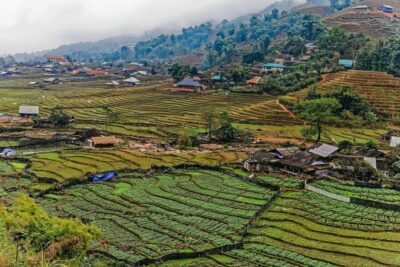
Sapa: 3-Day, 3-Night Trek and Hotel with Overnight Train
Read our review →

6- Days Aswan , Abu Simbel , Cruise , Luxor & Round Sleeper Train
Read our review →
Luxor East and West Banks Tour & Overnight SLEEPER Train Rounded trip
Read our review →
Luxor East and West Banks Tour by Overnight Sitting Train Rounded trip
Read our review →
Sa Pa Trekking 2 Days 3 Nights Homestay by Night Train
Read our review →
Browse the lists this tour appears in