
Review · SLEEPER AND OVERNIGHT TRAINS
Cairo : Luxor East and West Banks Tour & Overnight SLEEPER Train Rounded trip
Luxor in one day is a bold plan, and this tour makes it possible by turning the long Cairo journey into two overnight train rides. You leave your Cairo or Giza hotel, sleep on the way south, then spend the next day among royal tombs and monumental temples before boarding the train home. I like the door-to-door station transfers and the fact that an Egyptologist guide handles the sightseeing, while dinner and breakfast come with both sleeper journeys. The drawback is the pace: a full day of ancient sites followed by another overnight train is tiring.
The tour is especially useful if you have only three days and want more than Cairo. Guide Hany has been praised for clear Egyptology and for adjusting the day when time allows, but entrance fees are extra and must be paid in Egyptian pounds. Check the train arrangements carefully before booking, since the train is a practical overnight service, not a luxury hotel on rails.
Key points to know before booking
- Two overnight sleeper trains: You travel from Cairo to Luxor and return the next night, saving two hotel nights and daytime transit hours.
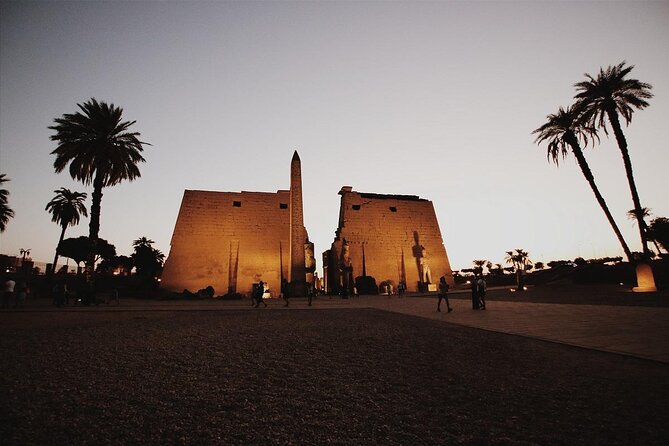
- One concentrated Luxor day: The route covers the Valley of the Kings, Hatshepsut’s temple, the Colossi of Memnon, Karnak, and Luxor Temple.
- A guide makes the difference: A licensed Egyptologist leads the visits, with different language options available. Hany is one guide connected with the experience.
- Station help is included: Pickup from Cairo or Giza, transfers to and from both stations, and drop-off back at your hotel are part of the package.
- Admission fees are separate: Bring Egyptian pounds for the sightseeing tickets. An international student card gives a 50 percent discount on entrance fees.
- Best for a short visit: The maximum group size is 15, making this a practical choice for visitors who want Luxor without arranging every transfer themselves.
Why this Cairo to Luxor plan works
The clever part of this experience is the timing. Cairo and Luxor are far enough apart that a daytime transfer can consume much of your trip. Here, you leave Cairo in the evening, sleep aboard the train, spend the daylight hours at Luxor’s major monuments, then sleep on the return journey.
That gives you a useful three-day outline without adding two ordinary hotel nights. You do give up comfort and flexibility. The sightseeing day is packed, and the overnight train may not suit anyone who needs quiet, polished accommodation.
The package costs $350 per person. That price covers both sleeper tickets, onboard dinner and breakfast on each journey, hotel pickup and drop-off, station transfers, the vehicle in Luxor, the guide, service charges, taxes, landing fees, and parking fees. Since entrance tickets are not included, your final cost will be higher.
I would judge the price by convenience rather than by the train ticket alone. You are paying for the whole chain of arrangements: getting from your hotel to the station, meeting the guide in Luxor, moving between both banks by air-conditioned vehicle, and returning to your hotel after the train reaches Cairo. If you can organize all of that yourself, the price may feel high. If you value a single booking with help at each handoff, it can make sense.
More Sleeper Trains in Egypt
Leaving Cairo for the overnight train
Day one begins with pickup at your hotel in Cairo or Giza. A driver takes you to the Cairo train station, and station assistance is included. The stated travel time is about nine hours, so your evening becomes a long ride followed by a night in a sleeper cabin.
Dinner and breakfast are served onboard at no extra charge. That is useful, since you do not need to arrange food during the journey. Still, keep your expectations practical. The included sleeper train is transportation with beds, not a high-end rail hotel, and the quality of your rest will affect how you handle the next day.
A useful strength of this setup is that you are not left to find the correct platform, train, or Luxor pickup alone. The service includes transfers to the train stations in Cairo and Luxor. One point worth confirming before departure is the exact pickup time and station procedure, since train schedules and local arrangements matter greatly on a tight trip.
Morning arrival and the West Bank
You arrive in Luxor in the morning and meet the licensed guide at the train station. From there, the sightseeing begins in a private air-conditioned vehicle, starting on the West Bank.
The West Bank is where ancient Egypt’s royal burial country comes into focus. The Valley of the Kings contains the tombs of rulers including Tuthmosis I, Tuthmosis III, Tut-Ankh-Amon, Ramses VI, Merenptah, and Amenhotep II. The tour allows about two hours here, but the entrance fee is not included.
That extra cost matters because admission arrangements are handled at the sightseeing stops. Bring Egyptian pounds, not just a bank card, and remember that your international student card can provide a 50 percent discount on entrance fees. The exact tombs open to the public can vary, so do not assume every named ruler’s tomb will be available on your visit.
You should also be ready for walking and stairs. The tour information specifically recommends bringing your camera, but a camera does not replace sensible footwear and water. Those items are not listed as included, so plan for the day as a self-contained outing.
Hatshepsut’s temple and the Colossi of Memnon
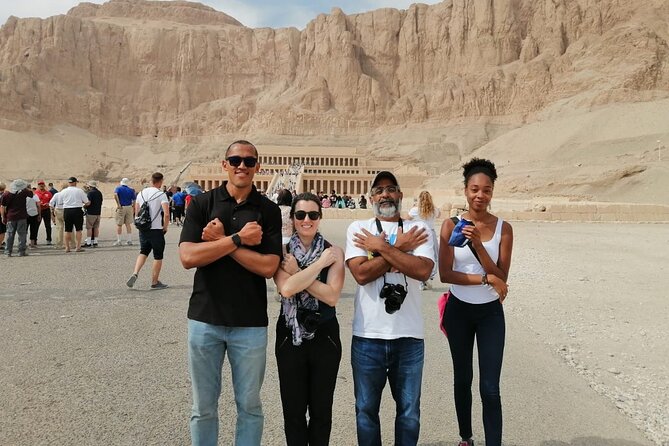
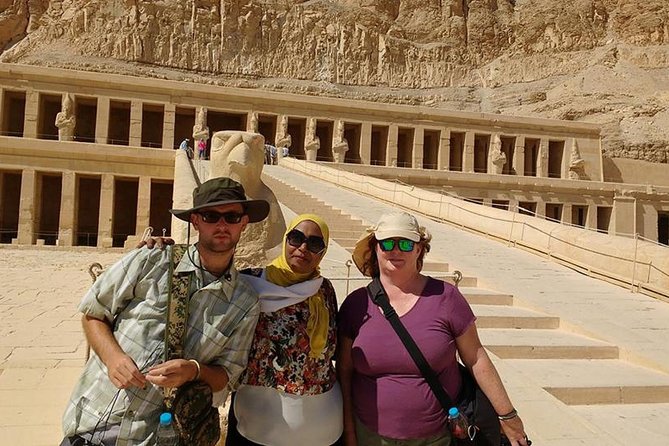
The next stop is the Temple of Queen Hatshepsut at Deir el Bahari, with about 90 minutes allotted. The site is linked to one of ancient Egypt’s most unusual royal stories, the reign of a woman who ruled as pharaoh.
This stop pairs well with the Valley of the Kings. The tombs show how royal burial was taken underground, while Hatshepsut’s temple presents royal power through broad terraces and formal design. Your guide’s explanation is important here because the site is easier to appreciate when you understand Hatshepsut’s position and the setting at Deir el Bahari.
Admission is again separate. The schedule is generous enough for explanation and photographs, but the day does not leave much room for a long independent wander. If you prefer to linger at one site, this tour’s fixed route may feel restrictive.
The Colossi of Memnon comes next, with about 40 minutes. These enormous statues are the remains of the mortuary temple of Amenhotep III. The stop is shorter and admission is listed as free, making it a simple pause between the West Bank and the East Bank.
Do not expect a full temple complex here. The appeal is scale and atmosphere, plus the chance to see how little remains beside the giant seated figures. Forty minutes is enough for photographs and a guide’s explanation before you cross the river.
More Sleeper Trains in the world:
- From Hanoi: 2-Day 2-Night Sapa Tour by Overnight Train
★ 4.4 · 96 reviews - Sapa: 3-Day, 3-Night Trek and Hotel with Overnight Train
★ 4.2 · 64 reviews - From Hanoi: Sapa Hill Tribes 2-Day Tour by Overnight Train
★ 4.4 · 62 reviews - Sa Pa Trekking 2 Days 3 Nights Homestay by Night Train
★ 4.5 · 11 reviews
Karnak, Luxor’s great temple complex
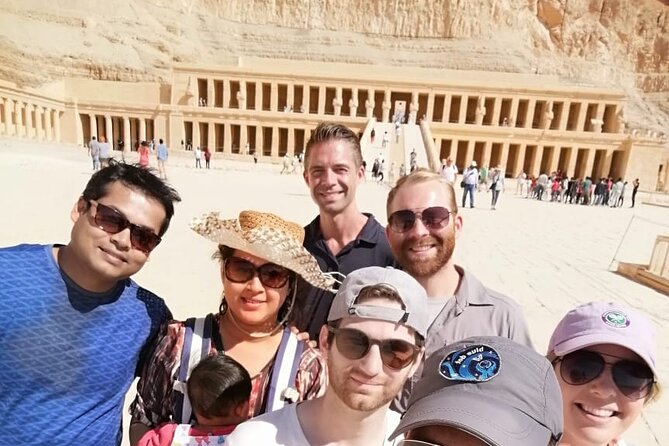
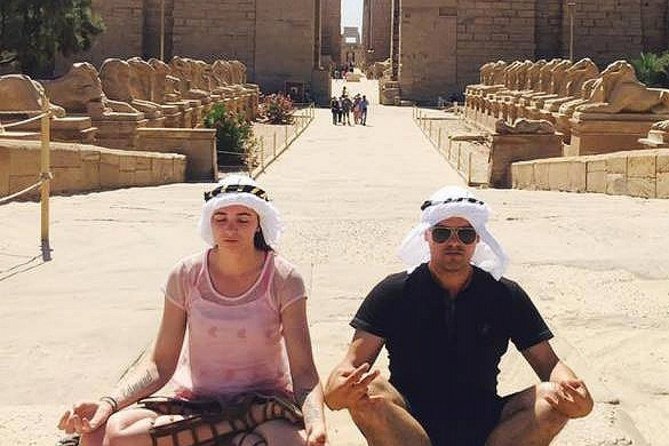
After the West Bank, the vehicle crosses to the East Bank for Karnak Temple. The visit is scheduled for about two hours, and that is time well spent. Karnak is not a single compact building but a huge religious complex with more than 20 temples and additions made by many rulers.
The complex was first dedicated to Amun Ra, his wife Mut, and their son Khonsu, though the supplied description uses the name Khanoum for the son. Over time, roughly 30 kings added their own work. That layering explains why Karnak can feel less like one monument and more like an entire sacred district.
The Hypostyle Hall is the visual center of the visit. Its forest of giant papyrus-shaped columns shows why Karnak is regarded as one of ancient Egypt’s great architectural achievements. With a guide, you can better understand how the columns, courts, and temple spaces fit together instead of seeing only a succession of impressive stones.
Karnak also shows the cost of a fast schedule. Two hours lets you see the essential areas, but it is not enough to examine every corner of a complex that covers a very large area. I would stay close to the guide and save independent photography for the final minutes at each section.
Luxor Temple at the end of the day
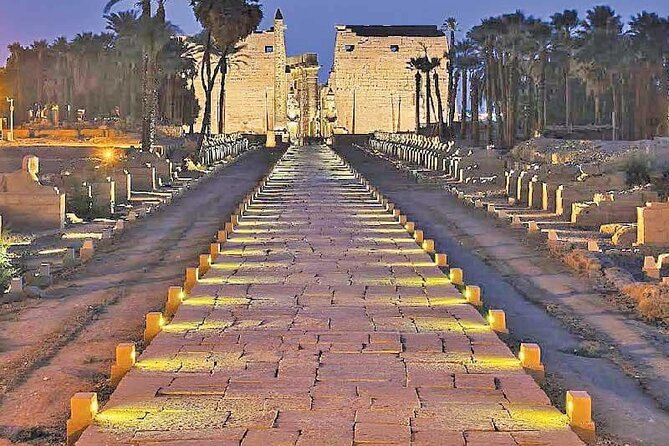
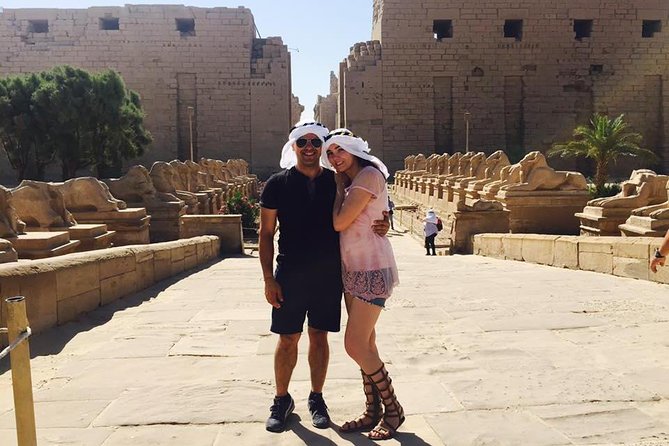
The final major stop is Luxor Temple, with about 90 minutes planned. Its position on the East Bank gives the day a strong closing point after the tombs and temple terraces of the West Bank.
Luxor Temple is different from Karnak in scale and mood. Karnak is a sprawling complex built up over many reigns, while Luxor Temple gives you a more contained visit after a long day. The guide can help connect the two sites, since they were part of the same religious world and are often best understood together.
The admission fee is not included here either. By this point you will have already visited several paid sites, so budget for the entrance charges before setting out. The supplied guidance says fees should be paid in Egyptian pounds, and that an international student card gives a 50 percent reduction.
The timing can also affect how the stop feels. Luxor Temple comes at the end of a demanding day, followed by the return train. You may have enough energy for photographs and an explanation, but not for a slow, unhurried exploration. That is the tradeoff for fitting so much into one day.
Returning to Cairo by sleeper train
After Luxor Temple, you are taken to the station for the overnight sleeper train back to Cairo. The train portion is listed at about nine hours, with dinner and breakfast included again.
This is where the tour’s value depends most on your expectations. The arrangement removes the need to find a hotel in Luxor and gets you back to Cairo by early morning. On the other hand, a second night on the train comes after a full day of walking, listening, and sightseeing.
Some practical complaints about this kind of plan are really complaints about the limits of overnight rail travel. The operator uses the available sleeper train, and there is only one sleeper train around Egypt according to the supplied response. If you strongly dislike trains or need a full night’s sleep, a flight-based option may be worth comparing, though this particular package is built around rail travel.
You arrive at the Cairo train station around 5 AM. Pickup then takes you back to your hotel in Cairo or Giza. That final transfer is a small but important part of the service, since arriving before sunrise with luggage and no onward plan would be awkward.
The guide and the value of a small group
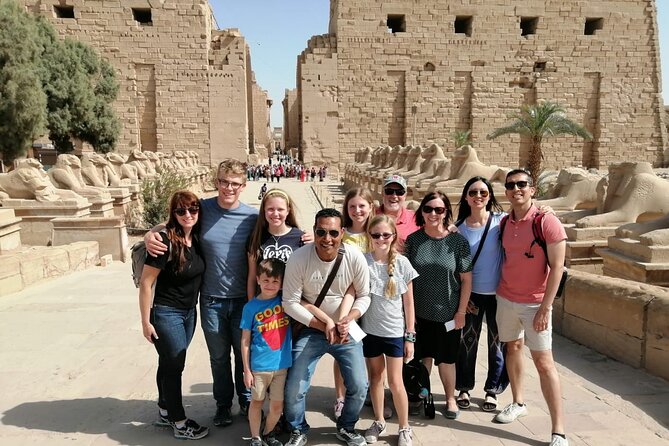
The tour has a maximum of 15 people and uses an Egyptologist guide. That size is large enough to keep the cost below a private tour while still being more manageable than a big coach group.
Guide Hany is associated with departures and has been praised for explaining Egyptology clearly, answering questions, and making use of spare time when the scheduled program finishes early. You should not assume Hany will lead every date, but the operator lists expert guides with different language options.
A good guide matters most at Karnak and the Valley of the Kings. Without context, it is easy to remember only columns, statues, and tomb paintings. With clear explanations, you can see the difference between a royal burial site, a mortuary temple, and a living temple complex.
The guide also helps protect your limited time. A one-day Luxor visit can easily lose minutes at stations, parking areas, or ticket counters. Included transfers and a guide who knows the sequence reduce that friction.
What is not included and how to prepare
Entrance tickets are the main extra cost. They are not included at the Valley of the Kings, Hatshepsut’s temple, Karnak, or Luxor Temple. The Colossi of Memnon is listed with free admission.
Carry Egyptian pounds for these payments. If you have an international student card, bring it because it gives a 50 percent discount on entrance fees in Egypt. The tour also specifically recommends bringing a camera.
Confirmation is provided at booking. Children must be accompanied by an adult, and most people can participate. The practical cancellation rule is simple: cancel at least three full days before the start time for a full refund. Inside that window, refunds and changes are not accepted.
Who should book this Luxor tour?
I would choose this tour if you have limited time in Egypt, want to see Luxor’s two banks, and prefer having the transport chain arranged for you. It suits visitors who can tolerate two overnight train rides and who want a guide to explain the monuments rather than simply photograph them.
I would hesitate if you want a relaxed Luxor stay, a quiet hotel night, or the freedom to choose exactly how long to spend at each site. The route is efficient, but it is not leisurely. You should also add entrance fees to the $350 price and decide if the convenience justifies the total.
For a short Cairo visit, this is a practical way to add the Valley of the Kings, Hatshepsut, Karnak, and Luxor Temple without losing two daytime travel periods. Book it when time matters more than comfort. Skip it when your ideal Egypt trip includes slow mornings, long temple visits, and proper nights in a bed.
FAQ
How long does the tour last?
The experience lasts about three days. You leave Cairo on the first day, tour Luxor on the second, return to Cairo by overnight train, and reach Cairo around 5 AM on the third day.
Are the sleeper train tickets included?
Yes. Round-trip sleeper train tickets between Cairo and Luxor are included, along with dinner and breakfast on each train journey.
Are entrance fees included?
No. Entrance fees for the sightseeing stops are separate and should be paid in Egyptian pounds at the sites.
Does an international student card help with costs?
Yes. The supplied information says an international student card gives a 50 percent discount on entrance fees in Egypt.
Where does pickup take place?
Pickup is offered from hotels in Cairo or Giza. The service also includes transfers to and from the train stations in Cairo and Luxor, plus drop-off at your Cairo or Giza hotel after arrival.
What sites do you visit in Luxor?
The route includes the Valley of the Kings, the Temple of Hatshepsut at Deir el Bahari, the Colossi of Memnon, Karnak Temple, and Luxor Temple.
How large is the group?
The activity has a maximum of 15 participants. An expert guide is provided, and different languages are available.
Just added for rail travellers in the world
- From Porto Douro Valley Tour with Train and Vinho Verde★ 4.7 · 16 reviews
- From Ella – Day Trip of 8 Iconic Sights & Scenic Train Ride★ 4.4 · 5 reviews
- Prague: Railway Kingdom Giant Model Railway Museum★ 4.4 · 54 reviews
- Sarajevo: Visegrad, Sarkan Eight Railway & Kurstendorf Tour★ 4.8 · 13 reviews
- Skip the Line: Historic RailPark and Train Museum Ticket with Guided Tour★ 4.5 · 59 reviews
- Sa Pa Trekking 2 Days 3 Nights Homestay by Night Train★ 4.5 · 11 reviews
- 2 Day Tour of Yala & Ella with Hill Country Scenic Train Ride – All Inclusive★ 5.0 · 5 reviews
- Private Day Tour: Suzhou Incredible Highlights from Shanghai by Car or Train★ 5.0 · 47 reviews
Sleeper and Overnight Trains, compared.


Sapa: 3-Day, 3-Night Trek and Hotel with Overnight Train
Read our review →

6- Days Aswan , Abu Simbel , Cruise , Luxor & Round Sleeper Train
Read our review →
Luxor East and West Banks Tour by Overnight Sitting Train Rounded trip
Read our review →
Sa Pa Trekking 2 Days 3 Nights Homestay by Night Train
Read our review →Browse the lists this tour appears in