
Review · 3-DAY EXPERIENCES
Hakone and Kamakura: 3-day Rail Pass
Hakone and Kamakura make a fine two-part Japan trip: volcanic scenery and Mount Fuji views in one area, old temples and seaside rail rides in the other. This pass gives you unlimited transport across both, including Hakone’s cable car, ropeway, sightseeing boat, local buses, and every Enoden Line ride.
I like two things here. First, you can change plans without counting every train or bus fare. Second, the pass covers the major Hakone circuit and Kamakura’s useful Enoden railway, with discounts at more than 90 facilities. The main catch is the voucher exchange at Shinjuku, which can be hard to find, and the pass does not cover every transport company.
Key points to know before you buy
- Hakone’s full scenic circuit is covered: Ride the Tozan Train, cable car, ropeway, sightseeing cruise, and designated buses.
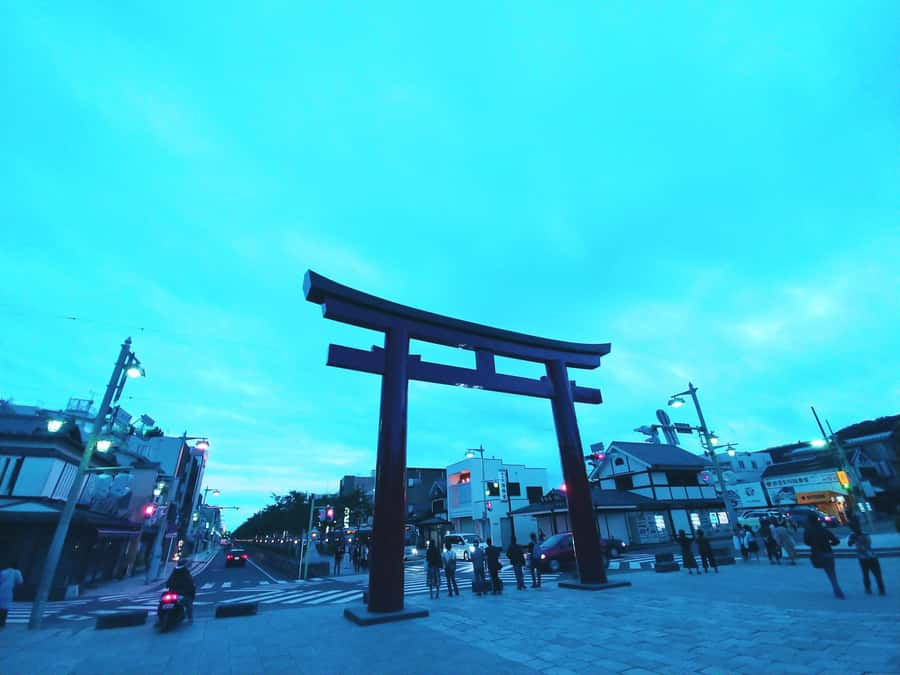
- Enoden opens up Kamakura: Use unlimited rides to connect Kamakura, Hase, and the coastal stations on the Enoshima Electric Railway.
- The value improves with a busy schedule: The pass can pay off when you use several trains, buses, and sightseeing rides over three days.
- Redemption takes planning: Exchange your voucher at the Odakyu Sightseeing Service Center, Shinjuku West, on the B1 level of Shinjuku Station.
- Weather can affect Hakone: Strong winds may stop the ropeway and sightseeing boat, two of the area’s headline rides.
- It is for non-Japanese passport holders: Carry the passport or ID used for the pass, since staff may ask to see it.
Two very different days in one pass
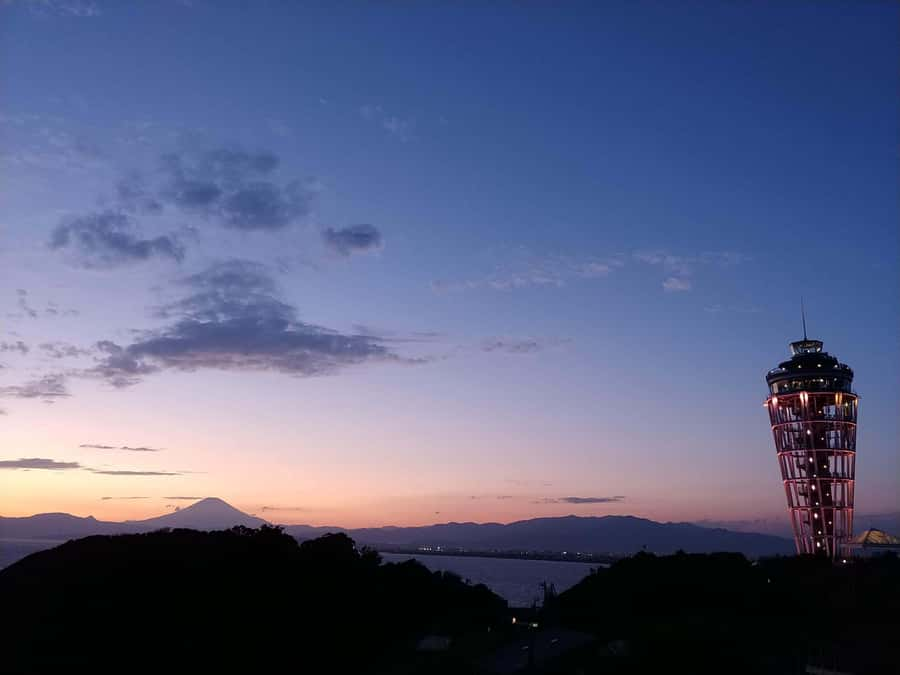
The appeal is simple: Hakone and Kamakura offer different kinds of sightseeing, and the pass ties them together through public transport. Hakone gives you mountains, hot-spring country, Lake Ashinoko, volcanic terrain, and the chance of seeing Mount Fuji. Kamakura gives you temples, shrines, old lanes, bay views, and the slower rhythm of a local electric railway.
You are not buying a guided tour. No guide accompanies you, and no fixed group schedule controls your day. You use the pass independently, choosing how long to stay at each stop and how much ground to cover.
That freedom matters in Japan, where weather and crowds can change the best plan. If clouds cover Mount Fuji, you can spend more time at the Hakone Open-Air Museum. If you have had enough temples in Kamakura, you can ride the Enoden toward the coast instead of forcing in another shrine.
The pass is valid for three days from first activation. One activity description also refers to a 36-hour pass, so I would confirm the exact validity printed on the physical pass when you exchange the voucher. The supplied terms identify it as a three-day pass, but this wording difference is worth checking before you build a tightly timed trip.
More Three-Day Trips in Japan:
- 3-Day Private Tokyo and Nagano: Snow Monkeys, Tsukiji Market and Bullet Train
★ 5.0 · 2 reviews - 3-Day Isle of Skye, ‘Hogwarts Express’ Train and Highlands Tour
★ 5.0 · 972 reviews - 3-Day Blarney Castle, Ring of Kerry, & Cliffs of Moher Rail tour
★ 4.5 · 211 reviews
Finding the pass at Shinjuku
Your first task is not sightseeing. It is finding the correct service counter.
You must present your voucher at the Odakyu Sightseeing Service Center, Shinjuku West. It is on the B1 floor of Odakyu Line Shinjuku Station, in front of the ticket gate. The stated opening hours are 8:00 AM to 6:00 PM.
The location is specific because Shinjuku Station is enormous. A French-speaking customer described the pass as very useful but found the voucher exchange difficult to locate. Another person said the redemption point was by far the most stressful part and advised doing careful homework before arriving.
I take that seriously. Save the full name of the center, allow extra time, and do not treat the exchange as a quick platform-side pickup. You need your passport or ID card, and the pass is issued to the named user only. Keep that document with you during the trip because station staff may request it.
The physical pass must be returned at the final station of the trip. That detail is easy to miss, especially if you are moving on to another destination after Kamakura.
Hakone Tozan Train and cable car
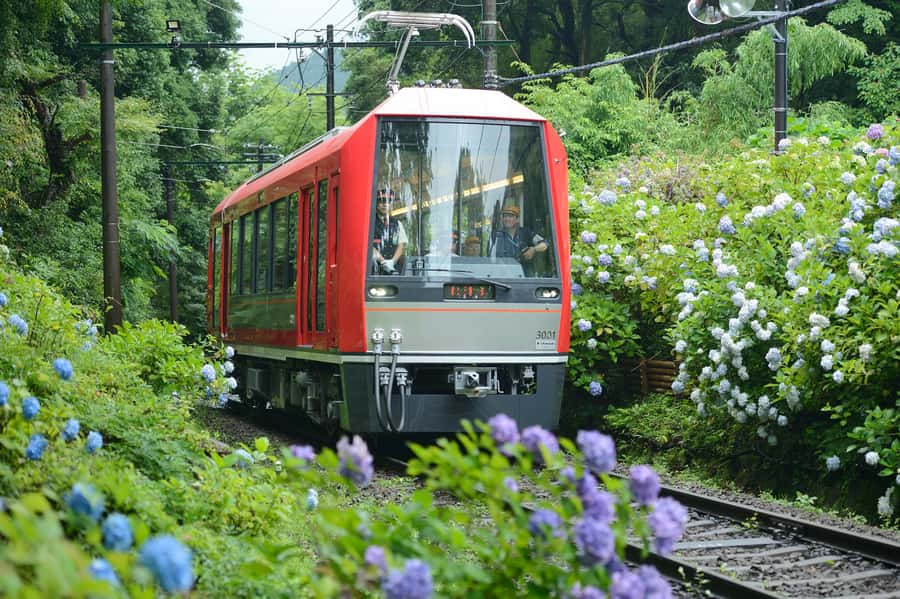
Hakone’s rail journey begins with the Hakone Tozan Train, a mountain railway included in the pass. It carries you into the Hakone area and connects with the Hakone Tozan Cable Car.
The train is useful in two ways. It is transport to the sights, and it is part of the experience. You are moving from the urban rail network toward Hakone’s mountain setting without needing to arrange separate tickets for each section.
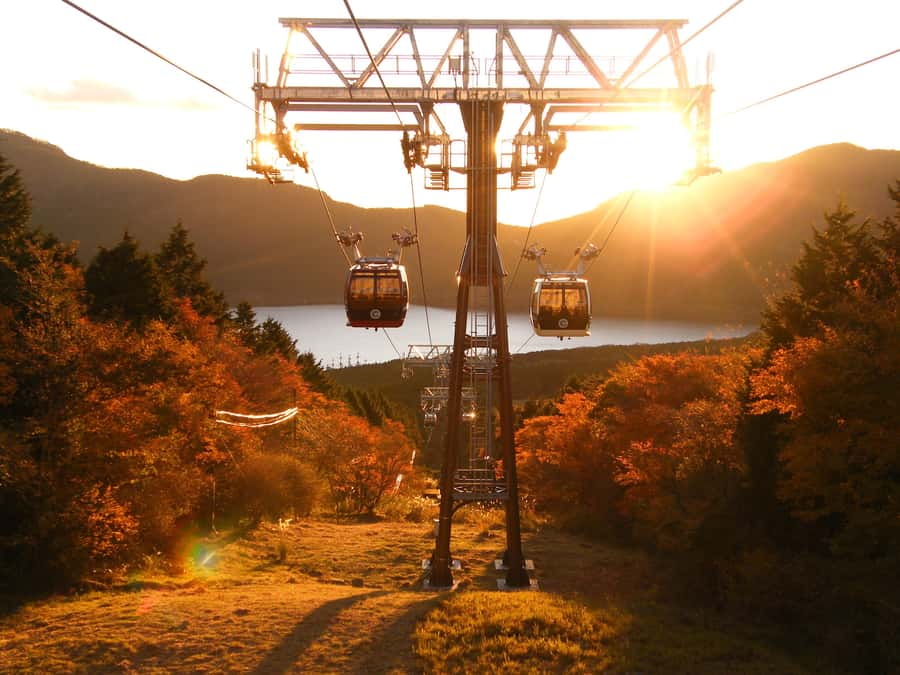
From the train, the cable car climbs farther into the hills. This is where the trip begins to feel like a proper scenic route rather than a simple transfer. The cable car connects with the Hakone Ropeway, one of the main reasons many people choose this pass.
You should not think of the cable car as a side attraction. It is one link in a connected route that lets you cross Hakone using several forms of transport. The pass removes the need to buy a new ticket each time you change modes, which is valuable when you are following the circuit.
Owakudani and the Hakone Ropeway
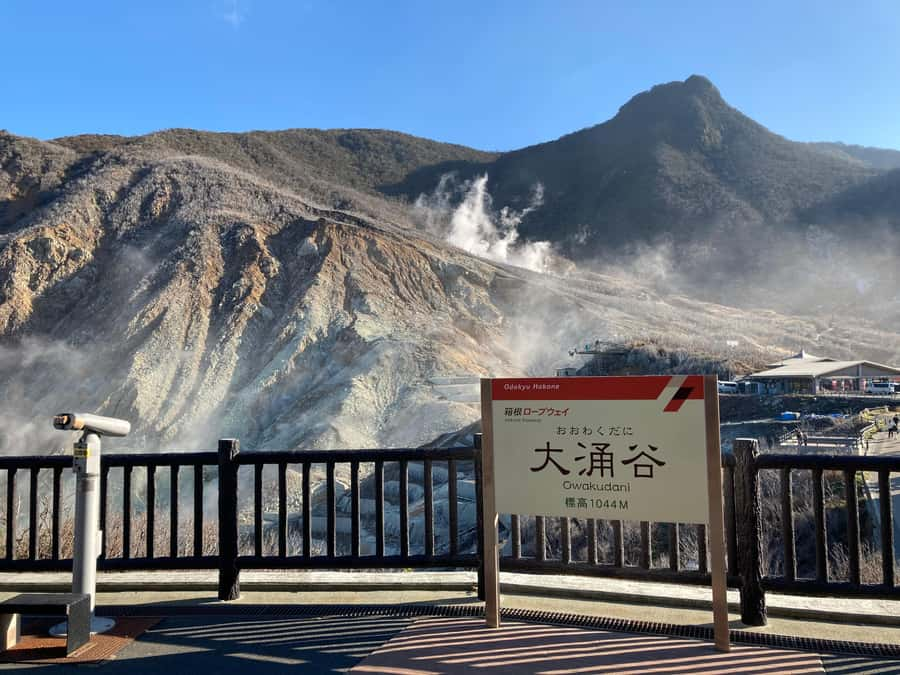
The ropeway carries you toward Owakudani, a volcanic area known for its dramatic terrain. The pass includes unlimited rides on the Hakone Ropeway, so you can get off to explore and continue later without paying another fare.
Owakudani is one of Hakone’s most distinctive stops because it gives the area a stronger volcanic character than the lakeside and forested sections. If conditions are clear, the route can also offer views toward Mount Fuji. The pass cannot control the weather, of course, so consider this a possibility rather than a promise.
Strong wind is a real practical concern. One customer had planned to use both the ropeway and the sightseeing boat but could not do so because of high winds. That is not a minor inconvenience: those rides are central pieces of the Hakone route.
For that reason, I would place the ropeway and boat earlier in your Hakone day when possible. You cannot guarantee good conditions, but you give yourself more room to adjust if service stops or your schedule changes.
More Train Journeys in Japan:
- Mt Fuji & Hakone Cruise, Drum Show Bullet Train 1 Day from Tokyo
★ 4.0 · 7,413 reviews - Tokyo Mt Fuji 5th St & Hakone Cruise Bus Tour w/Bullet Train
★ 4.4 · 5,024 reviews - Mt. Fuji and Hakone Day Trip From Tokyo with Bullet Train Option
★ 4.0 · 368 reviews - From Osaka: Sagano Train Ride and Kyoto Guided Day Tour
★ 4.3 · 180 reviews
Lake Ashinoko and the sightseeing cruise
The Hakone Sightseeing Cruise crosses Lake Ashinoko and is included in the pass. The lake is one of the area’s signature views, with mountain scenery and the possibility of seeing Mount Fuji in favorable weather.
The boat is especially useful because it is both a ride and a link between sightseeing areas. Instead of treating the lake as a viewpoint you simply photograph and leave, you cross it as part of the larger Hakone route.
That makes the pass more valuable than a basic train ticket. You are not only traveling from station to station. You are using several kinds of transport that would otherwise require separate fares.
Still, do not assume the boat always runs. Wind can affect it, just as wind can affect the ropeway. If the lake service is suspended, you will need to rely on the designated buses and other covered routes.
Buses, the Open-Air Museum, and more than 90 discounts
The pass includes several bus services in designated areas: the Hakone Tozan Bus, Odakyu Hakone Highway Bus, Tokai Bus, and the KANKO SHISETSU-MEGURI sightseeing bus.
The phrase designated areas matters. This is not an unlimited ticket for every bus in the Hakone region. It covers listed routes and services, but not all operators. I would check the route and operator before boarding, especially because one customer expected broader access and found that only certain company services were included.
The pass can take you toward major sights such as the Hakone Open-Air Museum. That museum is a strong choice if you want a break from transport and outdoor viewpoints. It also helps on a cloudy day when the mountain views are less reliable.
You receive special discounts at more than 90 sightseeing facilities. The savings depend on which places you enter, so do not treat the discounts as automatic profit. They improve the deal when you already plan to visit several participating sites.
This is one of the better reasons to read the facility list before activating the pass. If the discounts match your plans, the $54 price becomes easier to justify. If you only use one train and one bus, the value is much weaker.
Kamakura by Enoden
Kamakura is the pass’s second act. It was once a samurai capital, and its sights include old temples, shrines, and views toward the bay.
The Enoden railway is the key here. You receive unlimited rides on all Enoden Lines, making it easy to move between Kamakura and the coastal area without buying a separate ticket each time. The railway is not merely a way to reach one famous temple. It gives you a practical route through the wider area.
You can use Kamakura as a full day or combine it with part of a Hakone visit, though trying to do too much in one day could make the pass feel like a race. The appeal of three valid days is that you can give Hakone and Kamakura their own time instead of squeezing both into one long outing.
Kamakura’s character is different from Hakone’s. Here, the attractions are tied to religious buildings, historic streets, and the bay. The Enoden ride helps you connect those settings while keeping your day flexible.
The pass does not cover every railway in Japan. Its use is tied to the Odakyu network, designated Hakone transport, and Enoden. If you need a different company’s bus or train, you may need to pay separately.
What the $54 price really buys you
At $54 per person, this is not a bargain simply because it says unlimited. Its value depends on how actively you use it.
A customer calculated that a Shinjuku to Hakone return journey could cost about $25, with a round-trip ropeway around $25 and a boat ride around $25. Those figures suggest how quickly individual fares can add up when you combine long-distance rail with several Hakone attractions.
The math becomes stronger if you also use buses, ride the cable car, visit Kamakura by Enoden, and claim facility discounts. You are paying for convenience as well as transport. No one wants to stop at every connection to work out another fare while trying to complete a scenic route.
The pass is less attractive if your plan is narrow. For example, a simple trip to one Hakone stop and a short Kamakura visit may not reach the break-even point. The product also excludes the Limited Express Romance Car fare, so you must pay extra if you choose that faster premium train service.
It also excludes Izu Hakone Bus. That exclusion is important because the pass is not a universal Hakone ticket. Check the operator before you board.
My practical advice is to list your planned rides before buying:
- Shinjuku to the Hakone area
- Hakone Tozan Train
- Cable car and ropeway
- Lake Ashinoko cruise
- Designated Hakone buses
- Enoden rides in Kamakura
- Admission discounts at participating facilities
If you expect to use most of those, $54 can be sensible. If you will only use two or three, compare ordinary fares first.
How weather can change your Hakone plan
Hakone’s finest transport is also its most weather-sensitive. The ropeway and lake cruise depend on operating conditions, and strong wind can cancel both.
That does not make the pass a poor choice. It does mean you should avoid building your entire day around one perfect chain of rides. Keep the Open-Air Museum, temples, or other participating facilities as backup options, and use covered bus routes where available.
Mount Fuji views are also weather dependent. The pass gives you access to places where views may be possible, but it cannot guarantee clear skies. I would buy it for the combination of transport and sights, not for a promised Fuji photograph.
This is also why the three-day validity helps. You have more time to adjust than you would with a one-day ticket. If poor weather affects your first Hakone visit, you may be able to use the pass on another valid day.
Who will get the most from this pass
I would choose this pass if you want to see both areas and prefer independent travel. It suits people who like to make several stops, change plans, and use public transport without buying a new ticket at every stage.
It is also a good match for first-time visitors who want a clear transport framework. Hakone has several operators and transport types, so having one pass for the covered services reduces some of the friction.
You should be more cautious if you want a fully guided experience. There is no guide, no arranged sightseeing sequence, and no help built into the pass after redemption. You are responsible for reading route information and deciding where to go.
I would also think twice if you dislike complicated stations. The redemption problem at Shinjuku is the biggest weakness. Once you have the physical pass, use may be straightforward, but getting to the correct office takes preparation.
The pass is wheelchair accessible, which is useful to know, though the information provided does not explain the accessibility of every individual vehicle or sight.
Should you book the Hakone and Kamakura pass?
Book it if you plan to make serious use of Hakone’s connected transport system and add Kamakura by Enoden within the three-day period. The ropeway, cable car, cruise, buses, and facility discounts give the pass a fair chance of saving money, especially when you would otherwise buy several separate tickets.
Skip it if you only want one Hakone attraction, need transport outside the listed operators, or expect to use the Limited Express Romance Car without budgeting its separate fare. Most important, prepare for the Shinjuku exchange before you arrive.
This is a useful independent sightseeing pass, not an all-area rail ticket. Know that distinction, plan around wind, carry your passport, and you can turn $54 into a flexible three-day base for two of Honshu’s most rewarding day-trip areas.
FAQ
How long is the pass valid?
The pass is valid for three days from the first activation. The activity information also refers to a 36-hour pass, so confirm the validity printed on the physical pass when you exchange the voucher.
Where do I exchange the voucher?
Exchange it at the Odakyu Sightseeing Service Center, Shinjuku West, on the B1 floor of Odakyu Line Shinjuku Station West Exit, in front of the ticket gate.
What are the service center hours?
The stated opening hours are 8:00 AM to 6:00 PM.
Who can use this pass?
It is available only to people who hold a non-Japanese passport.
Do I need to carry identification?
Yes. Bring your passport or ID card, and carry it during the trip because station staff may request to see it.
Can someone else use my pass?
No. The pass can only be used by the person whose name appears on it.
Which Hakone transport is included?
The pass includes the Hakone Tozan Train, Hakone Tozan Cable Car, Hakone Ropeway, Hakone Sightseeing Cruise, designated Hakone Tozan Bus routes, designated Odakyu Hakone Highway Bus routes, designated Tokai Bus routes, and the KANKO SHISETSU-MEGURI sightseeing bus.
Is Enoden included?
Yes. The pass includes unlimited rides on all Enoden Lines.
Are the Romance Car and Izu Hakone Bus included?
No. The Limited Express Romance Car fare and Izu Hakone Bus are not included.
Do I have to return the pass?
Yes. You must return the physical pass at the final station of your trip.
Just added for rail travellers in Japan
- Train in Samurai Swordsmanship and Defeat the Demon in Tokyo★ 5.0 · 5 reviews
- Tokyo-Izu: Volcano, Ocean& Capybara Cuddle with Izu Scenic Train★ 3.5 · 3 reviews
- Private tour with Yasushi and Yoko – by car, train, on foot★ 5.0 · 2 reviews
- Bullet Train Experience & Mishima Shrine Private Tour from Tokyo★ 5.0 · 9 reviews
- Bullet Train and Mt. Fuji Famous Food Tour★ 5.0 · 4 reviews
- Mt Fuji & Hakone Private Tour from Tokyo: Return by Bullet Train★ 5.0 · 22 reviews
- 3-Day Private Tokyo and Nagano: Snow Monkeys, Tsukiji Market and Bullet Train★ 5.0 · 2 reviews
- Guided Half-day Tour(PM) to Toyota Commemorative Museum & SCMAGLEV Railway Park★ 5.0 · 3 reviews
3-Day Experiences, compared.
3-Day Isle of Skye, ‘Hogwarts Express’ Train and Highlands Tour
Read our review →
3-Day Blarney Castle, Ring of Kerry, & Cliffs of Moher Rail tour
Read our review →
Isle of Skye & Optional Jacobite Train 3-Day Tour
Read our review →
3 Day Isle of Skye and Jacobite Steam Train Tour from Inverness
Read our review →
Colombo/Negombo: Sigiriya, Kandy, Ella 3-Day Trip with Train
Read our review →
Sapa: 3-Day, 3-Night Trek and Hotel with Overnight Train
Read our review →
Edinburgh, Loch Ness, The Highlands from London – 3 Day Rail Tour
Read our review →
Browse the lists this tour appears in