
Review · GERMANY TRAIN JOURNEYS
Nuremberg: Nuclear Bunker in Main Railway Station
Nuremberg’s main railway station hides a serious piece of Cold War history below its polished concourse: a nuclear bunker built to protect civilians and passing passengers during an atomic attack. I like the way this 75-minute tour connects World War II, the nuclear arms race, and civil defense instead of treating the bunker as a dark room with a few old signs. I also like the computer simulation, which helps you grasp how the first atomic bombs compare with later nuclear weapons.
The main drawback is practical: the tour is in German, the entrance is easy to miss, and the underground setting can feel tight. You cannot enter late, and the tour is not suitable for children under eight, wheelchair users, people with mobility impairments, or anyone uncomfortable in enclosed spaces.
Key points to know before you go
- A nuclear bunker beneath the main station: The entrance is in the station basement, close to Yorma’s restaurant in the Königstorpassage.
- A 75-minute guided tour: A German-speaking guide leads you through the facility and explains its purpose, equipment, and civil-defense plans.
- More than a World War II stop: The focus is the postwar nuclear threat, along with protection from biological and chemical attacks.
- A computer simulation of nuclear weapons: You get a visual sense of how destructive power grew from the first atomic bombs to modern warheads.
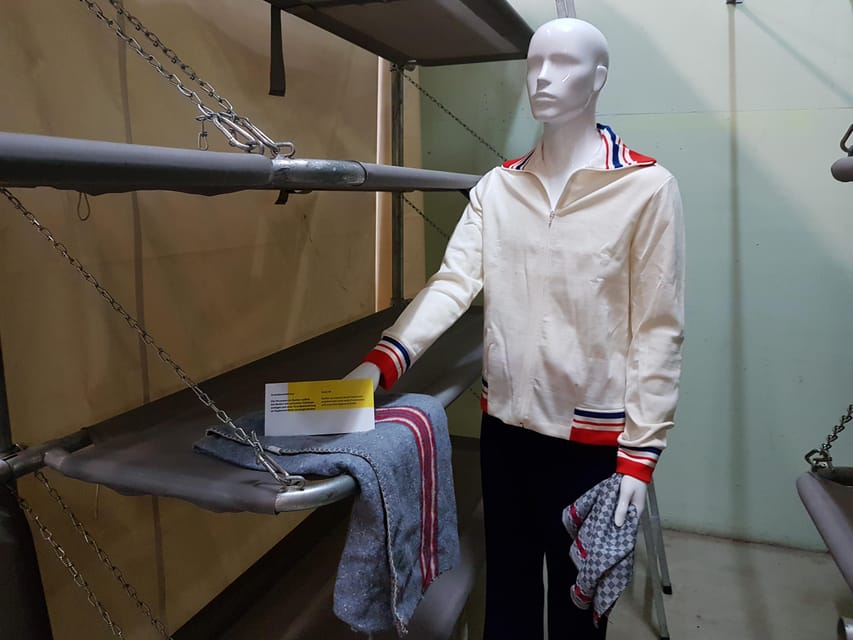
- A physical sense of bunker life: You can sit or lie on a pallet and imagine sharing the cramped space with several hundred people.
- A low-cost but specialized experience: At $15, it offers strong value if you care about history, military technology, or civil protection, but less if you want a broad city tour.
Finding the bunker beneath Nuremberg Hauptbahnhof
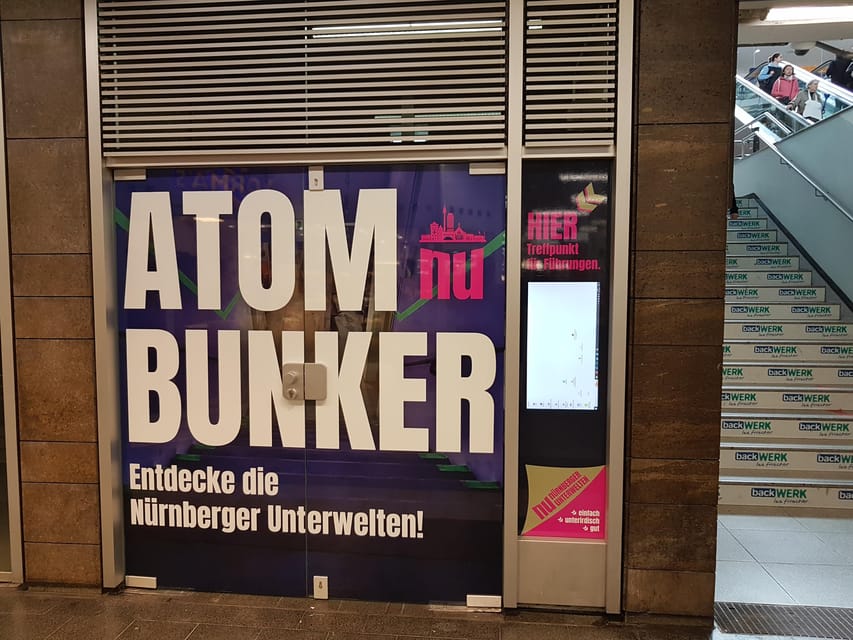
The tour begins inside Nuremberg’s central railway station, but not at an obvious street-level doorway. Enter through the main portal and walk into the main hall. From there, four escalators lead toward the basement levels.
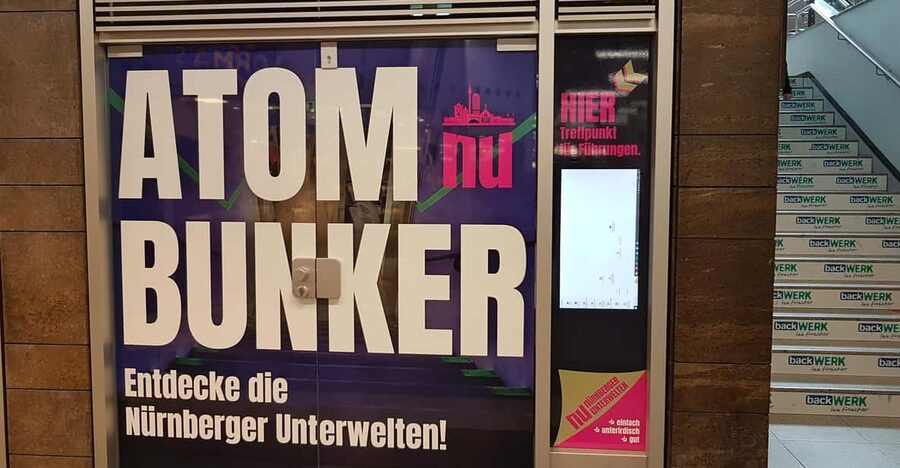
You need to reach the shopping arcade called Königstorpassage. Take the long escalator down, or use the short escalator followed by a step staircase. At the foot of the stairs, turn sharply right. The bunker entrance is on the right wall, directly by Yorma’s restaurant.
Give yourself extra time to locate it. The entrance is somewhat hidden, and if you are unfamiliar with Nuremberg station, it is easy to walk past it while looking for a more traditional museum door. The best plan is to arrive early, find the entrance first, then wait there for the guide.
There is no entry after the starting time. That rule matters here because the bunker is not a casual walk-in attraction. Once the group moves below the station, the tour follows a fixed route and late arrivals cannot simply catch up.
More Train Journeys in the world:
- Mt Fuji & Hakone Cruise, Drum Show Bullet Train 1 Day from Tokyo
★ 4.0 · 7,413 reviews - Montserrat & Cogwheel Train, Gourmet Wine Tasting & Tapas/Lunch
★ 5.0 · 6,290 reviews - From Milan: Lake Como Cruise, St. Moritz & Bernina Red Train
★ 4.6 · 5,648 reviews
From World War II to the nuclear age
The visit begins with the change in civilian danger after World War II. Nuremberg had already experienced the destruction of wartime bombing, but the atomic bomb created a different problem. A single attack could cause enormous damage, followed by radiation and long-term danger.
The dropping of atomic bombs on Japan and the nuclear arms race that followed shaped the thinking behind bunkers like this one. The question was no longer only how to shelter from falling bombs. Civil-defense planners also had to consider blast pressure, fire, radioactive contamination, and the possibility of biological or chemical attacks.
That context gives the bunker its value. You are not simply looking at an old underground chamber. You are seeing how governments tried to plan for a threat that was both technically real and almost impossible to make safe for everyone.
The facility was intended to protect part of Nuremberg’s population, with particular attention to people already in the station. That makes the location especially logical. A major railway station could hold many people at short notice, and passengers could be caught there when an attack began.
At the same time, the location makes the story uncomfortable. The bunker was not designed to shelter every person in the city. Its limited capacity forces you to think about the hard choices behind civil defense: who gets protection, how quickly people can reach it, and how long they might have to remain underground.
What you see during the 75-minute route
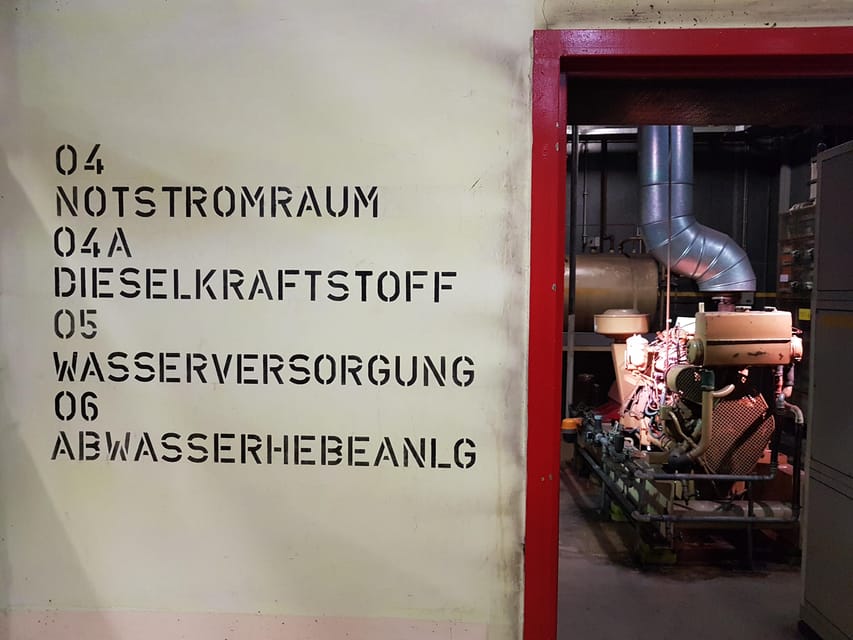
The exact presentation depends on the guide, but the tour combines explanation, exhibits, and time inside the bunker itself. Your guide speaks German and explains how civilian protection developed after the war.
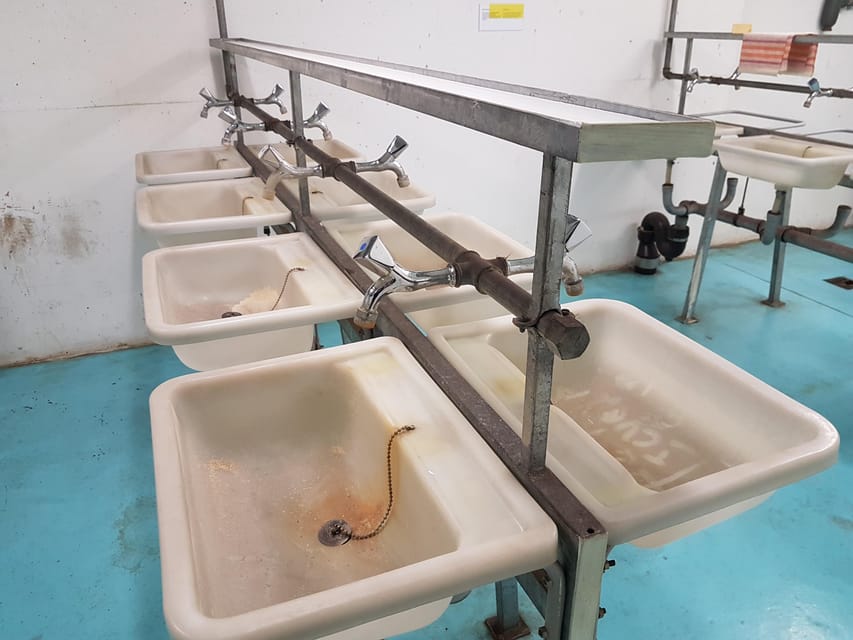
The exhibits show the measures planners imagined for nuclear, biological, and chemical threats. They help explain what the bunker was intended to do and what it could not do. This distinction matters. A bunker may offer protection from certain immediate dangers, but it cannot turn a nuclear attack into a safe event.
You also learn about the wider civil-defense system that grew around the new threat. The displays ask a practical question: how prepared should ordinary people be for a large-scale emergency? That question gives the tour a present-day edge without turning it into a modern political lecture.
The strongest part for many people will be the computer simulation. It shows the destructive power of nuclear weapons and compares the first atomic bombs with later nuclear warheads. Numbers alone can feel distant. A visual simulation gives the subject a clearer scale and helps explain why the arms race changed daily life and government planning so sharply.
I appreciate that the simulation is used as an aid to understanding, not as a spectacle. Nuclear weapons are not presented as clever machines or military curiosities. Their size and destructive force are tied to the human problem of protecting civilians.
Sitting on a pallet with several hundred people
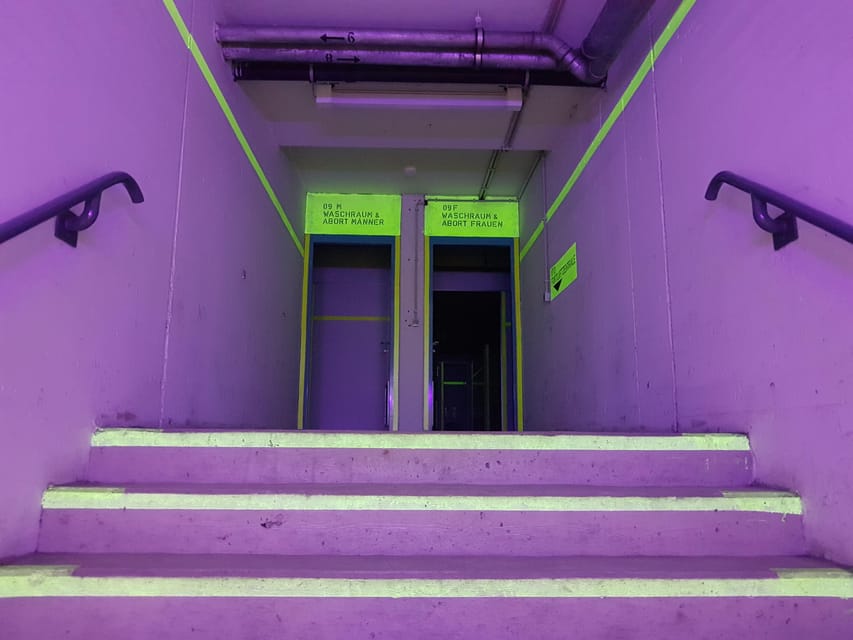
At some point, the tour lets you experience the bunker in a simple physical way. You can sit on a pallet or lie down and picture what it would be like to remain underground with several hundred other people.
This is a small part of the tour, but it gives the visit weight. A display case can explain a shelter. A hard pallet, limited room, and the thought of hundreds of people packed together make the plan feel more real.
You should not expect a theatrical attraction with actors or special effects. The point is restraint. The bunker’s spaces and the guide’s explanation do the work. A guide with a good sense of humor can help balance the grim subject, and the tone can remain human without making light of the danger.
The physical setting is also the reason to think carefully about comfort. Anyone who dislikes confined spaces may find the visit stressful. The tour is not suitable for wheelchair users or people with mobility impairments, and the underground route may involve stairs. Children under eight are not admitted.
Same line, a different day out:
- Tokyo Mt Fuji 5th St & Hakone Cruise Bus Tour w/Bullet Train
★ 4.4 · 5,024 reviews - From Milan: Bernina Train and St. Moritz Day Trip
★ 4.5 · 4,495 reviews - Christ the Redeemer Entry Ticket by Corcovado Train
★ 4.4 · 4,476 reviews - From Málaga: Ronda+Setenil de las Bodegas with Little Train
★ 4.6 · 4,115 reviews
Why the German guide matters
The live guide is central to the experience. This is not an audio tour that you can skim at your own pace. The explanations, timing, and atmosphere depend on the German-speaking guide leading the group.
A guide can explain why the station was chosen, how the bunker fit into civilian protection plans, and how the displays relate to one another. The human delivery also helps with a difficult topic. One guide described in the tour feedback used humor and common sense to keep the atmosphere from becoming too heavy, a useful balance in a place built around mass destruction.
If you do not understand German, this is a serious consideration. The activity is listed as German only, and no translation or English-language guide is provided in the information available here. You might still appreciate the rooms and visual displays, but you would miss much of the historical explanation.
For German speakers, the live format adds value. It allows the guide to respond to the mood of the group and explain the more troubling questions in plain language. For everyone else, check carefully before booking rather than assuming English will be available.
The value of a $15 admission
At $15 per person, the tour is reasonably priced for a guided historical site in a major European city. The entry fee includes the bunker admission and the guide. You pay separately for transportation, food, and drinks, although the meeting point is inside a station you may already be using.
The value depends on your interests. If you enjoy military history, Cold War planning, engineering, or civil protection, the price is easy to justify. You get a guide, a set of exhibits, the nuclear weapons simulation, and a chance to enter a facility that most people would otherwise pass without noticing.
If your interest is limited to medieval Nuremberg or the city’s famous World War II sites, this tour offers a different period and a narrower subject. It is not a replacement for a larger history museum. It works best as a focused addition to a day in the city, especially if you are already near the station.
The central location also saves time. You do not need a separate ride to an outlying site, and you can fit the tour around train connections or a visit to the city center. Do not cut it too close to a departure, though. The fixed start time and no-late-entry rule mean you need a comfortable margin.
What makes this bunker different from a standard museum
A conventional museum lets you move freely from case to case. This visit gives you a more controlled account of one facility and one problem: how civilians might survive a nuclear, biological, or chemical attack.
The bunker itself is the main object. Its location under a working railway station links the history to ordinary movement through the city. You are not looking at a distant military base. You are beneath a place where people still arrive, depart, shop, and change trains.
The contrast is powerful. Above you is the practical business of a modern station. Below is a shelter designed for an emergency that could have changed the city in minutes. That difference helps explain why civil defense became such a major concern during the Cold War.
The tour also avoids a common weakness of historical attractions: presenting weapons without explaining their effect on ordinary people. Here, the focus returns to shelter, crowding, contamination, and preparation. You come away with a clearer idea of what nuclear weapons meant for civilians, not just for generals and governments.
Practical limits and things to leave behind
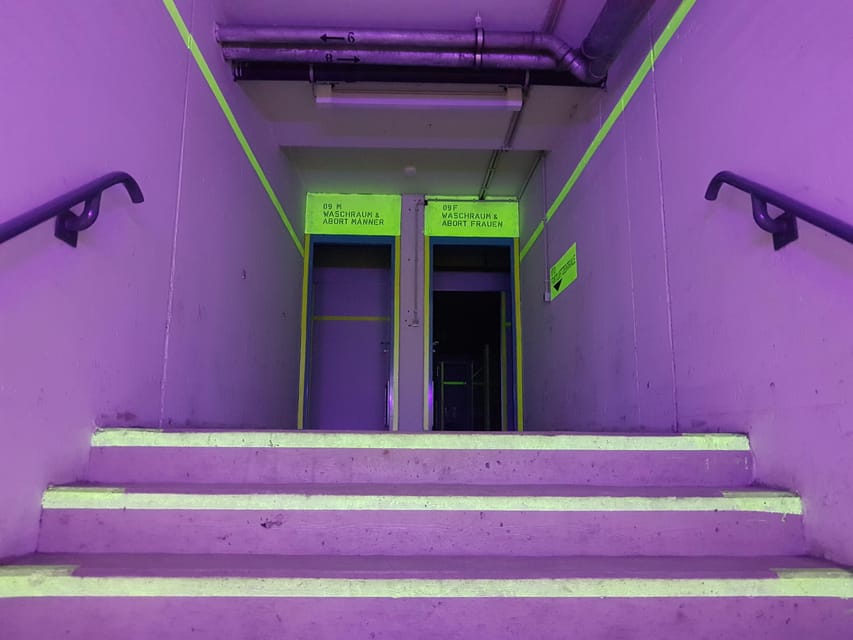
This is a rain-or-shine activity because most of it takes place indoors. Weather will not affect the bunker, but it may affect your walk to the station if you are coming from elsewhere.
Do not bring food or drinks into the tour. Smoking is not allowed, and you cannot touch the exhibits. Large bags and luggage are also prohibited, so plan around suitcases if you are using the station before or after a train journey.
Pets are not allowed, although assistance dogs are permitted. Selfie sticks are also prohibited. These rules make sense in narrow underground rooms, where bags and extended equipment can block the route or damage displays.
Wear something comfortable for a 75-minute visit and be prepared for a confined environment. The available information does not promise special seating or an accessible route, so people with mobility concerns should not assume the station’s escalators solve the problem.
Who should book this Nuremberg tour?
I would recommend it to adults and older children who can follow a German-language explanation and want a serious look at Cold War civil defense. It is especially suitable if you have already seen Nuremberg’s better-known World War II sites and want to understand what happened after 1945.
It also suits people interested in nuclear history, emergency planning, architecture, and the everyday effect of military technology. The computer simulation gives the tour a useful visual element, while the pallet scene adds a direct sense of scale.
I would hesitate if you are claustrophobic, have mobility impairments, use a wheelchair, or need an English-language guide. I would also skip it if your schedule is tight enough that a strict start time could cause trouble.
Book it if you want a focused, sober, and fairly priced historical experience in an unusual location. Skip it if you prefer open-air sightseeing or broad city history. For the right visitor, the bunker offers something that a standard museum cannot: the feeling of standing inside a plan made for a catastrophe that thankfully never came.
FAQ
Where is the nuclear bunker tour meeting point?
Enter Nuremberg’s main railway station through the main portal and go to the main hall. Take the long escalator to the Königstorpassage, or use the short escalator followed by the step staircase. At the bottom, turn sharply right. The bunker entrance is on the right wall by Yorma’s restaurant.
How long does the tour last?
The tour lasts 75 minutes.
What language is the tour in?
The live tour guide speaks German. No other tour language is specified.
Is the bunker tour suitable for children?
Children under eight are not allowed to join the tour.
Can I bring luggage, food, or drinks?
No. Luggage and large bags are not allowed, and food and drinks are prohibited. Smoking, selfie sticks, and touching the exhibits are also not allowed.
Is the bunker accessible for wheelchair users?
No. The experience is not suitable for wheelchair users or people with mobility impairments. It is also not suitable for people with claustrophobia.
Just added for rail travellers in the world
- From Porto Douro Valley Tour with Train and Vinho Verde★ 4.7 · 16 reviews
- From Ella – Day Trip of 8 Iconic Sights & Scenic Train Ride★ 4.4 · 5 reviews
- Prague: Railway Kingdom Giant Model Railway Museum★ 4.4 · 54 reviews
- Sarajevo: Visegrad, Sarkan Eight Railway & Kurstendorf Tour★ 4.8 · 13 reviews
- Skip the Line: Historic RailPark and Train Museum Ticket with Guided Tour★ 4.5 · 59 reviews
- Sa Pa Trekking 2 Days 3 Nights Homestay by Night Train★ 4.5 · 11 reviews
- 2 Day Tour of Yala & Ella with Hill Country Scenic Train Ride – All Inclusive★ 5.0 · 5 reviews
- Private Day Tour: Suzhou Incredible Highlights from Shanghai by Car or Train★ 5.0 · 47 reviews
Germany Train Journeys, compared.

Nuremberg: City Tour with the Bimmelbahn Train
Read our review →
Würzburg: City Tour with the Bimmelbahn Train
Read our review →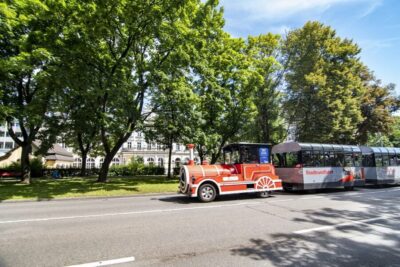
Regensburg: City Tour with the Bimmelbahn Train
Read our review →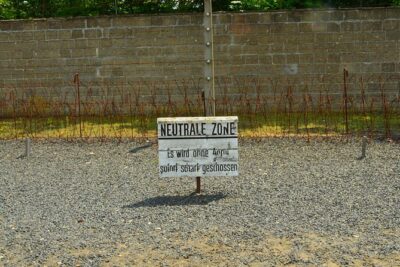
Private Sachsenhausen Concentration Camp tour with train
Read our review →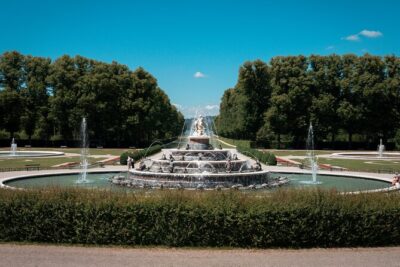
Herrenchiemsee Palace and Fraueninsel Rail Trip from Munich
Read our review →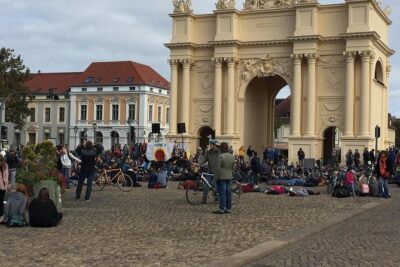
Potsdam Bike Tour with Rail Transport from Berlin
Read our review →
City tour through Regensburg with the little train
Read our review →Browse the lists this tour appears in