
Review · DEATH RAILWAY TOURS
Bridge on the River Kwai and Thailand-Burma Railway Tour
The most affecting part of this day is not the famous bridge. It is the quiet Kanchanaburi War Cemetery, where neat rows of graves make the human cost of the Thailand-Burma Railway impossible to ignore. From there, you move through a small museum, a fast long-tail boat ride, and a train journey through rural Thailand. History here is not abstract. It is tied to places you can see and tracks you can ride.
I like two things especially: the well-paced mix of solemn sites and scenic travel, and the chance to experience the railway by train rather than simply photograph the bridge. Guides such as Betty, Luck, Peter, Jenny, and Suki have been praised for clear explanations, good timing, and helping with photos or special meal needs. The lunch, boat ride, and train ticket are included too.
The main drawback is the long day. Kanchanaburi is about 130 kilometers west of Bangkok, so much of your time goes into the road journey. The museum visit is brief and basic, and some departures use a less comfortable vehicle or provide less information about places passed along the way. Go for the history and the railway, not for a relaxed day in the countryside.
Key points to know before booking
- The cemetery gives the day its emotional weight: Allow yourself quiet time among the Allied graves before moving on.
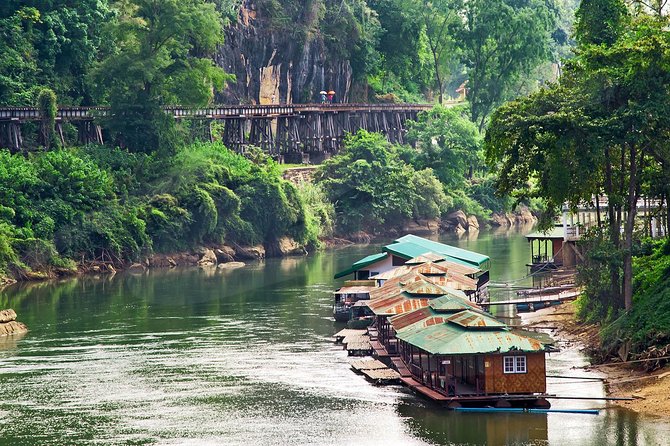
- The long-tail boat approaches the bridge from the river: It is more memorable than simply arriving by road, but the ride lasts about 20 minutes.
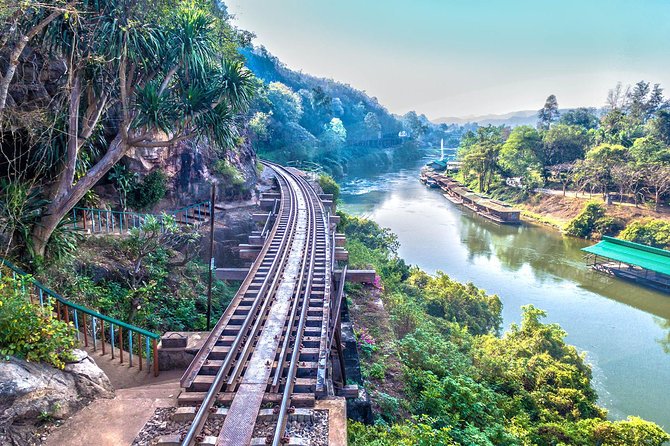
- The train ride is the centerpiece for railway fans: You spend about 90 minutes on the Death Railway, with rural views and sections cut through rock.
- The tour starts early and runs long: Pickup begins at about 6:30 am, and the full outing takes roughly 9 to 10 hours.
- A paid train upgrade may be useful: About 200 baht adds a guaranteed seat, cold towel, water, and a snack; about 300 baht adds tea or coffee and a certificate.
- The $108.17 price covers most major costs: Transport, guide, admissions, lunch, boat ride, and train ride are included, but drinks are not.
Why this Kanchanaburi day trip matters
The Thailand-Burma Railway was built during World War II to support the Japanese occupation of Burma, now Myanmar, and to create a direct rail connection from Bangkok toward Rangoon. Prisoners of war and forced laborers built the line under brutal conditions. Thousands died.
That background changes the way you see the bridge and railway. The bridge itself is a recognizable sight, but it is not the whole story. The cemetery, museum, river, and railway together show how a military project affected people, terrain, and communities.
I appreciate that this outing does not treat the bridge as a quick photo stop alone. You begin with the dead, then learn more about the construction, then travel along the railway itself. The order gives the day a useful shape.
Still, this is not an in-depth historical seminar. The JEATH War Museum gets only about 20 minutes, and the displays are described as fairly basic. If you want detailed archival material, you may find the museum too short and too modest. If you want an accessible first look at the subject, the combination works well.
More Death Railway Tours in Bangkok:
- From Bangkok: Death Railway & Hellfire Pass Tour with Lunch
★ 4.6 · 931 reviews - Bridge on the River Kwai and Thailand-Burma Railway Guided Tour
★ 4.5 · 353 reviews - Bridge over River Kwai and Hellfire Pass Tour with Train Ride
★ 5.0 · 199 reviews
Leaving Bangkok before sunrise
Pickup begins at approximately 6:30 am from selected Bangkok hotels. You must provide your hotel details when booking. Pickup is not offered everywhere, so check that point before paying.
The ride to Kanchanaburi takes you out of the city and through Thailand’s agricultural countryside. Sugarcane, rice paddies, and pineapple plantations fill much of the route. This is useful context: the day is not only about wartime sites, but also about seeing a more rural part of the country from an air-conditioned coach.
The transport is practical rather than luxurious. Some people have found the vehicle comfortable, while one account specifically noted that the car was less comfortable than expected. The maximum group size is listed as 99, so the experience can be fairly large, even though some departures may feel smaller.
Bring water, though drinks are not included. Restroom facilities are available, and the tour requires a moderate level of physical fitness. You should be comfortable with a long day, several transfers, walking at stops, and boarding a boat and train.
Kanchanaburi War Cemetery: the quietest stop
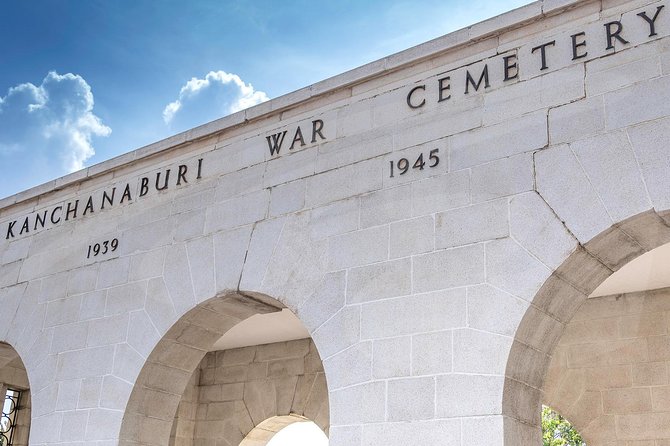
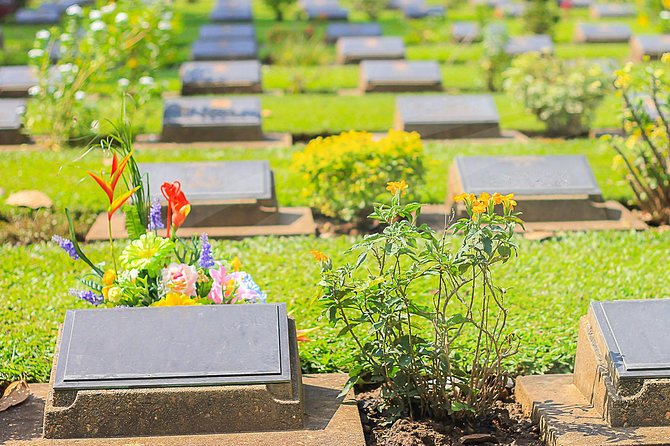
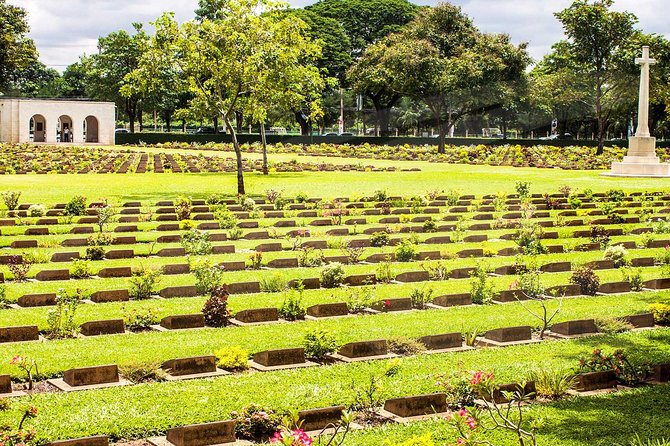
The Kanchanaburi War Cemetery is the main Allied prisoner of war cemetery connected with the Burma Railway. The stop lasts about 30 minutes, with admission included.
This is the place where you should slow down. The setting is orderly and carefully kept, and the rows of graves make the scale of the deaths personal. Names, ages, and dates carry more force than a general explanation of wartime statistics.
The stop can feel short, especially if you want to read many markers. One useful approach is to spend a few minutes taking in the whole cemetery, then choose a small number of graves to read closely. You do not need to rush through every row to understand the weight of the site.
Guides have been praised for giving historical context without losing sight of the people involved. That matters here. A good guide helps you understand the military purpose of the railway while leaving space for your own response.
Photography may be possible, but this is a place for restraint. The cemetery is not just an attraction on a busy schedule. Treat the visit as a memorial stop first and a sightseeing stop second.
JEATH War Museum: useful, but keep expectations modest
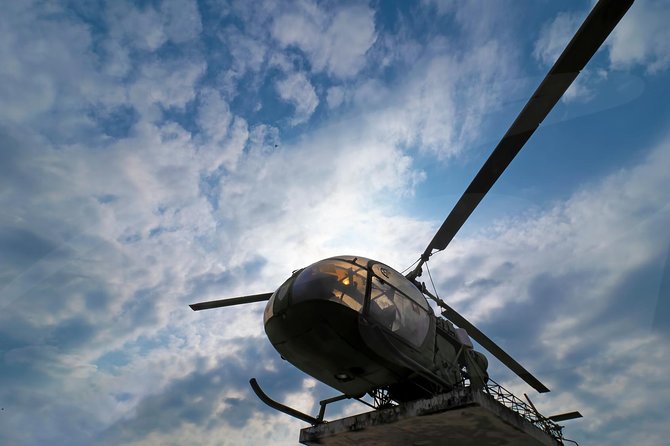
The next stop is the JEATH War Museum, with about 20 minutes to look at historical photographs and paintings connected with the Death Railway. The name refers to Japan, England, America, Australia, Thailand, and Holland, the countries linked with the wartime story presented here.
The museum helps explain how prisoners of war were used to build the railway and why the bridge mattered to the Japanese military plan. It gives you visual material before you ride the line yourself.
Twenty minutes is not long. You will have time for an overview, not a careful study of every display. Some parts may feel basic, particularly if you already know a great deal about the railway. I would treat it as preparation for the rest of the day rather than the main event.
The guide’s explanation makes a real difference. The strongest accounts of this experience credit guides including Luck, Tiny, Peter, and Suki with adding facts about the war, Thailand, local customs, and the railway’s purpose. The weaker part of the experience can come when information about the passing countryside or historical details is limited, so do not hesitate to ask questions when there is time.
More Train Journeys in Bangkok:
- Day Trip to Bangkok Floating Market & Maeklong Railway
★ 5.0 · 1,528 reviews - Bangkok: Railway and Floating Market Tour with Dragon Temple
★ 4.6 · 1,225 reviews - Private Excursion to Maeklong Railway and Floating Markets
★ 5.0 · 850 reviews - From Bangkok: Railway & Damnoen Saduak Floating Market Tour
★ 4.6 · 775 reviews
The Kwai River by long-tail boat
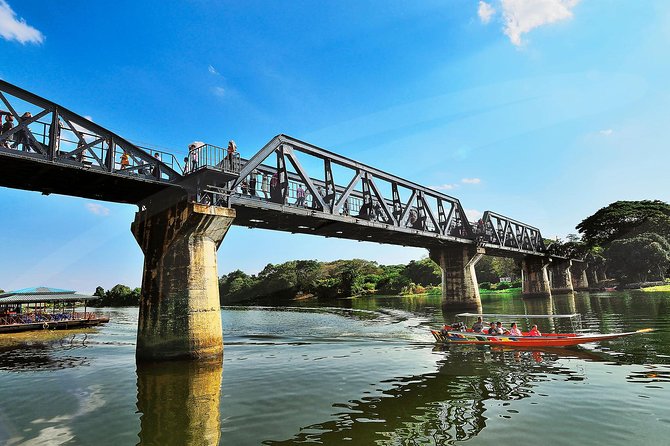
The boat ride lasts about 20 minutes and takes you along the Kwai River toward the bridge. This is one of the more enjoyable changes of pace in the program.
Long-tail boats sit low on the water and use powerful engines. The ride can feel lively and fast, especially after the quiet cemetery and compact museum. You approach the bridge from a different angle, with the river framing the structure instead of a road or platform.
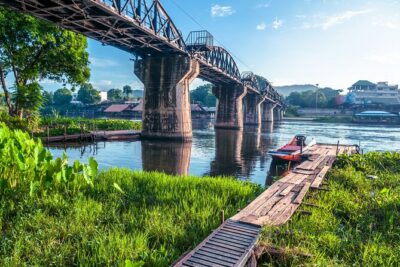
The boat ride is not a long sightseeing cruise. Its main value is the approach. You get a clear view of the bridge and a memorable sense of arriving by water. You also cruise beneath the River Kwai Bridge, which makes the famous structure feel like part of a working river rather than an isolated monument.
The ride may be noisy and exposed, so keep your belongings secure and be ready for spray. The tour includes the boat and admission fees. No separate boat charge is listed.
River Kwai Bridge: a short stop with plenty to see
At the bridge, you have time to explore independently, with the listed stop lasting about 20 minutes. That is enough to walk across, take photographs, and look at the river and surrounding countryside.
The bridge is historically important, but it is also a place where the popular image can oversimplify the past. The tour’s earlier stops help correct that by placing the bridge within the wider story of wartime construction, imprisonment, forced labor, and death.
Arriving by boat improves this part of the day. You first see the bridge from the river, then move closer on foot. Guides have often helped with photographs, which is useful when the schedule is tight and the group is moving on to the train.
Twenty minutes can pass quickly. If crossing the bridge is important to you, stay focused and do not spend the entire stop taking pictures from one spot. The tour is designed to keep moving.
The Death Railway train ride: the day’s strongest experience
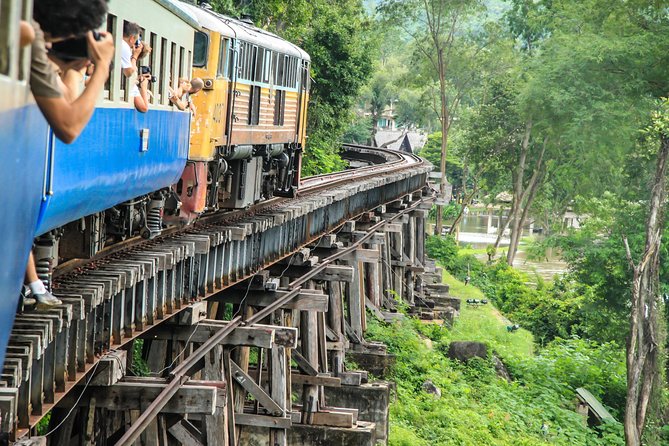
The train journey lasts about 1 hour and 30 minutes. This is the part I would look forward to most if I cared about railways, engineering, or seeing Thailand beyond Bangkok.
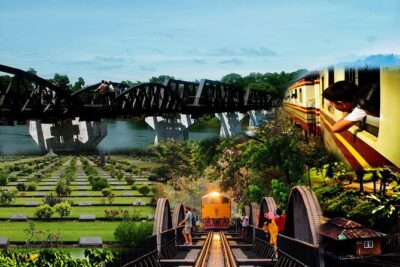
The train travels through the countryside and along the historic Thailand-Burma Railway. You see rural scenery, sections of track cut through rock, and the terrain that made construction so difficult. The ride gives physical meaning to the work described at the cemetery and museum.
It is also a normal rail experience in some respects. You are not entering a preserved war camp or walking through a complete wartime site. You are riding a section of railway that remains a scenic route, while carrying the knowledge of how it was built.
Seat arrangements deserve attention. The standard train experience does not guarantee a seat, with places allocated on a first-come, first-served basis. An optional upgrade costs approximately 200 baht and includes a guaranteed seat, cold towel, drinking water, and a snack. A package of about 300 baht adds tea or coffee and a certificate.
The upgrade can make sense on a long day, especially if you want a guaranteed place beside your group. The certificate is a souvenir rather than a major part of the experience, so the practical value is the seat, water, and refreshments.
One particularly useful detail is that masks may be offered for dust on the train. Conditions can vary, but the advice is sensible. Keep your phone and camera ready, yet do not spend the entire ride looking through a screen. The countryside is part of the point.
Lunch and the rhythm of the day
Lunch is included, while beverages are not. The meal has been described as delicious, with one especially well-liked restaurant setting. The exact menu and restaurant are not specified, so do not book this tour based on a particular dish.
Lunch provides a needed pause after the cemetery, museum, boat, and bridge. It also gives you time to talk with the guide about what you have seen. Dietary needs may be handled if you explain them in advance. One guide arranged an alternate meal for a participant with dietary restrictions, but you should still communicate your needs when booking.
The day’s rhythm is one of its strengths. You do not spend all nine or ten hours in a museum, and you do not spend the entire day taking photographs. The program shifts from memorial site to museum, river, bridge, train, and meal.
The tradeoff is that no stop is especially long. You get a broad introduction rather than slow, private time at each location.
Guides, group size, and the human side of the tour
The guide can shape this experience more than any single attraction. Strong guides have included Betty, Luck, Tiny, Peter, Jenny, and Suki. Their praised qualities are practical: clear English, good timing, help with photographs, attention to comfort, and useful explanations of Thai history and local customs.
That care matters on a complicated day. You need to know when to leave the cemetery, where to board the boat, how to reach the train, and how to manage the various transitions. A guide who keeps the day moving without making it feel hurried adds real value.
The service may not be identical on every departure. One criticism was that the guide did not offer enough information about places passed along the road. The stated maximum of 99 people also means you should not assume a small-group outing.
The overall rating of 4.3 from 658 ratings suggests a generally strong experience, but the range of reactions is useful. The best days combine a caring guide, reliable timing, and comfortable transport. The weaker days can feel long, basic, or under-explained.
Is $108.17 a fair price?
At $108.17 per person, the tour costs more than arranging a simple visit to the bridge on your own. But the price includes hotel pickup and drop-off from selected hotels, an air-conditioned vehicle, guide service, admissions, the long-tail boat, train ride, and lunch.
That bundle gives you a straightforward way to reach Kanchanaburi without planning several connections. You also get the cemetery, museum, bridge, and railway in one day. For a first visit from Bangkok, that convenience has real value.
The price is less attractive if you dislike organized schedules or already have transport in Kanchanaburi. You may find the 9 to 10 hour day tiring, and the short stops can feel restrictive. A private or slower arrangement would offer more control, though it would not necessarily cost less.
I see this as good value for a first-time visitor who wants the major sites handled in one day. The train and boat are not add-ons you have to arrange separately, and lunch removes one more decision from a busy schedule.
Who should book this tour?
I would recommend it to you if you want a strong introduction to the Death Railway, prefer an organized day trip, and can handle an early start and long return journey. It suits history-minded visitors, railway enthusiasts, and anyone who wants to honor the people connected with the railway rather than simply see the bridge.
It also works well if you value a guide. Names such as Betty, Luck, Peter, Jenny, and Suki come up in connection with thoughtful explanations and good care, though no tour can guarantee a specific guide unless the provider confirms one.
I would hesitate if you need long, quiet visits at memorial sites, dislike group schedules, or want a detailed museum experience. The JEATH museum is brief, the bridge stop is short, and some road time is unavoidable.
Book at least 24 hours before the start if you want the option of a full refund. The tour requires a minimum number of participants, so a cancellation is possible if that number is not reached. In that case, an alternative or full refund is offered.
FAQ
How long does the Bridge on the River Kwai tour take?
The tour lasts approximately 9 to 10 hours, including the road journey from Bangkok, sightseeing stops, lunch, the boat ride, and the train ride.
What time does the tour start?
The listed start time is 6:30 am.
Is hotel pickup included?
Hotel pickup and drop-off are included from selected Bangkok hotels. You must provide your hotel details when booking, and pickup is not available from every hotel.
What is included in the price?
The price includes selected hotel pickup and drop-off, an air-conditioned vehicle, a local guide, the long-tail boat ride, the Death Railway train ride, lunch, and admission fees.
Are drinks included with lunch?
No. Beverages are not included.
Is the train seat guaranteed?
A standard train place is not guaranteed and is allocated on a first-come, first-served basis. An optional upgrade of about 200 baht guarantees a seat and adds a cold towel, drinking water, and a snack. An upgrade of about 300 baht also includes tea or coffee and a certificate.
How much walking or physical effort is required?
A moderate level of physical fitness is recommended. You should be comfortable with a full day of sightseeing and boarding a long-tail boat and train.
Can I cancel for a full refund?
You can cancel at least 24 hours before the local start time for a full refund. Cancellations or changes made less than 24 hours before the start time are not accepted for a refund.
Just added for rail travellers in Bangkok
- Private Excursion to Maeklong Railway & Amphawa Floating Markets★ 5.0 · 84 reviews
- Train & Floating Market Food Adventure + Scenic train ride★ 5.0 · 102 reviews
- Maeklong Railway & Floating Market Tour (Private & All-Inclusive)★ 5.0 · 108 reviews
- From Bangkok: Death Railway & River Kwai Bridge Private Tour★ 4.9 · 171 reviews
- Private Tour: Thai–Burma Death Railway Bridge on the River Kwai from Bangkok★ 4.5 · 172 reviews
- Bangkok: Floating Market and Train Tour with Guide in Spanish and English★ 4.5 · 185 reviews
- Bridge over River Kwai and Hellfire Pass Tour with Train Ride★ 5.0 · 199 reviews
- From Bangkok: Maeklong Railway and Floating Market Food Tour★ 4.9 · 224 reviews
Death Railway Tours, compared.
Bridge on the River Kwai and Thailand-Burma Railway Guided Tour
Read our review →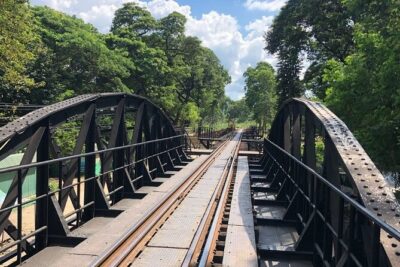
Bridge over River Kwai and Hellfire Pass Tour with Train Ride
Read our review →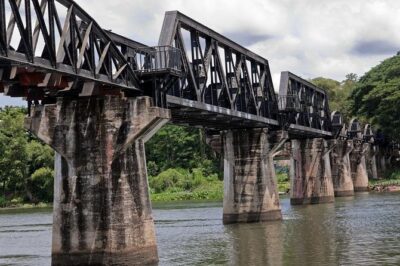
Private Tour: Thai–Burma Death Railway Bridge on the River Kwai from Bangkok
Read our review →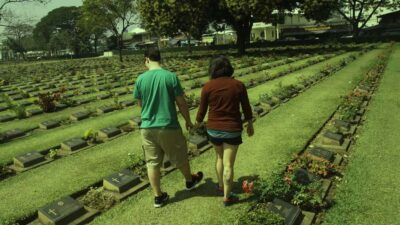
Death Railway & River Kwai Bridge Private Tour
Read our review →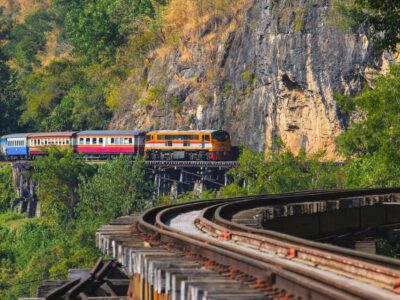
Kanchanaburi Tour: Erawan Waterfall and Death Railway
Read our review →Browse the lists this tour appears in