
Review · GERMANY TRAIN JOURNEYS
Potsdam Bike Tour with Rail Transport from Berlin
Potsdam is where Prussian palaces, Cold War drama, and quiet park paths meet. This six-and-a-half-hour outing lets you cover far more ground than you could on foot, from Sanssouci Palace and the Dutch Quarter to Cecilienhof and the Bridge of Spies.
I like the easy train connection from central Berlin and the comfortable cruiser bikes. I also like the guide-led storytelling, especially when guides such as Simon, Maggi, Nick, and Thor connect Frederick the Great’s palaces with the 1962 spy exchange on Glienicke Bridge. The main drawback is time: 17 kilometers of riding plus many stops makes this a full day, not a quick side trip.
Key points to know before you book
- The route covers about 10.5 miles: Most of the ride is described as leisurely and fairly flat, but you should be comfortable cycling for several hours.
- Train transport is included: You meet near the TV Tower at Alexanderplatz, then travel together to Potsdam and return to Berlin at the end.
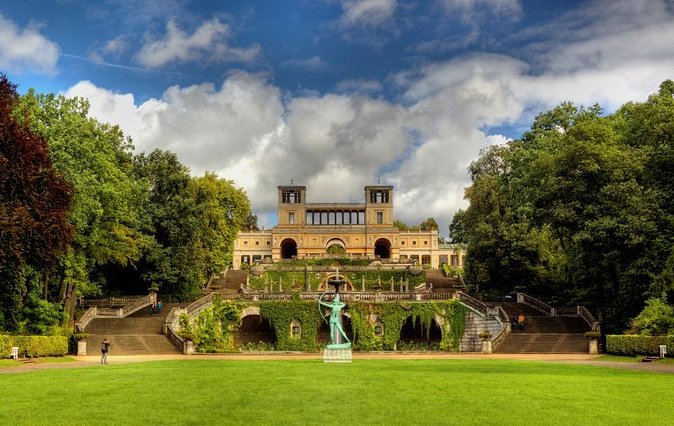
- The palaces are mainly exterior visits: You see Sanssouci, the New Palace, the Orangery, and other royal sites from outside, with explanations from the guide.
- The history reaches far beyond Prussia: Cecilienhof, Glienicke Bridge, the former Berlin Wall, and the Potsdam Agreement add strong 20th-century context.
- Lunch is on your own: You get about 45 minutes in the Dutch Quarter, but food and drinks are not included.
- The group is capped at 18 people: That is small enough for a more personal ride while still giving the tour a social feel.
Why a bike is the right way to see Potsdam
Potsdam is spread across grand parks, palace grounds, residential quarters, lakes, and former military areas. On foot, you would spend much of the day walking between sights. By bike, you can move from the formal center to Sanssouci Park, then out toward the Havel and Glienicke Bridge without giving up the outdoor feel of the city.
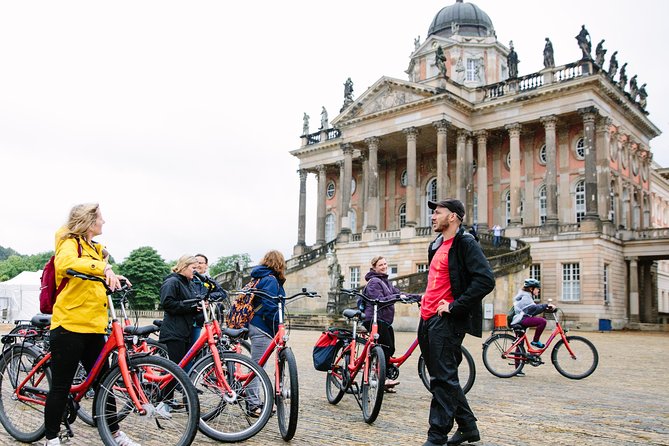
The bikes are city-cruiser style, with comfortable seats and a relaxed riding position. A helmet is provided, though it is optional. The route covers roughly 17 kilometers over about four and a half hours, with regular stops for photos and explanations.
The ride is generally flat and unhurried. Still, do not confuse leisurely with effortless. You will be in the saddle for much of the day, and the tour is best for anyone with moderate physical fitness. One useful detail from the experience is that guides make a point of waiting for the whole group before moving on. That matters when riders have different levels of confidence.
The route mixes paved city streets, park paths, and busier sections. One account notes that sidewalks and streets can feel crowded at times. You should expect to ride near other people, pause often, and stay attentive rather than treating the outing as a silent park cruise.
More Train Journeys in the world:
- Mt Fuji & Hakone Cruise, Drum Show Bullet Train 1 Day from Tokyo
★ 4.0 · 7,413 reviews - Montserrat & Cogwheel Train, Gourmet Wine Tasting & Tapas/Lunch
★ 5.0 · 6,290 reviews - From Milan: Lake Como Cruise, St. Moritz & Bernina Red Train
★ 4.6 · 5,648 reviews
Meeting at Alexanderplatz and riding to Potsdam
The morning begins at Unlimited Biking, formerly Fat Tire Tours, at Panoramastraße 1A near the entrance to the TV Tower in Alexanderplatz. The meeting point sits beside one of Berlin’s main public squares and transport hubs, so allow enough time to find the shop and check in for the 9:30 a.m. start.
After meeting the English-speaking guide and the rest of the group, you receive your bike and helmet. The train ride to Potsdam is included, which removes one of the less pleasant parts of arranging this day trip yourself. You do not have to work out the route, transport, or bike rental separately.
Once in Potsdam, the guide gives a short introduction before the cycling begins. This first overview helps place the city in context. Potsdam was a royal residence, a garrison town, a center of Prussian power, and later a key site in the story of divided Germany.
The tour returns to the original meeting point in Berlin. Hotel pickup and drop-off are not included, so you need to make your own way to Alexanderplatz at the start and after the return.
Sanssouci Park and Frederick the Great’s royal world
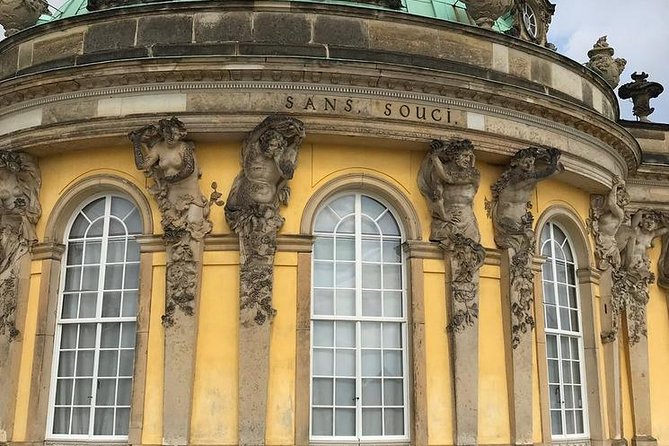
The first major section centers on Sanssouci Park and its royal buildings. Sanssouci Palace is the obvious star. You see it from the outside and hear about Frederick the Great, whose summer residence became one of the best-known symbols of Potsdam.
The exterior visit lasts about 15 minutes, enough for photographs and a focused explanation rather than a full palace tour. If you want to see the interiors, this bike tour is not designed for that. Its value comes from fitting the palace into a much wider route.
The park itself rewards the slow pace of a bicycle. You pass formal gardens, open paths, and smaller structures that are easy to miss when visiting only the main palace. The Chinesisches Haus, or Chinese House, is one such stop. Frederick the Great built the garden pavilion as an ornamental feature, and the guide explains its role in the park.
You also pass the historic windmill and the Orangery. The Orangery Palace was built in a High Renaissance style under Frederick William IV. Its name relates to the greenhouse inside, where exotic fruit such as oranges and lemons could be grown.
The New Palace gives the royal story a different tone. Frederick the Great built it after Prussia’s victory in the Seven Years War. It is the largest palace ensemble in Sanssouci Park, and the exterior helps show how royal buildings could serve as political statements as much as homes.
You also ride past garden areas sometimes described as Potsdam Paradise Garden. These short stops are not full garden visits, but they let you understand how the palaces, paths, and planted grounds were planned as one setting.
Cecilienhof and the Potsdam Agreement
Cecilienhof shifts the day from royal ceremony to modern European history. You view the palace from outside and learn about the 1945 meeting where Harry Truman, Joseph Stalin, and Winston Churchill discussed the postwar division of Germany.
The site is important because the Potsdam Agreement shaped Europe after World War II. The tour does not simply point out an attractive building. It links the architecture to the decisions made inside it, giving the palace a weight that is easy to miss on a basic sightseeing visit.
The stop is brief, about 10 minutes. That is enough for an introduction and photographs, but not enough for an extended museum visit. One account describes going inside the palace, yet the stated schedule presents Cecilienhof as an exterior stop, so you should treat interior access as not included in the standard plan.
This is one of the strongest parts of the tour for anyone interested in World War II, the division of Germany, or the start of the Cold War. The day works well because the guide places the postwar events alongside the earlier Prussian story instead of treating each period as a separate attraction.
Same line, a different day out:
- Tokyo Mt Fuji 5th St & Hakone Cruise Bus Tour w/Bullet Train
★ 4.4 · 5,024 reviews - From Milan: Bernina Train and St. Moritz Day Trip
★ 4.5 · 4,495 reviews - Christ the Redeemer Entry Ticket by Corcovado Train
★ 4.4 · 4,476 reviews - From Málaga: Ronda+Setenil de las Bodegas with Little Train
★ 4.6 · 4,115 reviews
Glienicke Bridge and the Cold War border
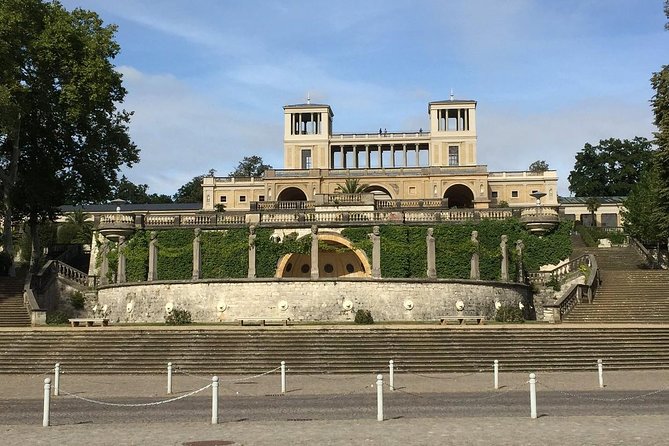
Glienicke Bridge is another major highlight. The bridge connects Potsdam and Berlin and became famous as a site for Cold War spy exchanges. In 1962, Rudolf Abel and Gary Powers were exchanged here, turning an ordinary crossing into one of the most recognizable Cold War locations in Europe.
You stop for an explanation rather than a long museum visit. The meaning comes from standing at the point where the border once divided two political systems. The guide also discusses the former East and West Berlin frontier, including sections of the old Berlin Wall and the former no man’s land, sometimes called the death strip.
The route along the Havel River and Jungfernsee adds a calmer side to this history. You cycle beside the water and through open park areas, then return to the political geography of the border. That contrast is one reason the bike format works so well here. You are not moving from one indoor exhibit to another. You are seeing the spaces where these events took place.
Potsdam’s old center, gates, and Dutch Quarter
The city center provides a different kind of history. At Old Market Square, the guide discusses Prussia and the Hohenzollern royal family around St. Nicholas Church, the historic heart of Potsdam.
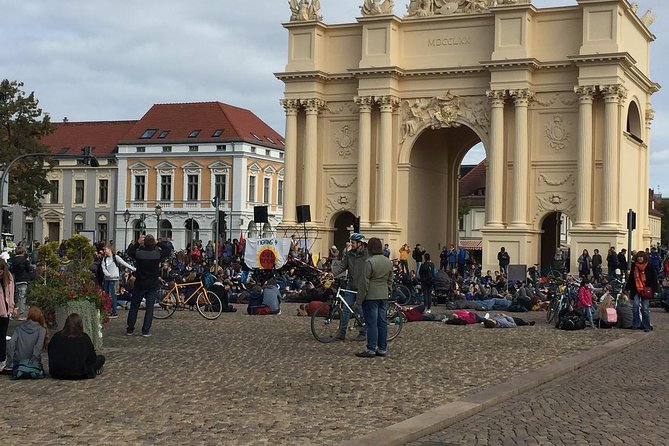
St. Nicholas Church is a useful photo stop, while the nearby obelisk recalls Prussian electors and early Hohenzollern kings. You also see the Old Town Hall and the Brandenburg Gate of Potsdam, which is separate from Berlin’s better-known gate. The Brandenburg Gate here connects with Potsdam’s role as a garrison town and the rise of Prussia’s military power.
The route includes Luisenplatz, named for Queen Louise, one of Prussia’s best-known queens. You also ride by Jägertor and Nauener Tor, two historic city gates. These stops are short, usually between five and 10 minutes, but together they give you a clear sense of how the old town was organized.
Lunch comes in or near the Dutch Quarter, with about 45 minutes to eat and look around. Food and drinks are not included, and the schedule leaves you to choose your own meal. This is both a benefit and a small nuisance. You can spend according to your appetite, but you may lose time deciding where to eat.
The Dutch Quarter dates to the reign of Frederick William I. He had 134 Dutch-style houses built to attract Dutch craftsmen, along with stone workers and linen weavers. The quarter remains one of the most distinctive parts of Potsdam, with a scale and style that differ from the royal parks.
A practical improvement would be to arrive with a lunch plan. One person specifically wished for clearer restaurant recommendations because the break can involve some wandering. You have enough time for a meal, but not enough for a leisurely restaurant search followed by extended shopping.
Alexandrowka, the Havel, and the former border
The ride also reaches the Russian colony of Alexandrowka, built in the 1820s on royal orders. The settlement adds another layer to Potsdam’s story, showing how rulers shaped the city through planned communities as well as palaces.
From there, the route continues through parks and along the Havel River. You may ride near Jungfernsee, also known as Virgin Lake, before reaching the former border zone. The combination of water, gardens, residential areas, and political history keeps the day from feeling like a simple palace circuit.
The route gives you a broad view of Potsdam rather than a single attraction. That is its main strength. You see how royal estates, ordinary neighborhoods, military power, immigrant communities, and Cold War divisions all occupy the same city.
The schedule also lists a brief view of the Grosse Orangerie at Schloss Charlottenburg. Since the main ride is centered on Potsdam and the tour returns to Berlin by train, this item may be a passing reference or a route detail that can vary. If that building is important to you, ask the guide at the start how it fits into the day.
Guides, pace, and group size
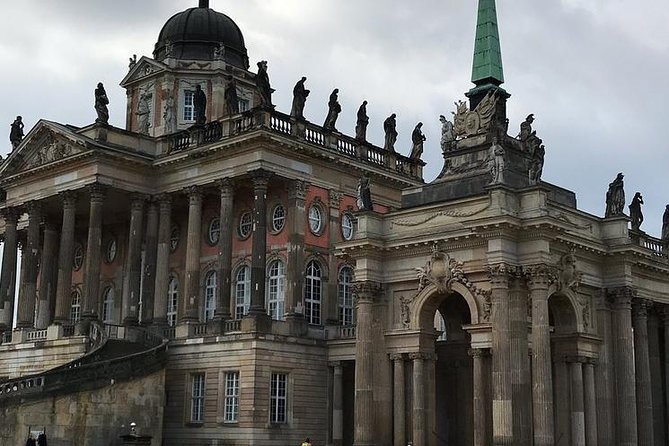
The guide makes a major difference here because most palace visits are exterior stops. The strongest part of the experience is the explanation at each location, not entry into buildings.
Several guides have been singled out for their style. Simon is described as relaxed and strong at storytelling, including LGBTQ+ history connected with Frederick the Great. Maggi is praised for being considerate of riders at different levels and for keeping everyone together. Nick is associated with clear explanations of Potsdam’s palaces and history, while Thor and other guides have been noted for adding memorable small details.
The tour has a maximum of 18 people. That is large enough for a lively group but small enough for the guide to stop, explain, and check that nobody has fallen behind. On at least one occasion, the outing continued with only one other couple, so a small booking does not necessarily mean cancellation.
The tone is active but not competitive. You stop often, receive short talks, take photos, then ride on. If you want hours inside Sanssouci or Cecilienhof, choose a palace-focused visit instead. If you want a broad introduction to Potsdam with useful historical context, this format is much more efficient.
Is the $102.58 price good value?
At $102.58 per person, the price is not the cheapest way to reach Potsdam. You could take public transport on your own and visit selected sites independently for less.
The value comes from what is bundled: the train ride from Berlin, the bike rental, the optional helmet, the guide, and the route planning. You also avoid the time and effort of piecing together Sanssouci, the Dutch Quarter, Cecilienhof, Alexandrowka, and Glienicke Bridge yourself.
Admission to palace interiors, food, and drinks are not included. Most listed stops are outside, so you are paying for access to the wider city and for interpretation rather than a collection of entry tickets.
I consider the price fair if you want an active overview and would otherwise spend time figuring out transport and directions. It is less appealing if you want a slow visit inside one or two palaces. The 4.7 rating from 81 reviews and 94 percent recommendation figure support the idea that the format works well for people who want history with movement, though the length and outdoor nature still matter.
Who should book this Potsdam bike tour?
I would choose this for an active first visit to Potsdam, especially if you want to connect the royal era with World War II and Cold War history. Families with active teenagers can enjoy it, and the route suits adults who prefer seeing a city from a bike rather than from a coach.
You should be comfortable riding for several hours, even though the route is fairly flat and paced gently. Bring clothing suited to the weather, since the experience spends most of the day outdoors. A morning drizzle did not prevent one outing from continuing, but wet conditions can make a long ride less pleasant.
I would not choose this if you need step-free sightseeing, dislike cycling in busier areas, or want extensive interior palace visits. The tour includes many short stops, and some admission details vary by site. It is designed as a moving overview, not a museum day.
Free cancellation is available up to 24 hours before the 9:30 a.m. start time. Changes or cancellations within 24 hours are not accepted for a refund.
Should you book it?
Book this tour if you want to see Potsdam’s major sights in one well-organized day and like the idea of combining royal palaces with Cold War history. The train connection, cruiser bike, modest group size, and steady pace make the logistics simple.
Skip it if your priority is going inside Sanssouci or Cecilienhof, or if 10.5 miles of cycling sounds tiring. For the right person, this is one of the most useful ways to understand Potsdam: not as a row of grand buildings, but as a city where Prussian power, immigrant communities, postwar decisions, and the Berlin Wall all meet.
FAQ
Where does the Potsdam bike tour begin?
It begins at Unlimited Biking, formerly Fat Tire Tours, at Panoramastraße 1A, 10178 Berlin, near the entrance to the TV Tower in Alexanderplatz.
What time does the tour start?
The tour starts at 9:30 a.m.
Is train transportation to Potsdam included?
Yes. Rail transportation from Berlin to Potsdam and the return trip to Berlin are included.
How far do you ride?
The cycling portion covers approximately 10.5 miles, or 17 kilometers, over about four and a half hours.
Is lunch included in the price?
No. You receive a lunch break of about 45 minutes in the Dutch Quarter, but food and drinks are at your own expense.
Are palace admission tickets included?
The standard experience mainly includes exterior views and guide explanations. Admission tickets for listed sites are not included unless specifically stated.
Is a helmet provided?
Yes. A helmet is provided, but wearing it is optional.
How large is the group?
The tour allows a maximum of 18 participants.
What happens if I need to cancel?
You can cancel up to 24 hours before the start time for a full refund. Cancellations or changes made less than 24 hours before the start are not accepted for a refund.
Just added for rail travellers in the world
- From Porto Douro Valley Tour with Train and Vinho Verde★ 4.7 · 16 reviews
- From Ella – Day Trip of 8 Iconic Sights & Scenic Train Ride★ 4.4 · 5 reviews
- Prague: Railway Kingdom Giant Model Railway Museum★ 4.4 · 54 reviews
- Sarajevo: Visegrad, Sarkan Eight Railway & Kurstendorf Tour★ 4.8 · 13 reviews
- Skip the Line: Historic RailPark and Train Museum Ticket with Guided Tour★ 4.5 · 59 reviews
- Sa Pa Trekking 2 Days 3 Nights Homestay by Night Train★ 4.5 · 11 reviews
- 2 Day Tour of Yala & Ella with Hill Country Scenic Train Ride – All Inclusive★ 5.0 · 5 reviews
- Private Day Tour: Suzhou Incredible Highlights from Shanghai by Car or Train★ 5.0 · 47 reviews
Germany Train Journeys, compared.
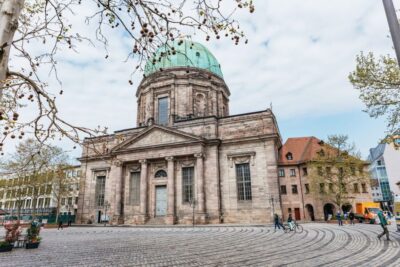
Nuremberg: City Tour with the Bimmelbahn Train
Read our review →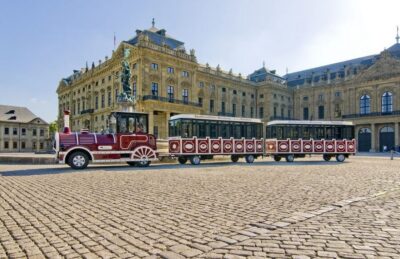
Würzburg: City Tour with the Bimmelbahn Train
Read our review →
Regensburg: City Tour with the Bimmelbahn Train
Read our review →
Nuremberg: Nuclear Bunker in Main Railway Station
Read our review →
Private Sachsenhausen Concentration Camp tour with train
Read our review →
Herrenchiemsee Palace and Fraueninsel Rail Trip from Munich
Read our review →
City tour through Regensburg with the little train
Read our review →Browse the lists this tour appears in