
Review · SLEEPER AND OVERNIGHT TRAINS
Cheap Egypt holiday 11 Days Cairo-Luxor-Aswan-Abu Simbel by sleeping train
The best part of this 11-day Egypt journey is its grand sweep: you move from the pyramids and Cairo’s old quarters to Luxor’s tombs, Aswan’s temples, and Abu Simbel without arranging each leg yourself. I like the overnight train because it turns a long transfer into part of the experience, and I like the four-night Nile cruise because your hotel travels with you.
The price looks attractive at $950 per person, especially with four-star Cairo lodging, a five-star cruise, meals, guides, and airport transfers included. The catch is that entrance fees, the visa, gratuities, and the sleeping-train fare are extra, so your final cost will be higher than the headline figure. The schedule is also demanding, with an early Abu Simbel departure and two overnight train rides.
Key points before you book
- A full route from Cairo to Abu Simbel: You see the pyramids, Saqqara, Luxor, Edfu, Kom Ombo, Aswan, and Cairo’s Islamic monuments in one connected trip.
- Two very different ways to travel: One overnight train takes you to Luxor, while the Nile cruise carries you between Luxor and Aswan.
- Abu Simbel begins at 3:30 a.m.: The long road trip is tiring, but it gives you time at one of Egypt’s great monuments.
- Small-group format: The tour is limited to a maximum of 10 people, with private Egyptology guides and an air-conditioned vehicle.
- Several costs are not included: You still pay for entrance tickets, the visa, gratuities, and the sleeping train.
- A useful itinerary check: Philae Temple appears in the advertised highlights, but it is not listed in the detailed day-by-day schedule, so confirm this before paying.
Cairo begins with pyramids and practical support
Your arrival is kept simple. A driver meets you outside Cairo International Airport after you clear passport control and collect your luggage, then takes you to your hotel. The airport transfer is included both at the beginning and the end, which matters in Cairo, where finding the right car after a long flight can be stressful.
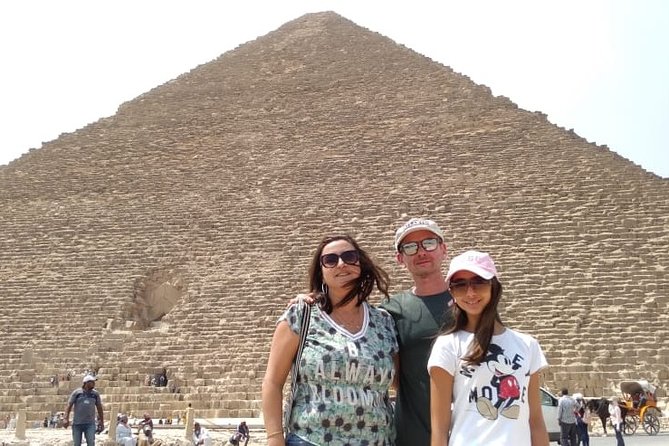
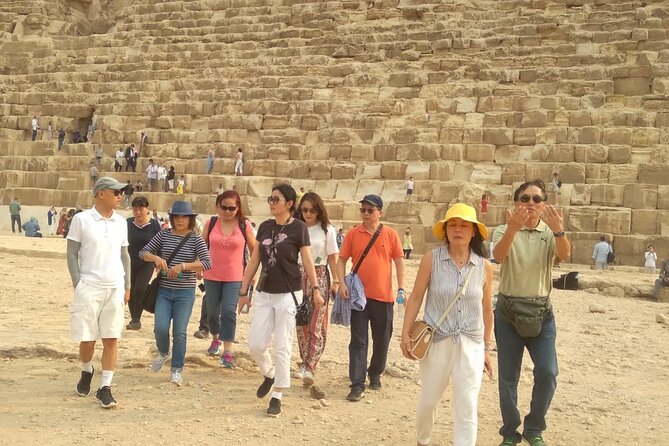
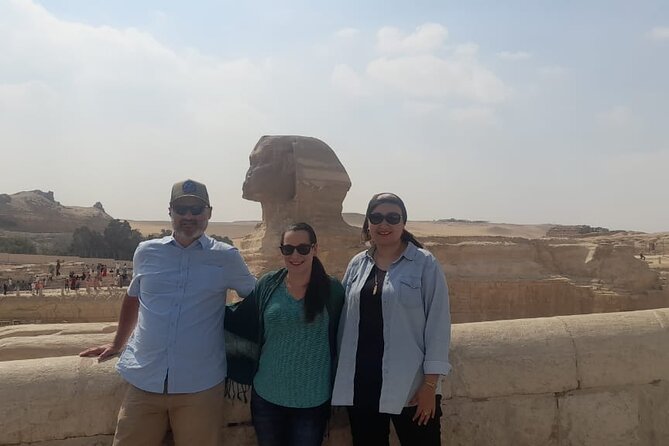
Your first full sightseeing day focuses on Giza and Saqqara. At Giza, you see the Great Pyramid of Khufu, the pyramids of Khafre and Menkaure, the Valley Temple, and the Sphinx. The schedule gives roughly two and a half hours to the main pyramid area, followed by lunch at a local restaurant.
Entrance tickets are not included, and drinks at lunch cost extra. That is a small detail, but it is worth remembering because bottled drinks add up quickly during a hot day outdoors. Bring water, a hat, and shoes that are comfortable on uneven ground.
Saqqara gives you a better sense of how pyramid design developed. The Step Pyramid of Djoser is older and more experimental in appearance than the famous monuments at Giza. I like this pairing because Giza supplies the familiar icons, while Saqqara gives you a clearer feeling for Egypt’s early building methods.
The day is not rushed by Egyptian standards, but Cairo traffic can affect the timing. Your guide handles the route and explains the sites, while you concentrate on the monuments instead of negotiating transport between them.
More Sleeper Trains in Egypt
- Egypt on Budget – 8 Days ( Cairo , Aswan , Nile Cruise – Luxor ) Sleeper Train
★ 4.5 · 121 reviews - 6- Days Aswan , Abu Simbel , Cruise , Luxor & Round Sleeper Train
★ 5.0 · 25 reviews - Cairo : Luxor East and West Banks Tour & Overnight SLEEPER Train Rounded trip
★ 4.5 · 21 reviews
Cairo’s museum, Citadel, and Christian quarter
The next Cairo day combines the Egyptian Museum with the Citadel and Coptic Cairo. The museum holds an enormous collection of ancient objects, including the famous Tutankhamun material. The schedule allows about an hour inside, which is enough for a first look but not enough for a serious study of the collection.
You will need to pay the museum entrance fee separately. If ancient art is your main reason for visiting Egypt, ask your guide to help you focus on a few important rooms rather than trying to see everything. An oversized collection can become tiring when you rush through it.
At the Citadel, Saladin’s medieval fortification gives you a different period of Egyptian history. The site was built to help protect Cairo and Fustat from Crusader attacks. Its elevated position also gives you a useful view across the city, though the main value here is the setting and the story of medieval Cairo.
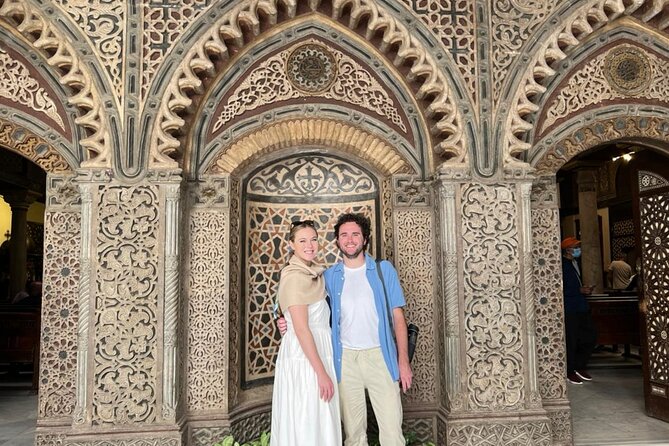
Coptic Cairo brings another change of pace. You visit the Hanging Church, Abu Serga Church, Saint Barbara Church, and the Ben Ezra Synagogue. These places show how several religious traditions shaped the old city over many centuries. The Coptic area is included in the tour, while other Cairo entrance fees are generally extra.
That evening, you return to the hotel, collect your luggage, and leave around 6:00 p.m. for Giza Railway Station. The overnight train to Luxor takes about 12 hours. This is not a luxury sleeper experience, so set your expectations sensibly. It is mainly a practical way to cover a long distance while saving a night of ordinary hotel travel.
Luxor starts with temples on the east bank
You reach Luxor Railway Station around 6:30 a.m. A local representative meets you and transfers you to the Nile cruise boat. Early access to the boat depends on availability, but the scheduled cruise check-in is around 11:00 a.m.
The first Luxor sightseeing takes place on the east bank. Karnak is the larger and more sprawling site, built and expanded by rulers over many centuries. Its columns, courtyards, and religious monuments reward a guide who can explain how the complex changed over time.
Luxor Temple feels more compact and urban. Built around 1400 BCE, it was linked to the sacred life of ancient Thebes and remains close to the modern city. Seeing Karnak and Luxor Temple together helps you understand that ancient Thebes was not one isolated monument, but a connected religious center.
The cruise provides breakfast, lunch, and dinner. Four nights on a five-star Nile cruise are included, but the word five-star can cover different standards in Egypt, so I would treat the boat as a comfortable base rather than a reason to expect resort-level service.
The west bank brings tombs and royal ambition
The west bank of Luxor is the emotional center of the trip. The Valley of the Kings contains royal tombs cut into the cliffs, and the narrow entrances give way to decorated underground chambers. The standard admission usually covers a set number of tombs, while special tombs may require an additional ticket. Since entrance fees are not included, ask exactly which tickets your guide plans to purchase.
The itinerary also includes the site connected with Queen Hatshepsut. Her rule was unusual for ancient Egypt, and her temple reflects her effort to present herself with the authority of a pharaoh. The visit lasts about 45 minutes, so you will get the main story and the key views rather than a slow architectural study.
The schedule refers to the Colossi of Memnon in the description of this day, but the detailed stops specifically name the Valley of the Kings and Hatshepsut. Confirm the exact west-bank stops before departure if the giant statues matter to you.
A second practical point: Luxor sightseeing begins after an overnight train. You may be running on little sleep, so the cruise’s routine is welcome. The four-night sailing gives you a chance to slow down after Cairo’s busy streets.
More Sleeper Trains in Cairo:
- Cairo : Luxor East and West Banks Tour by Overnight Sitting Train Rounded trip
★ 5.0 · 20 reviews - Cairo: Luxor East and West Banks Guided Tour& Overnight Sitting Train Round Trip
★ 5.0 · 8 reviews - Kings of Ancient Egypt : 6 Days Cairo and Luxor Guided Tours & Overnight Train
★ 5.0 · 7 reviews - Egypt 8 D: Cairo, Aswan,Abu Simbel, cruise, Luxor & Sleeper Train
★ 4.5 · 7 reviews
Sailing south through Edfu and Kom Ombo
The cruise route becomes the tour’s most relaxed section. At Edfu, you visit the large temple dedicated to Horus, traveling to the site by horse carriage. The carriage adds local character, though the short ride can feel more like transport than a sightseeing activity.
Kom Ombo is unusual because it is a double temple. It honors Sobek, the crocodile god, and Haroeris, a form of Horus. Your guide can help make sense of the divided design and the different religious roles represented there.
These stops are relatively short, so you will not have unlimited time to wander. That is the tradeoff of a scheduled cruise: you see several major monuments without arranging hotels and road transfers, but you follow the boat’s timetable.
The itinerary lists entrance fees at several stops as extra, even though some stop descriptions say admission is free. Because the pricing notes are not perfectly consistent, ask for a written explanation of which site tickets are included and which you must pay locally.
Abu Simbel requires an early start
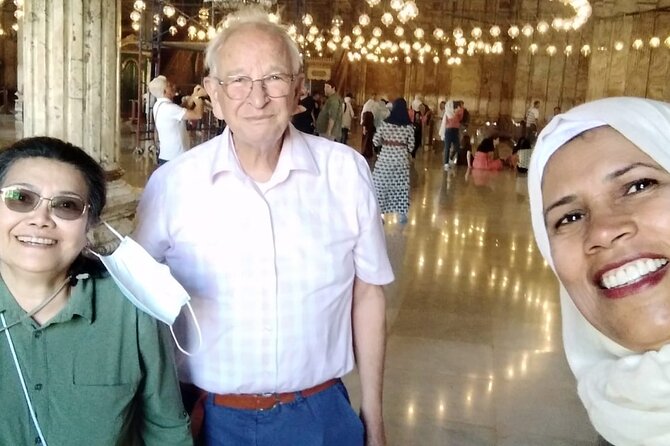
Abu Simbel is the most demanding day. You leave Aswan at about 3:30 a.m. with a breakfast box and travel roughly 350 kilometers by shared air-conditioned bus. The journey takes several hours each way, with arrival back at the cruise around noon.
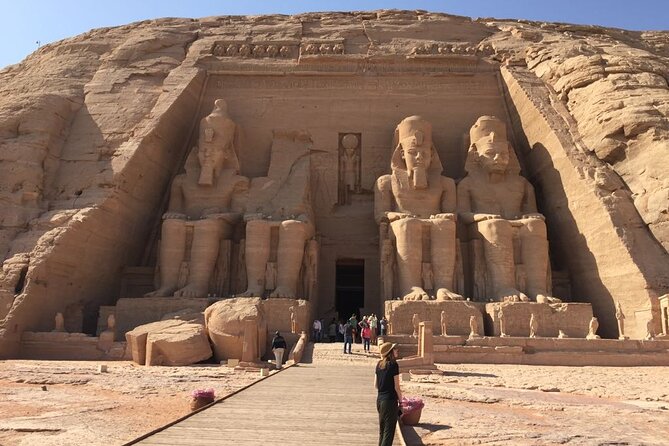
The temples were cut into the rock during the reign of Ramesses II. Their scale and setting make them unlike the sites around Luxor. You should wear comfortable shoes, light clothing, and a sun hat, as advised in the tour information. Entrance is extra.
The early departure is required under the stated tourism and antiquities instructions, so this is not a case of poor planning by the operator. Still, you need to decide how much fatigue you can handle. After the return trip, lunch and dinner are served on the cruise, but you may want a quiet afternoon rather than another activity.
I would not book this itinerary if you need leisurely mornings every day. I would book it if Abu Simbel is high on your list and you accept one very long day to reach it.
Aswan combines engineering and ancient stonework
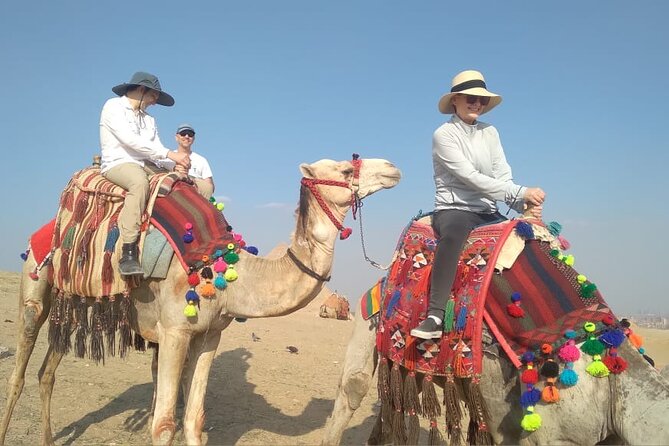
The Aswan day includes the High Dam and the Unfinished Obelisk. The dam explains modern Egypt’s effort to control Nile flooding and generate power after the 1952 revolution. It is a useful counterpoint to the ancient temples because it shows the river as a modern engineering problem, not only an ancient source of life.
The Unfinished Obelisk lies in an ancient stone quarry. You can see how a massive monument was started but abandoned before completion. The cracks and unfinished surfaces make the quarry more revealing than a perfectly finished object in a museum.
The tour also advertises Philae Temple among its Aswan highlights, but the detailed schedule names the High Dam and Unfinished Obelisk instead. Ask specifically if a Philae visit is included. Do not assume it is covered simply because it appears in the general description.
After lunch at a local restaurant, you transfer to Aswan Railway Station for the second overnight train. This train takes you back toward Cairo, with breakfast served onboard the following morning.
The return to Cairo leaves room to recover
You arrive at Giza Railway Station and transfer to your Cairo hotel. The plan allows time to rest, and normal hotel check-in is at 2:00 p.m. Early check-in depends on availability, so do not count on having a room immediately after arrival.
This recovery period is well judged. The route includes two overnight train rides, and a full sightseeing program would be too much directly after the second one. Use the free time to sleep, shower, or simply sit somewhere cool.
Your final sightseeing day covers Cairo’s Islamic architecture. The Mosque of Ibn Tulun dates from the ninth century and is known for its large open courtyard and early Islamic design. Sultan Hassan Mosque and Madrasa is a massive Mamluk complex built in the fourteenth century, with schools for the four Sunni legal traditions.
These mosques are a good final contrast with the pharaohs’ monuments. You see Cairo not as a gateway to ancient Egypt, but as a historic capital shaped by medieval rulers, religious institutions, and changing architectural styles. Entrance fees are not included for these visits.
On the last morning, your representative meets you at the hotel, helps with checkout, and transfers you to Cairo International Airport. A breakfast box can be prepared for an early flight. Standard checkout is at noon, and late checkout until 2:00 p.m. depends on availability.
What the $950 price really covers
At $950, the package has good potential value for a first Egypt visit. Included are four nights in a four-star Cairo hotel with breakfast, four nights on a Nile cruise with breakfast, lunch, and dinner, several additional lunches, seven breakfasts, four dinners, guides, air-conditioned transport, bottled water, and airport transfers.
The main issue is the list of exclusions. You must budget separately for:
- Sleeping-train tickets
- Visa costs
- Entrance tickets
- Gratuities
- Drinks at included lunches
The number of included meals is generous, but the wording suggests that not every meal on every travel day is covered in the same way. Ask for a day-by-day meal and ticket breakdown before booking.
The group maximum of 10 is a strong point. A small group makes it easier to hear your guide and may reduce the time spent gathering people at each stop. The tour uses private Egyptology guides, and guides named in past arrangements include Nasser, Eman, and Mohammed. Ahmed has also handled trip coordination and changes for larger groups. Guide assignments can change, so treat these names as examples rather than a guarantee.
The operator has also handled additions such as Alexandria and extra Cairo sites for some bookings. That suggests some flexibility, but any extension should be arranged and priced before you arrive.
Who should book this Egypt itinerary?
I would recommend it to a first-time visitor who wants the main ancient sights in one organized trip and does not want to arrange Egyptian trains, cruise transfers, local guides, and airport pickups separately.
It suits people who value coverage over free time. You see a lot: Giza, Saqqara, the Egyptian Museum, the Citadel, Coptic Cairo, Luxor’s temples and tombs, Edfu, Kom Ombo, Aswan, Abu Simbel, Ibn Tulun, and Sultan Hassan.
I would be cautious if you dislike overnight trains, early starts, or scheduled group touring. The 3:30 a.m. Abu Simbel departure and two 12-hour train rides are the hard edges of the route. Also confirm the exact hotel, cruise boat, entrance tickets, Philae visit, and sleeping-train fare before you commit.
Cancellation terms are fairly strict close to departure. A full refund requires cancellation at least six full days ahead, while cancellations two to six days before departure receive 50 percent. Inside two days, no refund is offered.
Should you book it?
Book this tour if you want a strong first look at Egypt for $950 before extra costs, and if you are willing to trade comfort and free time for a packed route. The Nile cruise, small group, airport transfers, and mix of ancient and medieval Cairo make the package useful for independent-minded visitors who still want local support.
Do not book it without clarifying the extras. Get the total price for entrance tickets, the visa, gratuities, and both sleeping-train journeys. Also confirm whether Philae and the Colossi of Memnon are included. With those points settled, this is a practical way to cover Egypt’s biggest sights in 11 days.
FAQ
Where does the tour start and finish?
The tour starts with pickup at Cairo International Airport and ends with a transfer from your Cairo hotel to the same airport for departure.
How long is the tour?
The advertised duration is approximately 11 days.
How large is the group?
The tour has a maximum of 10 participants.
Are the overnight train journeys included in the $950 price?
No. The sleeping-train fare is listed as an extra cost.
Are entrance fees included?
No. Entrance fees for the main archaeological and historical sites are listed as not included.
Is food included?
Breakfast is included at the Cairo hotel and on the train as specified. The Nile cruise includes breakfast, lunch, and dinner, and additional lunches are provided during the land portion. Drinks at the included local restaurant lunch are not included.
How early does the Abu Simbel trip begin?
The shared air-conditioned bus leaves Aswan at about 3:30 a.m. You receive a breakfast box before the journey, which covers roughly 350 kilometers each way.
Just added for rail travellers in Cairo
- 2-Day Private Tours to Luxor and Dendera from Cairo by Sleeper Train★ 5.0 · 3 reviews
- Luxor Day Tour by Sleeper Train★ 5.0 · 3 reviews
- 10 Day Around Egypt to Cairo ,Giza ,White desert ,Nile Cruise With Train & Hotel★ 5.0 · 5 reviews
- Full day Luxor tour from Cairo by a sleeper train★ 5.0 · 5 reviews
- Package 7-Days 6-Nights Cairo Pyramids, Nile Cruise&Alexandria by Sleeper Train★ 5.0 · 2 reviews
- Cairo : Luxor Full Day Guided Tour & Overnight SLEEPER Train Rounded trip★ 5.0 · 2 reviews
- Kings of Ancient Egypt : 6 Days Cairo and Luxor Guided Tours & Overnight Train★ 5.0 · 7 reviews
- Cairo : Luxor Full Day Guided Tour & Overnight Train Rounded trip★ 5.0 · 4 reviews
Sleeper and Overnight Trains, compared.
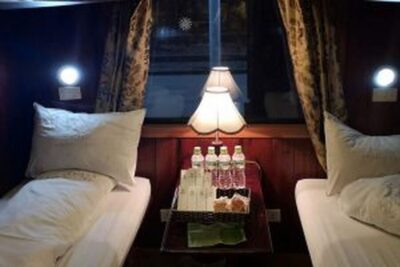

Sapa: 3-Day, 3-Night Trek and Hotel with Overnight Train
Read our review →
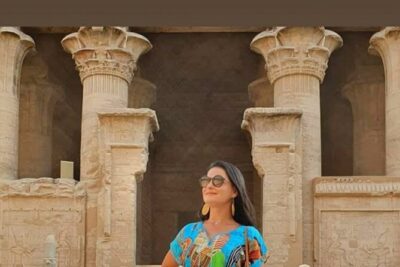
6- Days Aswan , Abu Simbel , Cruise , Luxor & Round Sleeper Train
Read our review →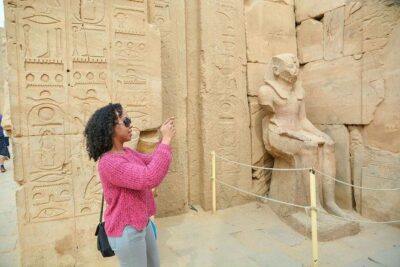
Luxor East and West Banks Tour & Overnight SLEEPER Train Rounded trip
Read our review →
Luxor East and West Banks Tour by Overnight Sitting Train Rounded trip
Read our review →
Sa Pa Trekking 2 Days 3 Nights Homestay by Night Train
Read our review →
Browse the lists this tour appears in